Two kinds of Rockridge house, and what each needs fixed
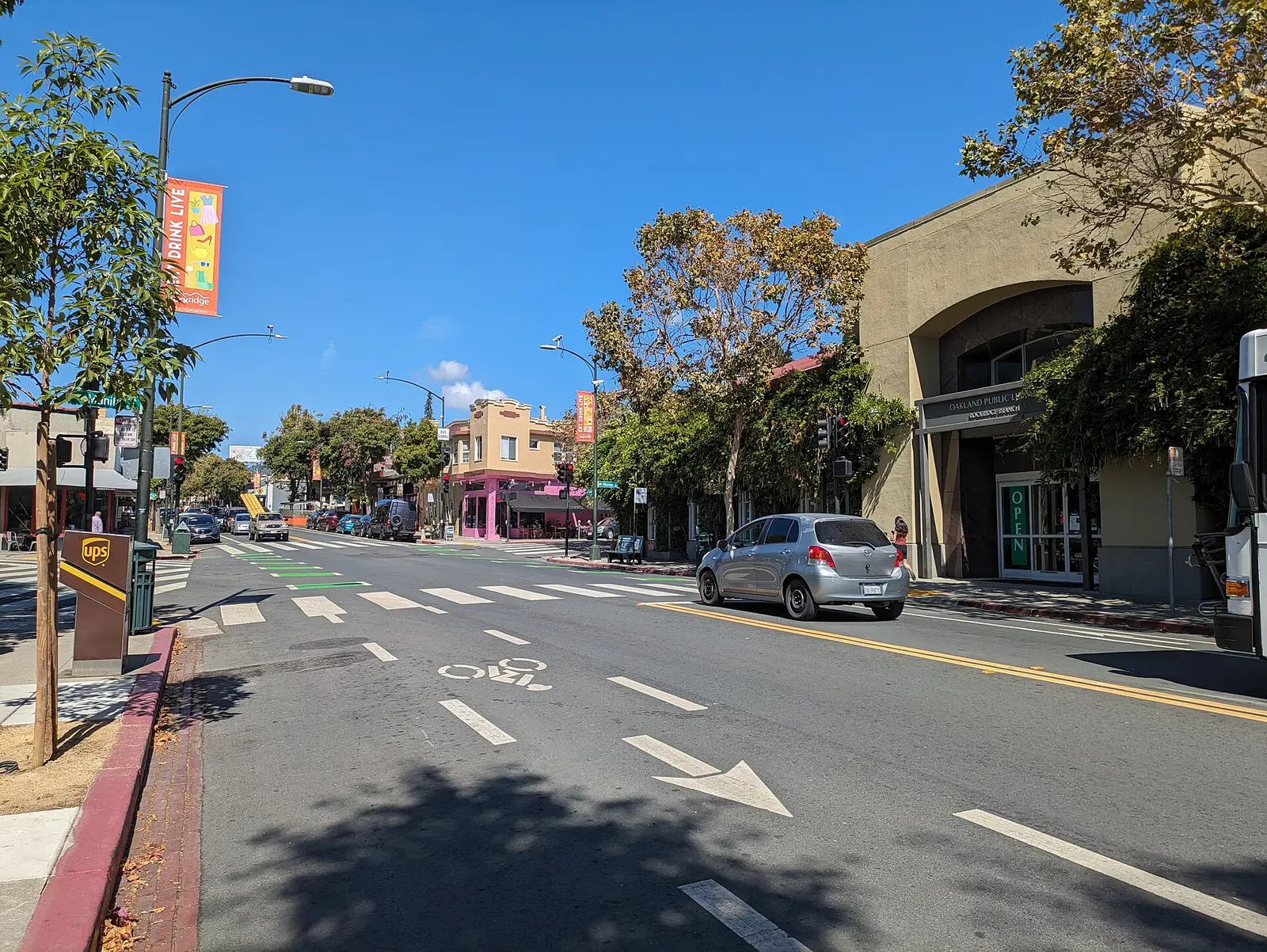
Rockridge has two housing stocks a few blocks apart. Around College Avenue, houses from about 1910 into the 1940s keep original doors, built-ins and wood windows. East of Broadway, much of Upper Rockridge burned in the 1991 firestorm and was rebuilt, so those houses are now thirty-year-old construction with aging decks and fixtures.
The houses closest to College Avenue went up from about 1910 onward, and many still hang their original wood doors in their original frames. A century of paint layers, seasonal swelling and settling means doors that rub at the top corner, latches that miss the strike, and hinges worn loose in their screw holes. Rehanging, adjusting hinges, planing a sticking edge and resealing the bare wood afterward keeps the original door, which in these houses is usually worth keeping. More about door and window repair
Craftsman built-ins that stick or sag
Craftsman houses were built with cabinetry as part of the room: bookcases flanking a fireplace, dining-room buffets, window seats and linen cupboards. In Rockridge's older blocks those pieces are now around a hundred years old. Drawers lose their runners, glass doors drop on worn hinges and shelves bow. A handyman can rebuild drawer slides in wood, re-hang cabinet doors, add shelf supports and fill old hardware holes without tearing out the built-in or losing its original finish. More about carpentry, shelves and trim
Decks on houses rebuilt after 1991
Upper Rockridge, east of Broadway, lost a large part of its houses in the 1991 firestorm, and the rebuilt homes date from the 1990s. Their decks, stairs and railings have now been through three decades of weather on hill lots. Loose railing posts, cupped or split boards and corroded fasteners are the usual findings. Replacing boards, re-securing rails and swapping hardware is handyman work; rotten posts, footings or ledger connections to the house are structural and go to a licensed contractor. More about fence, deck and gate repair
Thirty-year-old fixtures in rebuilt homes
A house finished in the early 1990s is likely still running some of its original faucets, toilet fill valves, shower valves and supply lines. Parts from that era are now failing in predictable ways: dripping cartridges, running toilets, and braided or plastic supply lines past their service life. Replacing a faucet, a fill valve or a supply line on existing plumbing is handyman work. Moving drains or supply lines, or anything behind the wall that needs a permit, is for a licensed plumber. More about faucet, toilet and fixture repair
How the houses here are built
Brown shingle and Craftsman houses, bungalows and cottages on the older blocks near College Avenue, with apartment buildings among them; rebuilt houses from the 1990s on the hill streets of Upper Rockridge.
The older houses are wood-frame with plaster walls, wood sash windows and, on shingle houses, wood shingle siding. The post-fire houses were built in the 1990s, so their original windows, decks, faucets and fans are reaching the age where parts wear out.
The dry, gusty autumn winds that drove the 1991 fire through Upper Rockridge make the hill blocks east of Broadway far more exposed than the flat streets around College Avenue.
Good to know before a job in Rockridge
Upper and lower Rockridge
The 1991 Oakland firestorm came within half a mile of College Avenue and destroyed a large part of Upper Rockridge east of Broadway. Below that line the houses are the neighborhood's original stock, some from as early as 1909 to 1912 and many from the 1920s through the 1950s. When you request a job, say which side of Broadway the house is on: it tells a handyman whether to expect plaster and old wood sash or 1990s drywall and windows.
Parking near the station and the shops
College Avenue carries more than 80 restaurants, cafes and shops, and Rockridge BART sits right on it where the avenue passes under Highway 24. The Rockridge Shopping Center, built in the late 1960s on a former quarry site, draws its own car traffic. Blocks close to the station and the avenue are the hardest to park a work vehicle on, so mention a driveway or a nearby spot when you book.
How a request works
Describe the job
A sentence and a photo or two is enough. It takes about a minute.
A local handyman gets in touch
By call or text, to ask what the photos don't show and give you a price.
You decide
Agree a time and price with the handyman directly, or don't. Requesting costs nothing.
Questions from Rockridge homeowners
My house is above Broadway in Upper Rockridge. Will it have plaster walls?
Probably not, if it was rebuilt after the 1991 firestorm, which destroyed much of Upper Rockridge. Houses built in the 1990s generally use drywall, which is patched differently from the lath and plaster found in the older homes near College Avenue. Tell us the year the house was built and the job can be planned around it.
Can the original built-in buffet in our Craftsman dining room be repaired instead of replaced?
Usually, yes. Worn drawer runners, dropped doors and loose face frames on Rockridge's hundred-year-old built-ins can be rebuilt in wood, and hardware can be matched or reused. Tearing a built-in out tends to damage plaster and trim around it, so repair is normally the less disruptive and better-looking route.
Is there anywhere to park near Rockridge BART for a repair visit?
Street parking is tightest on blocks near the station and College Avenue's shops. If you have a driveway, garage apron or a quieter side street close by, say so in your request. It saves time at the start of the job and avoids carrying tools several blocks.
Our deck was built when the house was rebuilt after the fire. What should be checked?
After about thirty years, check railing posts for movement, boards for splits and soft spots, and fasteners for rust. Those can be repaired by a handyman. If posts, footings or the connection where the deck meets the house show rot or movement, the repair is structural and needs a licensed contractor.