Home repairs across Oakland, from the flats to the hills
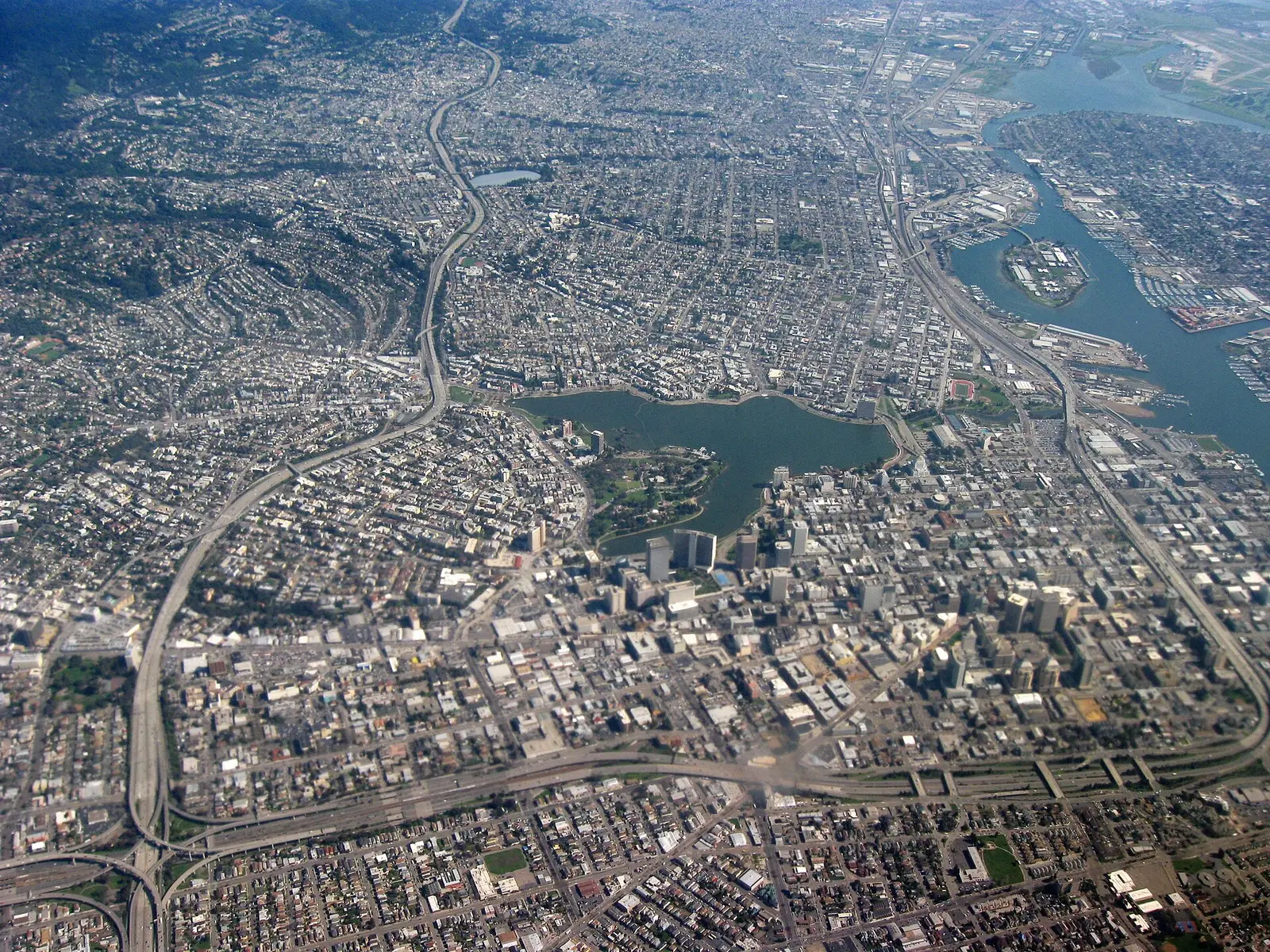
Two surges built much of older Oakland: the refugees who doubled the city after the 1906 earthquake, and the early 1920s, when about 13,000 homes went up in three years. That leaves a city of wood-frame houses with plaster walls and aging fixtures, split between flat grids and winding hill streets.
Lake Merritt, Preservation Park, Pardee Home Museum
What homes in Oakland need most
Plaster walls in 1920s boom houses
Oakland built roughly 13,000 homes between 1921 and 1924, more than in the thirteen years before, and many of them survive. Their walls are plaster over wood lath, not drywall. Cracks open at door and window corners, and old patches in the wrong material show through paint. A local handyman who works in older houses cuts back to sound plaster, fills in layers, and feathers the patch so it disappears once painted, rather than screwing a square of drywall over the hole. More about drywall and plaster repair
Steps, gates and paths near the fault
The Hayward Fault runs directly through Oakland and creeps a fraction of an inch a year, enough to leave classic offset curbs on 39th Avenue and street cracks along Revere Avenue in Sheffield Village. Near the fault trace, garden gates can slowly stop latching and wood steps and path edging drift out of line. Rehanging a gate, resetting a latch or rebuilding a few wooden steps is handyman work. Cracks in foundations or retaining walls that keep widening are structural and belong with a licensed contractor. More about fence, deck and gate repair
Replacing fixtures in older rooms
In a house that may have been rewired in stages over the decades, a ceiling box can be original, replaced or somewhere in between, and an owner may want a fan or a brighter fitting in that same spot. Hanging the new light or fan on the box already in the ceiling is handyman work, including checking that the box can carry a fan's weight and movement. Adding a new fixture where no box exists, running a new circuit, or anything that needs an electrical permit is a job for a licensed electrician, and a good handyman will tell you which side of that line your request falls on.
Sealing hill houses against damp
Because Oakland's hills tend to hold more fog than the flatlands, painted wood trim, window sills and door thresholds on hill houses spend more time damp than the same parts on a flatland bungalow. Failed caulk and worn weatherstripping let that moisture into the joints where rot starts. Resealing exterior joints, replacing door sweeps and weatherstripping, and filling small checks in sills before they open up are small jobs that keep a larger carpentry repair from arriving later. More about weatherstripping, caulking and sealing
How the houses here are built
Italianate and Queen Anne Victorians survive in the oldest districts near downtown and in Fruitvale; 1920s houses and flats fill much of the flatlands; the hills, about a third of the city, hold houses on winding streets and larger lots.
Houses from before the Second World War are wood-frame with lath-and-plaster walls, so wall repairs mean matching plaster rather than taping drywall. The city's Cultural Heritage Survey estimated the age of every visible building in Oakland, which tells you what you are likely to find inside before a wall is opened.
Oakland's hills tend to get more fog than its flatlands, so two houses a few miles apart can weather quite differently.
Good to know before a job in Oakland
Find out how old your house is
The Oakland Cultural Heritage Survey, run by the city's planning department, carried out a general survey of every visible building in Oakland with estimates of each building's age, and keeps a library of permits, maps and photos on historic properties and districts. Knowing whether a house is from the 1880s, the 1920s or the 1950s tells you whether to expect plaster, old wiring boxes and wood sash, and helps a handyman bring the right materials on the first visit.
Flatlands, hills and the Victorian districts
About two-thirds of Oakland is flat and a third is hills rising to more than 1,700 feet near Grizzly Peak Boulevard. The oldest houses cluster in the flats: Preservation Park near 12th and Castro streets gathers sixteen 19th-century buildings, the Pardee Home dates from 1868 and the Cohen-Bray House on 29th Avenue in Fruitvale from 1882. Hill parcels fall under the city's annual wildfire vegetation inspection, which flatland owners do not face.
How a request works
Describe the job
A sentence and a photo or two is enough. It takes about a minute.
A local handyman gets in touch
By call or text, to ask what the photos don't show and give you a price.
You decide
Agree a time and price with the handyman directly, or don't. Requesting costs nothing.
Questions from Oakland homeowners
How do I find out when my Oakland house was built?
Start with the Oakland Cultural Heritage Survey in the city's planning department. It surveyed every visible building in Oakland with an estimate of its age and holds permits, maps and photos for historic properties. That date tells you what materials are behind the walls, which matters before any patching or mounting work begins.
Why are the curbs offset on 39th Avenue, and should I worry about my steps?
That offset is creep on the Hayward Fault, which runs through Oakland and moves slowly even without an earthquake. Houses near the trace can see gates, steps and paths drift out of line over years. Re-hanging and rebuilding those is handyman work; widening cracks in foundations or retaining walls need a licensed contractor.
My 1920s house has plaster walls. Is it better to replace them with drywall?
Usually not for small damage. Oakland's 1920s houses were built with lath and plaster, and a crack or hole can be patched in plaster or a compatible compound so it blends with the surrounding wall. Tearing out whole walls is a remodel, with dust, permits and cost that a patch avoids.
Do handymen work in both the hills and the flatlands?
Yes. Handymen who work in Oakland take jobs from West Oakland and Fruitvale up to the hill neighborhoods. Tell us the street when you describe the job, because hill access, parking on narrow roads and the season's fire inspection can all change how the work is scheduled.
Checked against these public sources in September 2026. Rules change: confirm anything permit-related with the city or town of Oakland before work starts.