Home repairs along the Peninsula's coast, hills and bay plain
The San Andreas Fault runs up the Peninsula's spine, and its houses split around it: foggy post-war tracts on the coast side and northern ridge, large hillside lots above the Crystal Springs rift valley, pre-war towns and Eichlers on the bay plain, and whole neighborhoods on filled marsh. Describe the job and a local handyman calls or texts back.
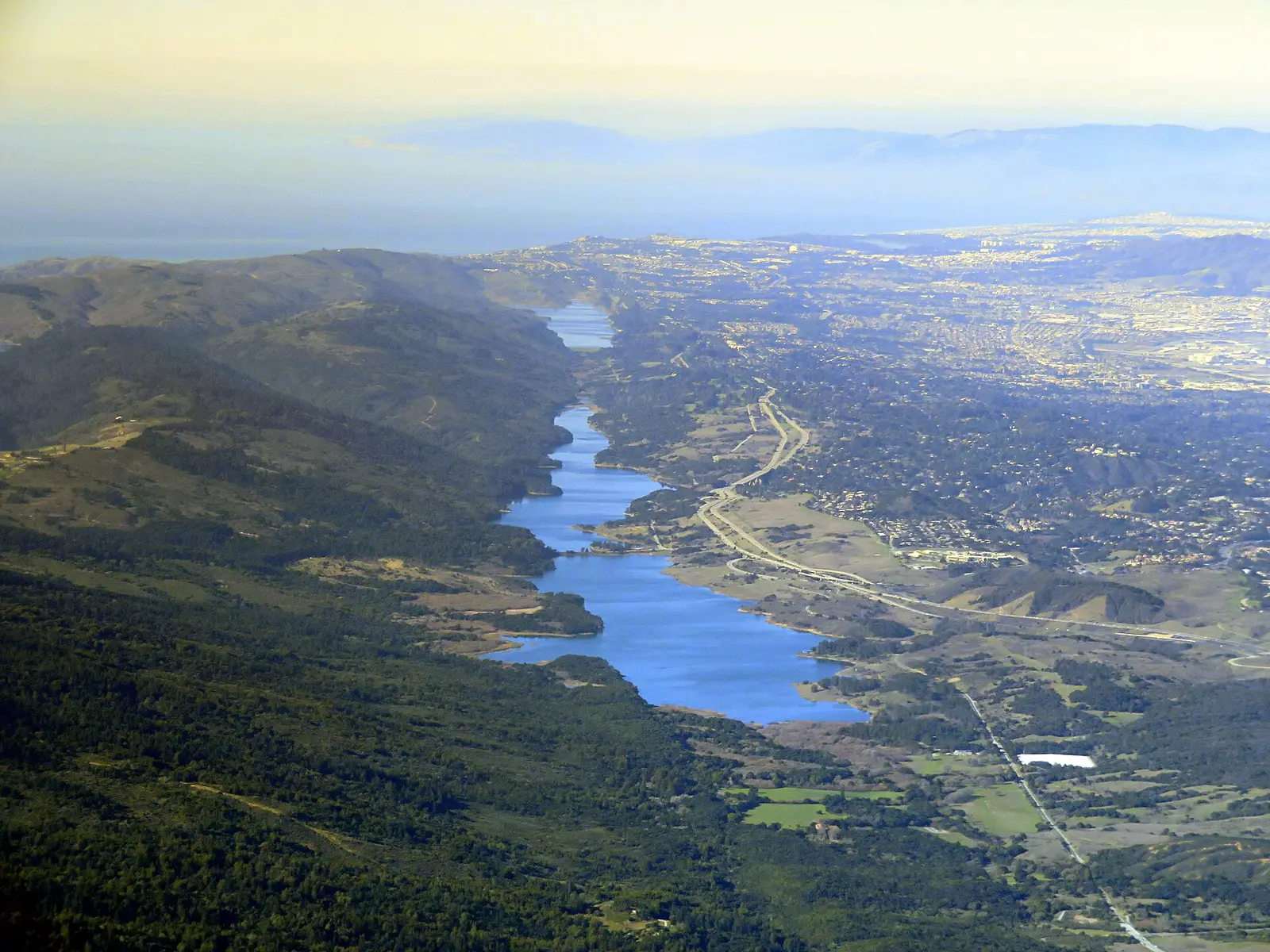
Geologist Andrew Lawson first identified the San Andreas Fault on the Peninsula in 1895. It runs the length of the Peninsula through the rift valley that holds the Crystal Springs reservoirs, just west of San Mateo and Hillsborough, and goes offshore near Mussel Rock in Daly City. West of that line the land drops to a cool, foggy coast. East of it, the hills fall to a warmer bay plain that was estates, farms and marsh before it became suburbs. One county holds very different houses within a short drive.
Much of what stands today went up after World War II. Henry Doelger turned sand dunes and cabbage patches in Westlake into rows of near-identical houses, Joseph Eichler built across Palo Alto and the San Mateo Highlands, and Foster City's first residents moved onto filled Brewer Island in 1964. Houses built to the same plan tend to fail in the same places, which is why a clear description of the house, its age and type, helps as much as a description of the problem.
How the work differs across the area
Coast side and the foggy northern ridge
Pacifica, formed in 1957 from nine small communities, is nicknamed the fog capital of California; its summer fog brings night drizzle and drips from the trees. Half Moon Bay, reached from the bay side over State Route 92, sees fog and overcast most nights and mornings. Along the northern ridge, Daly City's post-war tracts take the same marine air. Homes here stay damp for much of the year, so exterior paint, wood trim, gutters and exposed metal need more attention than a few miles inland, and caulking and ventilation matter more than they look.
Hills above the rift valley
Between the bay plain and the Crystal Springs reservoirs, the hills hold the Peninsula's largest residential lots. Hillsborough, incorporated in 1910, has no commercial zoning at all and a half-acre minimum lot size. Terrain like this brings long driveways, detached garages, gates, fences, decks and exterior stairs, along with the drainage problems that sloped yards create. Large properties tend to generate a steady list of small repairs rather than one job, so it helps to group them into a single request and describe how the handyman reaches each part of the lot.
Bay plain: old town centers and modern tracts
Between the hills and the water, pre-war town centers sit beside mid-century subdivisions. In Palo Alto, the neighborhoods north of Oregon Expressway hold Craftsman and colonial-style homes from the 1890s to the 1920s, while south of it are post-war modern houses, many built by Eichler. The San Mateo Highlands add more than 700 Eichlers built between 1956 and 1964. A job as ordinary as rehanging a door means old-growth wood and plaster in one house and a post-and-beam frame with walls of glass a mile away.
Filled marsh at the water's edge
Foster City was built from the 1960s on Brewer Island and engineered fill in the bay marshes, around a 218-acre man-made lagoon first designed for drainage. The city contends with water intrusion from the bay and added a steel-reinforced levee wall after a FEMA floodplain designation. Homes on low, filled ground tend to see more moisture at ground level, so fence posts, deck boards, garage doors, thresholds and weatherstripping take more wear than the same parts on a hillside house.
How a request works
Describe the job
A sentence and a photo or two is enough. It takes about a minute.
A local handyman gets in touch
By call or text, to ask what the photos don't show and give you a price.
You decide
Agree a time and price with the handyman directly, or don't. Requesting costs nothing.
Common questions
Does the fog on the coast side change when exterior work can be done?
Often. Paint, stain and caulk need a dry surface, and on the coast side nights and mornings are frequently foggy and overcast, usually clearing in the afternoon. Exterior touch-ups there are easier to schedule for later in the day or a dry spell, and it is worth mentioning flexibility on timing in your request. On the bay side of the hills, the same job is less often held up by weather.
What work on a hillside property is beyond a handyman?
Replacing deck boards and stair treads, repairing gates and fence panels, clearing gutters and drains, and patching siding are typical handyman jobs on a sloped lot. Rebuilding a retaining wall, re-supporting a deck, or anything that holds back soil or holds up a structure is structural and needs a licensed contractor, usually with a permit. If you are not sure which side of that line a job falls on, describe it and ask.
What should I mention about a mid-century Peninsula house?
Say whether it is an Eichler or a tract house of that era, and whether it has radiant heating in the concrete slab, since that affects anything fastened to the floor. Mention original sliding glass doors, the roof shape and any remodel. With those details, the person who calls back can tell whether the job needs era-specific parts or is a quick adjustment.
Which Peninsula cities have their own pages?
Daly City, South San Francisco, San Bruno, Millbrae and San Mateo have longstanding pages, and newer ones cover Pacifica, Brisbane, Burlingame, Hillsborough, Foster City, Belmont, San Carlos, Redwood City, Menlo Park, Atherton, Palo Alto and Half Moon Bay. Each describes that city's own housing and conditions. For anywhere else on the Peninsula, include the city and cross streets in the request.
Tell us what needs fixing in The Peninsula.
One short request reaches handymen who work locally. You hear back by call or text. Free, with no obligation to hire.