Houses here fall into a few belts that wear out in different ways: wooden Victorians and Edwardian flats, many west of the 1906 Van Ness firebreak; stucco rows laid over the western sand dunes; curving hillside residence parks; and newer condominiums on bay fill. Describe the job and a local handyman calls or texts you back.
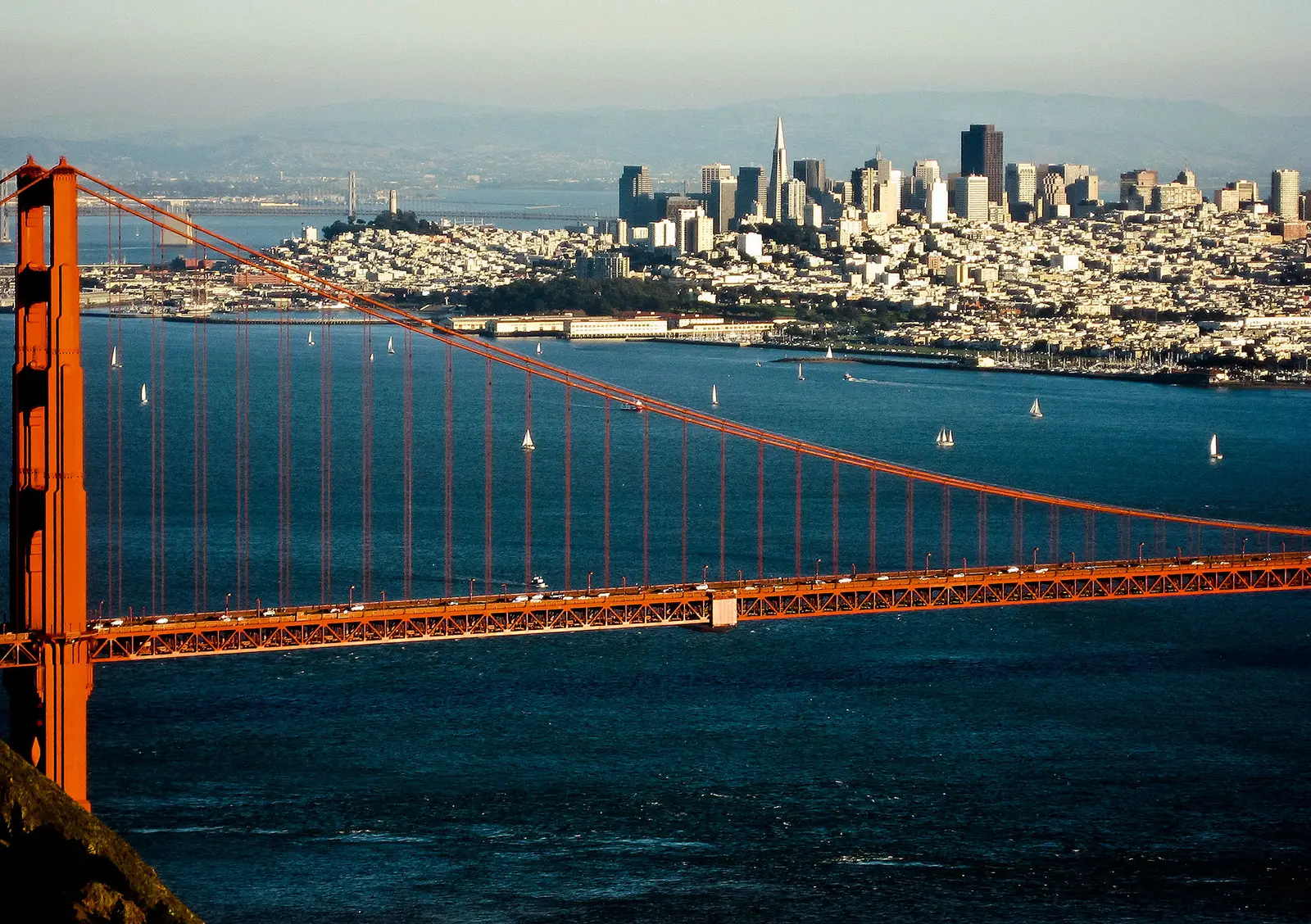
The Golden Gate Bridge and San Francisco, seen from the Marin Headlands. Photo: Paul.h, Public domain, via Wikimedia Commons.
About 48,000 Victorian and Edwardian houses went up in San Francisco between 1849 and 1915, most of them modest wooden buildings. After the 1906 earthquake, the Army dynamited almost every building on the east side of Van Ness Avenue to stop the fire moving west, and much of the surviving wood-frame stock stands beyond that line. Another 16,000 were later demolished, and many more had their trim stripped and covered with stucco, brick or siding, so a plain front can still hide old doors, sash windows and plaster.
The Twin Peaks Tunnel opened in 1918 and put the empty western dunes within streetcar reach of downtown. What followed looks like a different city: Henry Doelger's stucco-fronted houses on 25-foot lots with no gap between them, and planned residence parks with curving streets on the slopes. The newest layer is on the eastern waterfront, where Mission Bay has filled with mid-rise buildings since its 1998 redevelopment plan. Work in each belt starts from the building, so say what kind of house it is when you send the request.
How the work differs across the area
Victorian and Edwardian core
The wooden houses and flats built before 1915 fill the older districts that escaped the 1906 fire or were rebuilt right after it. They are tall, narrow buildings where doors and sash windows carry many coats of paint, plaster has cracked along a century of movement, and floors run out of level from room to room. Where an open garage or storefront sits under several floors of flats, the building has the soft-story shape the city began requiring owners to screen in 2013. Good repairs here work with the old wood and trim instead of replacing it.
Fog-belt avenues on the western dunes
West of the big parks, the Sunset and the outer Richmond were sand dunes, part of the Outside Lands, until streetcars and the tunnel opened them up. Builders such as Henry Doelger put up stucco-fronted houses with mirrored floor plans, most on 25-foot lots built wall to wall. With no side yards, every exterior job comes through the front door or the garage. Ocean fog sits heavily over these blocks, so wood window frames, garage doors and exterior paint take more damp than on the city's east side, and repeated plans mean the same faults repeat down a street.
Hillside residence parks around Twin Peaks
Forest Hill and St. Francis Wood both began in 1912 as master-planned residence parks, two of eight in the city, laid out with curving streets instead of the grid. Forest Hill's streets stayed private until the city took them over in 1978. Houses in these parks are larger, detached and often on slopes, so exterior stairs, gates, fences and drainage come up far more than on the flat avenues. Diamond Heights followed a different path: redeveloped between 1948 and 1978 across three hills, with housing planned around the terrain rather than cut into a grid.
Bay fill on the northern and eastern shore
Some of the city stands on land that used to be bay. The Marina was built out in the 1920s on the reclaimed grounds of the 1915 Panama-Pacific Exposition, and that fill liquefied in the 1989 Loma Prieta earthquake. Mission Bay, once a dumping ground that took rubble from 1906, is now mid-rise condominium and apartment buildings. Work in those newer towers runs through building management: concrete and steel walls, elevator bookings and loading hours, and rules about what may be drilled, hung or changed.
How a request works
Describe the job
A sentence and a photo or two is enough. It takes about a minute.
A local handyman gets in touch
By call or text, to ask what the photos don't show and give you a price.
You decide
Agree a time and price with the handyman directly, or don't. Requesting costs nothing.
Common questions
Can a handyman help after a soft-story seismic retrofit?
The retrofit itself, new steel frames or shear walls on the ground floor, is structural work for a licensed contractor with permits. What is often left afterward is handyman work: patching and painting around the new framing, rehanging garage shelves and storage, adjusting doors that now bind, and putting trim back. The city began requiring owners to screen soft-story buildings in 2013, so many multi-unit wood buildings have been through it.
Why do wood windows and garage doors wear out faster on the west side of the city?
The western avenues sit closest to the ocean and take the heaviest fog. Damp wood swells, paint lifts at the joints, and hinges and hardware rust. A handyman can plane and rehang a sticking door, seal or reglaze sash, replace weatherstripping and repaint exposed trim. If a frame has rotted through, the repair grows into carpentry, and it is worth describing the damage in the request so the visit is planned for it.
Do residence-park or homeowners association rules affect small outdoor jobs?
They can. Some of the city's master-planned residence parks still operate with a homeowners association, and St. Francis Wood's 2022 historic designation added environmental review for construction projects there. Before changing a fence, gate or anything visible from the street, check with the association. Interior jobs rarely touch those rules, while a condominium building will have its own requirements for work hours and elevator use.
Where are the pages for individual San Francisco neighborhoods?
The city is covered neighborhood by neighborhood. Longstanding pages include Noe Valley, the Mission, Bernal Heights, Pacific Heights, the Sunset and the Richmond, and newer pages cover places such as Cole Valley, the Excelsior, West Portal, Forest Hill and Mission Bay. Each one describes that area's houses in more detail. If your block is not listed, include the cross streets in your request.
Tell us what needs fixing in San Francisco.
One short request reaches handymen who work locally. You hear back by call or text.