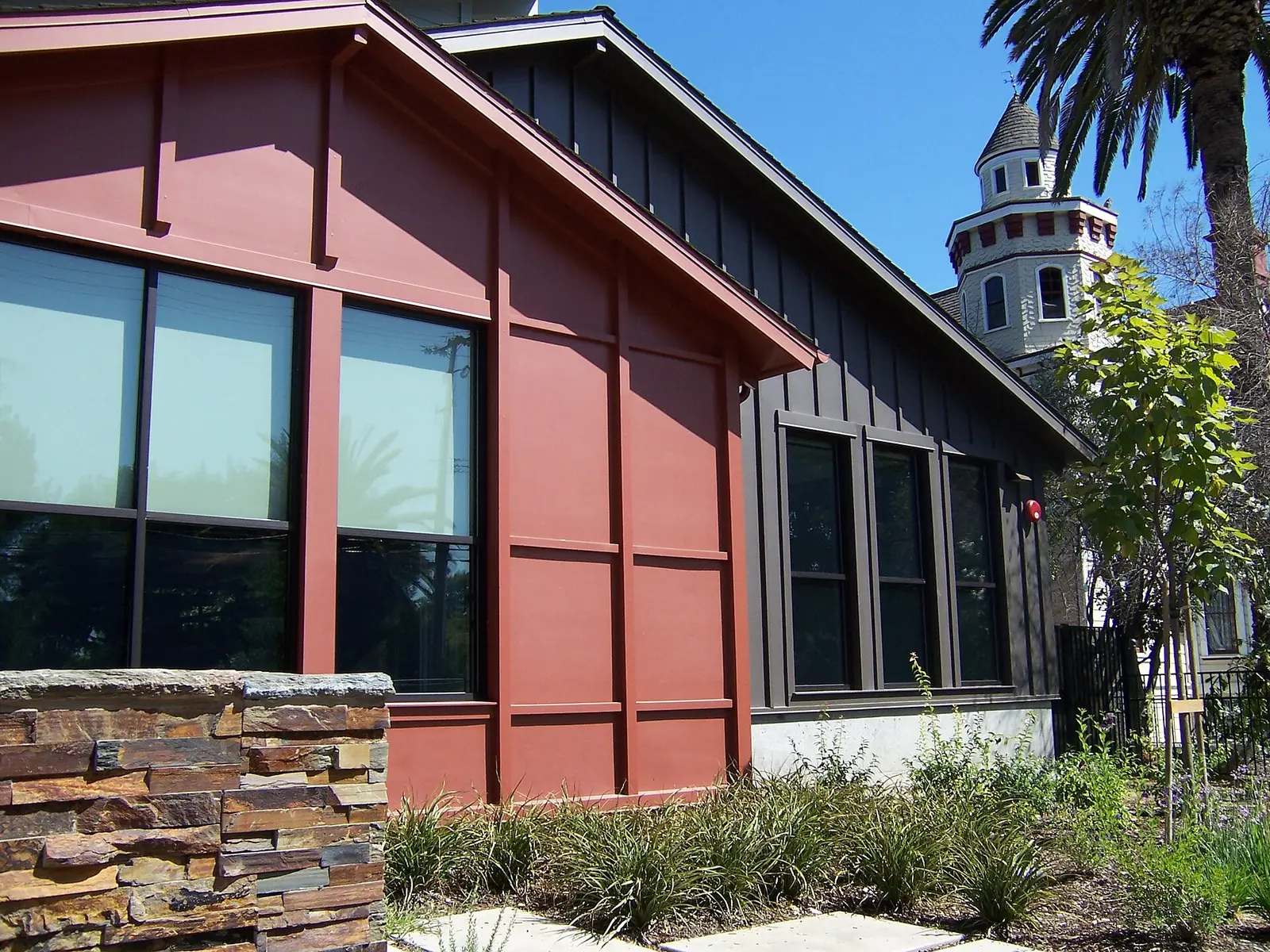
Fixing Willow Glen's plaster, stucco and old wood windows
Willow Glen ran its own affairs from 1927 until San Jose annexed it in 1936, and its streets still mix Victorians, Craftsman and Spanish Eclectic houses, Tudors and a few Eichlers. That spread of eras shapes the work: plaster next to drywall, wood windows that bind, stucco pulling away from trim, and palm debris in gutters.
Palm Haven was planted in 1913 with Mexican fan palms and Canary Island date palms at regular intervals, and those trees now stand around 100 feet tall and are protected as San José Heritage Trees. They shed fronds, fiber and fruit stalks onto the roofs below, and that debris packs into gutters and downspouts. Clearing gutters is a ladder job for a handyman and never involves the trees; anything done to the palms themselves is arborist work on a protected tree.
Three kinds of wall in one house
Willow Glen has houses in nearly every twentieth-century style, and plenty have been added onto since. A 1920s front room with lath-and-plaster walls can open into a later addition finished in drywall, and an Eichler down the street has wood paneling. Plaster cracks are filled with a setting compound that will not shrink away from the edges, loose plaster is reattached to the lath, and drywall seams are taped. Blending texture where old and new walls meet is most of the job. More about drywall and plaster repair
Wood sash windows that bind
The neighborhood's pre-war houses were built with wood sash windows and solid wood doors. Decades of paint layers, settling and seasonal swelling leave sashes painted shut, sash cords broken and doors rubbing at the head jamb. Most of it is repairable: cutting sashes free, restringing cords to their counterweights, planing and rehanging doors, and replacing worn hardware. That keeps the original wood in place, which matters in a neighborhood where the windows are part of what makes a house read as its era. More about door and window repair
Stucco gaps on Spanish-style houses
Willow Glen's Mission and Spanish Eclectic houses are stucco over wood framing, and the weak point is where that stucco meets wood: window casings, door frames and vents. As the wood moves and old caulk dries out, hairline gaps open that let winter rain run behind the stucco. Raking out failed caulk and resealing those joints with a flexible exterior sealant is handyman work. Wide or stair-step cracks in the stucco itself can point to movement and should be looked at by a contractor. More about weatherstripping, caulking and sealing
How the houses here are built
Single-family houses off Lincoln Avenue in styles from Victorian and Colonial Revival through Craftsman, Mission, Prairie, Spanish Eclectic and Tudor to Eichlers, plus custom and semi-custom homes. Palm Haven, laid out in 1913, is the best-known residence park.
Pre-war houses are wood-framed with lath-and-plaster walls and wood sash windows, and the Mission and Spanish Eclectic houses add stucco over the frame. Eichlers and later additions use drywall or wood paneling, so a single house can call for three different patching methods.
Dry summers and winter rain on the valley floor make wood doors and sashes swell in the wet months and shrink back by late summer, so a door that binds in January can rattle in August.
Good to know before a job in Willow Glen
Palm Haven is a conservation area
Palm Haven was laid out in 1913 by Eaton, Vestal and Herschband as a residence park, with Mission Revival pillars and lanterns at its entrances and a formally planted central plaza. It is a designated Historic Conservation Area in the City of San José, bounded by Riverside Drive, Bird Avenue and Coe Avenue, and its original palms are Heritage Trees. Interior repairs are unaffected by that status, but before changing windows, doors or anything visible from the street, check with the city's historic preservation staff.
A town that joined the city late
Willow Glen incorporated as its own city in 1927 to stop a Southern Pacific rail reroute, then voted 978 to 871 in 1936 to join San Jose and its sewer system. The land had been marsh between the Guadalupe River and Los Gatos Creek, full of willows, until a river channel was dug in 1860 to drain it for farming. That long, piecemeal build-out is why houses on one block can be decades apart in age and construction.
How a request works
Describe the job
A sentence and a photo or two is enough. It takes about a minute.
A local handyman gets in touch
By call or text, to ask what the photos don't show and give you a price.
You decide
Agree a time and price with the handyman directly, or don't. Requesting costs nothing.
Questions from Willow Glen homeowners
Can someone clear palm fronds out of our gutters in Palm Haven without touching the palms?
Yes. Gutter and downspout cleaning is done from a ladder at the roof edge and does not involve the trees at all. Pruning or removing fronds from the crown is arborist work, and because Palm Haven's original palms are San José Heritage Trees, they are protected by the city.
Our 1920s Spanish-style house has hairline gaps where the stucco meets the window trim. Is that a handyman job?
Resealing those joints is. The old caulk is cut out, the joint cleaned, and a flexible exterior sealant applied so rain cannot get behind the stucco. If the stucco itself shows wide cracks, stair-step patterns or bulging, have a contractor look first, since that can point to movement or hidden water damage.
Part of our house is original plaster and part is a later drywall addition. Can one person patch both?
Usually, yes. The skills overlap but the materials differ: plaster cracks take a setting-type compound and loose plaster may need reattaching to the lath, while drywall is taped and finished. The careful part is blending the texture where the two meet so the repair disappears once painted.
Is Willow Glen handled separately from the rest of San Jose?
Willow Glen is part of San Jose, and requests are welcome from anywhere in the neighborhood, from downtown Willow Glen on Lincoln Avenue to the streets near the Curtner and Tamien stations. It has its own page because its pre-war houses raise different repair questions from most of the city.