Fixing Gilroy houses, from Fifth Street to Uvas Creek
Gilroy averages almost eight days a year at 100°F or hotter, and the blocks around Fifth, Church and Eigleberry streets hold houses from the 1860s to the early 1900s. Sandy ground beside Uvas Creek turned soft in the 1989 earthquake, and the western hills carry fire-rated roof rules. Work runs from old trim and windows to heat-worn seals.
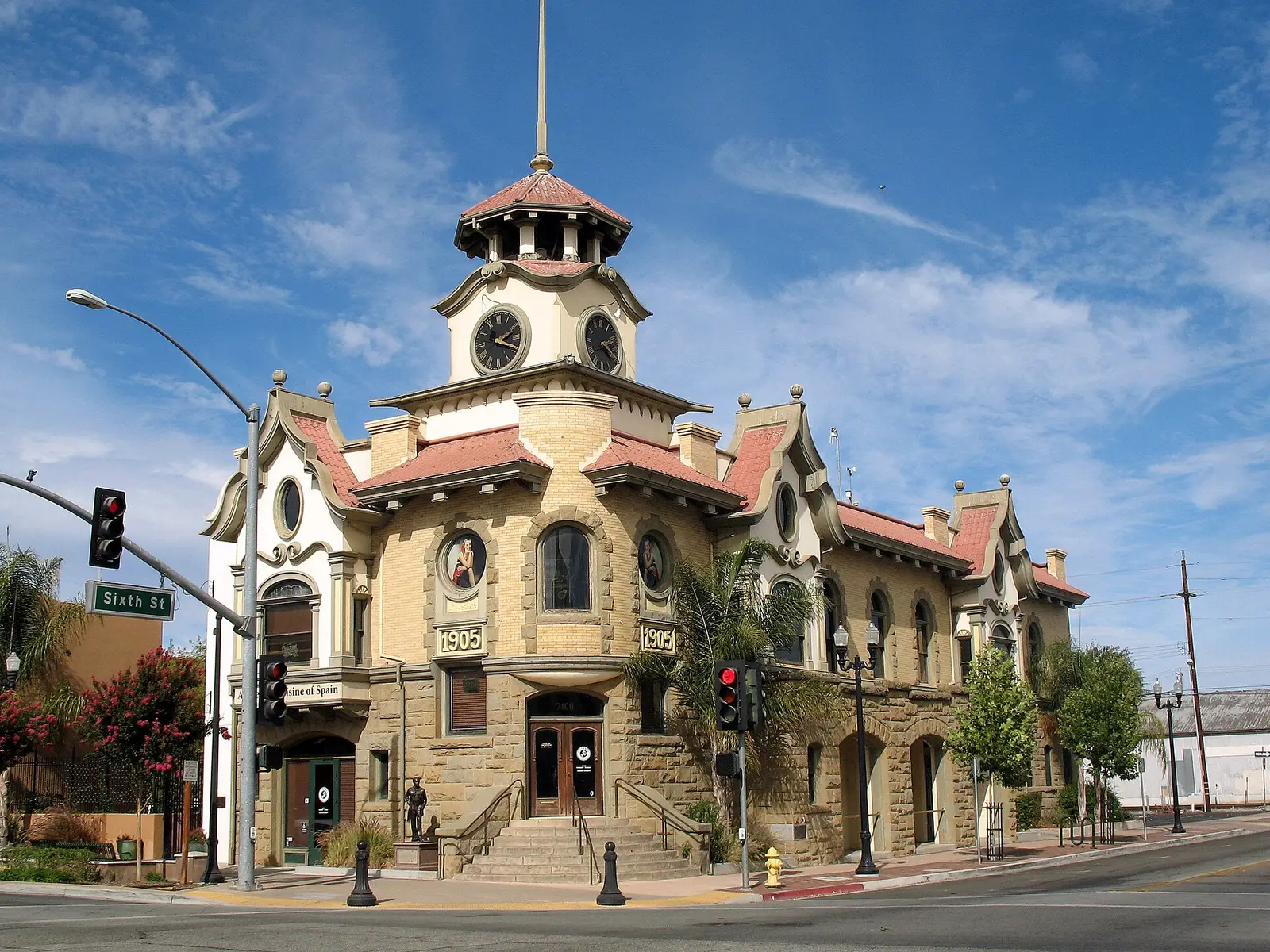
Gilroy's original City Hall, built in 1905, on Monterey Street. Photo: Sanfranman59, CC BY-SA 3.0, via Wikimedia Commons.
ZIP codes
95020, 95021
When the homes were built
1860s-1910s core; most houses 1970s onward
Main streets
Monterey Street, Fifth Street, Church Street, Eigleberry Street
Landmarks
Old City Hall, Gilroy Caltrain station, Christmas Hill Park
What homes in Gilroy need most
Trim on the city's listed houses
The city council's 1983 historic sites list includes the 1888 Eastlake Chesbro House on Church Street, the 1887 Italianate Graef House and 1903 Queen Anne Holloway House on Eigleberry Street, and Pioneer and Italianate houses from the 1860s along Fifth and Rosanna streets. On houses that old, porch posts, brackets, window casings and corner boards split and rot first. A good repair copies the surviving profile, splices in new wood only where the old is gone, and primes every cut end before it goes back up. More about carpentry, shelves and trim
Sash windows that stick in the heat
Wood sash windows in Gilroy's nineteenth-century houses get layers of paint that glue them shut, and months of dry heat open the joints and loosen the glazing. Freeing painted sashes, replacing broken sash cords, reglazing loose panes and consolidating a soft sill are all repairs. The standards the city points owners to for historic properties favor keeping and repairing original material over replacing it, which also keeps the house looking the way it did when it went on the list. More about door and window repair
Seals baked by 100-degree afternoons
With an average of 7.7 days a year at 100°F or hotter, rubber and foam seals age faster here than in the cooler cities up the valley. Door sweeps split, weatherstripping flattens, and caulk around window frames and trim shrinks away from the wood, letting hot air and dust in. Replacing sweeps and jamb seals, recaulking exterior joints and sealing the attic hatch are small jobs that make the house easier to cool. West-facing doors and windows usually need it first. More about weatherstripping, caulking and sealing
Gutters in the western hills
Gilroy's general plan identifies the hilly northern and western parts of the city as prone to wildfire and requires Class A fire-rated roofs on new construction and re-roofing west of Santa Teresa Boulevard and south of Mantelli Drive, and west of Rancho Hills Drive. A fire-rated roof still catches embers in gutters full of dry leaves. Cleaning gutters and roof valleys at the start of the dry season, and clearing debris from the ground next to the walls, costs little and removes the easiest place for a fire to start.
Cracks in houses near Uvas Creek
In 1989 the Loma Prieta earthquake turned the sandy soil along Uvas Creek soft and damaged homes nearby, and the city's community development director has said older homes east of the creek are less earthquake-proof. Wall and ceiling cracks in those houses are common. Cutting the crack open, taping it and filling with setting compound gives a repair that lasts longer than a surface skim. Mark the ends of the crack and date it first, so you can tell later whether it is still growing. More about drywall and plaster repair
How the houses here are built
Pioneer, Italianate, Eastlake and Queen Anne houses from the 1860s to about 1910 on Fifth, Church, Eigleberry and Rosanna streets near the old downtown; tract neighborhoods from the 1970s on, when Gilroy became a bedroom community for Silicon Valley; and later hillside and golf-course subdivisions such as Eagle Ridge.
The oldest houses are wood-framed, with milled trim, porches and wood sash windows. Where a house sits matters as much as its age: the city's general plan maps liquefaction hazard along Uvas Creek and Llagas Creek and small landslide areas in the steep northwestern and southwestern hills.
Summers are the hottest part of the job here: the average midsummer high is about 90°F, the record is 115°F from July 1972, and winter still brings about 16 nights a year at or below freezing.
Good to know before a job in Gilroy
The 1983 historic sites list
On August 15, 1983, the Gilroy City Council adopted a list of designated historic sites, marking which are also in the county Heritage Resource Inventory or on the National Register. Fifth Street has the most entries, among them the 1857 Christian Church, the 1860s Tuttle and Hoxett houses and the 1929 Wheeler Hospital. Owners of historic properties can apply for reduced property taxes through the city's Mills Act program; applications are accepted once a year in July, and each contract needs City Council approval.
Brick buildings and creek soils
Roughly 30 unreinforced red brick buildings still stand in Gilroy, some older than the 1906 earthquake that damaged downtown, and the city enforces a seismic safety article of its code for them. The 1989 quake forced major repairs to the 1905 Old City Hall on Monterey Street and damaged homes beside Uvas Creek. The general plan maps liquefaction hazard along Uvas and Llagas creeks, though most of the city lies outside the 100-year floodplain.
Two roof rules, drawn by street
Gilroy's roofing rule is set out by location rather than by fire map alone. New roofs and re-roofs west of Santa Teresa Boulevard and south of Mantelli Drive, or west of Rancho Hills Drive, must be Class A fire-rated; everywhere else the minimum is Class C. Re-roofing is a roofer's job, but the rule is worth knowing before buying replacement vents, flashing or gutter guards for a hillside house.
How a request works
Describe the job
A sentence and a photo or two is enough. It takes about a minute.
A local handyman gets in touch
By call or text, to ask what the photos don't show and give you a price.
You decide
Agree a time and price with the handyman directly, or don't. Requesting costs nothing.
Questions from Gilroy homeowners
Is my old house on Gilroy's historic sites list, and does that help pay for repairs?
The Planning Division publishes the list the City Council adopted on August 15, 1983, street by street, with most entries on Fifth, Monterey and Church streets. Owners of historic properties may be eligible for reduced property taxes through the city's Mills Act program. Applications are taken once a year, in July, and each contract must be approved by the City Council.
Our house is west of Santa Teresa Boulevard. What kind of roof does Gilroy require?
If it is also south of Mantelli Drive, or west of Rancho Hills Drive, the general plan requires a Class A fire-rated roof for new construction and re-roofing. Elsewhere in Gilroy the minimum is Class C. A roofer handles the roof itself; keeping gutters and valleys clear of dry leaves is the upkeep that goes with it.
We live near Uvas Creek and keep finding new wall cracks. Is it the ground?
It can be. The general plan maps liquefaction hazard along Uvas Creek, and sandy soil near its banks behaved like quicksand in the 1989 earthquake. Ordinary settling and seasonal drying cause cracks too. Patch them properly and record their length and date; if they keep reopening wider, have a structural engineer look before more cosmetic work.
What small repairs keep a Gilroy house cooler during a 100-degree week?
Close the gaps before adding cooling. Replace split door sweeps and flattened weatherstripping, recaulk around window frames, seal and insulate the attic hatch, and fix windows that no longer close tight. West-facing openings take the worst of the afternoon heat, so start there.
Checked against these public sources in September 2026. Rules change: confirm anything permit-related with the city or town of Gilroy before work starts.