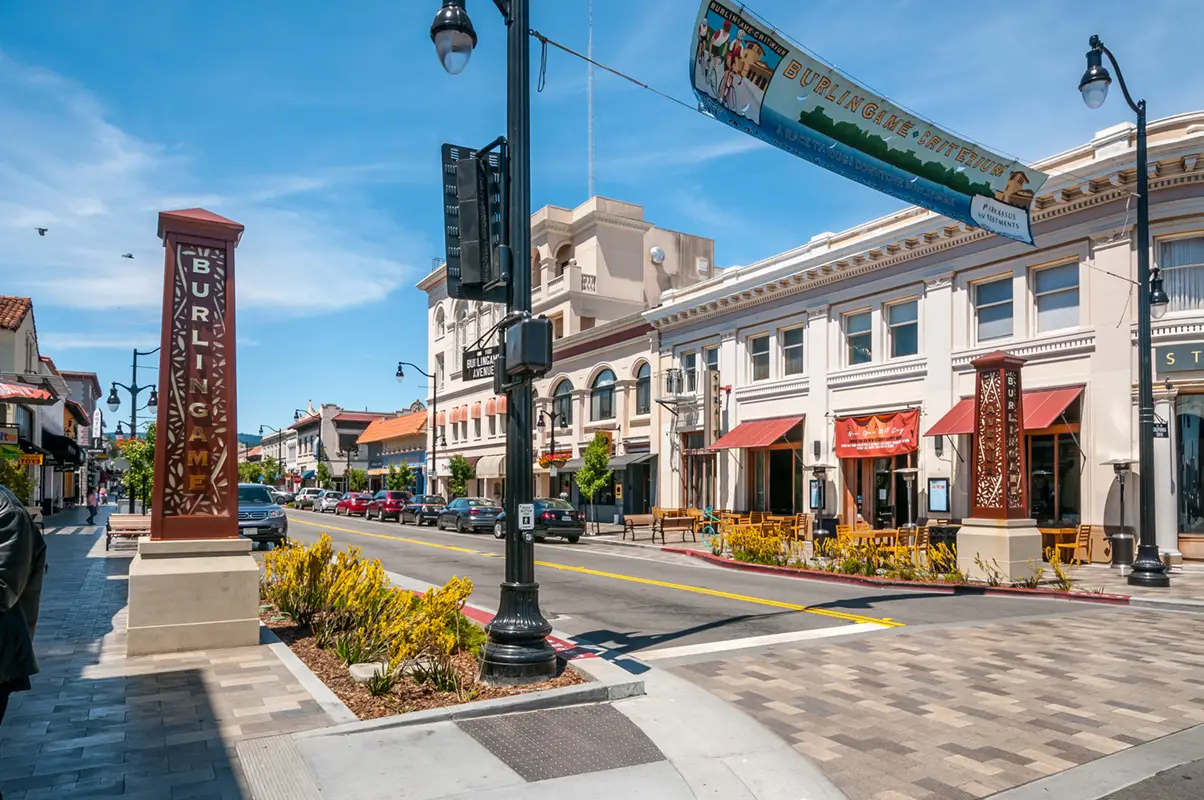
Repairs for Burlingame's pre-war houses and big trees
Burlingame's older blocks filled in after the 1906 earthquake sent San Franciscans looking for safer ground, and Easton Addition's 1910s to 1930s Tudors, Colonial Revivals and Craftsman houses still set the tone. They need wood windows freed and trim matched, while the city's protected trees fill gutters and complicate every new fence post.
Burlingame Avenue, Broadway, El Camino Real, California Drive
Landmarks
Burlingame Station, Howard-Ralston Eucalyptus Tree Rows, Kohl Mansion
What homes in Burlingame need most
Painted-shut and sticking wood windows
Double-hung wood windows in Burlingame's 1910s to 1930s houses are often painted shut, missing their sash cords, or bound up at the stops after decades of repainting. Cutting the paint seal, replacing broken cords, easing the stops and waxing the channels usually brings back a window that has not opened in years, without replacing it. Loose glazing putty and cracked panes in the original sash can be handled in the same visit, as can a heavy period front door that has dropped on its hinges and now drags at the threshold. More about door and window repair
Fence posts near protected trees
Burlingame protects every private tree with a trunk at least 14 inches in diameter, measured 54 inches above grade, and requires a permit before anyone cuts more than 15 percent of its roots or prunes more than 25 percent of it. Replacing a rotted fence post beside a big tree can easily cross that line. A careful repair reuses the old post holes where possible, hand-digs around roots instead of cutting them, and bridges over large roots with the fence frame. If a job would sever significant roots, talk to the city's Parks Division first. More about fence, deck and gate repair
Gutters under a century-old canopy
Burlingame has been named a Tree City USA every year since 1980, plants around 400 new trees a year, and has eucalyptus rows along El Camino Real planted in the 1870s. That canopy is much of the reason people live here, and it is also why gutters on older houses fill with leaves, bark strips and seed pods. Clearing gutters and downspouts before the winter rains, and checking that downspouts discharge away from the foundation, keeps water from backing up behind fascia boards and spilling against old wood siding.
Period trim, built-ins and picture rails
Houses from Easton Addition's 1920s building rush often keep their original built-ins, picture rails, crown moldings and wide window casings. When a section is damaged by a leak or an earlier remodel, the replacement has to match the old profile rather than come off a store rack. A handyman can patch in matching trim, re-glue and re-fasten loose built-in cabinet doors and drawers, and add shelving that follows the existing lines of the room. Photos of the molding profile help when you send the request. More about carpentry, shelves and trim
How the houses here are built
Single-family houses from the 1910s through the 1930s, including Tudors, Colonial and English Revivals and Craftsman bungalows, on the mostly flat grid of Easton Addition and the streets around downtown, with later neighborhoods such as the Mills Estate, annexed in 1954.
Houses of this era are wood-framed with double-hung wood windows, solid wood doors and site-built trim, and many still have plaster walls. Original sash, doors and moldings can usually be repaired rather than replaced, which keeps a house consistent with the rest of the street.
Weather here is mild year-round, so what wears on houses is winter rain arriving with leaf, bark and seed litter from mature street and yard trees.
Good to know before a job in Burlingame
How Easton Addition came to be
The neighboring town of Easton was annexed to Burlingame in 1910 and became Easton Addition. Its earliest subdivision map on file with the county dates from 1905 and covers the land from California Drive to El Camino Real, between Sanchez Creek and Broadway. Streetcar service arrived in 1913, but the real rush of house building came in the 1920s. That is why so many blocks share one era of windows, doors and trim, and why most houses have been through several rounds of repainting and partial remodels.
Living with the city's trees
The Howard-Ralston Eucalyptus Tree Rows along El Camino Real, planted between 1873 and 1876, are on the National Register of Historic Places, and John McLaren, head gardener for the Howard family, landscaped the road with elms and eucalyptus. Today the city keeps its own in-house tree crew and an online street tree inventory searchable by address. For homeowners the practical side is simple: a private tree 14 inches or more across is protected, removal needs a permit, and work near roots should be planned before the shovel goes in.
How a request works
Describe the job
A sentence and a photo or two is enough. It takes about a minute.
A local handyman gets in touch
By call or text, to ask what the photos don't show and give you a price.
You decide
Agree a time and price with the handyman directly, or don't. Requesting costs nothing.
Questions from Burlingame homeowners
Can the original double-hung windows in my Easton Addition house be saved?
In most cases, yes. Windows from the 1910s to 1930s were built to be repaired: broken sash cords can be replaced, painted-shut sash freed, stops eased and glazing putty renewed. Rot is usually limited to the bottom rail or sill and can be patched. Replacement is rarely the only option for a window that simply will not move.
Do I need a permit to replace a fence post next to a large tree in Burlingame?
The city's rule is about the tree, not the fence. If the trunk is at least 14 inches in diameter at 54 inches above the ground, a permit is required before cutting more than 15 percent of its roots. A repair that reuses old post holes and hand-digs around roots aims to stay well clear of that; if roots must be cut, ask the Parks Division first.
A leak damaged the trim in our 1920s Burlingame Tudor. Can new pieces match?
Often, yes. Many period profiles can be matched from existing millwork or assembled from two or three simpler moldings. Where a profile is unusual, a short section can be milled to match. Send photos and a measurement of the trim's width and depth with your request so the right material comes on the first visit.
How often should gutters be cleaned on a tree-lined Burlingame street?
At least once a year before the winter rains, and twice if the house sits under eucalyptus, oaks or other trees that drop through the year. Eucalyptus sheds bark strips that clog downspouts quickly. If water spills over the front of the gutter during a storm, it is overdue.
Checked against these public sources in September 2026. Rules change: confirm anything permit-related with the city or town of Burlingame before work starts.