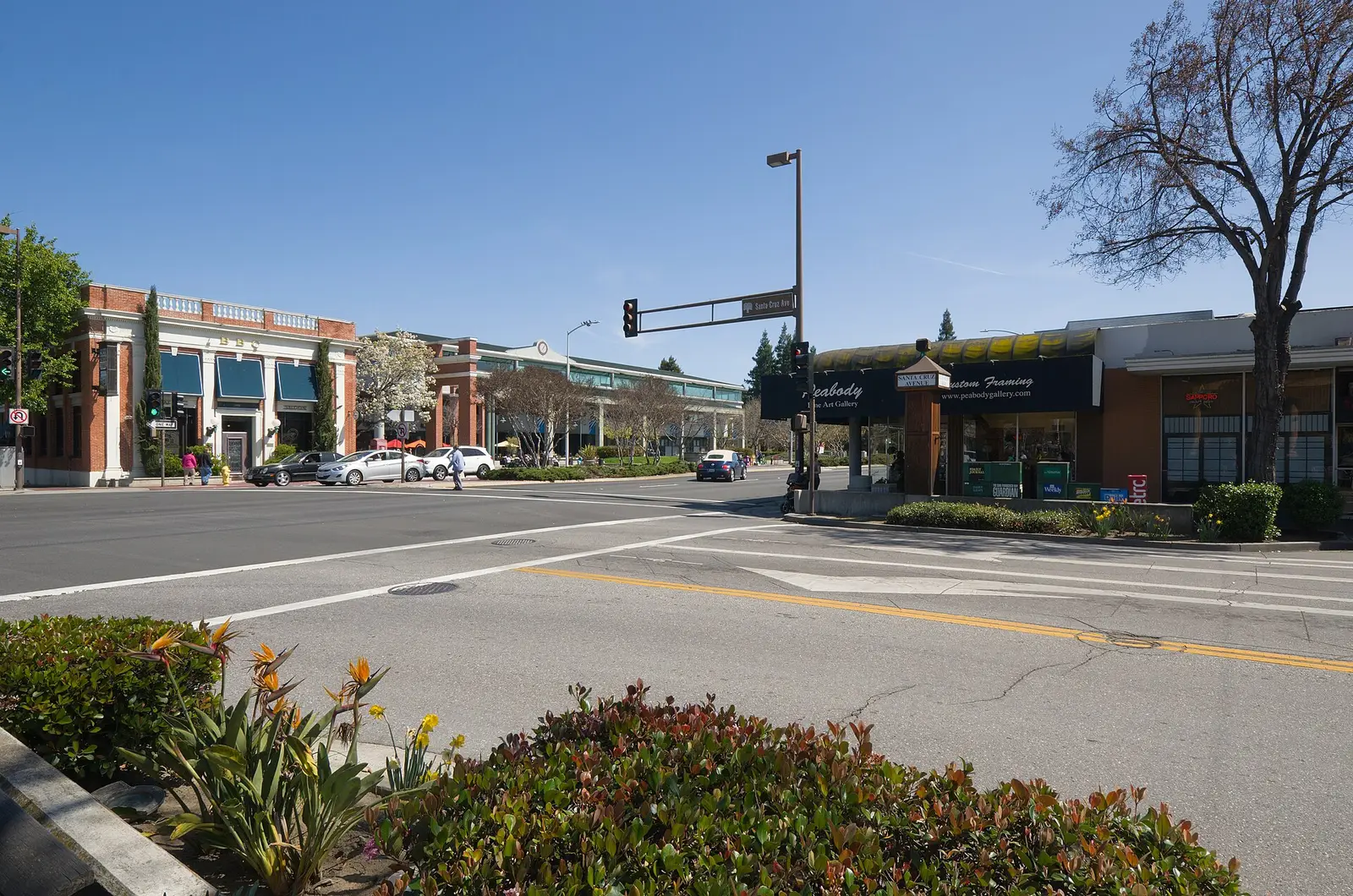
Menlo Park repairs around heritage trees and the creek
Two things shape repair work in Menlo Park: heritage trees, protected down to a 10-inch trunk for native oaks, and San Francisquito Creek, which flooded homes along its banks in February 1998 and threatened again on New Year's Eve 2022. That means lower-wall and floor repairs after water gets in, swollen doors, and fence work under big oaks.
When creek water or storm runoff gets into a house, the damage starts at the floor: drywall wicks water upward, and baseboards and the bottom of the wall stay wet behind the paint. In homes near San Francisquito Creek, the usual repair is to cut the wall out in a clean line above the wet zone, let the framing dry fully, and replace the lower section with new drywall, taped and textured to match. Where mold has grown inside the wall or water sat for days, a remediation company should clear it first. More about drywall and plaster repair
Baseboards and flooring that swelled
Laminate, engineered wood and the edges of hardwood floors swell and cup when water reaches them, and MDF baseboards soak up water and crumble. After a Menlo Park storm event, a handyman can pull and replace damaged baseboard and shoe molding, replace affected rows of floating or click-together flooring, and fit new transition strips at doorways. Solid hardwood that has cupped across a whole room, or a subfloor that stayed wet, needs a flooring contractor to assess and refinish or replace it. More about flooring repair
Exterior doors with swollen bottoms and jambs
Exterior doors at ground level take water first. The bottom rail of a wood door swells or delaminates, the lower jamb softens and the threshold loosens. The fix is to trim and seal the door's bottom edge, replace a rotted section of jamb or brick molding with new wood, reset or replace the threshold and add a fresh door sweep. In the Willows, where many houses date from the 1920s through the post-war years, original doors are often worth that repair rather than a replacement. More about door and window repair
Fences under heritage oaks
Oak limbs drop onto fences in winter storms, and big roots lift posts and rails over time. Menlo Park requires a permit to remove a heritage tree or prune more than a quarter of its crown or roots, so the repair has to work around the tree rather than through it. That means re-setting posts by hand-digging, bridging over large roots with the fence frame, replacing broken rails and pickets, and leaving any cutting of branches or roots to a certified arborist. More about fence, deck and gate repair
How the houses here are built
Bungalows, Craftsman houses and post-war ranches in the Willows, mid-1950s ranch houses and two-story apartment buildings in Linfield Oaks, and 1960s houses in Sharon Heights, built on part of a former 600-acre estate.
Most houses are wood-framed single-family homes, many under large oaks and redwoods. Near the creek, the parts of a house that have historically taken damage when water leaves the channel are the lowest ones: drywall and baseboards, finished floors and exterior door bottoms and jambs.
Heavy winter rain upstream can raise San Francisquito Creek quickly; in February 1998, fierce storms on top of king tides damaged about 1,700 properties across Menlo Park, East Palo Alto and Palo Alto.
Good to know before a job in Menlo Park
Heritage trees
Under Menlo Park's heritage tree ordinance, a native California oak counts as a heritage tree once its trunk reaches 10 inches in diameter, and most other species at 15 inches, both measured 54 inches above natural grade. Removing a heritage tree, or significantly pruning one, meaning removal of more than 25 percent of its crown or root system, requires a city permit, issued only for good cause. Pruning below that level does not need a permit. Plan fence, deck and path repairs so they avoid cutting roots under large trees.
The Willows and the Pope-Chaucer Bridge
The Pope-Chaucer Bridge, a 1940s structure, crosses San Francisquito Creek between the Willows in Menlo Park and Crescent Park in Palo Alto, and it has remained vulnerable despite two decades of talk about replacing it with a bridge that carries more water. The neighborhoods around it flooded in February 1998, and on December 31, 2022, water there neared capacity and flooding hit parts of both cities. The San Francisquito Creek Joint Powers Authority, formed after 1998, is working on replacing it.
How a request works
Describe the job
A sentence and a photo or two is enough. It takes about a minute.
A local handyman gets in touch
By call or text, to ask what the photos don't show and give you a price.
You decide
Agree a time and price with the handyman directly, or don't. Requesting costs nothing.
Questions from Menlo Park homeowners
Do I need a permit to cut back an oak branch hanging over my Menlo Park fence?
It depends on the tree and how much is cut. A native oak with a trunk of 10 inches or more is a heritage tree, and removing more than a quarter of its crown needs a city permit. Minor pruning below that threshold does not, but it is still best done by a certified arborist.
Water from the creek came into our Willows house. Which repairs can a handyman handle?
Once the house is dry and any mold has been professionally cleared, a handyman can replace lower drywall, baseboards and shoe molding, swap damaged rows of floating flooring, and repair swollen exterior doors and thresholds. Electrical outlets that were underwater need a licensed electrician, and cupped hardwood or a wet subfloor needs a flooring contractor.
We live near the Pope-Chaucer Bridge. What is worth doing before winter storms?
Handyman-level steps help with ordinary storm water, not a creek overflow: clear gutters and downspouts, make sure downspouts discharge away from the house, and replace worn door sweeps and threshold seals. Flood protection for the creek itself is the job of the San Francisquito Creek Joint Powers Authority and the city, so follow their storm alerts.
Can a new fence post go right next to a heritage oak in Menlo Park?
It can, if it avoids cutting significant roots. Removing more than 25 percent of a heritage tree's root system requires a permit, so posts should go into existing holes where possible, be hand-dug, and shift a few inches when a large root is in the way. For work close to the trunk, consult the city or an arborist first.
Checked against these public sources in September 2026. Rules change: confirm anything permit-related with the city or town of Menlo Park before work starts.