North Berkeley repairs on both sides of the 1923 fire line
The 1923 Berkeley fire destroyed 584 houses north of campus, and much of that ground was rebuilt in stucco and tile instead of wood siding and cedar shakes. North Berkeley's blocks now mix those 1920s stucco houses with wood-sided and shingled survivors, and the two need different care: sealing and tile-safe gutter work on one, siding repairs on the other.
When North Berkeley rebuilt after the 1923 fire, stucco replaced wood siding on many blocks. A century on, the weak point on those houses is the joint where stucco meets wood window frames, door casings and vents: hairline cracks and failed caulk let winter rain behind the wall. Raking out and resealing those joints with a flexible, paintable sealant, and filling small cracks before painting, is handyman work. Large bulging or hollow-sounding sections of stucco need a plastering contractor. More about weatherstripping, caulking and sealing
Gutters on clay tile roofs
The tile roofs that came in after 1923 are fire-resistant but fragile underfoot: a clay tile cracks easily if someone walks on it the wrong way, and a broken tile lets water under. Gutter cleaning on these houses should be done from a ladder at the eaves wherever possible, not by walking the roof. Tell us the roof is tile when you book, and mention any trees from the neighborhood's parks and creek corridors that drop into your gutters.
Shingle and siding repairs on houses the fire spared
The houses outside the 1923 burn kept their wood shingles and board siding, the materials the fire showed to be vulnerable, and many are well over a century old. Split shingles, cupped siding boards and rotted corner trim let water into the wall. A handyman can replace individual shingles and boards, weave new shingles into the existing courses, and match trim profiles so the repair blends with the original, rather than re-siding a whole wall. More about carpentry, shelves and trim
Steps and paths on sloping lots
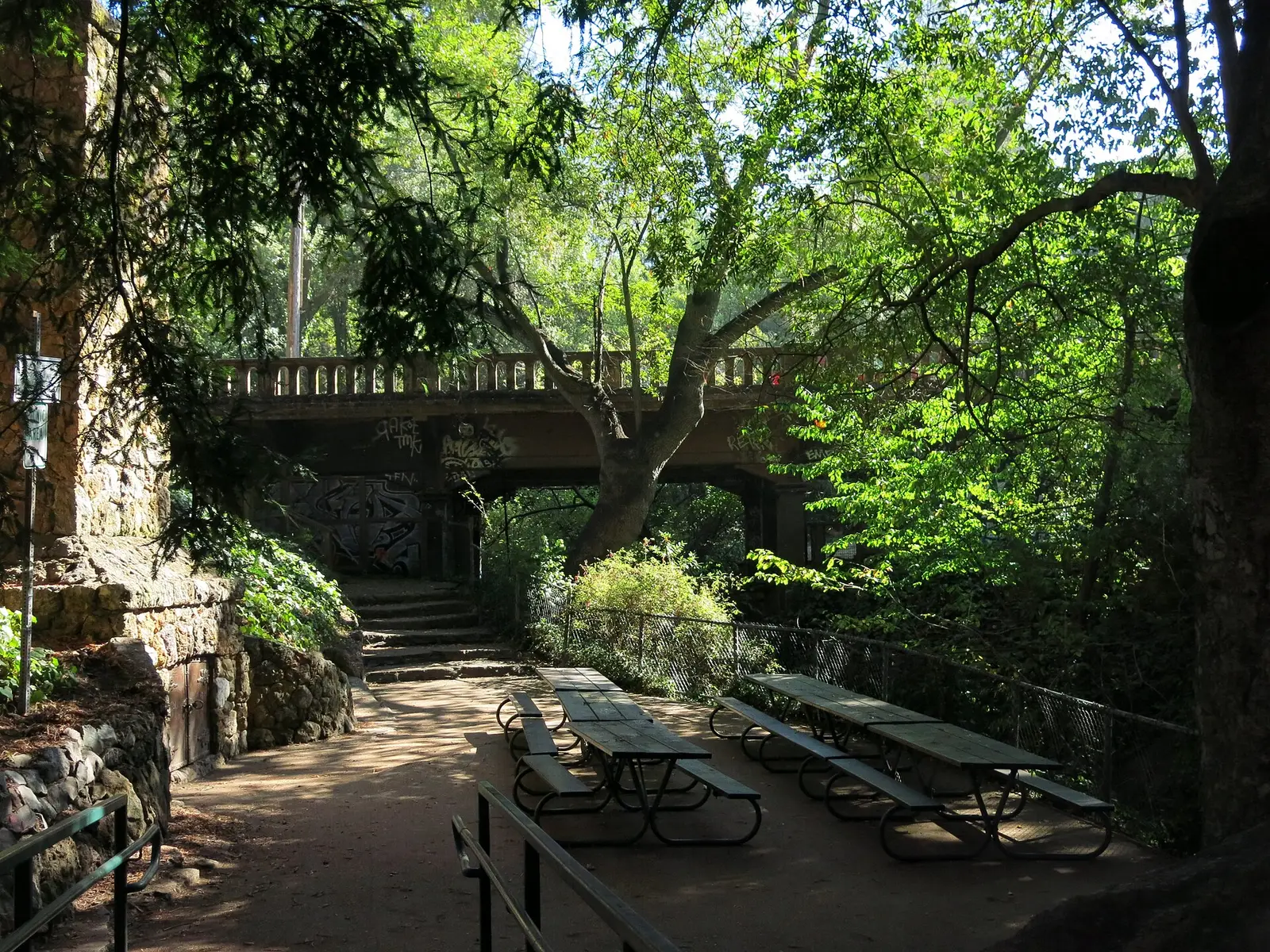
Above Shattuck Avenue the ground rises quickly toward the hills, as the terraced Berkeley Rose Garden on Euclid Avenue shows, and a house set above its street can be reached by a long run of outdoor steps. Wood steps rot at the stringers, brick and stone treads loosen, and handrails work free of their posts. Replacing treads, re-setting loose pavers, adding or re-anchoring handrails and rebuilding short wooden stair runs is handyman work; retaining walls holding back a slope are a contractor's job. More about fence, deck and gate repair
How the houses here are built
Stucco houses with tile roofs built after 1923 in the burned La Loma Park and Northside areas, wood-sided and shingled houses outside the burn, and the shops of the Gourmet Ghetto along Shattuck Avenue.
Post-fire houses are stucco over wood framing with clay tile roofs; the survivors are wood siding or wood shingle. Stucco tends to crack where it meets windows and doors and lets water in there, while wood siding and shingles need individual boards and shingles replaced as they split.
The 1923 fire was pushed downhill from Wildcat Canyon by a strong, dry wind and was stopped near Shattuck Avenue only when a cool breeze came in off the bay.
Good to know before a job in North Berkeley
Where the 1923 fire burned
The fire began in the chaparral and grassland of Wildcat Canyon east of the ridge on September 17, 1923. The first house lost was at 125 Shasta Road. It swept through La Loma Park and Northside, burned toward the campus edge at Hearst Avenue, and reached Shattuck Avenue north of University Avenue before the wind shifted. About 640 structures were destroyed, including 584 houses. Hydrants ran dry, and burning shakes lifted off roofs spread it. A house inside that area is likely a post-1923 rebuild.
Getting to the Gourmet Ghetto blocks
North Berkeley's business district, the Gourmet Ghetto on Shattuck Avenue, holds Chez Panisse, the Cheese Board Collective and Acme Bread, and draws steady visitors. North Berkeley BART sits just outside the neighborhood's western edge, and the downtown station is closer to the Shattuck shops. Street parking near those shops is the hardest to find, so mention a driveway or a side-street spot when a job needs tools or materials carried in.
How a request works
Describe the job
A sentence and a photo or two is enough. It takes about a minute.
A local handyman gets in touch
By call or text, to ask what the photos don't show and give you a price.
You decide
Agree a time and price with the handyman directly, or don't. Requesting costs nothing.
Questions from North Berkeley homeowners
How can I tell whether my North Berkeley house was rebuilt after the 1923 fire?
Location and materials are the best clues. The fire burned La Loma Park and Northside, from the hills down to Hearst Avenue and Shattuck Avenue north of University Avenue. A stucco house with a clay tile roof inside that area is very likely a 1920s rebuild, and a wood-sided house inside it was probably built after the fire too. The year built in county assessor records helps confirm it.
Can someone clean the gutters on our clay tile roof without breaking tiles?
Yes, if the work is done from a ladder at the eaves rather than by walking across the tiles, which crack easily. Mention the tile roof and the height of the gutters when booking so the right ladder and approach are planned. Any tiles already cracked are worth pointing out before work starts.
Is North Berkeley the same as Northbrae or Thousand Oaks?
Not quite. North Berkeley is sometimes defined to include Northbrae and Thousand Oaks, but all three are distinct local neighborhoods. Handymen who work in North Berkeley generally cover all three, so name your street and nearest cross street when you request a job.
A few shingles on our pre-fire house have split. Do we need to re-side the wall?
Usually not. Individual shingles can be removed and new ones woven into the existing courses, then stained or painted to match. Re-siding only makes sense if most of the shingles on the wall are failing or the sheathing behind them is damaged.