Repairs for Danville homes between Las Trampas and Mount Diablo
Danville's houses arrived in two waves: its first sizable tracts, Montair and Cameo Acres, in 1947, then a population boom in the 1970s and 1980s after the freeway reached town in 1964. Summers bring four to six months without rain, drying out exterior wood, paint and caulk, and older houses near Hartz Avenue fall under town heritage rules.
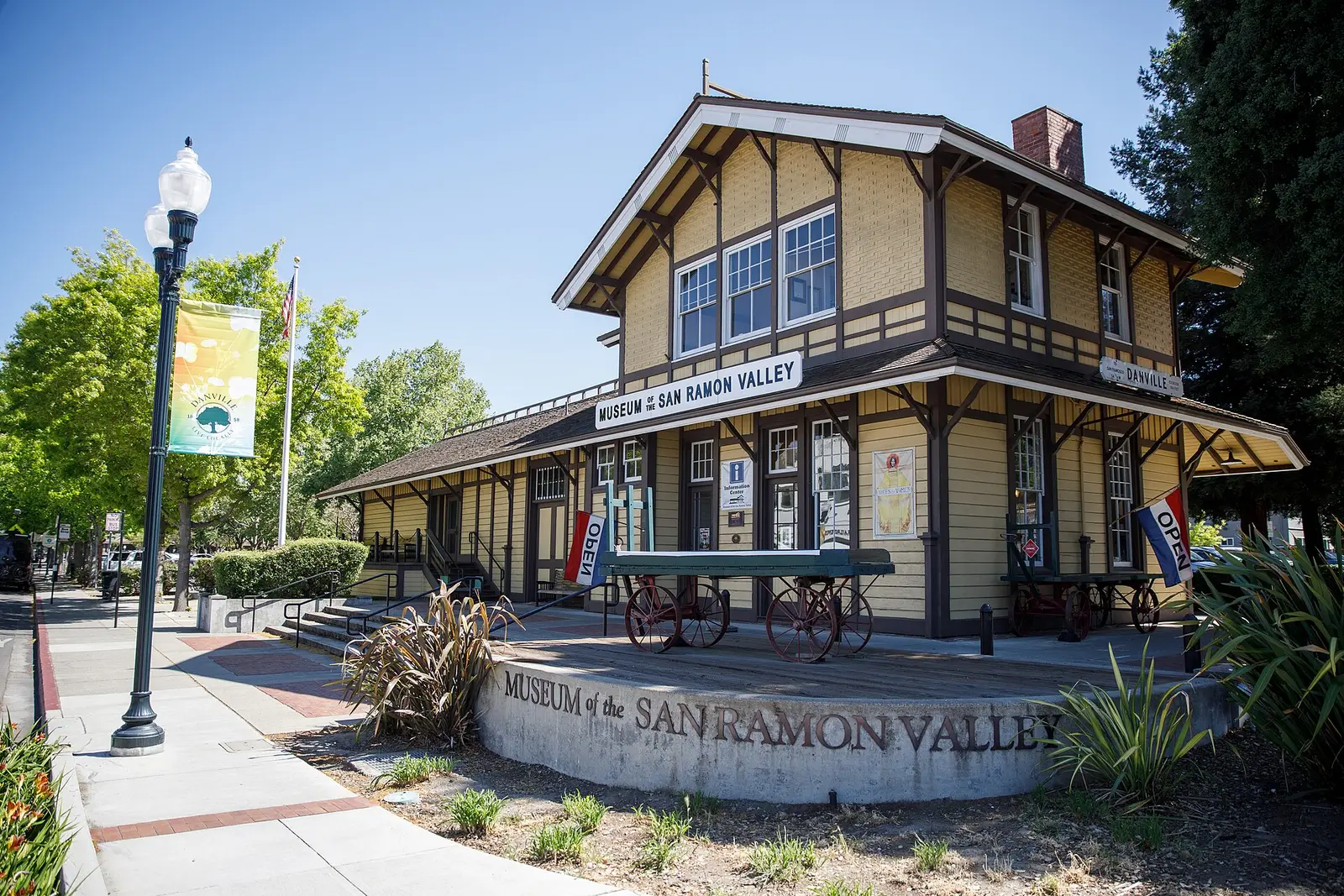
The old railroad depot, now the Museum of the San Ramon Valley, in Danville. Photo: Agwatkin, CC BY-SA 4.0, via Wikimedia Commons.
ZIP codes
94506, 94526
When the homes were built
1947-1990
Main streets
Hartz Avenue, Front Street, Diablo Road, Camino Tassajara
Landmarks
Museum of the San Ramon Valley, Eugene O'Neill National Historic Site (Tao House), Iron Horse Regional Trail
What homes in Danville need most
Original doors and windows in Montair and Cameo Acres
Danville became a residential suburb in 1947, when Montair and Cameo Acres, its first sizable housing tracts, were built. Those houses are now nearly eighty years old, and some still have original doors and windows. Sash that binds, wood doors swollen tight in winter and loose in summer, and worn hinges and latches are the typical complaints. Planing and rehanging doors, replacing hardware and repairing wood sash keeps the originals working. More about door and window repair
Trim and siding on older houses near Hartz Avenue
Downtown moved to Hartz Avenue after John Hartz sold land for the 1891 railroad depot and subdivided lots east of the station, shifting the town's center away from Front Street. The older buildings around that core call for like-for-like carpentry: replacing a rotted trim board or window casing with a matching profile, rebuilding porch steps and railings, and patching siding without changing its look. If the building is a designated heritage resource, talk to the town before altering anything on the exterior. More about carpentry, shelves and trim
Fences and gates after a rainless summer
Four to six months without rain, followed by winter storms, is hard on wood fences. Boards shrink apart and split, nails and screws back out, and posts that stayed dry all summer soften at soil level once the rains return. Replacing split boards and rails, resetting leaning posts, and rehanging sagging gates in the dry season heads off a winter blowdown. More about fence, deck and gate repair
Resealing after hot days and cool nights
Danville's summer pattern of hot days and cool nights makes exterior caulk and weatherstripping expand and contract every day for months. By fall, joints around windows, trim and door frames have opened and door sweeps no longer seal. Recaulking exterior joints, replacing weatherstripping and sweeps, and sealing gaps where pipes and vents pass through siding are best done in late summer or early fall, while the wood is dry and before the first storm. More about weatherstripping, caulking and sealing
How the houses here are built
Early post-war tracts such as Montair and Cameo Acres, large subdivisions from the 1970s and 1980s spread across the valley, and a handful of older buildings around Hartz Avenue and Front Street; gated Blackhawk to the east is unincorporated but shares the 94506 ZIP code.
Wood-frame houses on a narrow valley floor between Las Trampas Ridge and the Diablo Range. The long dry season shrinks and checks exterior wood, so fascia, trim, doors and fence boards on sunny sides age faster than anything indoors.
Long summers of hot days and cool nights, with four to six months between rains, dry exterior wood and caulk out well before the winter storms arrive.
Good to know before a job in Danville
Heritage resources and design review
The town has 21 designated heritage resources, 20 structures and one tree, with seven more properties on its survey list and 21 identified as potential resources. The Heritage Resource Commission reviews development proposals under the Historic Preservation Ordinance and the Design Guidelines for Heritage Resources, and a Historic Design Review Committee reviews proposed alterations to designated resources. Owners can qualify for incentives including a Mills Act contract that reduces property taxes.
Blackhawk and Diablo are not part of the town
Blackhawk, east of Danville along Camino Tassajara, is an unincorporated, gated planned community in Contra Costa County whose first phase opened in 1979 and was completed in the early 1990s, with two 18-hole golf courses. It shares the 94506 ZIP code with Danville. Diablo, 2.5 miles east-northeast of town, is another unincorporated community with its own 94528 ZIP. For both, county rules apply rather than the town's, and Blackhawk's gates mean entry has to be arranged before a job.
How a request works
Describe the job
A sentence and a photo or two is enough. It takes about a minute.
A local handyman gets in touch
By call or text, to ask what the photos don't show and give you a price.
You decide
Agree a time and price with the handyman directly, or don't. Requesting costs nothing.
Questions from Danville homeowners
My house is on Danville's heritage resource list. What does that mean for repairs?
Alterations to designated heritage resources go to the town's Historic Design Review Committee, under the Historic Preservation Ordinance and design guidelines. Contact the town before any exterior change. Repairing in kind, such as matching a trim profile or rebuilding a porch step the same way, keeps the character intact and is the kind of work a handyman does well.
Is Blackhawk part of Danville?
No. Blackhawk is an unincorporated, gated community in Contra Costa County east of the town, even though it shares Danville's 94506 ZIP code. That means county rather than town rules, plus the community's own standards. For a job there, arrange gate access in advance and mention the Blackhawk address when you describe the work.
I live in one of Danville's 1947 tracts. What tends to need work?
Houses in Montair and Cameo Acres are approaching eighty years old. Original wood doors and windows that bind or rattle, worn hardware, fence posts rotted at soil level, and exterior trim dried out by long summers are the usual list. Say whether the house has been remodeled, since original and replaced parts call for different fixes.
When is the best time for exterior wood repairs in Danville?
During the dry season, and ideally late summer or early fall. With four to six months between rains, wood is dry enough to take paint, stain and caulk, and repairs are finished before winter storms test them. Fence and gate work done then also avoids digging in saturated soil.
Checked against these public sources in September 2026. Rules change: confirm anything permit-related with the city or town of Danville before work starts.