Repairs for Hayward's post-war tracts and fault-zone blocks
Hayward grew fivefold in the 1950s, from 14,000 people to 72,000, as tract houses replaced orchards, and the Hayward Fault creeps through its downtown every year. Most houses are post-war wood-frame tracts, with older Victorian and Craftsman houses around Upper B Street. Jobs that come up: doors out of square, recurring wall cracks, fences and worn fixtures.
Mission Boulevard, Foothill Boulevard, B Street, Jackson Street
Landmarks
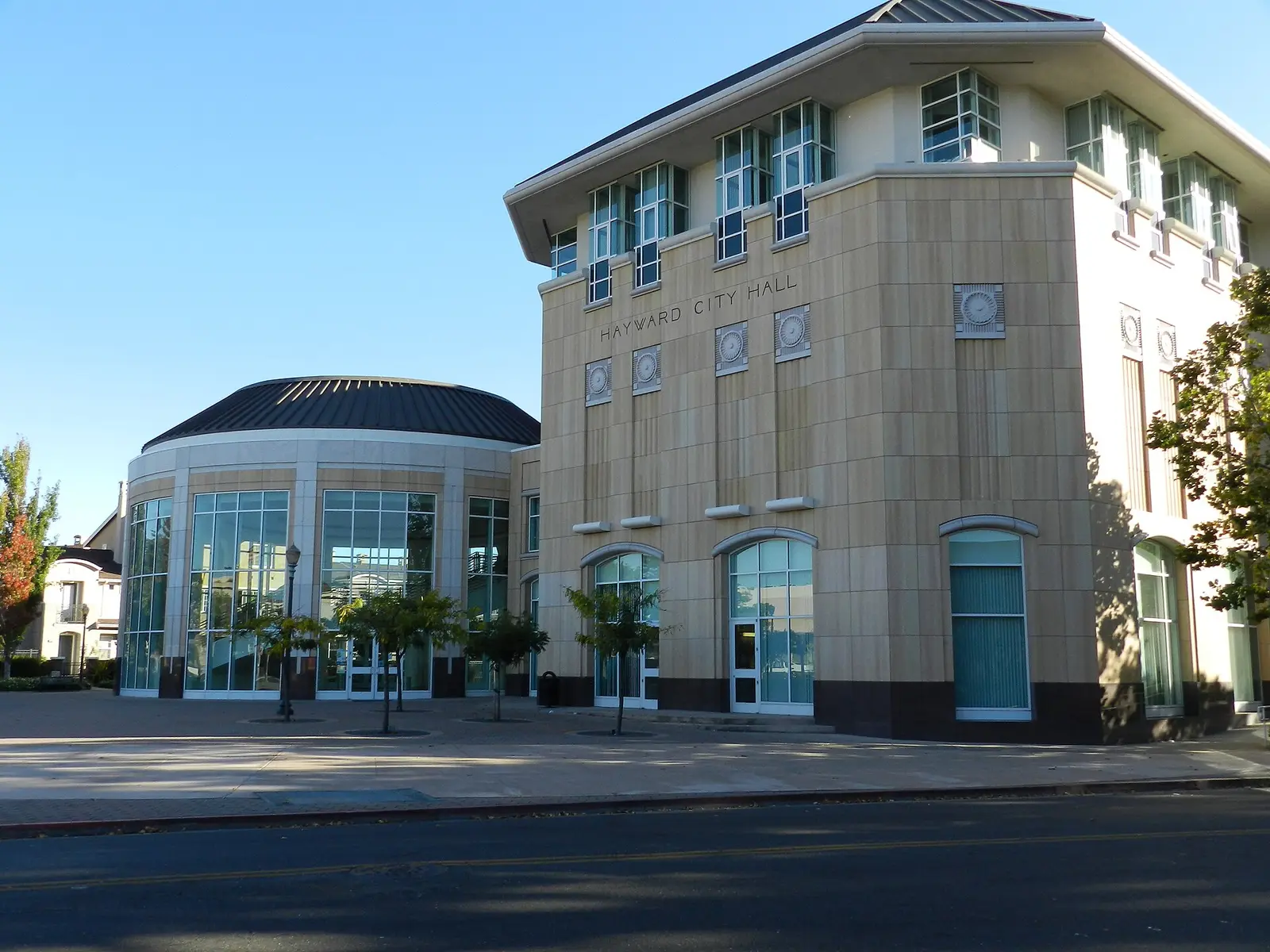
Old Hayward City Hall, Hayward Japanese Gardens, California State University, East Bay
What homes in Hayward need most
Doors that drift out of square
The Hayward Fault creeps roughly 4.6 millimeters a year along the Hayward-to-Fremont stretch, and downtown, half a block east of Mission Boulevard, the curbs of nearly every cross street are offset by a few inches. In houses on or near the trace, that slow movement can pull door frames out of square, so latches stop catching and gaps open along the top. Planing, rehanging, moving a strike plate or shimming hinges fixes the symptom. If a door keeps drifting season after season, have a structural engineer look first. More about door and window repair
Wall cracks that come back
Cracks running from the corners of doors and windows are common in any 1950s tract house, and in Hayward some reopen after patching because the ground under the house is still moving. A repair with mesh tape and setting compound holds up better than a skim of spackle. Before patching, photograph and date the crack with a tape measure in the frame: a crack that comes back wider each year is information a structural engineer will want, not just a cosmetic flaw. More about drywall and plaster repair
Fence lines that no longer line up
Fault creep does not stop at curbs. Along the trace it offsets fence lines and bends straight runs, and ordinary post rot adds to it in backyards that have had the same fence for decades. A fence that has kinked sideways can often be straightened by resetting the affected posts and reframing a section, instead of replacing the whole run. On a lot near the fault, expect a straightened line to slowly shift again over the years. More about fence, deck and gate repair
Fixtures in houses from the 1950s boom
Between 1950 and 1960 Hayward went from 14,000 residents to 72,000, so many of its bathrooms and kitchens date from that single burst of building and have been updated piecemeal since. Dripping faucets, running toilets, corroded supply lines and shutoff valves that no longer close are the common repairs. Those are parts swaps a handyman can finish in one visit; if the trouble is in the pipes inside the wall, that is a plumber's job. More about faucet, toilet and fixture repair
How the houses here are built
Most neighborhoods are single-family tracts from the 1950s through the 1970s, built on former farms and orchards; Upper B Street keeps Victorian, Mediterranean and Craftsman houses near downtown; the Hayward Hills rise east toward Cal State East Bay.
Post-war tract houses are wood-frame with stucco or wood siding and drywall inside. Near the fault trace, slow creep bends curbs and can crack foundations, which shows up indoors as doors drifting out of square and cracks returning at the corners of openings.
The flatlands run west to the bay shoreline and the hills rise to the east, and the Mediterranean pattern of dry summers and wet winters swells and shrinks exterior wood every year.
Good to know before a job in Hayward
Where you can see the fault move
Creep cracked the walls of the old Hayward City Hall on Mission Boulevard so badly that the building was abandoned. Offset curbs line B Street, a 1930s wall in Memorial Park has been visibly shifted, and the curb at Rose and Prospect streets had moved more than 7.5 inches before it was replaced with a wheelchair ramp in 2016. The 1868 rupture on this segment, estimated at magnitude 7.0, destroyed or badly damaged nearly every building in the Hayward area.
From Apricot City to tract city
By 1950 Hayward had 14,000 people and called itself the Apricot City, home to Hunt's Cannery. After the war, tract developers including Oliver Rousseau and David D. Bohannon built housing on the orchards, and most neighborhoods came out of the 1950s, 1960s and 1970s. Tracts built from repeating plans tend to share the same weak points, so when you describe a problem, mention your neighborhood and the year the house was built.
How a request works
Describe the job
A sentence and a photo or two is enough. It takes about a minute.
A local handyman gets in touch
By call or text, to ask what the photos don't show and give you a price.
You decide
Agree a time and price with the handyman directly, or don't. Requesting costs nothing.
Questions from Hayward homeowners
My house is a few blocks from Mission Boulevard and the doors keep sticking. Is it the fault?
It can be. The fault's creeping trace runs through downtown near Mission Boulevard, and houses on or close to it can shift slowly out of square. Seasonal swelling and ordinary settling cause the same symptom, though. A door can be adjusted either way, but if doors and cracks keep getting worse year after year, a structural engineer should look before more cosmetic fixes.
Is it worth straightening a fence that the fault keeps pushing out of line?
Often, yes. Resetting a few posts and reframing one section costs far less effort than a new fence and restores the line for years. On a lot directly on the trace, the fence will creep again, so choose repairs that are easy to redo, such as screwed rather than nailed rails, instead of rebuilding in concrete.
Where in Hayward can I see fault creep for myself?
Walk downtown a half block east of Mission Boulevard, where cross-street curbs are offset by inches, and look at B Street. The old City Hall on Mission Boulevard was abandoned because creep cracked its walls, and a 1930s wall in Memorial Park has been shifted. The famous Rose and Prospect curb was replaced in 2016.
Can cracks in a house near the Hayward Fault be patched, or is that pointless?
They can be patched, and a good patch with mesh tape and setting compound lasts. What matters is whether the crack is stable. Photograph and measure it first; if it returns wider after a year, stop patching and have a structural engineer assess the foundation. A handyman handles the cosmetic side, not the cause.
Checked against these public sources in September 2026. Rules change: confirm anything permit-related with the city or town of Hayward before work starts.