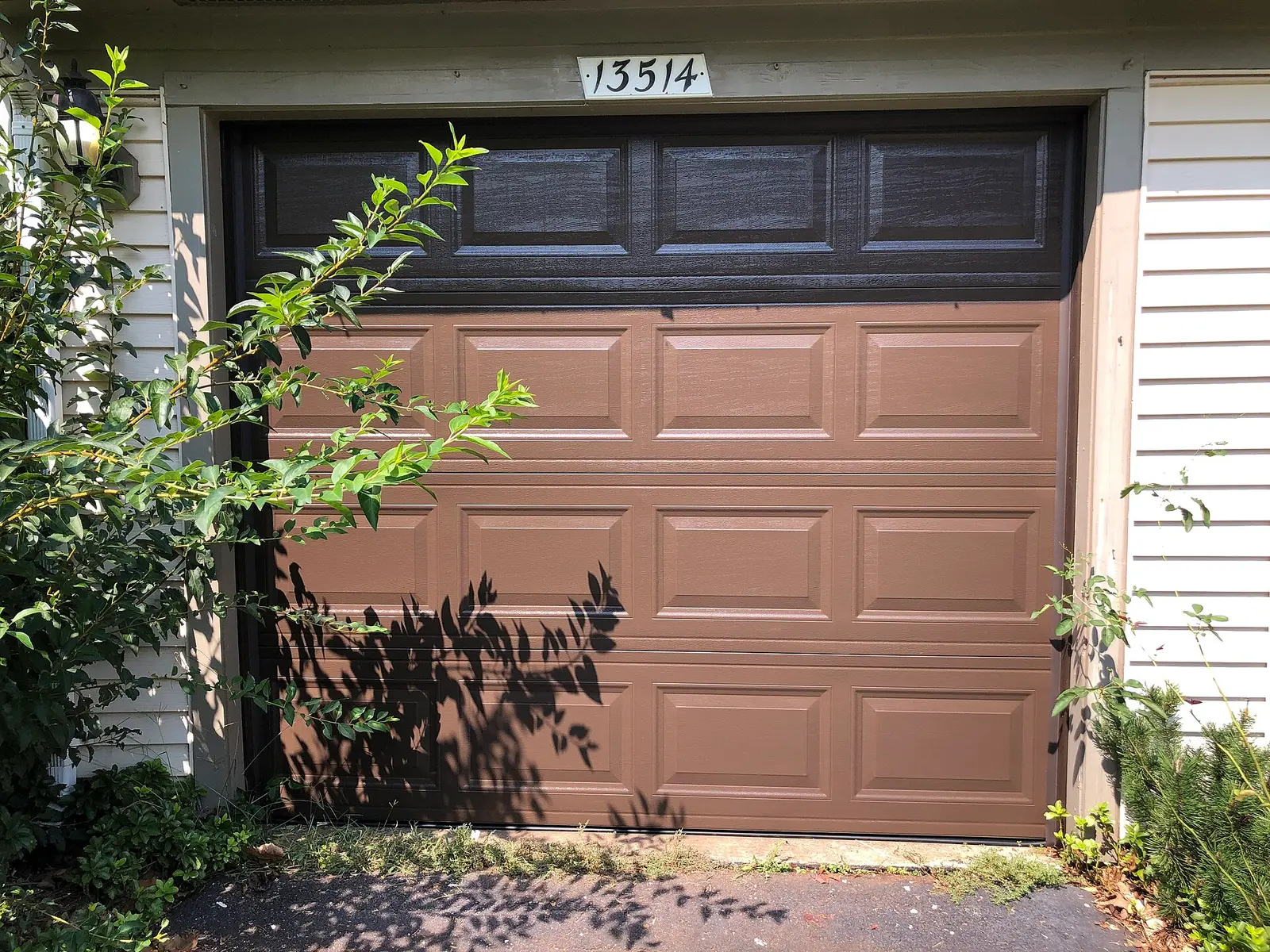
Does replacing a garage door in Burlingame need design review?
No. Design review applies to new houses, most second-story additions and new garages attached to a house, and the code says altering or reconstructing an existing attached garage that stays a garage is not subject to it. Whether the job needs a building permit is a question for the Building Division, which takes applications for every permit type online through eTRAKiT.
Our front garage has one wide door. Can we switch to two single doors?
Yes, and the city's guidebook favors it: where a garage faces the street, it asks for doors split to single-car width. If the attached garage is ever rebuilt, two single doors also ease the front setback, from 35 feet for a two-car garage to 25 feet side by side, or 20 and 25 feet staggered. The code's minimum widths are 8 feet for one car and 16 for two, so confirm how a pair is measured.
How big must our garage be to count as the covered parking space?
Each required space needs a clear interior of at least 10 by 18 feet and seven feet of headroom to the lowest projection on the ceiling, behind a door at least 8 feet wide for one car. A single-family house needs two off-street spaces, one of them covered, and covered spaces may not be stacked in tandem, so check shelving or equipment against those dimensions before a remodel.
We live in Burlingame Hills. Does the City of Burlingame issue our permits?
No. Burlingame Hills is unincorporated San Mateo County, and the county's Planning and Building Department reviews and inspects projects that need building permits in unincorporated areas. The area's sewers are run by the county's Burlingame Hills Sewer Maintenance District, formed in 1935, and the city's zoning code, including its garage setbacks and door widths, does not govern your lot.
Who can act if an installer puts in an opener without a battery backup?
Under Health and Safety Code Section 19891, a case can be brought by the local building department, by the affected consumer or by the district attorney, and the civil penalty is counted for each opener out of compliance. If the consumer brings the case, the penalty is paid to the consumer; if the agency does, it goes to the agency to offset its costs.