Electrical Gilroy

Gilroy electrical work, from a torque-checked panel to off-grid solar

Gilroy's 2025 code amendments shape electrical work before the first wire is pulled. New services go underground because of the area's high winds, the main disconnect stays on the first floor, and new buildings get a concrete-encased ground. On a panel upgrade, the inspector checks the lugs with a torque wrench and leaves a compliance label, and PG&E restores power only once that label is in place.

Panel reconnection
PG&E restores power once the inspector's compliance label is on
New electrical services
Underground, under Ordinance 2025-06, adopted August 18, 2025
Inspection booking
72 hours out, through the GO Permit portal
Electricity supplier
Silicon Valley Clean Energy; PG&E delivers it
  • Free to request, no obligation to hire
  • Up to five local pros who take this work can reply
  • Rules on this page checked against 16 public sources, October 2026
Gilroy's original City Hall, built in 1905, on Monterey Street
Gilroy's original City Hall, built in 1905, on Monterey Street. Photo: Sanfranman59, CC BY-SA 3.0, via Wikimedia Commons.

Permits and local rules

Three Gilroy documents behind the inspection card

  1. Ordinance 2025-06, Electrical Code amendments

    Adopted August 18, 2025, with the 2025 codes, the ordinance makes three local changes to the Electrical Code. Section 230.2(F) requires every new electrical service to be underground, and in existing residential areas with overhead lines it requires undergrounding when four or more dwelling units are developed or redeveloped. Section 230.70(A)(4) puts the main service disconnect on the building's first-floor level, for emergency access in an area of high seismic activity. Section 250.50(A) requires a concrete-encased electrode in all new buildings, with its connection kept away from the main service equipment.

    City of Gilroy, Ordinance 2025-06 (opens in a new tab)
  2. Main Service Panel Upgrade Checklist

    The handout has the contractor check the proposed location against PG&E's Green Book, mark the PG&E point of interconnection on the site plan, list the main breaker and bus ratings being removed and installed, and show the grounding electrodes and the bonding of water and gas piping. Arc-fault breakers go on new 15- and 20-amp, 120-volt circuits, every circuit is labeled, and multiwire circuits get handle ties. Final inspection confirms smoke and carbon monoxide alarms, which a signed owner affidavit can satisfy.

    City of Gilroy Building Division (opens in a new tab)
  3. SolarAPP+ and the forms that travel with it

    A city building permit is required for a rooftop solar system of up to 38.4 kW, with no separate planning or fire review, and eligible systems can be permitted instantly through SolarAPP+. The submittal still carries a smoke detector and carbon monoxide self-certification, because the Residential Code requires both alarms when a permit covers an addition, alteration or repair valued at more than one thousand dollars. It also carries a water-conserving plumbing fixture self-verification, the form the city uses for exterior jobs such as an electrical service upgrade.

    City of Gilroy Building Division (opens in a new tab)

State license for this work: C-10 Electrical. Look up a contractor's license on the CSLB website (cslb.ca.gov).

Free, no obligation. Next, add your details in the request form.

The work

Gilroy requests that come with a city handout

  1. A Level 2 charger in the garage

    The city's charging station guidelines require an electrical permit for a Level 2 charger, with a single-line diagram, an Article 220 load calculation that includes the charger, and photographs of the main panel and any subpanels. Even a new 120-volt receptacle for a Level 1 charger needs a permit. Every panel the charger relies on must be free of hazards; violations found have to be corrected by a licensed contractor. Mounting the unit on a garage side wall, out of the car's path, avoids the need for a protective bollard.

  2. Re-roofing under existing solar panels

    Gilroy's residential policy splits this into two permits. A C-39 roofer, a B contractor or an owner-builder holds the re-roof permit, but a C-39 roofer may not remove and reinstall the solar system; that takes a C-46, C-10, A or B contractor. Any change to the system along the way, such as a new layout, more modules, a different inverter or a panel upgrade, needs plans and its own review, and the homeowner signs a re-roofing clearance form before the permit issues.

  3. Going off the grid

    Guidelines revised in December 2025 let the Building Official or Community Development Director approve standalone solar, battery and generator systems case by case for new dwellings and accessory structures. Only a C-10, C-46 or B contractor with NABCEP certification may install one. The design must meet the worst-case winter day, the battery bank must hold at least three days of autonomy, the system needs an exterior disconnect, and the plans state whether a generator is portable with a manual transfer switch or fixed with an automatic one.

  4. Getting ready for a heat pump water heater

    The city's Pre-Wire guidance suggests adding an outlet within 3 feet of the existing water heater while an electrician is already on site, on either a dedicated 240-volt, 30-amp circuit or a dedicated 120-volt, 20-amp one, and it recommends the 240-volt circuit for households of four or more or homes with three or more bedrooms. The same page notes that a house with existing air conditioning will likely need no change to its electrical service to take a heat pump.

  5. Outdoor lights and stray cords

    Gilroy amended its property maintenance code so that no unobstructed beam of exterior lighting may be directed outward from a site toward a residential use or the public right-of-way, matching a zoning code guideline. The same ordinance lets the code official order corrections wherever an electrical system endangers occupants, naming inadequate service, improper fusing, too few outlets, deterioration and extension cords used as permanent wiring.

Free request

Describe the electrical job once. Local pros who take work in Gilroy reply by call or text.

  • No fee to request, and no obligation to hire
  • You agree scope and price with the pro you choose
  • Photos help them quote without a first visit

Get quotes for electrical work in Gilroy

Two short steps. A local pro who takes this work calls or texts you back.

To send a request, call or text (415) 449-8213.

Free to request, and you agree the scope and price with the person you hire before work starts. In California, a job over $1,000 in labor and materials, or one that needs a building permit, must be done by a contractor licensed by the CSLB in the right class. Ask for the license number and check it at cslb.ca.gov.

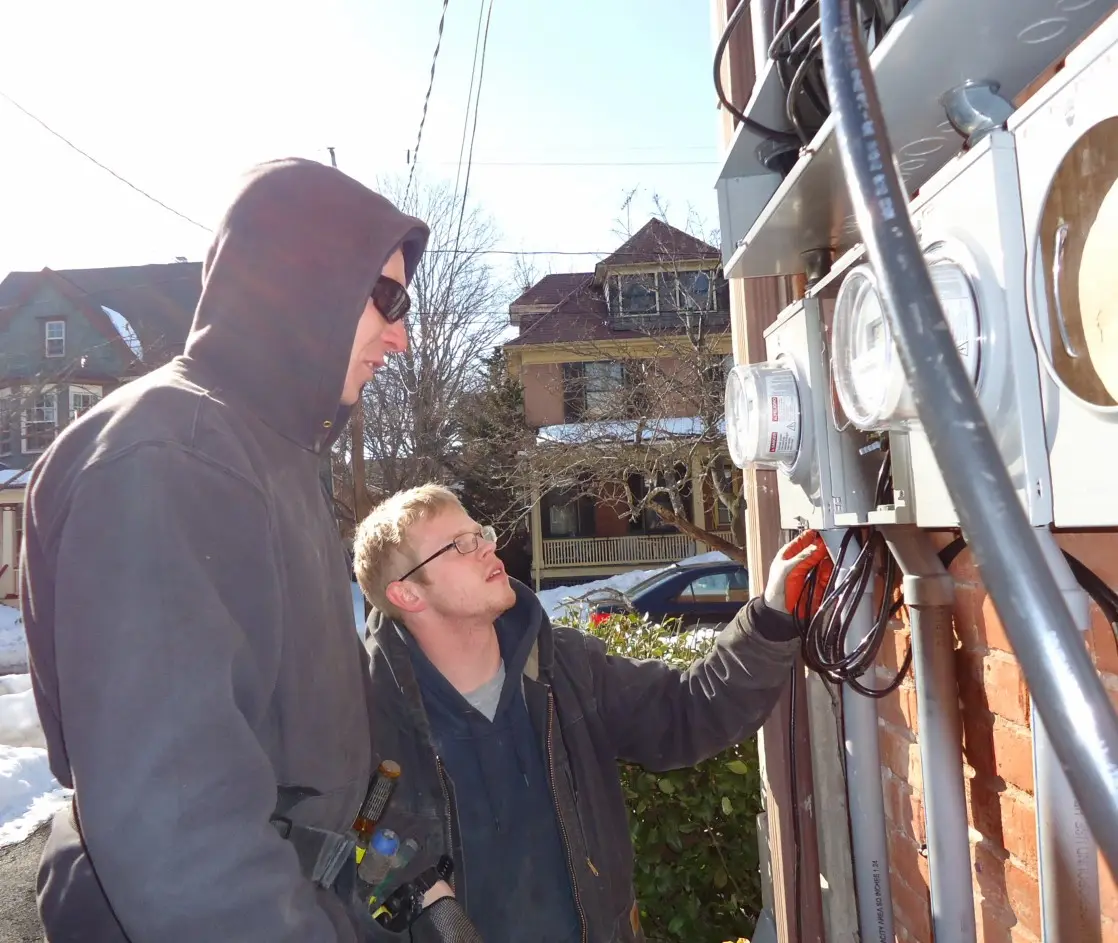
Electricians inspecting the electrical panels and meters on a multifamily house
Electricians inspecting the electrical panels and meters on a multifamily house. Photo: Tomwsulcer, CC0, via Wikimedia Commons.

The houses here

Victorian blocks, 1970s tracts and soil that wears out ground rods

Gilroy's oldest houses stand near downtown: the council's 1983 historic sites list includes an 1885 Neo-Classic house and an 1887 Italianate on Eigleberry Street and an 1890s Eastlake on Church Street. Most of the rest came after the 1970s, when the city turned into a bedroom community for Silicon Valley, followed by hillside subdivisions. Two local conditions run through the city's electrical amendments. The Building Division requires a soil report for all new construction because of expansive soils, and the ordinance calls for a concrete-encased electrode in new buildings because ground rods may deteriorate in local soils. It cites high winds as the reason new overhead services are no longer allowed.

Questions

Gilroy questions about panels, chargers and solar

Why won't PG&E turn our power back on after the Gilroy panel swap?

In Gilroy, PG&E restores power to a new or upgraded service panel only once the city inspector has verified the connections with a torque wrench and affixed a label of compliance. The city's checklist adds that it is not responsible when PG&E fails to reconnect because a contractor did not pass inspection, so a failed rough electrical inspection can keep the house without power until the correction is approved.

Does a Level 1 charger in a Gilroy garage need a permit?

The city's guidelines say a Level 1 charger plugs into a standard 120-volt receptacle, and that installing a new receptacle for it takes a permit and a single-line diagram. A Level 2 charger needs an electrical permit, inspections and a load calculation that includes the charger, and the application asks for photographs of the main panel and any subpanels.

Our roofer says he'll take the solar panels off and put them back. Is that allowed in Gilroy?

No. Under the city's re-roofing with solar policy, a C-39 roofing contractor cannot remove and reinstall a solar system. That work belongs to a C-46 solar contractor, a C-10 electrical contractor, an A general engineering contractor or a B general building contractor, with its own permit if the system is modified, while the roofer holds the re-roof permit.

Can a new house in Gilroy run entirely on solar, batteries and a generator?

Possibly. The city's off-grid guidelines, revised in December 2025, consider standalone systems case by case for new dwellings and accessory structures, with approval from the Building Official or the Community Development Director. The system must be sized for the worst-case winter day, carry at least three days of battery autonomy and have an exterior disconnect, and the applicant must show it can supply the total calculated load.

Does Gilroy make us remove the old furnace when a heat pump goes in?

Yes. The city's amended property maintenance code says that when new mechanical equipment is installed and the old equipment is no longer in use, the old equipment must be removed, openings in walls, floors or ceilings repaired and painted, and its electrical circuits and gas lines properly abandoned and inspected. Ask the installer whether the abandoned circuit work is in the quote.

How far ahead should we book a Gilroy electrical inspection?

Gilroy’s Building Division books inspections 72 hours out and may charge a reinspection fee when one is cancelled on the day or missed. On a panel upgrade that lead time decides how long the house sits without power, because PG&E reconnects only after the inspector has checked the lugs with a torque wrench and attached the compliance label. Book the rough electrical and service inspections before the shutdown date is fixed.


Free, no obligation. Next, add your details in the request form.

Before you hire

Ask a Gilroy electrician these before work starts

  • On a panel upgrade, ask who books the city inspections and how the 72-hour lead time fits the PG&E disconnect date.
  • For a charger, ask for the Article 220 load calculation and single-line diagram the city's guidelines require, with the charger counted.
  • If solar sits on the roof being replaced, confirm that a C-10, C-46, A or B contractor, not the roofer, moves it.
  • For an off-grid system, ask who installs it; Gilroy accepts only a C-10, a C-46 or a B contractor with NABCEP certification.
  • Look up the license on the CSLB site and confirm the C-10 Electrical classification is active.

Electrical work in Gilroy? Tell us what you see.

One request reaches local handymen and contractors who take this work. The Handyman SF connects you with them; it does not do the work.

HandymanNow for handymen Work in Gilroy? Get job leads by text. Pick your trades and areas, take only the jobs you want. No subscription. Start getting leads HandymanNow for homeowners Get the HandymanNow app. Send a request with photos, message your handyman and follow them on the way. Download the app

HandymanNow app

Fix it faster. Find work faster.

Homeowners send a job with photos and follow their handyman on the map. Handymen get local jobs by text and take only the ones they want.

Call WhatsApp (opens WhatsApp) Free quote