Pressure washing Newark

Washing a Newark driveway when the gutter runs to The Lake or the Bay

Newark's code bans any discharge to its storm drains that is not entirely stormwater, and washing a driveway or a house is not on its list of exceptions. A wash job here is therefore planned around where the water ends up: collected for the sanitary sewer once Union Sanitary District has been asked, or hauled away. Since October 8, 2026, the Alameda County Water District's permanent ordinance has also barred washing paved areas in a way that causes excessive runoff.

  • Free to request, no obligation to hire
  • Up to five local pros who take this work can reply
  • Rules on this page checked against 15 public sources, October 2026
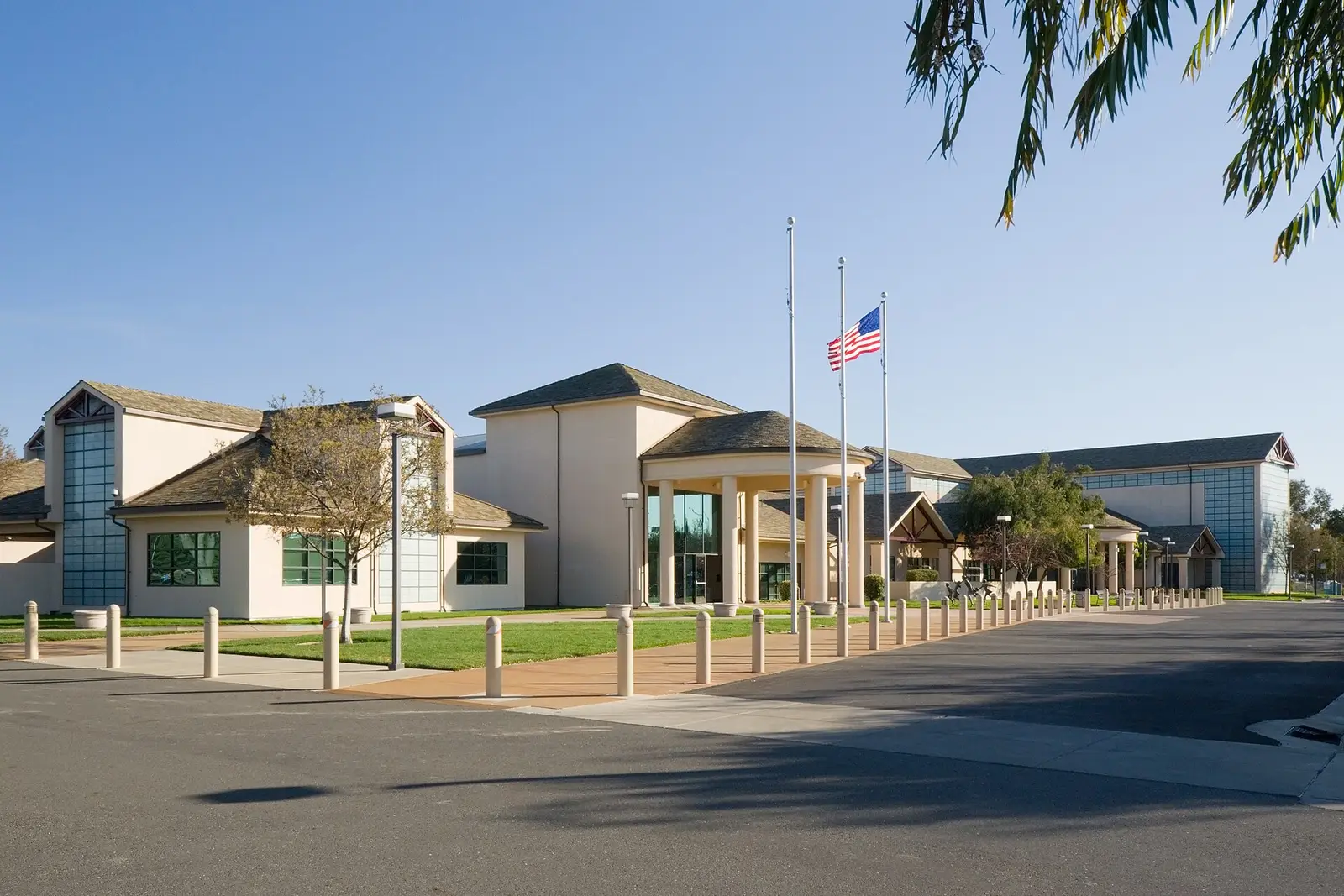
The Silliman Activity and Family Aquatic Center in Newark
The Silliman Activity and Family Aquatic Center in Newark. Photo: LPS.1, CC0, via Wikimedia Commons.

How pressure washing work goes in Newark

The ordinances a Newark wash job has to satisfy

  1. Newark's stormwater ordinance, Chapter 8.36

    Section 8.36.070 prohibits any non-stormwater discharge to the city storm sewer system, which the chapter defines to include streets, curbs, gutters, catch basins and storm drains. Section 8.36.080 lists the flows exempted when properly managed, among them landscape irrigation, air conditioning condensate and individual residential car washing; surface cleaning and power washing are not named. Section 8.36.110 requires anyone whose activity may put pollutants into the system to follow the pollution-prevention practices adopted by regional agencies. A violation is an infraction; after a third conviction under the same provision, later violations within twelve months may be charged as misdemeanors.

    Newark Municipal Code, Chapter 8.36 (opens in a new tab)
  2. The county program's surface cleaning sheet

    The Clean Water Program's Tips for Surface Cleaning and Power Washing says wash water must stay out of storm drains because they flow to creeks and San Francisco Bay with no treatment. It names possible sewer discharge points, interior sinks, toilets, floor drains and plumbing cleanouts, and says the local wastewater agency must be contacted before using them; for Newark, the sheet lists Union Sanitary District. Wash areas are contained with gravel bag berms, wattles or mats, and the water moved with a wet-vac or a small pump and hose.

    Alameda Countywide Clean Water Program (opens in a new tab)
  3. ACWD Ordinance 2026-01 on wasteful water use

    Adopted on October 8, 2026, it replaced the district's 2008 ordinance and applies whatever the drought status. Customers may not use water to wash sidewalks, walkways, driveways, patios, parking lots or other hard-surfaced areas in a way that causes excessive runoff or waste, and hoses used to wash vehicles and machinery need shutoff nozzles. The prohibitions give way only as far as an immediate health and safety need requires. Water in the district's purple pipes counts as potable under the ordinance too.

    Alameda County Water District (opens in a new tab)

State license for this work: C-61/D-38 Sand and Water Blasting, C-33 Painting and Decorating. Look up a contractor's license on the CSLB website (cslb.ca.gov).
Free request

Describe the pressure washing job once. Local pros who take work in Newark reply by call or text.

  • No fee to request, and no obligation to hire
  • You agree scope and price with the pro you choose
  • Photos help them quote without a first visit

Get quotes for pressure washing work in Newark

Two short steps. A local pro who takes this work calls or texts you back.

To send a request, call or text (415) 449-8213.

Free to request, and you agree the scope and price with the person you hire before work starts. In California, a job over $1,000 in labor and materials, or one that needs a building permit, must be done by a contractor licensed by the CSLB in the right class. Ask for the license number and check it at cslb.ca.gov.

Free, no obligation. Next, add your details in the request form.

The work

Four surfaces, and where each rinse is allowed to go

  • An oil-spotted driveway

    The Alameda Countywide Clean Water Program, of which Newark is a member, starts with dry methods: rags or cat litter on the oil, then a sweep or vacuum, with the used absorbent bagged for the trash. If water is still needed, use as little as possible and no soap where the job allows. Driveway wash water is contained and either sent to the sanitary sewer or hauled off-site. Where heavy oil builds up on an area that is rarely cleaned, the program suggests routing the water through an oil/water separator after a talk with the wastewater agency.

  • The public sidewalk in front of the house

    Newark puts the sidewalk on the person living behind it. Section 8.36.110 requires the occupant, or the owner when nobody lives there, to keep a paved sidewalk in front of the property free of dirt and litter as far as practicable, and forbids sweeping it into the gutter or the street; sweepings go in the garbage. The same logic applies to a wash crew working the walk: grit loosened by the wand is swept up and bagged, not rinsed toward the curb inlet.

  • Siding or trim before a repaint

    The Clean Water Program sorts building exteriors by what is on them. Glass, steel, or paint known to be lead-free washed without soap: block the storm drains, then send the water to the sanitary sewer or haul it away. Paint that may contain lead or mercury: block the drains, collect every drop, pump it to a tank, and discharge it to the sewer or dispose of it as hazardous waste after checking the wastewater authority's rules. On a pre-1978 Newark house, the second case is the safer assumption until the paint is tested.

  • White bloom on brick or block

    Efflorescence, the chalky salt that blooms on masonry planters, chimneys and garden walls, is often lifted with an acid wash. The county program treats that rinse as its own category: block the storm drain, collect the water, and test it. Only when its pH reads between 6 and 10 may it be pumped to a tank and released to the sanitary sewer, and then only within the wastewater authority's requirements. A crew that brings acid should bring a pH test as well.

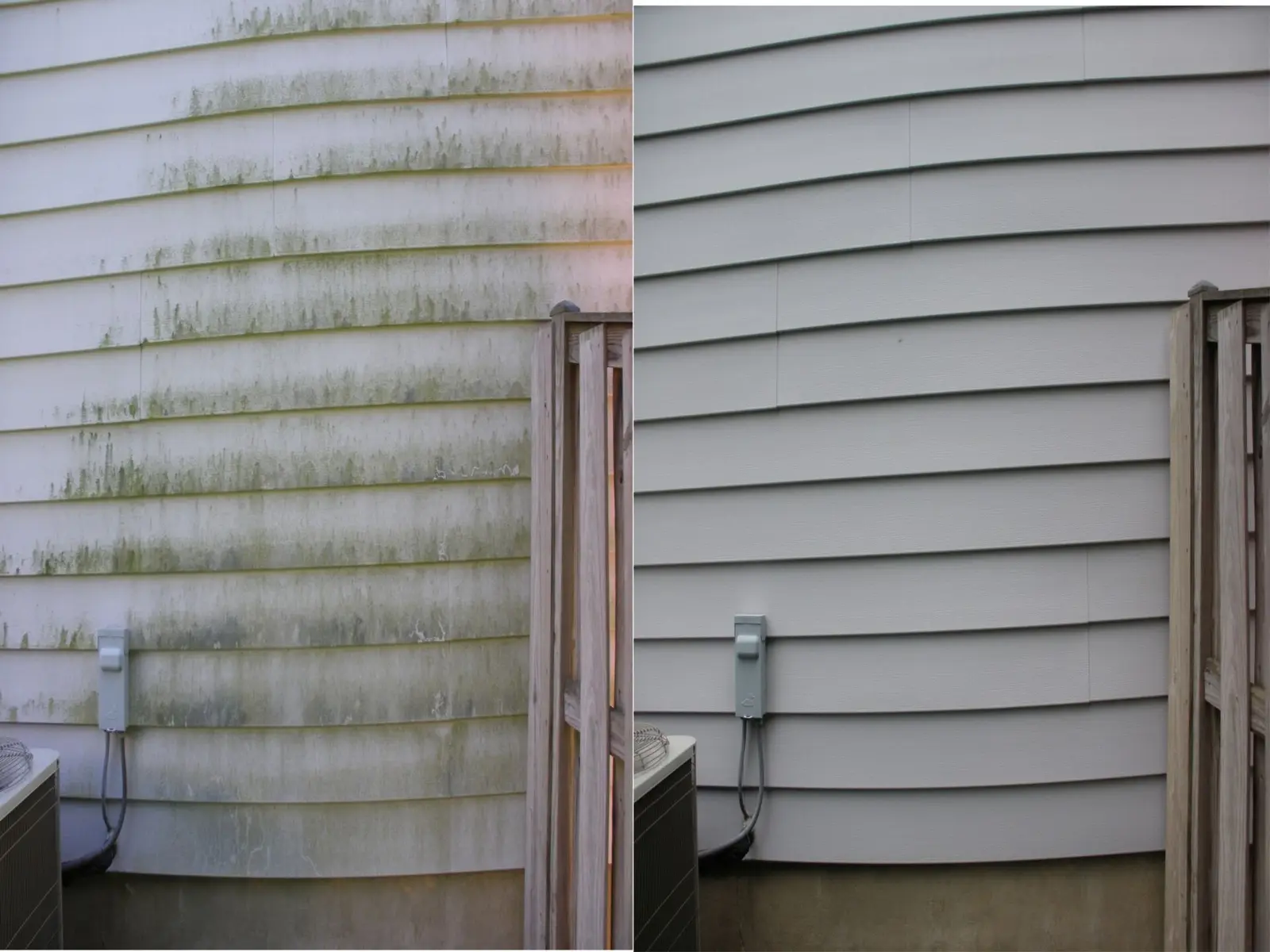
The same stretch of house siding before and after washing: green mildew streaks on the left, clean siding on the right
The same stretch of house siding before and after washing: green mildew streaks on the left, clean siding on the right. Photo: East Coast Powerwashing, CC BY-SA 3.0, via Wikimedia Commons.

The houses here

Driveways on flat ground, and paint from before 1978

Newark's houses went up quickly: the city's Housing Element says more than half of its housing predates 1980, most of it single-family tract homes on level lots. Two things follow for anyone washing them. The first is paint. A house built before 1978 may carry lead-based coats, and the EPA treats a wash that disturbs more than 20 square feet of that exterior paint as renovation, with the waste water contained. The second is the ground. Newark sits low beside the Bay, and the city notes that when heavy rain meets a high tide its storm drain system cannot empty, a reminder that these gutters lead toward the Bay, not to a treatment plant.

Part by part

Two parts of Newark where the runoff has a known destination

  • The Lake and Lakeshore Park

    The city says the lake at Lakeshore Park is an important stormwater detention basin, built to take runoff from the surrounding neighborhoods before it is released to Alameda County Flood Control channels. Gutter water from those streets meets the 16-acre lake first. The city already fights summer and fall algae blooms there and names nutrients such as nitrogen and phosphorus among the causes, so a crew working near the park has every reason to block the inlet and collect the rinse.

  • Old Town and Mirabeau Park

    The Housing Element places some of Newark's oldest houses here, ahead of the 1960s tracts, and its code enforcement map clusters substandard conditions in these blocks. Older paint on older siding is the issue for a wash: chips and flakes go wherever the water goes, and the county program wants water from paint that may hold lead or mercury collected in a tank, not left on the drive.

Before you hire

Before the wand comes out in Newark

  • Ask where the collected water will go: a sink, toilet, floor drain or cleanout on your property, or the crew's own tank, and whether Union Sanitary District was asked.
  • Ask the crew to lay absorbent on oil spots and sweep before any water, and to bag the used absorbent for the trash.
  • Near Lakeshore Park, ask how the curb inlet on your street will be blocked while the work is under way.
  • For a house built before 1978 where the wash will lift paint, ask for the firm's EPA lead renovation certificate and its plan for the waste water.
  • Above the state's minor-work limit, check the C-61/D-38 Sand and Water Blasting or C-33 Painting license at cslb.ca.gov.

Free, no obligation. Next, add your details in the request form.

Questions

Newark wash-water questions, from the curb to the sewer

Is it legal to hose off my driveway in Newark?

Not in a way that sends a stream down the street. ACWD's 2026 ordinance bars washing driveways and other hard surfaces so that it causes excessive runoff or waste, and Newark's code allows only stormwater into its storm drains. The Clean Water Program's advice to homeowners is to sweep the driveway instead of hosing it down, and to clean up outdoor spills with a broom and an absorbent such as kitty litter.

Can a wash crew empty its water into our toilet or a cleanout?

Those are the discharge points the county program names, but it says the local wastewater agency must be contacted first, and in Newark that is Union Sanitary District. USD's own advice for residents allows a bucket of soapy car-wash water into a sink or toilet and marks it residential wash water only, so water collected by a business is a question to put to the district before the job.

Our street is near Lakeshore Park. Does our gutter really drain to the lake?

The city says the park was designed to accommodate stormwater runoff from the surrounding neighborhoods, with the lake acting as a detention basin before the water is released to county flood control channels. In heavy storms its level can rise over the retaining wall and cover parts of the path. Anything washed into those gutters reaches the lake before the Bay.

What happens if ACWD gets a report about water running off our driveway?

The 2026 ordinance puts education first. The district sends at least two courtesy notices, then a written warning, then a second warning delivered to the property. If the waste continues after both warnings, it may install a flow restrictor, or end service where a restrictor will not work, on or after day 21. Exceptions can be requested on grounds of undue hardship or of health, sanitation, fire protection or safety.

Who takes reports of wash water going into a Newark storm drain?

The city's Engineering Division and its environmental services staff handle illicit discharges under Newark's stormwater program, and the city asks anyone who sees toxic substances being dumped into a storm drain to call 911 at once. Union Sanitary District's stormwater inspection partnership is with the City of Fremont, so in Newark the report goes to the city.

Where these facts come from

Checked against these public sources in October 2026. Rules and programs change: confirm permit requirements with the city before work starts, and a contractor's license on the CSLB website.

Pressure washing work in Newark? Tell us what you see.

One request reaches local handymen and contractors who take this work. The Handyman SF connects you with them; it does not do the work.

HandymanNow for handymen Work in Newark? Get job leads by text. Pick your trades and areas, take only the jobs you want. No subscription. Start getting leads HandymanNow for homeowners Get the HandymanNow app. Send a request with photos, message your handyman and follow them on the way. Download the app

HandymanNow app

Fix it faster. Find work faster.

Homeowners send a job with photos and follow their handyman on the map. Handymen get local jobs by text and take only the ones they want.

Call WhatsApp (opens WhatsApp) Free quote