What goes behind new stucco and siding in the Bay Area
Most stucco and siding jobs in the Bay Area replace or patch what a house already wears, and permits start small: San Bruno and San Jose exempt only repairs under 10 square feet of wall. San Jose is now classed as a marine climate, so new stucco there needs a drainage space behind it, not just building paper, and painted siding on a pre-1978 house brings federal lead-safe rules.
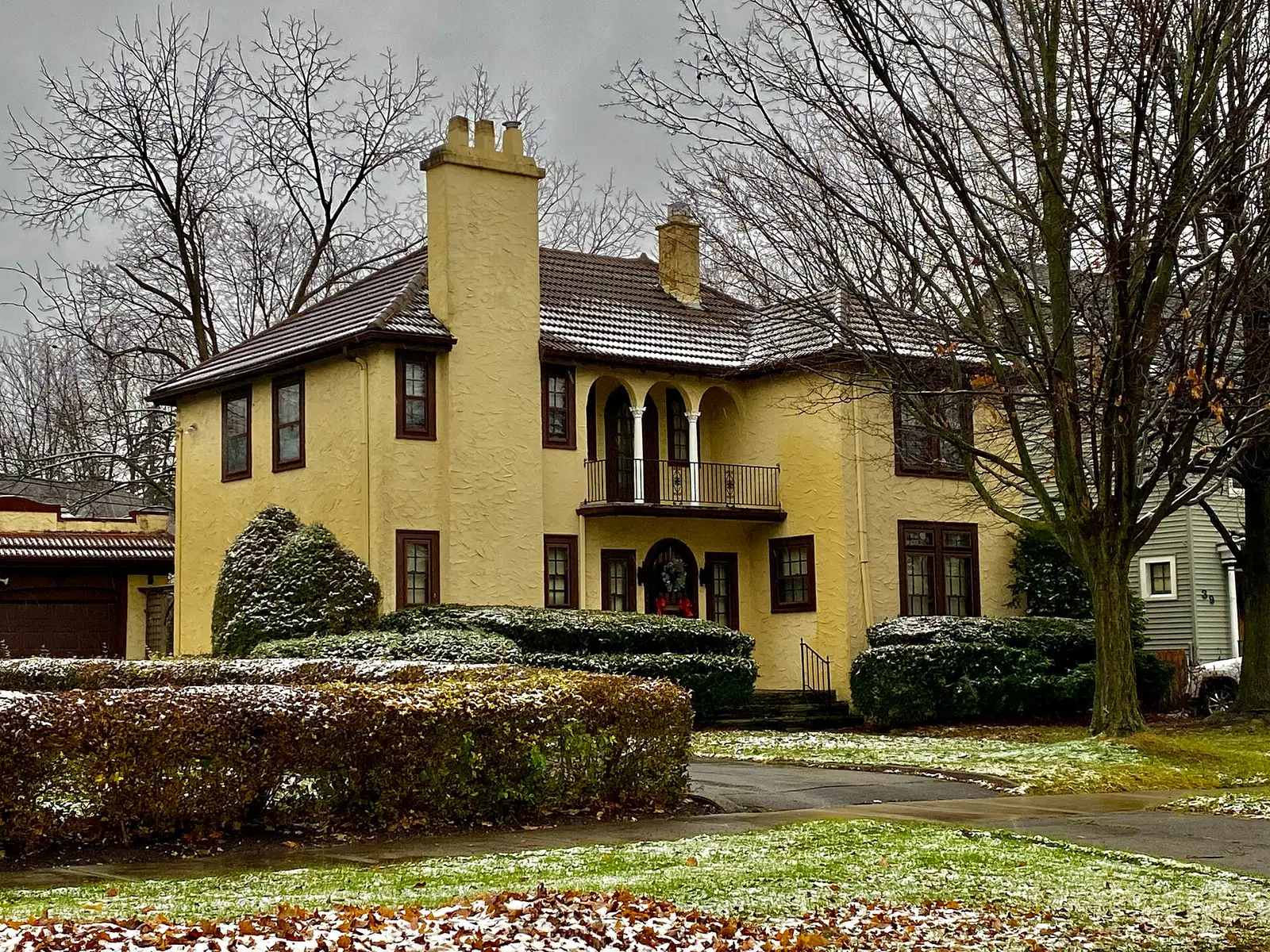
A two-story yellow stucco house with a tile roof and an arched upper porch. Photo: Andre Carrotflower, CC BY-SA 4.0, via Wikimedia Commons.
CSLB license class
C-35 Lathing and Plastering, D-41 Siding and Decking, B General Building
Where it applies
San Francisco, East Bay, South Bay
Request
Free, up to three local pros reply
Stucco and siding jobs on Bay Area homes
Patching cracked or damaged stucco
A crack at a window corner or a hole left by a removed fixture is where most stucco questions start. In San Jose and San Bruno a repair under 10 square feet of wall area needs no permit; past that, both cities want one. Where new stucco meets old, San Bruno's handout requires the new lath to overlap the existing by at least 2 inches horizontally and 6 inches vertically, and the new water-resistive layer has to lap into what is already there rather than stop at the edge.
Full re-stucco down to the framing
Stripping a wall to the studs is the moment to rebuild the moisture layers properly. Over a wood base, San Bruno requires at least two layers of Grade D paper or an approved equivalent, with lath and lath fasteners of corrosion-resistant material. Its inspector comes twice at minimum: once when the barrier or lath is on, with every penetration sealed and flashings installed, and again at final. The first inspection is the last chance to see what the plaster will hide.
Weep screeds at the base of the wall
The bottom edge of a stucco wall is where trapped water leaves, or does not. San Bruno's building division requires a weep screed at or below the foundation plate line on every exterior wall, set at least 4 inches above the ground or 2 inches above paving. Where soil, a planter or a later patio has been built up against that line, re-grading or cutting the paving back to restore the clearance is part of fixing the wall rather than an extra, and it belongs in the written scope before work starts.
Stucco fronts with cast ornament
Sunset District Mediterranean Revival tract houses from the mid-1920s into the 1930s wear stucco cladding with ornament worked into it: arched window surrounds, blind niches, embossed shapes above windows, cartouches and corbels. SF Planning has identified several of these tracts as eligible for the National Register. Repairing that kind of front means patching around the ornament and matching texture, not skimming the wall flat, so ask whether a plasterer has rebuilt a damaged niche or cartouche before.
Lap and manufactured siding
San Jose's siding rules read like a checklist for a good bid. The water-resistive barrier needs laps of about 2 inches horizontally and 6 inches vertically, tied into flashings at doors, windows, roof-to-wall intersections, trim breaks and deck attachments. Siding has to stay about 6 inches above grade and 2 inches above roof surfaces and decks, with fasteners sized and spaced to the manufacturer's instructions. Butt joints and trim joints get sealed, and the inspector wants the installation instructions on site.
Plywood panel siding
Plywood siding has to be a product rated for exterior siding, and San Bruno notes that approved panels carry a stamp on the back naming that use. Vertical joints land on framing and are caulked or covered with battens; horizontal joints get Z-flashing over solid blocking. The handout also warns that non-galvanized nails rust unless painted regularly, which is why hot-dipped galvanized fasteners are the ones to ask for when old panels come off.
The license this work needs
C-35 Lathing and Plastering
D-41 Siding and Decking
B General Building
Stucco is plaster work. The CSLB's C-35 Lathing and Plastering class covers applying cement or gypsum plaster coats and installing the lath they key into. Wood, vinyl, aluminum and metal siding fall under D-41 Siding and Decking, a limited specialty class. A B General Building contractor can take stucco or siding as part of a job with at least two unrelated trades, not counting framing. Check any contractor's number at cslb.ca.gov.
The Bay Area Air District names stucco and plaster among the places asbestos is found, and a San Francisco history of the Victorians records that in the 1930s many were modernized with stucco and asbestos siding. Before a wall is cut or stripped, a sample should go to a lab. Removing 100 square feet or more of regulated asbestos material requires notice to the district 10 working days ahead, or 72 hours for buildings of four or fewer units.
Houses built wall to wall
In the Sunset, tract houses went up on narrow lots with no visual separation between them, and Wikipedia describes most as sitting on 25-foot lots with no free space between houses. SF Planning describes the result as nearly attached single-family houses. Where two houses touch, a side wall may not be reachable from outside at all, which changes both what can be repaired and how the work is staged. Say when you request a bid which walls actually have open access, and whether a neighbor's side is involved.
Moisture that stucco traps
San Jose's permit page lists what goes wrong when stucco is installed badly: moisture intrusion, cracking, bulging, water stains, mold, rot and termites. The city has been reclassified as a marine climate, Zone 3C, in the California Residential and Building Codes, which is why it now requires a drainage space between the water-resistive barrier and the stucco. The new rule targets the layers behind the plaster, which a surface patch never touches, so a bid for bulging or stained stucco should say what happens to the layers underneath.
Lead paint on older painted siding
EPA's Renovation, Repair and Painting rule covers work on houses built before 1978 that disturbs painted surfaces. Minor repair that disturbs 20 square feet or less of paint on the exterior is exempt; beyond that, only a firm holding EPA's RRP firm credential may advertise or do the work. On an older house, treat the paint on siding and trim as covered until a test says otherwise, and ask how the work area will be contained.
San Francisco treats in-kind exterior siding repair or replacement, same size and location, as an over-the-counter permit applied for through the PermitSF portal, and minor dry rot repairs qualify for over-the-counter review too. Planning adds one stucco-specific rule: unpainted masonry buildings in Article 10 historic districts may need a permit before stucco is applied to them.
Eichler Homes built tracts in Walnut Creek and Castro Valley, and their exteriors used vertical 2-inch pattern wood siding with plain, geometric facades. Replacing damaged boards on those walls means matching that pattern, which is plain enough that a mismatch shows from the street. In Berkeley's hill fire zone, any new siding also has to meet the wildfire material rules described in the permits section below.
In San Jose, a property on the Historical Resources Inventory needs Planning clearance before a stucco or siding permit is issued. The city recommends that a licensed contractor apply, warns that whoever signs the application is responsible for all work under it, and notes that insurance companies may deny claims tied to unpermitted work.
Permits and rules to know
San Jose's drainage space behind stucco
Because San Jose is now a marine climate under the building codes, stucco there needs a drainage plane per CRC R703.7.3 and CBC 2510.6. The city accepts three barrier options: two independent layers of 10-minute Grade D paper, with window and door flashing lapped between them; a single layer of 60-minute Grade D; or a 60-minute barrier with a drainage efficiency of at least 90 percent. The first two also need a space or drainage material at least 3/16 inch deep behind the stucco.
Wildfire siding rules in Berkeley's Fire Zone Two
Berkeley's Fire Zone Two, its Combined Hillside District plus land mapped Very High fire hazard, requires exterior siding to be ignition-resistant, noncombustible, heavy timber, tested to State Fire Marshal Standard 12-7A-1, backed by 5/8-inch Type X gypsum sheathing, or part of a listed one-hour exterior wall. The city's guideline exempts replacing or repairing less than 50 percent of a wall surface where matching the new plane to the existing plane on that wall is not possible.
Before you hire
Ask for the C-35 license number for stucco, or D-41 for siding, and look it up at cslb.ca.gov.
Ask how many layers of water-resistive barrier the bid includes and whether it adds a drainage space behind the stucco.
Ask whether the wall will be sampled for asbestos before cutting, and who files the Air District notice if needed.
On a house built before 1978, ask for the firm's EPA RRP credential before any painted siding is disturbed.
Ask how the weep screed will clear the ground or paving, and whether soil or a patio must be cut back.
Ask for proof of workers' compensation coverage, especially where scaffolding goes up against a neighbor's wall.
For an ornamented stucco front, ask to see a past repair around a niche, arch or cast detail.
How a request works
Describe the job
A few sentences and a photo of the problem or the space. It takes about a minute.
Local pros get in touch
Up to three handymen or contractors who take this kind of work may call or text to ask questions and quote.
Check, compare, decide
Look up the license, compare what you hear, and agree the scope and price with the one you pick. Requesting costs nothing.
Questions about stucco and siding work in the Bay Area
Could the original siding still be under the stucco on our Victorian?
It is possible. A history of San Francisco's Victorians records that in the 1930s many were modernized by stripping their millwork and covering them in stucco or asbestos siding, so wood can survive underneath. Have a small area opened and the stucco tested for asbestos before planning around it. In San Francisco, a street-visible change of finish, such as stucco to wood siding, is one of the projects that needs plans.
Why can't my San Jose stucco permit be done over the counter?
San Jose issues like-for-like stucco permits in one visit only for single-family or duplex properties outside a Planned Development zoning district, outside flood zones A, AE, AH and AO, outside geohazard and seismic landslide zones, and outside the wildland-urban interface, with no open code case. If any one of those fails, the job goes through Standard Plan Review online instead.
Can new stucco go over our old wood siding?
Some cities allow it. San Bruno's handout shows stucco applied over existing siding, but it treats the old siding as backing only: all the waterproofing goes between the siding and the new plaster, and the siding is cut back around each window so the window can be flashed again. The permit and inspections still apply, so the barrier layers get checked before the plaster covers them.
Can we swap wood siding for vinyl on a San Francisco house?
Not as a simple over-the-counter job if the change shows from the street. San Francisco's Department of Building Inspection lists street-visible facade work that changes finishes, with wood to vinyl siding and stucco to wood siding as its examples, among the projects that need plans. The department's advice is to hire a designer, architect or engineer to draw them before applying.
Does a stucco repair on a San Francisco landmark need a Certificate of Appropriateness?
Not for ordinary upkeep. SF Planning says a Certificate of Appropriateness is not required for maintenance and repair done solely to correct deterioration, decay or damage, as long as the replacement materials and details are in-kind. Changing the material, texture or design of a wall in an Article 10 district is a different matter and goes to Planning first.
Checked against these public sources in September 2026. Codes and programs change: confirm permit rules with your city's building department and a license on the CSLB website before work starts.