Water heaters Walnut Creek

Walnut Creek water heaters, from Mutual-owned tanks to Eichler boilers

Who owns the tank comes first in Walnut Creek. In Rossmoor's two big co-ops, First and Second Walnut Creek Mutual, the Mutual is responsible for the original water heaters. Elsewhere a replacement needs a city building permit, applied for online and usually reviewed over the counter, against a handout written for gas storage tanks. From January 1, 2028, the Air District's amended Rule 9-6 requires new residential gas water heaters to meet a zero-NOx standard.

  • Free to request, no obligation to hire
  • Up to five local pros who take this work can reply
  • Rules on this page checked against 21 public sources, November 2026

Start with your job

Which of these is closest to yours?
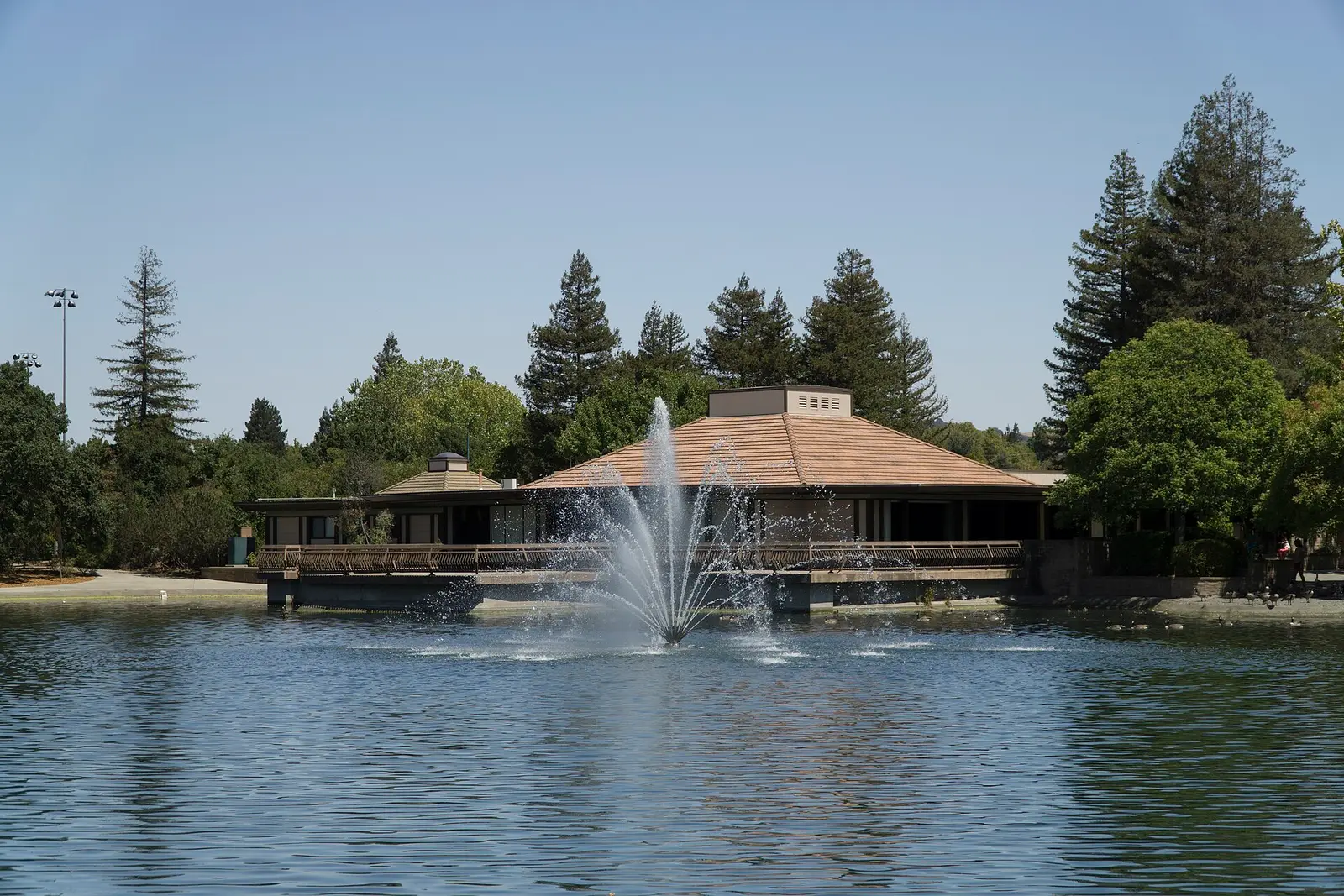
The community center at Heather Farm Park in Walnut Creek
The community center at Heather Farm Park in Walnut Creek. Photo: Californiathegreat, CC BY-SA 4.0, via Wikimedia Commons.
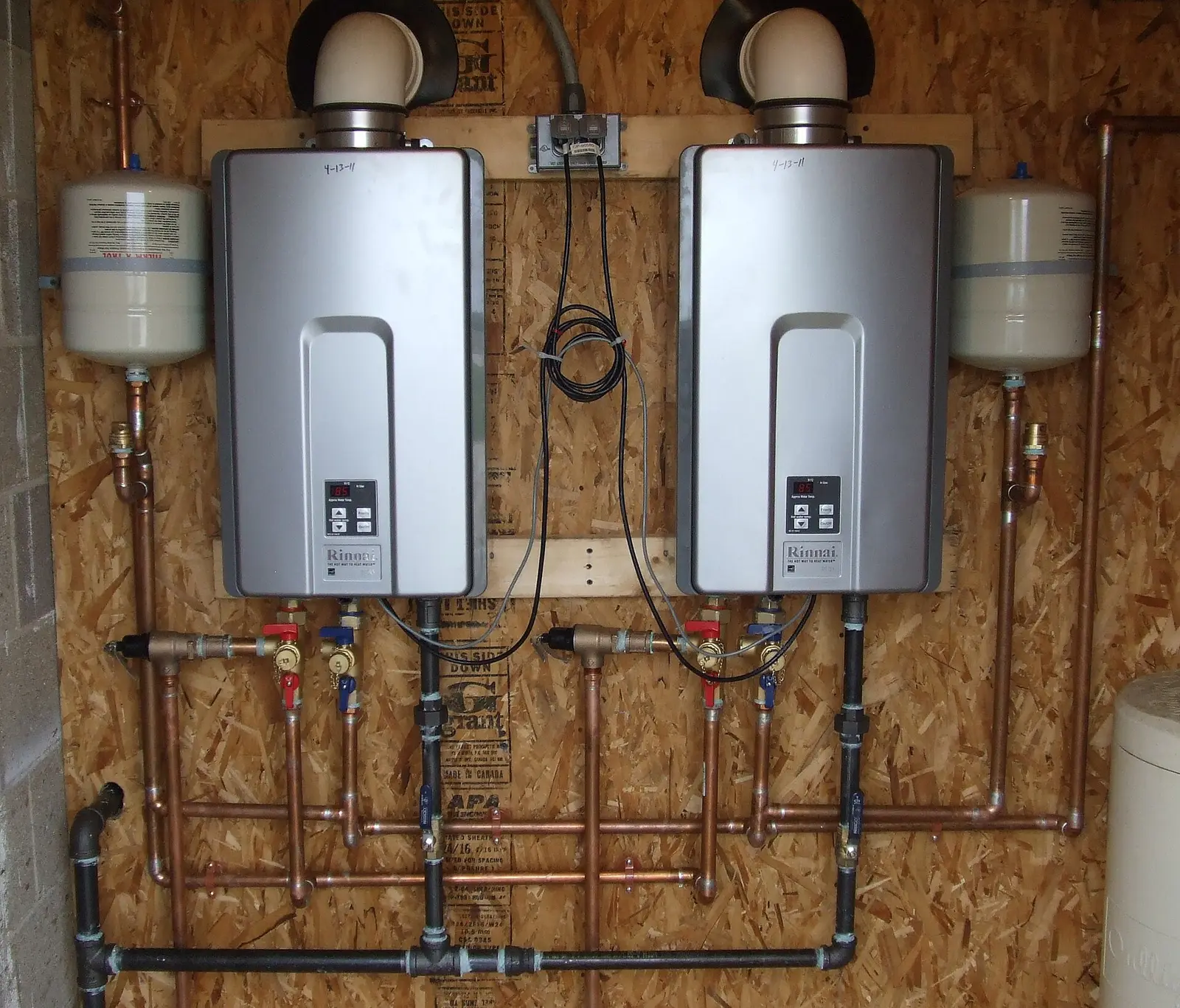
Two wall-mounted tankless water heaters plumbed with copper supply lines
Two wall-mounted tankless water heaters plumbed with copper supply lines. Photo: Behrat, CC BY-SA 3.0, via Wikimedia Commons.

The houses here

Attic tanks, Eichler boilers and heaters a Mutual owns

The city's gas water heater handout reads like a list of where heaters end up here: in garages, in attics reached through a ceiling hatch, outside in an enclosure, and in closets off bedrooms and baths. Rancho San Miguel's Eichlers were sold with radiant-heated concrete floors, and the Eichler Network describes those floors as warmed by a boiler that is a separate appliance from the household water heater. In Rossmoor's co-op manors the tank belongs to the Mutual's maintenance, and in Saranap, unincorporated and under county rules, the permit comes from Contra Costa County rather than the city.

Free, no obligation. Next, add your details in the request form.

Neighbourhood by neighbourhood

Three Walnut Creek addresses where the first call differs

  1. Rossmoor's co-op Mutuals

    First Walnut Creek Mutual's policy makes the Mutual responsible for all water heaters and their connectors, and for relighting pilot lights, with Rossmoor's public safety staff covering nights and weekends. Second Mutual's occupancy agreement covers hot water tanks that were standard original equipment, not ones a member added. Plumbing changes in First Mutual also need an alteration permit, so call the Mutual before a plumber.

  2. Rancho San Miguel

    Eichlers were built to run two hot-water appliances, the radiant boiler and the domestic heater. The Eichler Network describes combination units, usually tankless, that replace both and free garage space, and quotes a radiant contractor who says such a unit's hot-water output should be at least three gallons per minute. Boiler work falls under the CSLB's C-4 class.

  3. Saranap

    With a Walnut Creek address but county land use, Saranap's heater permits come from Contra Costa County. The county's SB 407 certificate lists water heater replacement as work that does not trigger plumbing fixture upgrades, for houses included, while the city's bulletin PB-065 limits that list to multifamily and commercial buildings.

Free request

Describe the water heater job once. Local pros who take work in Walnut Creek reply by call or text.

  • No fee to request, and no obligation to hire
  • You agree scope and price with the pro you choose
  • Photos help them quote without a first visit

Get quotes for water heater work in Walnut Creek

Two short steps. A local pro who takes this work calls or texts you back.

To send a request, call or text (415) 449-8213.

Free to request, and you agree the scope and price with the person you hire before work starts. In California, a job over $1,000 in labor and materials, or one that needs a building permit, must be done by a contractor licensed by the CSLB in the right class. Ask for the license number and check it at cslb.ca.gov.

The work

From pilot light to heat pump: the jobs a Walnut Creek heater brings

  1. A gas tank in the attic

    The city's handout sets out what an attic heater needs before an inspector signs off: a solid floor passageway at least 24 inches wide, an access opening of 22 by 30 inches, the heater within 20 feet of that opening, a 30-by-30-inch working platform on the service side, and a switched light and receptacle. A corrosion-resistant pan with a drain is also required up there. A swap is the moment to find out whether an old attic install meets each line.

  2. A closet off a bedroom or bathroom

    Walnut Creek's handout bars a gas storage heater from a bathroom or bedroom unless the heater is a direct-vent type or sits behind a listed, gasketed door with a listed self-closing device. Combustion air is sized by the burner's rating: one permanent opening near the top of the enclosure takes one square inch per 3,000 Btu/h, while two openings through vertical ducts take one per 4,000. A plumber quoting a replacement should say which method the closet uses.

  3. Trading the tank for a tankless unit

    Moving from a tank to a tankless unit changes the gas load the house piping has to carry, so the line back to the meter may need resizing. The city's sizing procedure asks for a single-line diagram from the meter, takes the run to the most distant appliance to pick the column, and assumes PG&E gas at 1,100 Btu per cubic foot. New CSST tubing must follow bulletin PB-032: two pressure tests, before and after the walls close, and bonding to the electrical grounding system.

  4. Switching to a heat pump water heater

    The city's posted handout covers gas tanks only, so the state rules carry the weight here. When a water heater is replaced, the 2025 Energy Code accepts a heat pump unit kept indoors on a rigid insulated base of at least R-10 with a communication port, or one meeting NEEA's Advanced Water Heater Specification Tier 3 or higher. The Air District notes that electric water heaters made for older homes with lower-amp panels are already available, which may avoid a panel upgrade.

Permits and local rules

Where the permit, the handout and the Air District come in

  1. A permit for every replacement, filed online

    Walnut Creek's building permit FAQ lists a new, relocated or replacement water heater among residential work that needs a permit, and it names water heater and furnace replacements as examples of over-the-counter permits, typically reviewed within three to five business days. The city no longer takes applications or issues permits in person; everything goes through the online portal. Permit issuance needs the signature of the legal property owner or a California licensed contractor.

    Source: City of Walnut Creek Building Division (walnutcreekca.gov)

  2. Gas Storage Water Heater Requirements

    The handout, issued January 19, 2010, lists thirteen items with their California Plumbing Code sections. Beyond the attic, closet and venting rules, it asks for a control valve on the cold supply immediately ahead of the heater, insulation on the first five feet of hot and cold pipe from the tank, an accessible manual gas shutoff within six feet, a sediment trap, and a check of the first-hour rating on the EnergyGuide label.

    Source: City of Walnut Creek Development Review Services (walnutcreekca.gov)

  3. Rule 9-6 as amended in November 2026

    On November 4, 2026, the Bay Area Air District's board adopted amendments to Rule 9-6 that move the zero-NOx compliance date for residential water heaters to January 1, 2028, and add exemptions for qualifying low-income property owners and for properties with significant electrical or space constraints. The district states that the rule applies only when a water heater is replaced and does not require replacing a working unit.

    Source: Bay Area Air District (baaqmd.gov)

  4. What the 2025 Energy Code allows as a replacement

    The California Energy Commission's guidance on single-family water heater alterations lists the systems that may go in when a heater is replaced: a natural gas or propane system, a single heat pump water heater with an indoor storage tank on an R-10 base and a communication interface, a NEEA Tier 3 or higher heat pump unit, or, where the old heater was electric resistance, a consumer electric water heater. Newly installed or accessible hot water pipes must also be insulated.

    Source: California Energy Commission (energy.ca.gov)

State license for this work: C-36 Plumbing, C-20 Warm-Air Heating, Ventilating and Air-Conditioning, C-10 Electrical. Look up a contractor's license on the CSLB website (cslb.ca.gov).

Before you hire

What to ask before the old Walnut Creek tank goes

  • Check the C-36 Plumbing license at cslb.ca.gov; for an Eichler radiant boiler or combination unit, ask whether the firm also holds C-4.
  • Ask whether the quote includes the city permit and which lines of the 2010 handout apply to your attic, closet or garage.
  • For a tankless conversion, ask to see the gas line sizing diagram from the meter to every gas appliance.
  • Compare the first-hour rating on the new heater's EnergyGuide label with what your household actually draws.
  • In a Rossmoor manor, ask the Mutual whether the heater is original equipment before hiring anyone.

Free, no obligation. Next, add your details in the request form.

Questions

Hot water questions from Walnut Creek homes

Do I need a permit to replace a water heater in Walnut Creek?

Yes. The city's permit FAQ lists a new, relocated or replacement water heater among residential work that requires a building permit. Water heater replacements are among the city's examples of over-the-counter permits, applied for through its online portal and typically reviewed within three to five business days. The permit is signed by the property owner or a California licensed contractor.

Can my old gas water heater still be repaired, or replaced with gas, in Walnut Creek?

Repair, yes: the Air District says Rule 9-6 applies only when a water heater is replaced and never requires removing a working unit. Replacement with a new gas residential heater remains possible until the zero-NOx compliance date, which the board moved to January 1, 2028 on November 4, 2026. The amendments also add exemptions for qualifying low-income owners and homes with significant electrical or space limits.

My Rossmoor manor's water heater is leaking. Who do I call?

In First Walnut Creek Mutual, the Mutual: its policy makes it responsible for all water heaters and connectors and for relighting pilot lights. Second Mutual covers hot water tanks that came as original equipment. Other Mutuals, including the condominium ones, have their own documents, so Rossmoor's Mutual Operations Division is the place to start before any outside plumber.

Our Rancho San Miguel Eichler has a boiler and a water heater. Can one unit do both?

Often. The Eichler Network describes combination units, usually tankless, that replace both the radiant boiler and the domestic water heater and free up garage space. A radiant contractor quoted there cautions that a combination unit's hot-water production should be at least three gallons per minute and that a house with heavy demand may outrun one. Ask for C-4 as well as C-36 credentials.

Is Walnut Creek's tap water hard on a tankless heater?

It depends on the supplier. EBMUD's 2025 water quality report lists hardness of about 1 grain per gallon, 15 to 21 ppm, at its Walnut Creek treatment plant, and EBMUD suggests checking appliance manuals for the hardness they are designed around. Addresses billed by the Contra Costa Water District instead should read CCWD's own water quality report before settling on a descaling schedule.

We live in Saranap. Does Walnut Creek issue our water heater permit?

No. Saranap is an unincorporated area with a Walnut Creek mailing address, and its land use follows county rules, so the permit comes from Contra Costa County's Building Inspection Division. The county's permit guide lists installation or replacement of water heaters among work that needs one, and permits go to a licensed contractor, the owner, or an authorized tenant.

Where these facts come from

Checked against these public sources in November 2026. Rules and programs change: confirm permit requirements with the city before work starts, and a contractor's license on the CSLB website.

  • walnutcreekca.gov: building permit faqs (walnutcreekca.gov)
  • walnutcreekca.gov: solar electrical heating and plumbing (walnutcreekca.gov)
  • walnutcreekca.gov: 635839635688500000 (walnutcreekca.gov)
  • walnutcreekca.gov: 635695185917370000 (walnutcreekca.gov)
  • walnutcreekca.gov: 635990816532430000 (walnutcreekca.gov)
  • walnutcreekca.gov: 636322533028730000 (walnutcreekca.gov)
  • baaqmd.gov: Building Appliances (baaqmd.gov)
  • baaqmd.gov: 20260713 faq appliance rules 07062026 pdf (baaqmd.gov)
  • energy.ca.gov: energy code support center 19 (energy.ca.gov)
  • ebmud.com: wqr
  • ebmud.com: water quality data
  • contracosta.ca.gov: ALL ABOUT BUILDING PERMITS (contracosta.ca.gov)

Water heater work in Walnut Creek? Tell us what you see.

One request reaches local handymen and contractors who take this work. The Handyman SF connects you with them; it does not do the work.

HandymanNow for handymen Work in Walnut Creek? Get job leads by text. Pick your trades and areas, take only the jobs you want. No subscription. Start getting leads HandymanNow for homeowners Get the HandymanNow app. Send a request with photos, message your handyman and follow them on the way. Download the app

HandymanNow app

Fix it faster. Find work faster.

Homeowners send a job with photos and follow their handyman on the map. Handymen get local jobs by text and take only the ones they want.

Call WhatsApp (opens WhatsApp) Free quote