Water heaters San Francisco

San Francisco water heaters in garages, flat closets and old hotels

Replacing a San Francisco water heater normally takes a plumbing permit but no building permit, unless a new flue goes in. The bigger change is regional: on November 4, 2026 the Air District moved its zero-NOx date for home tank heaters to January 1, 2028 and added exemptions for tight closets, weak electrical service and low-income owners. The city's plumbing code then adds valve rules that matter most where one heater serves several flats.

  • Free to request, no obligation to hire
  • Up to five local pros who take this work can reply
  • Rules on this page checked against 16 public sources, November 2026

Permits and local rules

The regional rule and the city code a heater quote answers to

  1. Rule 9-6 as the Air District amended it in 2026

    The Board voted on November 4, 2026 to delay the zero-NOx requirement for residential water heaters from January 2027 to January 2028. It applies only when a heater is replaced, never to a working one, and not to stoves, dryers or fireplaces. New exemptions cover owners under 80 percent of Area Median Income or enrolled in programs such as Medi-Cal or CalFresh, owners paying more than 28 percent of income in mortgage and property tax, cramped spaces, and electrical limits such as panels below 100 amps. Heaters of 30 gallons or less are not required to comply.

    Source: Bay Area Air District (baaqmd.gov)

  2. Which permit a replacement takes in San Francisco

    Section 104.2 of the San Francisco Mechanical Code, as amended for 2025, adds an item exempting replacement water heaters of not more than 100 gallons from building permits when no new flue is installed, and says they still require plumbing permits. DBI takes plumbing permits online through PermitSF, and the work is inspected before any pipes are covered. Moving the heater, adding a flue or changing fuel can take the job past a simple replacement.

    Source: San Francisco Department of Building Inspection (media.api.sf.gov)

  3. The city's own plumbing amendments

    The 2025 San Francisco Plumbing Code amendments add four details a heater installer meets. Section 504.1 requires a permanent platform for an exterior heater 7 feet or more above grade. Section 604.1 calls for dielectric or insulated fittings, or six-inch brass nipples, between copper and ferrous piping. Section 606.2 requires a full-way valve on the cold supply to each heater, plus valves isolating each unit's hot water where one heater serves several, and Section 606.3 adds shutoffs inside each dwelling.

    Source: San Francisco Department of Building Inspection (media.api.sf.gov)

  4. Backflow assemblies and the expansion they trap

    The SFPUC's cross-connection program requires an approved backflow prevention assembly, tested at least once a year by an authorized tester, at buildings four or more stories tall and where the water supply rises more than 40 feet above the meter. The state plumbing code, sections 608.2 and 608.3, then requires an approved expansion tank or similar device on the building side of any check valve or backflow preventer, whatever kind of water heater is installed.

    Source: San Francisco Public Utilities Commission (sfpuc.gov)

State license for this work: C-36 Plumbing, C-20 Warm-Air Heating, Ventilating and Air-Conditioning, C-10 Electrical. Look up a contractor's license on the CSLB website (cslb.ca.gov).

Free, no obligation. Next, add your details in the request form.

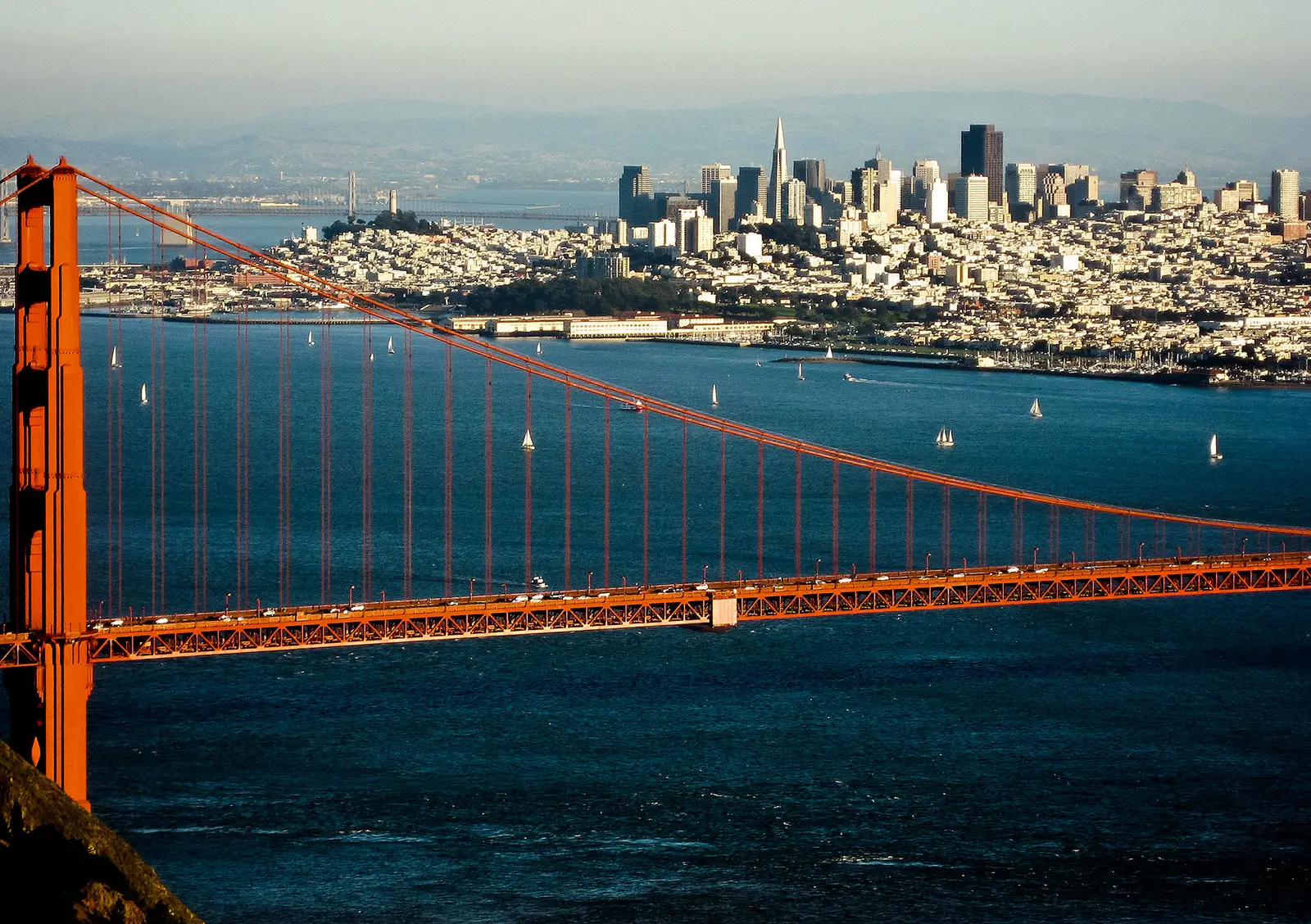
The Golden Gate Bridge and San Francisco, seen from the Marin Headlands
The Golden Gate Bridge and San Francisco, seen from the Marin Headlands. Photo: Paul.h, Public domain, via Wikimedia Commons.

The houses here

Ground-story laundries, wartime apartments and post-1906 hotels

Three building histories decide where a San Francisco heater sits. In the Sunset, SF Planning's context statement describes a ground story of garage and basement space, often with the laundry, under the living floor, and notes that the Rousseau brothers' early-1930s tracts featured water heaters and laundry machines as conveniences new to the city. In Haight-Ashbury, Wikipedia records that Edwardian and Victorian houses were divided into apartments during World War II, so one old house may now need hot water for several households. The Tenderloin, rebuilt after 1906 as hotels and apartment buildings, historically housed people almost entirely in single rooms, studios and one-bedrooms.

Neighbourhood by neighbourhood

Neighborhoods where the same heater swap takes a different turn

  1. Sunset and Parkside

    Where the heater shares the ground story with the cars and the washer, the layout Planning's survey describes across tracts built from the mid-1920s to 1950, a heat pump needs enough air volume and a circuit within reach. A garage ceiling under 7.2 feet is one of the space limits the Air District staff report lists for a one-time exemption.

  2. Haight-Ashbury

    Where a house split into apartments gives each flat its own small heater in a closet, three rules meet in one building: the 700-cubic-foot space exemption, the 30-gallon line below which zero-NOx does not apply, and San Francisco's requirement for a shutoff inside each dwelling unit.

  3. Tenderloin

    A building of single rooms, studios and one-bedrooms that heats water centrally counts as multifamily once it has five or more units, and the Air District's adopted amendments push its date to January 1, 2033. If the building stands four or more stories, the SFPUC's yearly backflow test, and an expansion device, come with it.

  4. Diamond Heights and Twin Peaks

    Diamond Heights was laid out across three hills, and Twin Peaks rises from the middle of the city, so a house here can sit well above the meter at the street. Where its plumbing is more than 40 feet above the meter, the SFPUC calls for a backflow assembly, and a replacement heater then needs room for an expansion tank.

Free request

Describe the water heater job once. Local pros who take work in San Francisco reply by call or text.

  • No fee to request, and no obligation to hire
  • You agree scope and price with the pro you choose
  • Photos help them quote without a first visit

Get quotes for water heater work in San Francisco

Two short steps. A local pro who takes this work calls or texts you back.

To send a request, call or text (415) 449-8213.

Free to request, and you agree the scope and price with the person you hire before work starts. In California, a job over $1,000 in labor and materials, or one that needs a building permit, must be done by a contractor licensed by the CSLB in the right class. Ask for the license number and check it at cslb.ca.gov.

The work

Four heater jobs, four different sets of city requirements

  • A gas tank swap on the garage level

    Where the new tank is the same kind in the same spot, San Francisco's Mechanical Code exempts a replacement of up to 100 gallons from a building permit as long as no new flue is installed; the plumbing permit is still required and is filed through PermitSF. Two local amendments show up at the inspection: a full-way shutoff on the cold supply at or near the heater, and dielectric or insulated fittings, or brass nipples at least six inches long, where copper meets steel.

  • A heat pump that the closet cannot hold

    A divided Victorian flat may keep its heater in a closet far smaller than a heat pump needs. The staff report behind the Air District's November 2026 amendments describes a one-time exemption for an existing heater in an enclosed space under 700 cubic feet that cannot be ventilated, and for electrical limits such as knob-and-tube wiring needing more than 50 feet of conduit to the panel. It is used once per address, and the certificate comes before the gas unit is installed.

  • One heater serving several apartments

    San Francisco amends the state code for shared systems. Where one water heater or boiler supplies hot water to several units, added full-way valves must let the hot water to any one apartment be shut off without interrupting the others, placed inside that unit or in a common area. A remodel of a single unit brings it up to the same valve rules, so an owner renovating one flat should expect the shutoffs to be part of the plumbing scope.

  • Tankless units hung on an outside wall

    Some owners free up indoor space by mounting a tankless heater outdoors on a rear or lightwell wall. San Francisco adds one requirement here: a water heater mounted on the exterior at 7 feet or more above the floor or grade needs a permanent platform strong enough for a tester or maintenance person. Gas tankless units typically fall in the Air District's larger size class, whose zero-NOx date the 2026 amendments pushed from 2031 to January 1, 2033.

Before you hire

Questions that separate one heater bid from another

  • Ask whether the job stays a plumbing-permit replacement, and what changes if the flue has to be replaced or the heater moved.
  • If an Air District exemption might apply, ask who requests the certificate, since it must be issued before a non-compliant gas heater goes in.
  • Ask how the copper lines will meet the steel tank: dielectric or insulated fittings, or brass nipples at least six inches long.
  • In a building of five or more units, ask which Rule 9-6 date the replacement falls under before choosing between gas and electric.
  • On a tall building or steep lot, ask whether a backflow assembly sits at the meter and where the expansion tank will go.

Free, no obligation. Next, add your details in the request form.

Questions

San Francisco water heater questions, from the gas rule to shutoffs

Is there a gas water heater ban in San Francisco?

Not on heaters already working. The Air District's Rule 9-6 governs replacements: since the November 4, 2026 vote, a new residential tank installed from January 1, 2028 must be zero-NOx unless an exemption applies, and heaters of 30 gallons or less are not required to comply. Nobody has to remove a working gas heater. San Francisco's own all-electric rules reach new buildings and qualifying major renovations, not an ordinary swap.

What does the San Francisco code require when a water heater is replaced?

A plumbing permit, though no building permit for a same-size replacement up to 100 gallons without a new flue. The city's amendments add a full-way valve on the cold supply at the heater, dielectric or insulated fittings or six-inch brass nipples where copper meets steel, and a permanent platform for an outdoor heater 7 feet or more up. State law still requires the tank to be braced against earthquakes.

Our flat's heater sits in a tiny closet. Can it stay gas after 2028?

Possibly. The amendments adopted in November 2026 allow a one-time exemption where a compliant unit will not fit, and the staff report describes enclosed spaces under 700 cubic feet that cannot be ventilated. The exemption is used once per property address and the certificate must come from the Air District before installation. A heater of 30 gallons or less is outside the zero-NOx requirement entirely.

Can I shut off hot water to my apartment without cutting off the whole building?

In San Francisco that is the intent of the code. Where one heater or boiler supplies several units, the city's plumbing amendments require valves that shut off hot water to any one unit without interrupting the rest, located in that unit or a common area. A remodel of a single unit has to bring its valves up to the same rules.

Why does a plumber want an expansion tank on our hillside house?

Probably because of the backflow rules. The SFPUC requires a backflow prevention assembly where the water supply rises more than 40 feet above the meter, and in buildings of four or more stories. Once that assembly is in, heated water can no longer push back toward the main, and the state plumbing code requires an expansion tank or similar device on the building side.

Where these facts come from

Checked against these public sources in November 2026. Rules and programs change: confirm permit requirements with the city before work starts, and a contractor's license on the CSLB website.

  • baaqmd.gov: Building Appliances (baaqmd.gov)
  • baaqmd.gov: 2026 41 water heater rule board vote approval pdf (baaqmd.gov)
  • baaqmd.gov: 20261030 final staff report rule 9 6 pdf (baaqmd.gov)
  • media.api.sf.gov: 2025 SF Mechanical Code (media.api.sf.gov)
  • media.api.sf.gov: 2025 SF Plumbing Code (media.api.sf.gov)
  • sf.gov: apply plumbing and mechanical permit (sf.gov)
  • sf.gov: all electric buildings in san francisco (sf.gov)
  • sfpuc.gov: cross connection control (sfpuc.gov)
  • sfpuc.gov: CCC Req levels protection potable (sfpuc.gov)
  • sandiego.gov: resd 5 1 (sandiego.gov)
  • default.sfplanning.org: Adopted SunsetHCS
  • en.wikipedia.org: Haight Ashbury

Water heater work in San Francisco? Tell us what you see.

One request reaches local handymen and contractors who take this work. The Handyman SF connects you with them; it does not do the work.

HandymanNow for handymen Work in San Francisco? Get job leads by text. Pick your trades and areas, take only the jobs you want. No subscription. Start getting leads HandymanNow for homeowners Get the HandymanNow app. Send a request with photos, message your handyman and follow them on the way. Download the app

HandymanNow app

Fix it faster. Find work faster.

Homeowners send a job with photos and follow their handyman on the map. Handymen get local jobs by text and take only the ones they want.

Call WhatsApp (opens WhatsApp) Free quote