Plumbing Walnut Creek

Walnut Creek plumbing, with a sewer lateral you own out to the street main

In Walnut Creek the sewer pipe an owner answers for does not stop at the curb. Central San, the sanitary district, holds each owner responsible for the whole line from the house to its main, including the stretch under the sidewalk and street, and exterior sewer work needs Central San's own permit, separate from the city's. Water comes from EBMUD or the Contra Costa Water District, depending on the address.

Sewer agency
Central San, with a sewer permit separate from the city's
Lateral ownership
The owner's, from the house to Central San's main
Water supplier
EBMUD or Contra Costa Water District, by address
Overflow device
Required by Central San on every home

Get quotes for plumbing work in Walnut Creek

Two short steps. A local pro who takes this work calls or texts you back.

To send a request, call or text (415) 449-8213.

Free to request, and you agree the scope and price with the person you hire before work starts. In California, a job over $1,000 in labor and materials, or one that needs a building permit, must be done by a contractor licensed by the CSLB in the right class. Ask for the license number and check it at cslb.ca.gov.
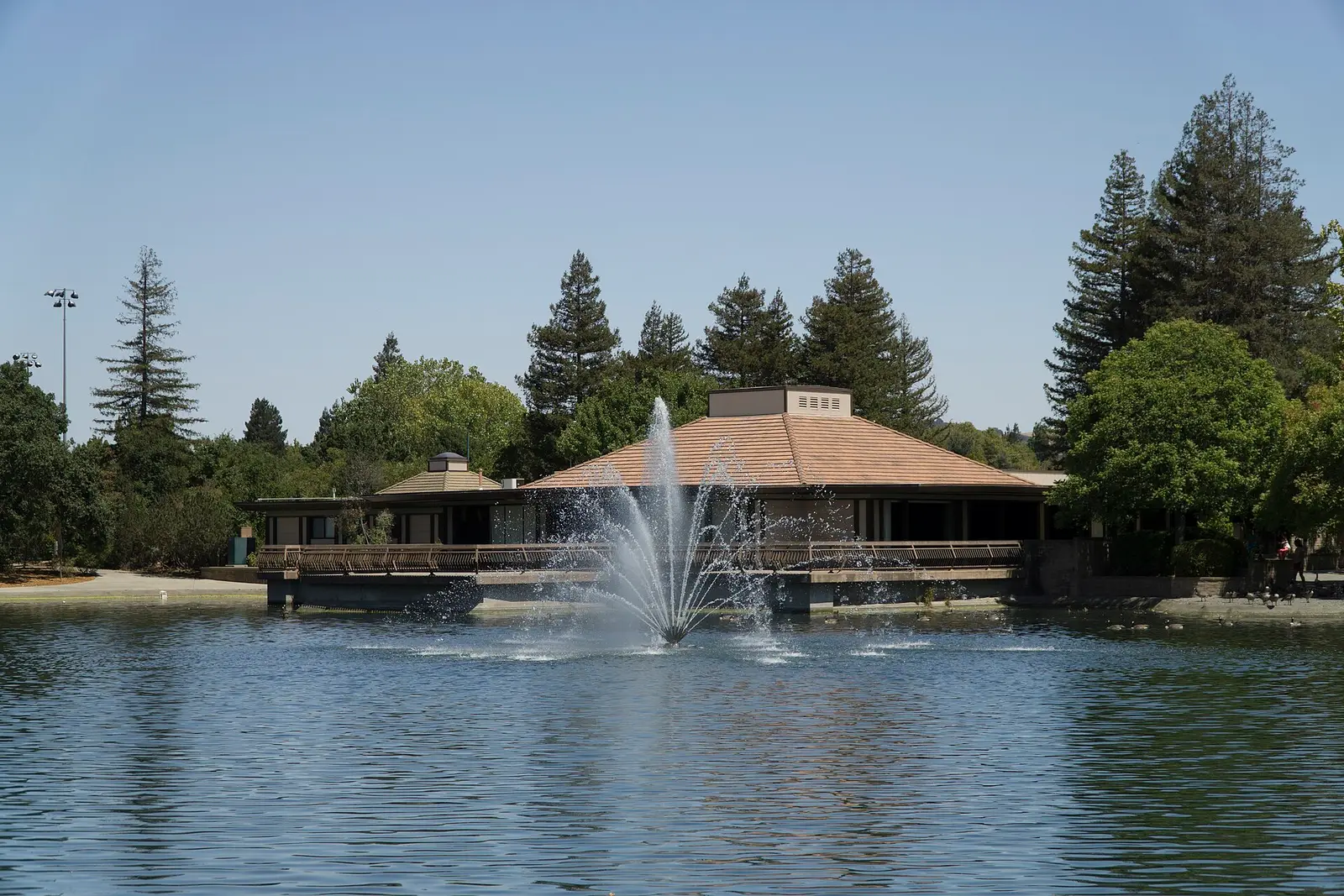
The community center at Heather Farm Park in Walnut Creek
The community center at Heather Farm Park in Walnut Creek. Photo: Californiathegreat, CC BY-SA 4.0, via Wikimedia Commons.
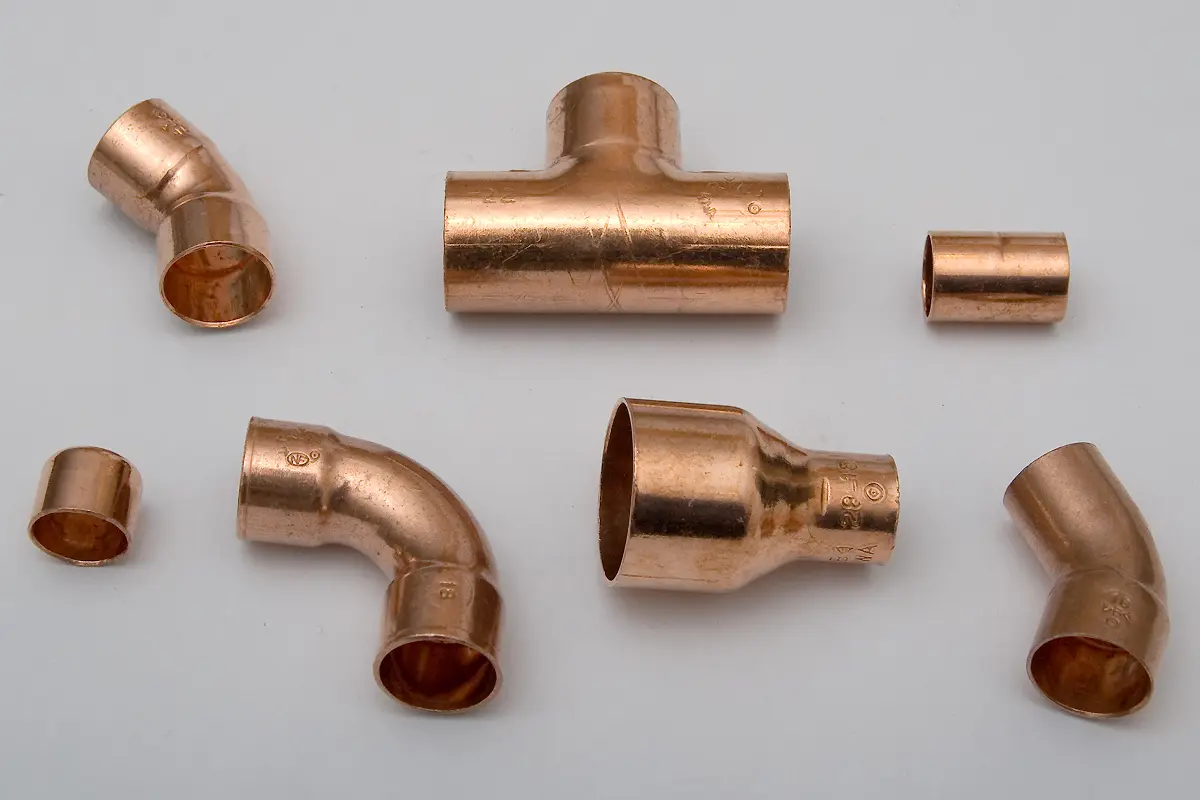
Copper pipe fittings: elbows, a tee, reducers and couplings
Copper pipe fittings: elbows, a tee, reducers and couplings. Photo: Torsten Bätge, CC BY-SA 3.0, via Wikimedia Commons.

The houses here

Long laterals, radiant slabs and a few septic tanks

Walnut Creek's population climbed from about 2,400 in 1950 to nearly 40,000 by 1970, so many of the city's sewer laterals date from those same years. Central San describes a side sewer as generally a four-inch line from the house to the public sewer, and part of it may have been stubbed out to the lot when the main was built. In Rancho San Miguel, Eichler poured concrete slab floors with radiant heating pipes inside them, so the heating system is plumbing too, buried in the floor. And not every lot was sewered from the start: Central San still runs a Septic to Sewer financing program that names Walnut Creek in its service area.

The work

From the cleanout to the main: common plumbing work here

  1. Replacing a cracked side sewer

    Lateral work outside the house belongs to Central San rather than the city. Its permit has to be in hand before any trenching starts, whether the pipe runs under the lot or the street, and its inspectors want 24 hours' notice. The district lists what may go in the ground: PVC SDR 26 or C900, ABS, cast iron to match a repair, ductile iron, or HDPE for pipe bursting. An owner may dig the private section alone only while the trench stays five feet deep or less.

  2. Water heater swaps against the city's checklist

    Replacing a water heater needs a Walnut Creek permit, and the city's handout for gas storage heaters reads like the inspector's list: straps at the upper and lower thirds of the tank, burners and igniters 18 inches above a garage floor, a bollard where a car could strike it, a drain pan where a leak would do damage, and a relief line run outdoors ending 6 to 24 inches above grade. Ask whether each item is in the quote.

  3. Sewer for a backyard ADU

    Central San is specific about where an accessory dwelling unit drains. On the same parcel as the house, the ADU connects to the existing lateral downstream of the main house cleanout, and its line may not tie back into the house plumbing. If a lot split will leave the ADU on its own parcel, it needs its own connection to the public main. Settle the route before the slab is poured.

  4. Converting a septic system to sewer

    Where a Walnut Creek lot still drains to a septic tank, the move to public sewer comes in pieces: a side sewer to an available main, plumbing changes inside the house under a city permit, Central San's fees, and abandoning the tank under a Contra Costa Environmental Health permit once the new line is tested and accepted. An existing pipe to the tank can stay in service only if it is at least four inches across and passes a pressure test Central San witnesses.

Permits and local rules

Two agencies, two permits: the rules behind the pipes

  1. Central San owns the main; you own the rest

    Central San's permit FAQ says each property owner is responsible for the entire sewer from the house to Central San's main, including the lateral beneath the sidewalk and street. Exterior sewer work and its inspections fall under Central San's jurisdiction and are not included in a city building permit. Work in the public right-of-way or a Central San easement requires a properly licensed contractor registered with Central San, and unregistered contractors must register before pulling a permit.

    Central Contra Costa Sanitary District (opens in a new tab)
  2. An overflow protection device on every lateral

    Central San requires a sewer overflow protection device on every home or property it serves. The device reroutes a backup so it spills outside rather than inside the building. Central San does not supply them, recommends a licensed plumber because the device's elevation and location decide whether it works, and asks owners to keep it accessible and free of soil and plants. A blockage between the device and the house drains is not something it can relieve.

    Central Contra Costa Sanitary District (opens in a new tab)
  3. Water-conserving fixtures under PB-065

    Walnut Creek's Policy Bulletin PB-065 applies the state's fixture law, Civil Code Sections 1101.1 to 1101.8, to properties built on or before January 1, 1994. Since January 1, 2017, every non-compliant fixture in an existing single-family house or duplex has had to be replaced with a water-conserving one, alterations or not, and permit applicants must make the replacements before final approval. The city implements the rule through a self-certification signed by the property owner.

    City of Walnut Creek Development Review Services (opens in a new tab)
  4. Two water utilities in one city

    The city states that two utilities serve Walnut Creek, the East Bay Municipal Utility District and the Contra Costa Water District, and points owners to each one's service-area map. EBMUD's Walnut Creek treatment plant on Larkey Lane treats Mokelumne River water stored at Pardee Reservoir along with water from Briones Reservoir. CCWD draws from the Delta and carries it south to Walnut Creek in the Contra Costa Canal. Meter questions and leak calls go to whichever one sends the bill.

    City of Walnut Creek (opens in a new tab)

State license for this work: C-36 Plumbing, C-42 Sanitation System. Look up a contractor's license on the CSLB website (opens in a new tab).

Part by part

Parts of town where the plumbing call changes

  • Rossmoor

    Plumbing in a manor is an alteration. First Walnut Creek Mutual's policy manual lists plumbing among the work that needs an alteration permit from Rossmoor's Mutual Operations Division before anything starts, and only a Mutual member can apply. A tub-to-shower conversion is a standard alteration approved at that level, and a city permit may be needed on top.

  • Rancho San Miguel

    In these Eichlers the heat itself runs through pipes in the concrete slab. Before a leak call, it helps to know whether the house still uses that radiant loop, since tracing water in a slab is different work from fixing a supply line behind a wall.

  • CCWD-served addresses

    The Contra Costa Water District lists Walnut Creek among the cities it serves only in part, so two neighbors a few streets apart can have different water suppliers. Check the bill before a meter-side repair or a conservation rebate application, because the right district differs.

Before you hire

Before a Walnut Creek plumber picks up a shovel

  • Confirm the company is registered with Central San before a lateral job, since registration comes before the sewer permit.
  • Ask whether the quote includes Central San's sewer permit and inspection, which a city building permit does not cover.
  • Ask where the overflow protection device will sit and how it stays accessible, above soil and clear of planting.
  • Look up the C-36 Plumbing license at cslb.ca.gov and match the name to the contract.
  • For a water heater, ask whether the strapping, relief line, drain pan and any garage bollard are in the price.

Questions

Plumbing questions with Walnut Creek answers

Do I need a sewer lateral inspection to sell a house in Walnut Creek?

Not under Central San's rules. Its FAQ says it has no point-of-sale sewer lateral inspection ordinance, and while it encourages having the line inspected before buying or selling, it does not require it. Because the owner answers for the lateral all the way to the main, a camera inspection before closing is still worth weighing.

Who fixes the sewer pipe under my street in Walnut Creek?

Usually you do. Central San holds each owner responsible for the whole sewer from the house to its main, the part under the sidewalk and street included, and says it cannot remove a blockage or make repairs on that private line. Work in the street needs a properly licensed contractor registered with Central San, plus Central San's permit before digging.

Is my water from EBMUD or the Contra Costa Water District?

It depends on the address, and the bill names the supplier. The city says both serve Walnut Creek and points to their service-area maps. CCWD lists Walnut Creek as a city it serves in part, and EBMUD's east-of-hills area includes portions of Walnut Creek. Knowing which one serves you matters for meter problems and for conservation programs.

Can a new ADU's sewer line tie into the house plumbing?

Not inside the house. Central San says an ADU on the same parcel connects to the existing lateral downstream of the main house cleanout, and its sewer line cannot connect back into the house plumbing. An ADU that ends up on its own parcel after a lot split needs a separate connection to the public main.

If I replace one toilet, do the other fixtures matter?

They can. Under Walnut Creek's PB-065, every non-compliant fixture in a single-family house or duplex built on or before January 1, 1994 has had to be water-conserving since 2017, and permit applicants have to finish those replacements before final approval. If older showerheads or faucets remain, plan to change them along with the toilet.

Plumbing work in Walnut Creek? Tell us what you see.

One request reaches local handymen and contractors who take this work. The Handyman SF connects you with them; it does not do the work.

HandymanNow for handymen Work in Walnut Creek? Get job leads by text. Pick your trades and areas, take only the jobs you want. No subscription. Start getting leads HandymanNow for homeowners Get the HandymanNow app. Send a request with photos, message your handyman and follow them on the way. Download the app

HandymanNow app

Fix it faster. Find work faster.

Homeowners send a job with photos and follow their handyman on the map. Handymen get local jobs by text and take only the ones they want.

Call Get a quote