Napa houses since the 2014 quake, from Calistoga Avenue to Westwood
The 2014 South Napa earthquake showed where older Napa houses are weak: unbraced brick chimneys and tall cripple walls under raised floors. The housing runs from Victorians built after 1868 in Napa Abajo and along Calistoga Avenue to the 1943 Westwood defense tract, so jobs range from original sash and porch rails to quake straps and winter gutters.
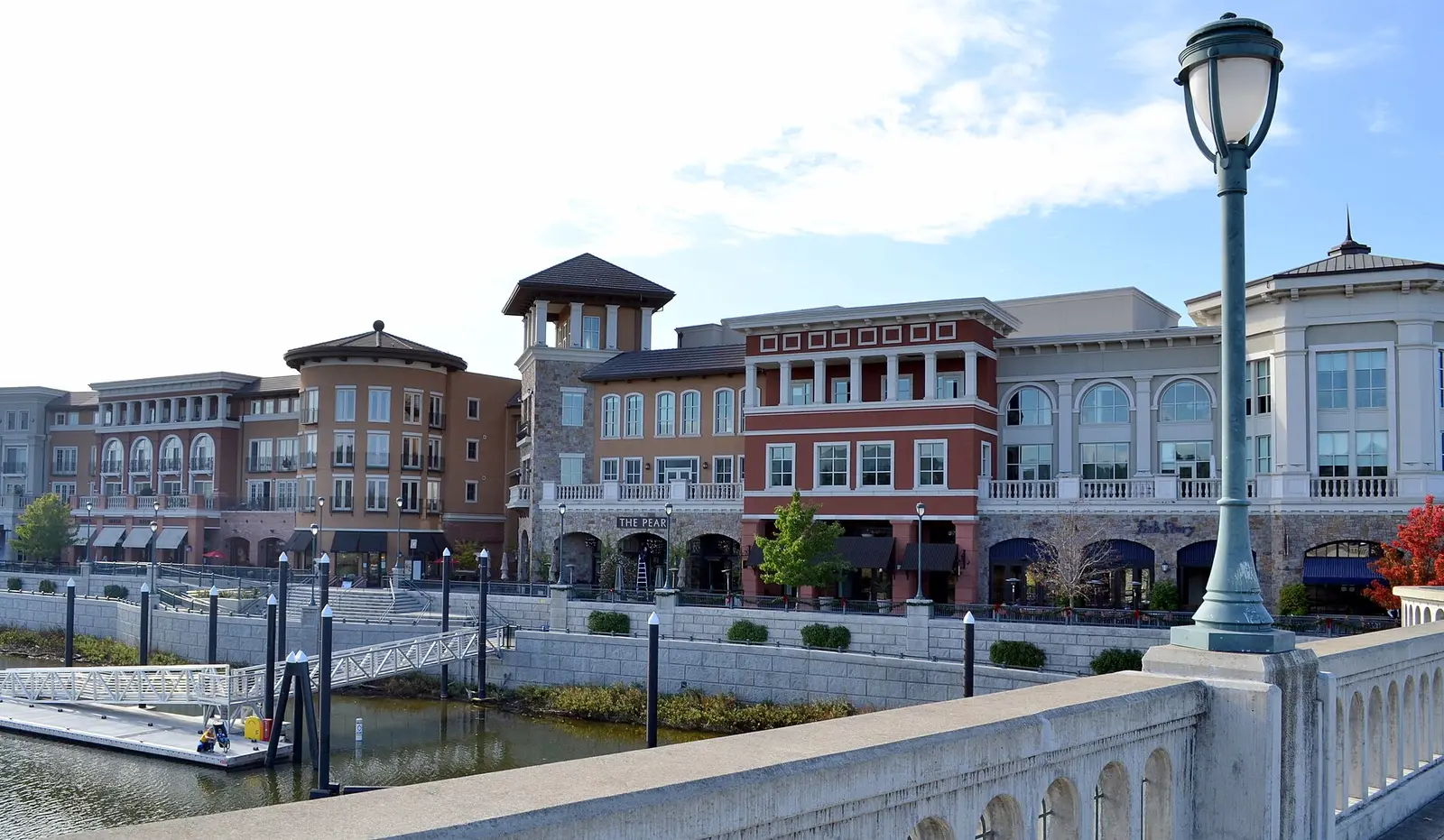
Downtown Napa buildings with towers and arched windows above the Napa River, seen from a riverside railing with a lamppost. Photo: Oleg Alexandrov, CC BY-SA 4.0, via Wikimedia Commons.
ZIP codes
94558, 94559
When the homes were built
1868-1960s
Main streets
Jefferson Street, Calistoga Avenue, Soscol Avenue, Browns Valley Road
Landmarks
Fuller Park, Oxbow Bypass, Tulocay Cemetery
What homes in Napa need most
Quake prep the 2014 shaking pointed to
FEMA's study of the August 24, 2014 earthquake found house damage concentrated in two places, unbraced chimneys and unbraced cripple walls, and bricks from one collapsed fireplace struck a teenager asleep in a living room. Bracing a cripple wall or rebuilding a chimney is permit work for a licensed contractor, and the city lists seismic upgrades among its express-review projects. The smaller items are handyman work: strapping bookcases and tall dressers to studs, latching cabinets, and checking that the water heater's earthquake straps are still tight, which state law requires of every residential heater. More about general handyman repairs
Original sash in the Victorian districts
The National Register nomination for Napa Abajo/Fuller Park counts door and window openings and their surrounds among the features that make a house a contributor, and notes that some original windows have already given way to aluminum sliders. Repairing what is there usually keeps a house in step with the district: freeing painted-shut sash, renewing cords and pulleys, refitting loose stops and planing doors that bind. On Calistoga Avenue, a local landmark district since 1988, alterations go before the Cultural Heritage Commission, so ask Planning before swapping a window on the street side. More about door and window repair
Porches added around 1900
Many Napa Abajo houses gained spacious front porches at the turn of the century, and the district's nomination lists replaced balustrades and roof supports as one of the most common later changes. Worn treads, split rails and balusters that no longer match their neighbors can be replaced in the original profile, which keeps the porch in character. A sagging porch roof, rotten posts carrying a load or a failing foundation pier is structural, and belongs to a licensed contractor. More about carpentry, shelves and trim
Gutters ahead of the river season
Rain here falls mainly between fall and spring, and the city prepares for it: free sandbags are handed out at the Corporation Yard on Jackson Street on the first Saturday of each month from December through March, with more sites opened when a flood watch is posted. Clearing gutters and downspouts before the first storms, and turning downspouts away from raised foundations and crawlspace vents, keeps roof water out from under the house. Do it once leaves are down and again in midwinter if trees overhang the roof.
Patching around a retired chimney
FEMA's advisory on chimneys damaged in the 2014 quake offers four paths: cap the chimney at the roof, rebuild it from the firebox up with a metal flue or a fireplace insert, or rebuild firebox and chimney entirely. The city had published a handout in 2000 on converting masonry fireplaces to factory-built metal chimneys. Whichever path a mason or contractor takes, it often leaves torn wall and ceiling finishes around the old flue and hearth, and patching, texturing and painting those is work a handyman can take on afterward. More about drywall and plaster repair
How the houses here are built
Victorian and early-1900s houses in Napa Abajo, Fuller Park, St. John's and along Calistoga Avenue; streetcar-era bungalows in Spencer's Addition, West Napa and Alta Heights; the 1943 Westwood and 1941 Lincoln Park wartime tracts; and the ranch-house subdivisions that followed, such as Devita and Bel Aire.
Almost all of it is wood frame. The older houses stand on raised floors, some over cripple walls about five feet tall, and 1920s bungalows were often clad in stucco. Wartime and postwar houses are one story, long and low, with the garage built into the front of the house.
Summers here are warm and almost rainless, and the winter storms drain into the Napa River and Napa Creek, which meet downtown and flooded the center of town in 1986 and again in 2005.
Good to know before a job in Napa
Two kinds of historic district
Napa Abajo/Fuller Park, twenty-three blocks between Fuller Park and the Napa River, was listed in the National Register in 1997 with 295 contributing buildings from its 1868-1918 period of significance; the city publishes its own design guidelines for it. Calistoga Avenue, shaped by the electric railway that arrived in 1905 and lined with small tracts of nearly identical 1890s Stick/Eastlake houses, was designated a local landmark district in 1988, and the city's 2009 citywide historic context statement called it Napa's only locally designated district. The city's Historic Resources Inventory falls under Municipal Code Chapter 15.52, and the Cultural Heritage Commission decides Certificates of Appropriateness.
Flood maps redrawn in 2019
The Napa River-Napa Creek Flood Protection Project has been under construction since 2000. The Napa Creek bypass was finished in 2012 and the Napa River dry bypass in fall 2016, and FEMA's revised maps took effect on January 22, 2019, moving many properties out of the floodway and floodplain. Building in what remains mapped falls under the city's Floodplain Management Overlay District, Municipal Code 17.38, and the city keeps an inventory of elevation certificates on file by address.
Browns Valley and the fault line
Browns Valley, west of downtown, was prune orchards and a country lane well into the twentieth century before postwar subdivisions filled it in. In 2014 the surface rupture of the fault ran through the neighborhood: FEMA's team followed one crack from the street, up a driveway and around a garage of a slab house built about 1960, which was posted unsafe, and found buckled floors next door. The ground kept creeping in the days after, so cracks there can be fault movement rather than settling.
How a request works
Describe the job
A sentence and a photo or two is enough. It takes about a minute.
A local handyman gets in touch
By call or text, to ask what the photos don't show and give you a price.
You decide
Agree a time and price with the handyman directly, or don't. Requesting costs nothing.
Questions from Napa homeowners
Should we rebuild the brick chimney the 2014 earthquake damaged?
FEMA's recovery advisory warns that a chimney rebuilt to match its pre-earthquake condition stays vulnerable, and that bringing an old unreinforced chimney up to modern seismic performance is generally not feasible. It recommends capping at the roof, rebuilding above the firebox with a lightweight metal flue, or full reconstruction, all under a building permit. Lightweight metal flue chimneys caused no injuries in the Napa quake.
Is our house inside the Napa Abajo/Fuller Park historic district?
The National Register district covers twenty-three blocks between Fuller Park and the Napa River, with boundaries that follow parcel lines, and about 70 percent of its major buildings were counted as contributors. Being on or near it does not by itself settle what review a project needs. Ask the city's Planning Division before exterior work, and read the district design guidelines the city publishes.
Do Napa water heaters really have to be strapped?
Yes. California Health and Safety Code 19211 requires every new, replacement and existing residential water heater to be braced, anchored or strapped against earthquake motion, and a seller must certify it in writing. In 2014 a seismically braced heater in a Browns Valley house split by the fault came through undamaged, while restraint straps failed on two school water heaters in the area.
Where do we get sandbags in Napa before a storm?
The city hands out free sandbags on the first Saturday of the month from December through March at the City of Napa Corporation Yard, 770 Jackson Street, from 9 a.m. to 1 p.m. When a Flood Watch develops it opens more locations and posts them on its emergency information page and social media.
What happened to tall cripple walls in the 2014 earthquake?
Two Napa houses built around 1910 stood on cripple walls about five feet tall that failed. One duplex fell toward the neighboring lot and lost its side porch roof; another shifted sideways without collapsing. Of about 100 homes raised above flood level under FEMA programs, mostly on properly braced cripple walls, all but one were posted as inspected. Bracing is permit work, and the city offers a Brace and Bolt plan set handout.