Cabinets and countertops Mountain View
New cabinet boxes need a Mountain View permit; a new countertop does not
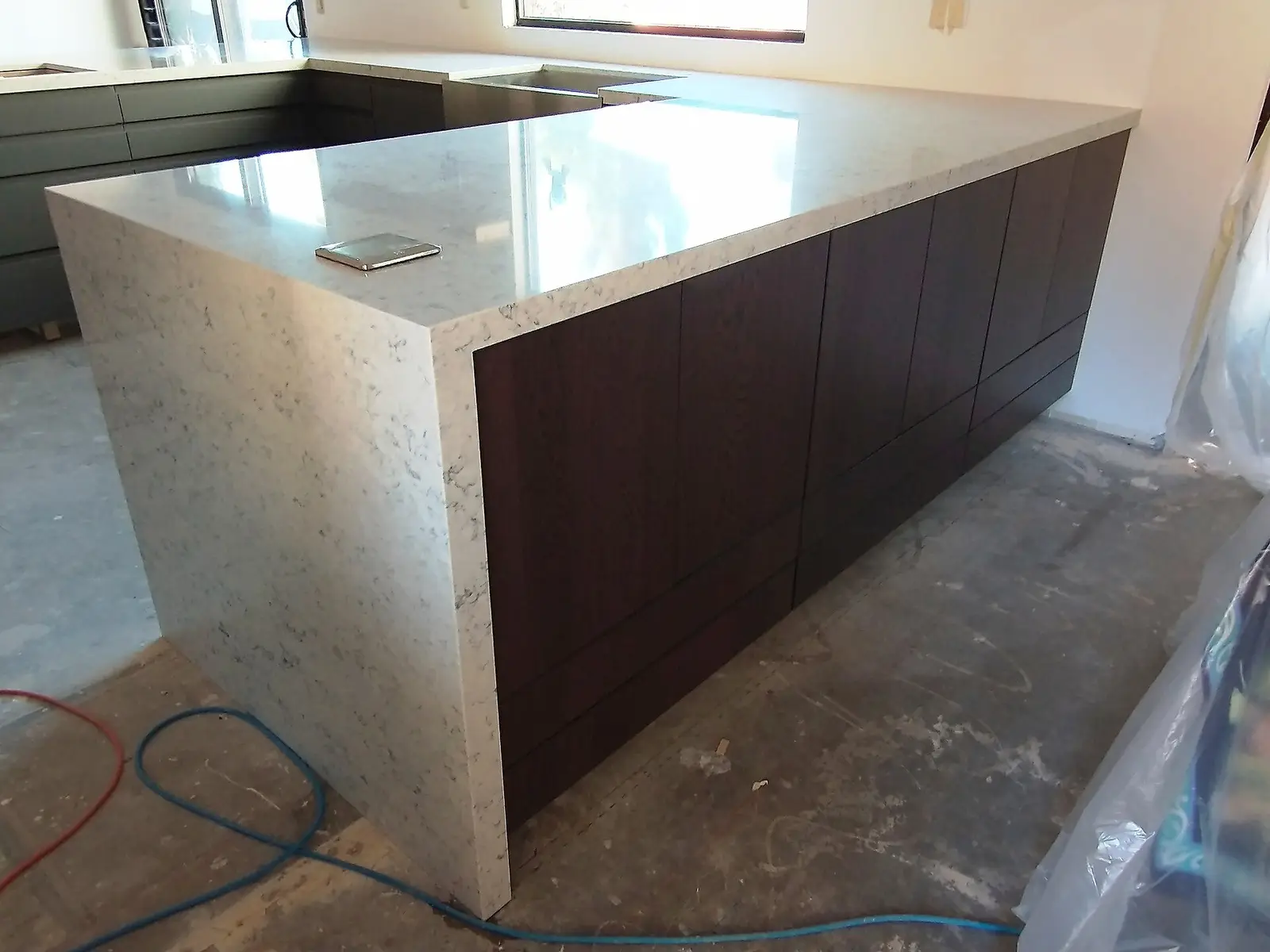
Mountain View draws its permit line through the cabinet boxes. The city's list of exempt work carves kitchen cabinet replacement out of the finish-work exemption, so new boxes mean a building permit and plans, while a new countertop on the old boxes, or refaced doors and frames, needs none. Once a permit is open, the city's kitchen guide reaches into the cabinetry itself, from how the lights inside and under it are switched to wiring that readies the range wall for electric cooking.
- Free to request, no obligation to hire
- Up to five local pros who take this work can reply
- Rules on this page checked against 12 public sources, October 2026

How cabinet and countertop work goes in Mountain View
Where Mountain View writes the cabinet rules down
Projects that don't require permits
The city's list follows Section R105.2 of the California Residential Code and then narrows it. Painting, tiling, cabinets, countertops and similar finish work are exempt only when they are not part of an accessible route or of a kitchen or bathroom remodel. On the plumbing side, stopping a leak needs no permit, but a concealed trap, drain or vent pipe that has to be removed and replaced does, which is the pipe a sink-base tear-out tends to expose. Exempt work still has to keep to the city's construction hours.
Source: City of Mountain View Building Division (developmentpermits.mountainview.gov)
Who can sign for a permit
Whoever signs, or pulls, a permit is responsible for all the work done under it. State licensing also limits which permits each contractor may sign; the city's own example is that a plumbing contractor cannot sign for an electrical permit, nor an electrician for a plumbing one. An owner-builder completes the Owner Acknowledgement and Information Verification Form and shows identification, and anyone signing for an owner needs a notarized authorized agent form.
Source: City of Mountain View (developmentpermits.mountainview.gov)
Go Electric recommendations for kitchens
The city's Go Electric page advises running circuits for a cooktop and oven during any kitchen remodel, even when the gas appliance stays, so tiled walls and cabinets need not be opened later, and notes that an induction stove commonly needs a 240-volt, 50-amp circuit. It also suggests efficient appliances, shared circuits and load management to avoid a larger electrical service, and points residents to Silicon Valley Clean Energy's eHub and its Go Electric Advisor.
Source: City of Mountain View, Go Electric (developmentpermits.mountainview.gov)
State license for this work: C-6 Cabinet, Millwork and Finish Carpentry, C-54 Ceramic and Mosaic Tile, C-61/D-12 Synthetic Products. Look up a contractor's license on the CSLB website (cslb.ca.gov).