Do we need a Fremont permit to replace the cabinets and put in a quartz counter?
Not for the cabinets and the counter themselves. Fremont lists cabinets, countertops and similar finish work among jobs that need no permit. The permit question comes from what moves with them: a sink, a dishwasher, a new outlet or a ducted hood. A kitchen that keeps its walls can take all of that on the express Kitchen Remodel, Like for Like record, filed through Citizen Access.
Our 1962 house is getting a permitted kitchen. Why are the bathrooms involved?
Because of SB 407. Fremont applies it to permits for alterations on houses built on or before January 1, 1994, and final approval waits until noncompliant fixtures throughout the house have been replaced with water-conserving ones. Fixtures that already meet the limits can stay. A panel upgrade or a new water heater on its own would not have triggered the rule; the kitchen remodel does.
Can the wall between our kitchen and family room come out on the express permit?
No. The express kitchen record excludes any wall alteration and any work outside the kitchen, so opening the room up takes a general Building Permit, the type Fremont uses for residential alterations. A change to the outside, such as a larger window over the sink, adds a step on a house 50 years or older: a Historic Evaluation Request before the permit is issued.
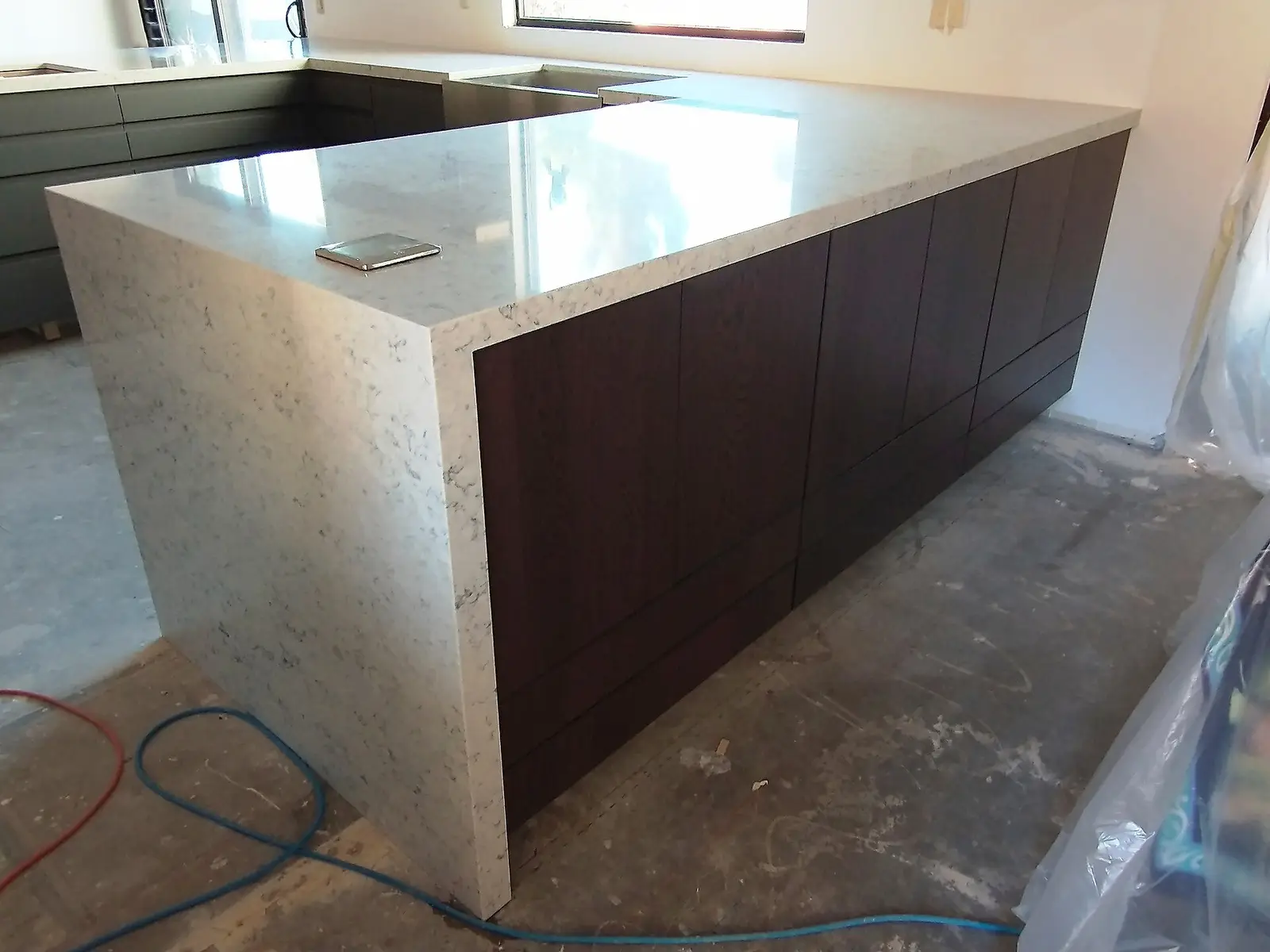
Does a new Fremont kitchen island have to have an outlet?
Not necessarily a working one. If a receptacle is installed for an island or peninsula, Fremont's plan sheet wants it GFCI-protected and either in a raised backsplash no more than 20 inches above the counter or in a listed countertop assembly. Without one, the sheet calls for a provision so a receptacle can be added later, such as a junction box inside the island cabinet carrying the required small-appliance circuit.
The new cabinets smell strongly. Is that formaldehyde?
Not necessarily. CARB notes that varnish, paint and other finishes on cabinets also give off odors, and that formaldehyde from panels made with formaldehyde-based resins is released fastest when a product is new and drops over time. Its advice is to ventilate with open windows and exhaust fans, keep temperature and humidity down, and, if the boxes arrive before installation day, let them air out in the garage for a few days.