Retaining walls and hardscape Oakland

Holding up Oakland hillsides: walls, grading limits and creekside lots

On an Oakland hill lot the wall is often the simpler part; the soil around it is what the city regulates. Disturbing ground that slopes more than 20% needs a grading permit, so does grading of any size where the city knows of land stability problems, and no grading is allowed from October 15 to April 15. A creek or protected tree near the wall brings a separate permit of its own.

Wet-season grading ban
October 15 to April 15, every year
Steep-ground trigger
Any land disturbance on slopes over 20% needs a grading permit
Creek setback band
Category 4 permit within 20 feet of the top of bank
Landslide hazard map
USGS MF-2379 covers Oakland and Piedmont (2001)

Get quotes for retaining wall work in Oakland

Two short steps. A local pro who takes this work calls or texts you back.

To send a request, call or text (415) 449-8213.

Free to request, and you agree the scope and price with the person you hire before work starts. In California, a job over $1,000 in labor and materials, or one that needs a building permit, must be done by a contractor licensed by the CSLB in the right class. Ask for the license number and check it at cslb.ca.gov.

Downtown Oakland and Lake Merritt from the air
Downtown Oakland and Lake Merritt from the air. Photo: Dcoetzee, Public domain, via Wikimedia Commons.
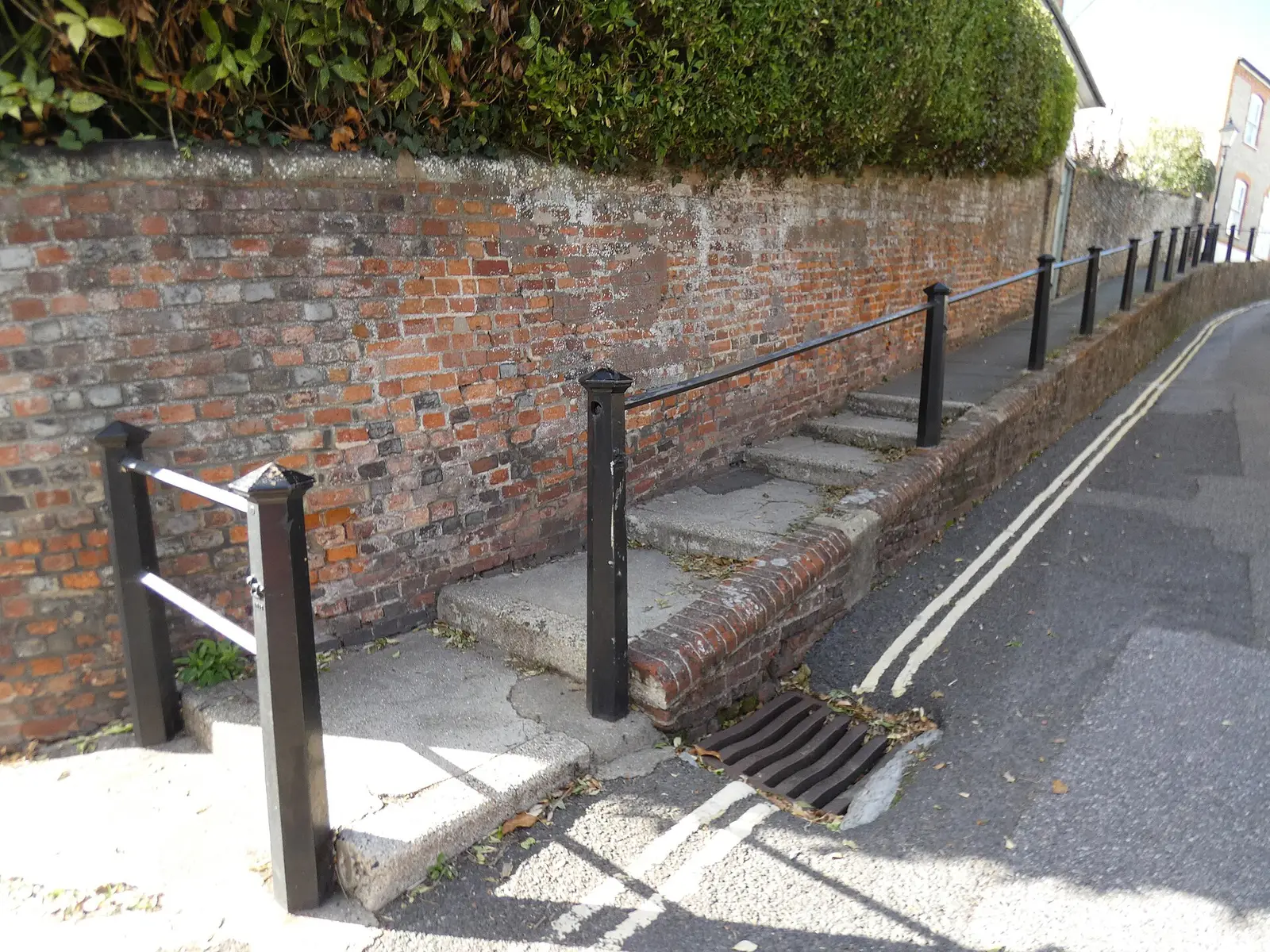
A brick retaining wall holding up a raised garden beside a sloping street
A brick retaining wall holding up a raised garden beside a sloping street. Photo: Djm-leighpark, CC BY-SA 4.0, via Wikimedia Commons.

The houses here

Hill lots cut, filled and walled since the 1920s

Oakland's hills opened to houses once cars could climb grades the streetcars never managed; Rehab Right, the city's 1978 rehab manual, ties the change to the automobile boom of the 1920s. Building on those slopes meant cutting a level pad into the hill, filling below it and holding both edges with walls, wood or concrete, on lots that keep shedding winter rain downhill. Sections of creeks were buried in culverts to limit flooding as the city grew over them, and the city still treats a creek as a creek both above and below its culvert. The U.S. Geological Survey has mapped earthquake-induced landslide hazard for Oakland and Piedmont, modelled for a magnitude 7.1 quake on the Hayward Fault with fully saturated ground.

The work

Wall projects on Oakland slopes, and what each one triggers

  1. Rebuilding a wall below a cut pad

    Replacing a failing wall on a hill lot usually means excavating behind it, and once that digging disturbs ground steeper than 20%, Oakland wants a grading permit as well as the wall's own building permit. The city also notes that walls built as part of a grading project may need Planning and Zoning review. The grading application goes in through the Online Permit Center with plans and an Initial Statement of the Engineer, so the engineer is involved before the first bucket of soil moves.

  2. Walls close to a neighbor's line

    Small digs near a lot line are treated more strictly than the same volume mid-lot. Oakland requires a grading permit for more than 5 cubic yards of excavation or fill within 15 horizontal feet of any property line when the cut drops below, or the fill rises above, a 2:1 line drawn from that property line. On narrow hill lots where the wall sits a few feet from the boundary, that threshold arrives quickly, and it protects the neighbor's slope as much as yours.

  3. Walls beside a creek or culvert

    A wall within 20 feet of a creek's top of bank falls in Category 4 of Oakland's Creek Protection Permit, which names landscape walls, fences, patios, decks, private drainage and trenching among its examples. Category 4 work needs a creek protection plan and a hydrology report from a licensed engineer with creek hydrology expertise, approved by the city before the permit issues. Farther than 20 feet from the top of bank, more than 3 cubic yards of earthwork still lands in Category 3.

  4. Building around protected trees

    Oakland's tree ordinance, Municipal Code Chapter 12.36, requires a permit to remove a protected tree, and a project that already needs a building or grading permit goes through the development-related path, reviewed by the Public Works Tree Division. Trees that stay must be fenced at a distance the Tree Reviewer sets, with no grade changes, chemical storage or open flames near their protected perimeter. A wall footing traced through an oak's root zone has to be designed around that.

  5. Stabilizing a slope after a winter slip

    When a bank lets go in a storm, Oakland allows grading of an emergency nature to safeguard life or property before a grading permit is issued, and that exception is the one way around the wet-season moratorium. The permit and engineering still follow. Where the city already has information about land stability problems on or near a site, any grading there, of any volume or height, needs a permit, so a lot with a history of movement should expect that paperwork for its permanent repair.

Permits and local rules

Grading, creek and tree rules behind an Oakland wall

  1. When Oakland requires a grading permit

    Oakland's grading triggers include: more than 50 cubic yards of cut or fill where the slope exceeds 20% or the cut or fill is over five feet deep; any land disturbance on ground steeper than 20%; more than 5 cubic yards within 15 feet of a property line beyond a 2:1 line; any grading where the city has information of land stability problems; and over 500 cubic yards on a parcel. Retaining walls in a grading project also need their own building permit.

    City of Oakland Planning & Building (opens in a new tab)
  2. The wet-weather grading moratorium

    A City of Oakland grading moratorium is in effect every year from October 15 to April 15, the wet weather season, and no grading operations are allowed during that time. The same city page states that grading of an emergency nature to safeguard life or property may be undertaken before a grading permit is issued. For a planned wall that involves real earthwork, the digging belongs in the dry half of the year.

    City of Oakland Planning & Building (opens in a new tab)
  3. Creek Protection Permits

    Any construction on a creekside property, meaning one a creek or riparian corridor crosses or adjoins, needs a Creek Protection Permit first. The category depends on distance: exterior work between 20 feet from the top of bank and 100 feet from the centerline is Category 3, and work from the centerline to 20 feet from the top of bank is Category 4. Zoning staff handle the permits, working with the Public Works Watershed Division, and a Creek Determination settles whether a lot counts.

    City of Oakland Planning & Building (opens in a new tab)
  4. Protected trees during construction

    Oakland's Protected Trees Ordinance, OMC 12.36, requires a permit to remove a protected tree on public or private property, with a development-related permit for projects that need design review or a zoning, building, grading or demolition permit. Trees that remain must be protected for the whole construction period, fenced at a distance the Tree Reviewer sets, and any damage to one has to be reported at once to the Oakland Public Works Tree Division.

    City of Oakland Public Works (opens in a new tab)

State license for this work: C-27 Landscaping, C-8 Concrete, C-29 Masonry. Look up a contractor's license on the CSLB website (opens in a new tab).

Timing

Fitting the dig between April 15 and October 15

Oakland bans grading operations from October 15 to April 15 every year, so a hillside wall that needs real excavation has a dry-season window. Engineering, a soils review, a grading permit, a creek or tree permit and the wall's building permit can all take time, which makes winter the season to design and apply, and late spring the time to break ground. A crew that cannot finish its cut before mid-October should explain how the open slope will be protected until April.

Before you hire

Before anyone starts digging into your slope

  • Ask whether the job needs a grading permit as well as the wall's building permit, and who prepares the Initial Statement of the Engineer.
  • Ask for a schedule that finishes grading before October 15, and what protects open cuts if the work runs late.
  • If a creek, ravine or culvert crosses or borders the lot, file the city's Creek Determination before the wall is designed.
  • Ask the contractor to mark every protected tree near the work and the fencing distance the Tree Reviewer requires.
  • Confirm at cslb.ca.gov which class the builder holds, C-27 Landscaping, C-8 Concrete or C-29 Masonry, and that it matches the wall type.

Questions

Oakland slope and wall questions

Can our Oakland retaining wall go in during November?

Not if the job involves grading. Oakland's wet-weather moratorium bars grading operations from October 15 to April 15. Footing excavation fully retained by a wall built under a valid building permit, on ground no steeper than 10%, is exempt from the grading permit, so ask the building department how the moratorium applies to your specific job before booking a crew.

A culvert runs under our yard. Do Oakland's creek rules apply?

They can. The city's definition says a creek flowing through a culvert is a creek both above and below the culvert, and while pipes and storm sewers are not creeks themselves, their presence does not rule a creek out. File a Creek Determination Application to settle whether your lot counts as creekside before any wall or drainage is designed.

There is a large oak just uphill from where the wall will go. What changes?

If it is a protected tree, the wall project falls under Oakland's tree ordinance. A wall that needs a building or grading permit takes the development-related tree path, and a tree that stays must be fenced at a distance set by the Tree Reviewer, with no grade changes near its protected perimeter. Plan the footing line with that in mind.

Our bank slipped in a storm. Can repair work start before the permit?

Oakland allows grading of an emergency nature to safeguard life or property before a grading permit is issued. That covers making the site safe, not skipping the process: the permanent wall still needs its permits and engineering. If the city already has information about land stability problems on or near your lot, any grading there needs a permit.

Does a small dig near the property line need a grading permit?

It can. Oakland requires one for more than 5 cubic yards of excavation or fill within 15 horizontal feet of any property line, when the cut falls below or the fill rises above a 2:1 line drawn from that line. On a narrow hill lot, a wall footing near the boundary reaches that quickly.

Retaining wall work in Oakland? Tell us what you see.

One request reaches local handymen and contractors who take this work. The Handyman SF connects you with them; it does not do the work.

HandymanNow for handymen Work in Oakland? Get job leads by text. Pick your trades and areas, take only the jobs you want. No subscription. Start getting leads HandymanNow for homeowners Get the HandymanNow app. Send a request with photos, message your handyman and follow them on the way. Download the app

HandymanNow app

Fix it faster. Find work faster.

Homeowners send a job with photos and follow their handyman on the map. Handymen get local jobs by text and take only the ones they want.

Call Get a quote