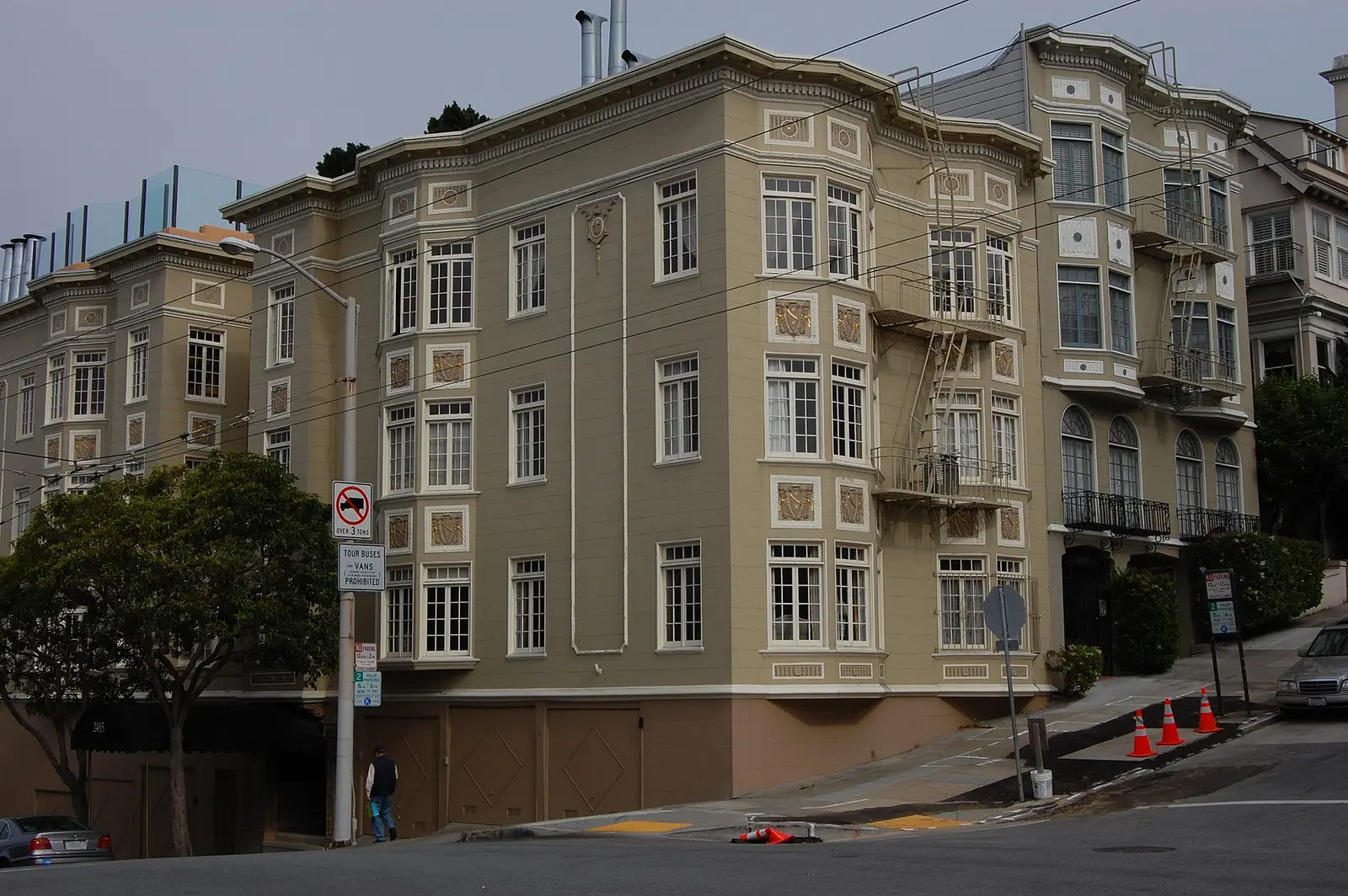
Cow Hollow repairs across every decade since the 1860s
Cow Hollow was spared by the 1906 fire, so its blocks between Lombard Street and Pacific Heights hold buildings from nearly every decade since the 1860s, now mostly flats and condominiums along with single houses. Repairs follow that age range: original sashes and paneled doors, old plaster, fixtures in stacked units, and careful mounting and assembly in shared buildings.
With buildings surviving from nearly every decade since the 1860s, Cow Hollow still has plenty of original wood sash windows and paneled doors. Sash cords break, painted-shut sashes won't open, and entry doors to flats sag after a century of use. Replacing cords, freeing and weatherstripping sashes, and rehanging and re-hardwaring doors keeps originals working. Where a sill has rotted through, it is rebuilt or replaced before the sash is refitted. More about door and window repair
Plaster walls in century-old buildings
Victorian and Edwardian flats here have plaster over wood lath, and years of conversions into condos have added drywall partitions beside it. Cracks at door corners, sagging ceiling sections and crumbling anchor holes are the typical repairs in the older rooms. Securing loose plaster to the lath before patching, and blending the joint where old plaster meets newer drywall, is what makes a repair last and disappear. More about drywall and plaster repair
Fixtures in stacked flats and condos
In a building divided into flats or condos, one unit's bathroom usually sits directly over another's ceiling, so a slow drip at a faucet, a leaking toilet base or a failed shower valve seal turns into a neighbor's water stain. Replacing faucets, toilet seals and parts, and shutoff valves before they fail is worth doing in these buildings. Leaks inside walls or shared drain lines are for a licensed plumber and usually the association. More about faucet, toilet and fixture repair
Assembly in walk-up units
Many of Cow Hollow's flats and condos are in older walk-up buildings, reached by front stairs that often turn at a landing. Assembling beds, wardrobes and shelving in the room they will occupy avoids carrying them up whole and scuffing a shared stairwell. Tall pieces in older rooms also need anchoring to the wall studs through plaster, which is worth doing in a seismic city. More about furniture assembly
Mounting on plaster and shared walls
Mounting a TV in a converted Victorian or Edwardian unit means working with plaster walls and, often, walls shared with the next unit. Fastening into framing through old plaster takes slow drilling, and in a divided building the wiring for the screen often has to follow trim or a raceway because fishing it through a shared wall isn't practical. The association may also have a say if the wall is common to another unit. More about tv mounting
How the houses here are built
More condominiums than any other type, then flats and single-family houses, plus small apartment buildings and Union Street's houses-turned-shops. Assessor records cluster in the 1900s and 1920s, with a handful from the 1860s to 1890s.
Mostly wood-frame Victorian, Edwardian and 1920s buildings with wood siding, sash windows and plaster interiors, plus some later concrete apartment buildings. Many have been divided into units, so walls, floors and pipes are often shared.
The neighborhood slopes north toward the Marina and the bay, open to the summer wind and fog that the Golden Gate draws into the city, which keeps old wood windows and siding damp.
Good to know before a job in Cow Hollow
Union Street's converted houses
Cow Hollow took its name from the dairies that grazed here until livestock was ordered out in 1891. Several of the farm-era houses on Union Street, including James Cudworth's farmhouse at 2040 Union and the twin houses he built as wedding presents at 1980 Union, were turned into shops and restaurants in the 1950s. For work on Union Street itself, with its boutiques and busy curb, a side street is usually the better place to unload.
Landmarks among the flats
The McElroy Octagon House, built in 1861, now stands at 2645 Gough Street after being moved across the street in 1951, and the Vedanta Temple at Filbert and Webster is described as the oldest Hindu temple in the western world. Holy Trinity Cathedral at Van Ness and Green is described as the oldest Orthodox Christian parish in America. Naming the nearest of these, or Allyne Park, in a request makes a nearby address easier to find.
How a request works
Describe the job
A sentence and a photo or two is enough. It takes about a minute.
A local handyman gets in touch
By call or text, to ask what the photos don't show and give you a price.
You decide
Agree a time and price with the handyman directly, or don't. Requesting costs nothing.
Questions from Cow Hollow homeowners
Our block mixes 1870s flats with much newer buildings. Does the age of ours change the repair?
Yes. Cow Hollow escaped the 1906 fire, so an 1870s flat can sit beside a 1920s apartment house. Older buildings have plaster, wood sash windows and out-of-square openings that need fitting by hand; newer ones take standard parts. Say the building's approximate age in the request.
Water is staining the ceiling of the unit below our bathroom. Can the fixture be fixed?
If the source is a faucet, toilet seal or shower valve in your unit, replacing it is routine. If the stain continues afterward, the leak may be in a drain or supply line inside the wall or floor, which needs a licensed plumber and usually the building association. Patch the ceiling below only after the leak stops.
We rent a flat above a shop on Union Street. Where should someone park?
Union Street's curb is busy with shoppers and deliveries, so a cross street such as Pierce, Steiner or Webster is usually easier. Mention the building entrance, whether it's up a separate stair beside the shop, and any owner or manager permission needed.
Can tall bookcases be anchored safely in our old plaster-walled condo?
Yes. Straps or brackets go through the plaster into the wall studs, not just the plaster, and holes are pre-drilled to avoid cracking. If the wall adjoins another unit, ask the owner or association first and warn the neighbor about the drilling.
Checked against these public sources in September 2026. Rules change: confirm anything permit-related with the City of San Francisco before work starts.