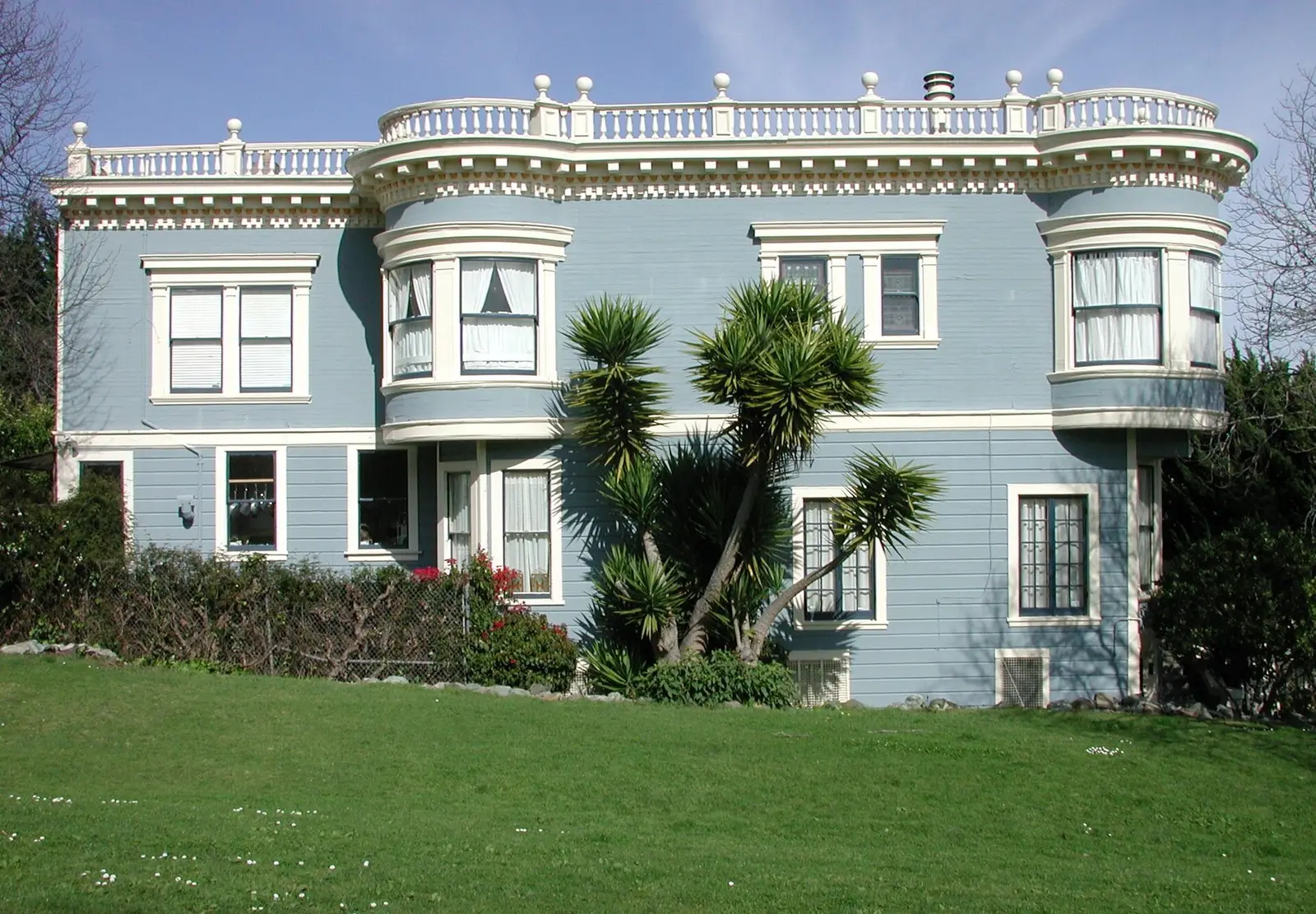
Duboce Triangle repairs between Market, Castro and Duboce
Most of Duboce Triangle dates to the 1900s, much of it classic revival flats from the 1906 era, many since divided into condominiums, packed into a small triangle bounded by Market Street, Castro Street and Duboce Avenue. Repairs are old-building work in close quarters: wood windows, plaster, trim, mounting and bathroom fixtures in stacked units.
Classic revival flats from the 1906 era still have many of their original wood double-hung windows and paneled front doors. Cords break, sashes are painted shut, and doors at the top of shared stairs drag or won't latch. Repairing originals is often the practical route here: for the neighboring Duboce Park landmark district, the Planning Department says vinyl windows are rarely approved, with or without landmark status. Cords, stops, weatherstripping and rehanging usually do it. More about door and window repair
Plaster in century-old flats
Most Duboce Triangle buildings are over a century old, with plaster over wood lath that has cracked at doorways and ceilings and been patched unevenly over decades of owners and tenants. Remodels and condo conversions often added drywall beside the old plaster. A good repair secures loose plaster to the lath before filling and blends the transition to drywall so a patched wall reads as one surface under paint. More about drywall and plaster repair
Period trim, stair rails and closets
Flats of this era have wood casings and baseboards, and shared interior stairs have wood treads, balusters and rails that loosen with daily use. Replacing a damaged section of trim to match an old profile, tightening balusters and newel posts, and adding closet shelving to shallow period closets are common small carpentry jobs. Work on a shared stair belongs to the building, so agree it with the other owners first. More about carpentry, shelves and trim
Mounting on plaster between windows and trim
Walls in Duboce Triangle flats are broken up by windows, doorways and wood trim, which leaves few good spots for a screen. The mount has to be anchored into framing located through the plaster, drilled slowly so the surface doesn't spall, with cables run along trim or through existing openings. In a divided building, confirm whether the wall is shared with another unit before drilling. More about tv mounting
Fixtures in stacked 1900s units
Bathrooms in these flats have usually been remodeled at least once since they were built, and in divided buildings they sit one above the other, so a small drip at a faucet or a failing toilet seal shows up as a stain on the ceiling below. Replacing faucets, toilet seals and parts, and old shutoff valves is routine and worth doing before a failure. Leaks inside walls or in the building's shared lines need a licensed plumber. More about faucet, toilet and fixture repair
How the houses here are built
Flats and condominiums in 1900s buildings, small apartment buildings, relatively few single houses, and some newer condo buildings from the 2010s and 2020s. The oldest known house, at 22 Beaver Street, dates to 1876.
Wood-frame flats with wood siding, wood sash windows, lath-and-plaster interiors and period trim. On the three blocks just north of Duboce Park, a city landmark district protects Victorian and Edwardian houses and flats, most of them built in 1899 and 1900.
Sheltered east of Buena Vista Heights and Twin Peaks, Duboce Triangle gets less fog than the neighborhoods over the hill, so exterior paint and wood trim here weather as much from sun as from damp.
Good to know before a job in Duboce Triangle
The Duboce Park landmark blocks
In 2013 the city designated the Duboce Park Landmark District, a three-block enclave of 87 houses and flats on Waller, Carmelita, Pierce, Potomac and Steiner streets beside the park, many built by the prolific Victorian builder Fernando Nelson. Exterior changes there go through Planning Department review, but the designation does not require review of exterior paint color or any interior alteration. If your building is on one of those blocks, check with Planning before changing windows, doors or facade details.
Streetcars, the tunnel and Market Street
The N Judah runs along Duboce Avenue at the south edge of Duboce Park and enters the Sunset Tunnel at Duboce and Noe, a portal opened in 1928. Market Street forms the neighborhood's southeastern edge. With streetcar tracks on Duboce and busy Market and Castro on two sides, the smaller interior streets such as Henry, Beaver and Belcher are the more practical places to stop and unload for a job.
How a request works
Describe the job
A sentence and a photo or two is enough. It takes about a minute.
A local handyman gets in touch
By call or text, to ask what the photos don't show and give you a price.
You decide
Agree a time and price with the handyman directly, or don't. Requesting costs nothing.
Questions from Duboce Triangle homeowners
We're on Carmelita Street in the landmark district. Can we repaint or repair our windows?
Exterior paint color and interior work are not reviewed under the Duboce Park landmark designation. Repairing existing windows in place, such as new cords, weatherstripping and reglazing, keeps the original look. Replacing windows is a different matter: check with the Planning Department first, since vinyl replacements are rarely approved.
We live beside the N Judah tracks on Duboce Avenue. Where should a work vehicle stop?
Not beside the tracks. A side street such as Noe or Sanchez, or one of the smaller interior streets like Henry or Beaver, is the usual choice. Note which door of the building to use and whether a garage is available, so the unloading plan is set before arrival.
Our condo is in one of the newer buildings near Market Street. Is the work different from the old flats?
Yes. Newer buildings have drywall, standard window and door sizes and modern fixtures, so parts are easier to match. They also usually come with association rules on work hours, elevators and contractor paperwork, which are worth sending along with the request.
Is our 1900s flat likely to have plaster behind the paint?
Very likely, at least in rooms that haven't been remodeled. Most Duboce Triangle buildings date from the first decade of the 1900s, when lath and plaster was the norm. Knocking on the wall helps: plaster sounds solid and feels cold; drywall sounds hollow. That tells you which fasteners and repair method will hold.
Checked against these public sources in September 2026. Rules change: confirm anything permit-related with the City of San Francisco before work starts.