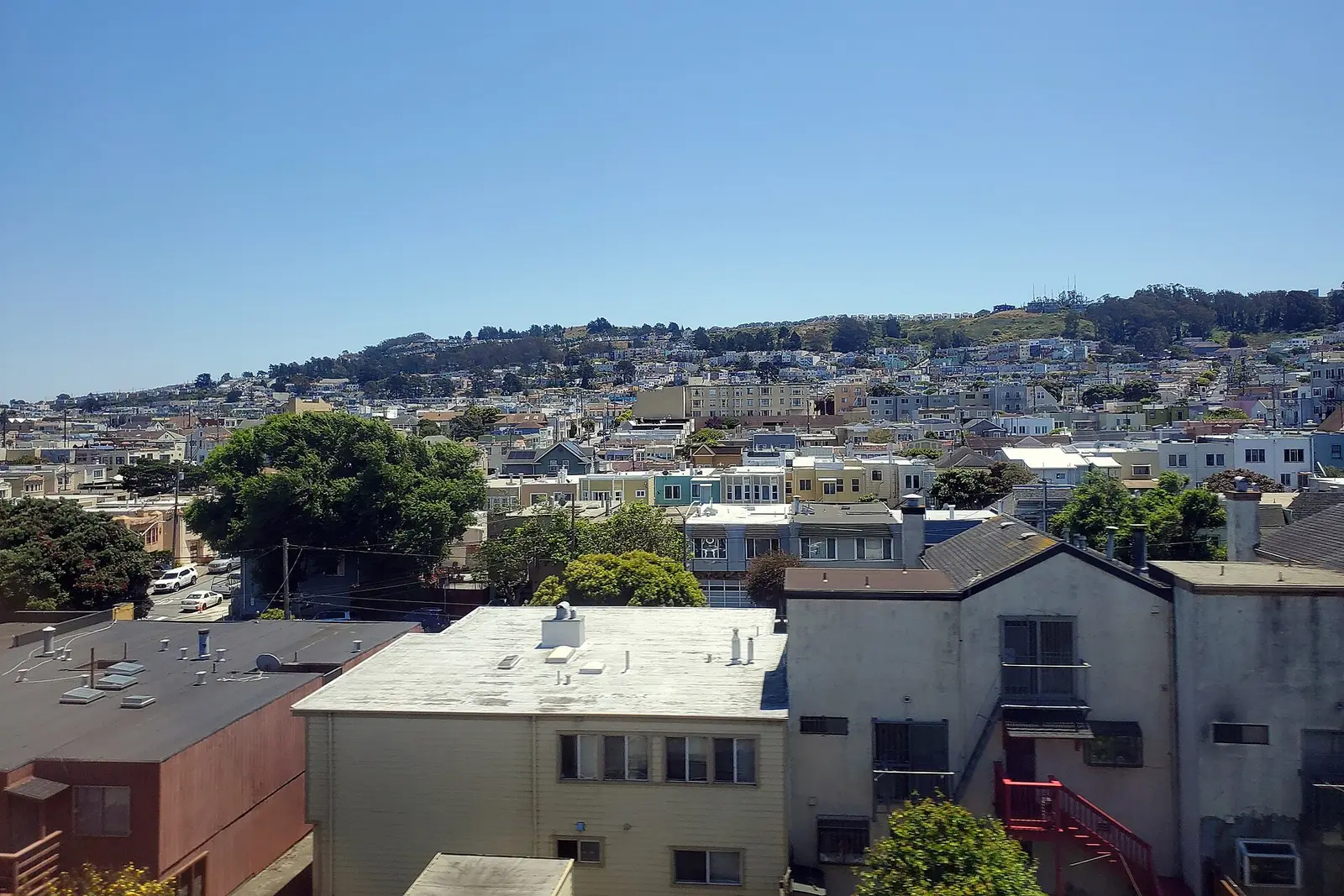
Outer Mission repairs, from garage units to back fences
Outer Mission houses are mostly single-family homes from the 1920s through the 1940s, often attached on both sides, with a small fenced back yard and frequently an in-law unit built into the garage. Repairs center on those garage-level rooms, shared-wall fences, and doors and windows on the blocks where BART trains run past.
Building an in-law apartment into part of the garage has long been common here, and those rooms take hard use: hollow-core doors split, cabinet hinges fail, baseboard gets kicked loose, and small bathrooms wear out. Cosmetic and fixture-level repairs inside an existing unit are handyman work. Creating a new unit, moving walls, adding plumbing or wiring, or legalizing an older unit are permit matters for a licensed contractor and the city. More about general handyman repairs
Fences between small back yards
Most houses here have a small fenced back yard that meets the neighbors' yards along the side and back fence lines, so one rotted post usually affects more than one household. Fence boards, posts, gate latches and the short steps down from the back door are the usual repairs. Because there is no side path, lumber and old fence sections come through the garage, which is worth clearing a lane through before the day of the job. More about fence, deck and gate repair
Sealing windows on the BART side
BART trains are visible and audible through most of the Outer Mission, and the tracks run along the neighborhood's edge by I-280. Weatherstripping, fresh caulk around window frames and door sweeps won't silence a passing train, but closing the gaps that let sound and drafts through older frames makes a noticeable difference in bedrooms on the track side. Replacing the glass itself with acoustic windows is a job for a window installer. More about weatherstripping, caulking and sealing
Doors between the garage and the house
With living space above a street-level garage, the interior door and stair from the garage is the main route in for many households and gets constant use. Hinges loosen, latches stop catching and doors rub after decades of use. Adjusting or rehanging the door, fitting a closer, and repairing the stair handrail are typical fixes. Worn thresholds and missing weatherstripping at the garage door also let cold air from the garage into the house, and both are simple to replace. More about door and window repair
Patching garage-level walls and ceilings
Garage-level rooms and in-law units often have walls added long after the house was built, and the ceilings under the main floor pick up stains and cracks from bathrooms and kitchens above. Patching holes, repairing water-stained ceiling sections once the leak above is fixed, and retexturing to match are common. A recurring stain means the source upstairs needs attention before any ceiling patch will last. More about drywall and plaster repair
How the houses here are built
Single-family houses, often attached, each with a small fenced back yard. Assessor records put about two-thirds of them between 1920 and 1949. Many houses have had part of the garage turned into an in-law apartment.
Wood-frame houses built side by side with no gap between them, living space over a street-level garage. With no side yard, everything going to the back yard travels through the garage or the house.
The city gets nearly all its rain in winter, and in these attached houses the street-level garage rooms and in-law units are where damp and musty walls show up first.
Good to know before a job in Outer Mission
Living beside BART and I-280
The neighborhood sits in a wedge between Interstate 280, Mission Street, Geneva Avenue and the Daly City line, with Balboa Park station within walking distance. Trains run past in plain sight, and Cayuga Park lies beneath the tracks, known for dense planting and more than 100 carved wooden figures. For work on the blocks nearest the tracks, expect noise during the day and plan any quiet measurements around it.
No side yards, one way in
Most houses are attached, so there is no path from the street to the back yard except through the garage or the house itself. Before a fence, deck or yard job, clear a lane through the garage, move cars if needed, and protect floors on any interior route. If an in-law unit occupies the garage, arrange access with whoever lives there, and mention it in the request.
How a request works
Describe the job
A sentence and a photo or two is enough. It takes about a minute.
A local handyman gets in touch
By call or text, to ask what the photos don't show and give you a price.
You decide
Agree a time and price with the handyman directly, or don't. Requesting costs nothing.
Questions from Outer Mission homeowners
Can a handyman make our bedroom by the BART tracks quieter?
Partly. New weatherstripping, caulking gaps around window frames and a door sweep cut the sound and drafts that leak through old frames. The trains will still be audible. Real soundproofing means acoustic windows or added wall layers, which is a bigger job for a window installer or contractor.
What can be fixed inside the in-law unit in our garage?
Doors, cabinets, fixtures, patching, trim and similar repairs inside an existing unit are fine. Adding a new bathroom or kitchen, moving walls, running new wiring or making an unpermitted unit legal involve permits and a licensed contractor. Ask for those as a separate job rather than folding them into a repair visit.
Our back fence is shared with two neighbors. How do we get it replaced?
Agree with the neighbors on the line and on who pays before anyone starts, since back yards here meet on several sides. Posts, boards and gates are straightforward work. With no side yard, materials come through a garage, so decide which house the job will run through.
Our house is attached on both sides. Will drilling for shelves or a TV bother the neighbors?
Drilling noise carries through attached walls, so a quick word with the neighbors first is considerate. Heavy items should be fastened into the studs of your own wall, not just the surface. If a wall turns out to be shared construction, or has an old firewall between houses, it gets checked before anything is mounted.
Checked against these public sources in September 2026. Rules change: confirm anything permit-related with the City of San Francisco before work starts.