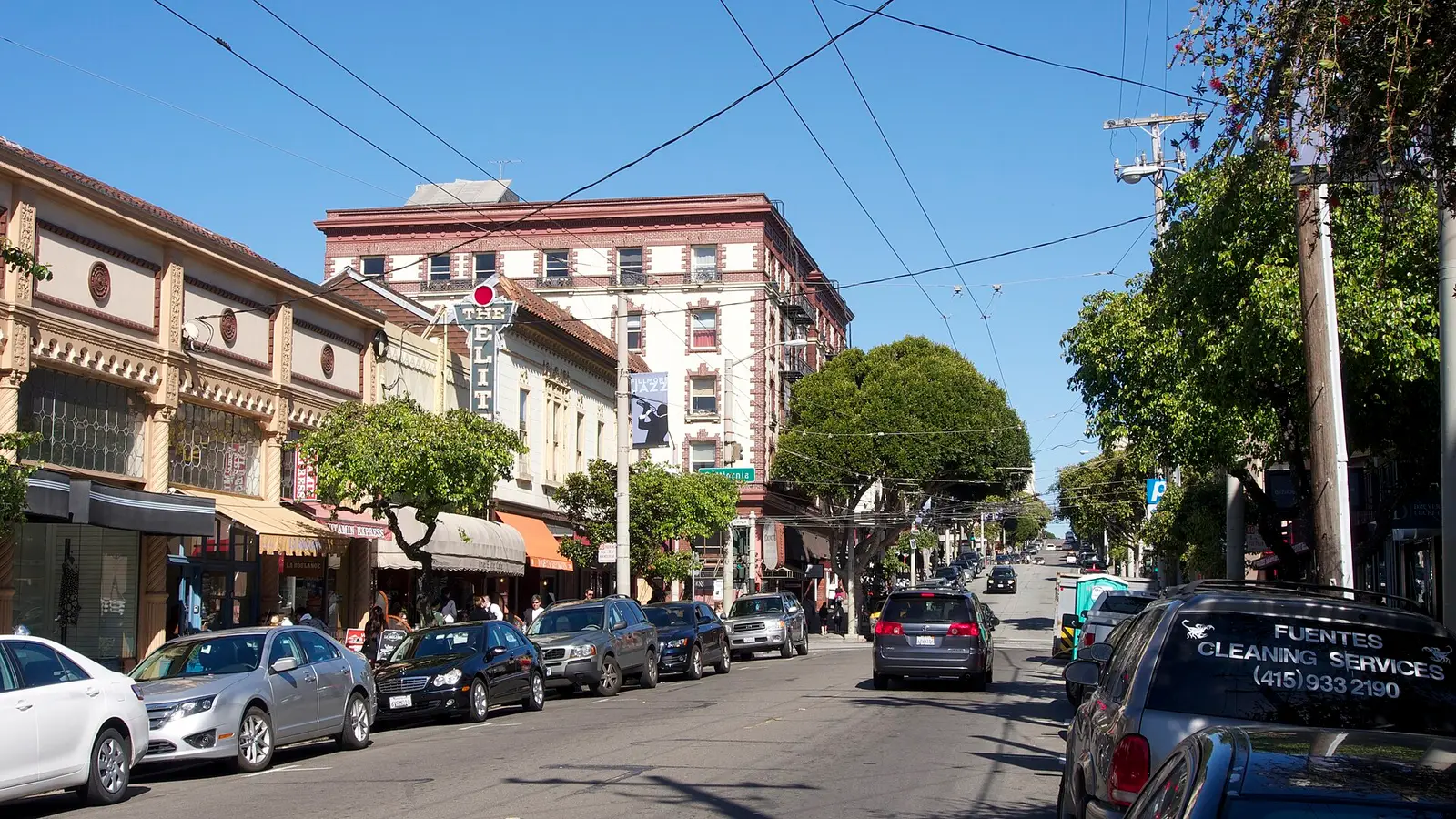
Lower Pacific Heights repairs, Victorian flats to newer condos
Lower Pacific Heights mixes Victorians that survived 1906 with a large wave of condominium buildings from the 1980s and 1990s, and condos now outnumber every other kind of home here. That split decides the repair: plaster and tall wood sash windows in the older flats, drywall, sliding doors and HOA rules in the newer buildings, and stacked-unit plumbing in both.
Fillmore Street, Pine Street, Bush Street, Sutter Street
Landmarks
Upper Fillmore shopping corridor, Madame C. J. Walker Home for Girls and Women, Japantown
What homes in Lower Pacific Heights need most
Plaster in the Victorians, drywall in the condos
Because the Western Addition came through 1906 with its Victorians largely intact, Lower Pacific Heights still has plenty of 1880s and 1900s plaster walls, while the condo buildings from the 1980s and 1990s are drywall. A plaster crack needs loose areas secured to the lath and filled in layers; a drywall hole gets a cut-in patch and texture match. Knowing which wall you have before patching or anchoring avoids making the damage worse. More about drywall and plaster repair
Tall sash windows in older flats
Victorian and Edwardian flats here, like the Italianate buildings of the late 1870s, have tall double-hung wood windows and heavy entry doors. Sash cords break, sashes stick or rattle, and doors to individual flats drag after years of settling. Replacing cords, easing and weatherstripping sashes and rehanging doors are the usual fixes. In the newer condo buildings, the equivalent job is usually worn rollers and tracks on sliding doors. More about door and window repair
Mounting on walls you share
In a neighborhood that is mostly condominiums, the wall behind a new TV is often shared with the unit next door. In drywall buildings, the mount goes into studs or approved heavy-duty anchors; in plaster, into the studs behind with careful drilling. Some condo associations limit drilling into shared or fire-rated walls and set quiet hours for noisy work. Read the building rules and note any restrictions in the request. More about tv mounting
Stacked bathrooms and kitchens
Whether in a divided Victorian or a 1980s condo complex, units here usually stack directly above one another, so a small leak at a faucet, toilet seal or shower valve becomes the neighbor's ceiling stain. Swapping tired faucets, flappers, fill valves and angle stops early costs far less than the ceiling repair downstairs. Leaks in supply or drain lines inside the walls, or in shared building risers, need a licensed plumber and the association. More about faucet, toilet and fixture repair
Move-in assembly in condo buildings
With so many condos, move-ins are frequent here, and buildings often require reserved elevator time, padded walls and set moving hours, while the Victorian flats come with stairs instead. Assembling beds, desks and storage in the unit rather than carrying them in built saves scuffs and time. Tall bookcases and dressers should also be anchored to wall framing, which matters in both old and newer buildings. More about furniture assembly
How the houses here are built
Condominiums make up the majority of parcels, in both converted Victorian flats and purpose-built complexes, alongside flats, small apartment buildings and a few single-family houses. Assessor records show two peaks: the 1900s and the 1980s-1990s.
Older buildings are wood-frame Victorians and Edwardians with lath and plaster and wood sash windows; the condo buildings of the 1980s and 1990s are generally finished in drywall. The same repair takes different anchors and patches in each.
The summer fog that enters through the Golden Gate thins as it moves east across the city, so these blocks between Presidio Avenue and Van Ness get less of it than the west side, though enough damp to swell old wood sashes.
Good to know before a job in Lower Pacific Heights
Upper Fillmore
The neighborhood centers on Fillmore Street between California and Post streets, a commercial stretch also known as Upper Fillmore. It is lined with shops and restaurants, and in 2024 an investor began buying properties along the corridor for a revitalization project. For homes on or just off Fillmore, a residential cross street such as Pine, Bush or Sutter is usually a better place to unload than the commercial curb.
Victorians beside newer condo blocks
Lower Pacific Heights runs from California Street south to Geary Boulevard and from Presidio Avenue east to Van Ness, sharing its southeastern edge with Japantown. The 1878-79 Italianate house at 2066 Pine Street, home to the Madame C. J. Walker Home for Girls and Women from 1921 to 1972, is a designated city landmark. Across the neighborhood, century-old flats sit near much newer condo buildings, so say the building's age and type in any request.
How a request works
Describe the job
A sentence and a photo or two is enough. It takes about a minute.
A local handyman gets in touch
By call or text, to ask what the photos don't show and give you a price.
You decide
Agree a time and price with the handyman directly, or don't. Requesting costs nothing.
Questions from Lower Pacific Heights homeowners
How can we tell whether our walls are plaster or drywall?
Knock and press. Plaster feels hard and cold and sounds solid; drywall sounds hollower and dents more easily. In Lower Pacific Heights, a Victorian or Edwardian flat is likely plaster and a 1980s or 1990s condo building likely drywall, but remodels mix the two. It decides which anchors and patches to use.
Our condo association requires approval before any work. What should we send with the request?
Include the building's rules for contractors, the allowed work hours, elevator or loading dock booking details and any paperwork the association asks a contractor to provide. Having those ready before the visit avoids a wasted trip. Work touching common areas usually needs the association to sign off first.
The sash windows in our 1890s flat off Fillmore won't stay up. What's wrong?
Almost always broken sash cords. The weights inside the frame are no longer attached, so the sash drops. Replacing the cords, and freeing any painted-shut edges while the window is open, gets it working. It's a common repair in the neighborhood's older flats.
We live right on Fillmore Street. Where should someone park?
Fillmore's curb between California and Post is busy with shops and deliveries. A residential cross street such as Pine, Bush or Sutter is easier, or a building garage if you have one. Put the building entrance and any garage access in the request.
Checked against these public sources in September 2026. Rules change: confirm anything permit-related with the City of San Francisco before work starts.