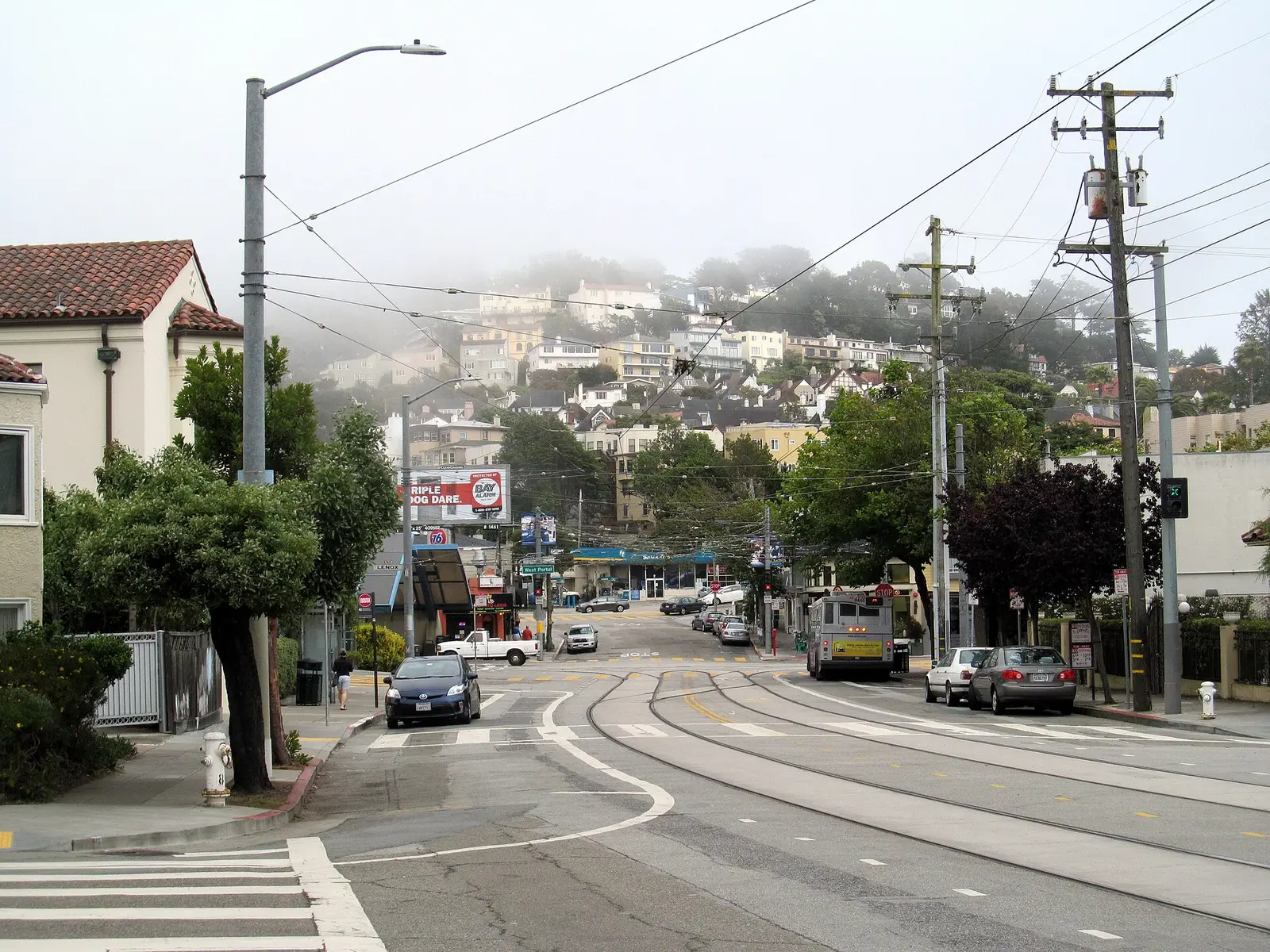
Most West Portal houses date to the 1920s, the building boom that followed the Twin Peaks Tunnel's opening in 1918. Those single-family houses now need the same things: plaster walls patched and anchored properly, old wood doors and windows adjusted for the fog, fixtures replaced and screens mounted on walls that aren't drywall.
Houses from West Portal's 1920s boom were plastered inside, and a century on, the plaster cracks around door frames and ceilings, and pulls away from its backing where it has been knocked or drilled. A good repair reattaches loose sections before filling, then feathers the patch so it disappears under paint. Rooms remodeled with drywall in later decades need the joint between old and new blended so the wall reads as one surface. More about drywall and plaster repair
Mounting TVs on plaster, not drywall
A flat screen on a 1920s plaster wall has to be fastened into the studs behind it; toggles in plaster alone can crack the wall and let go. Finding studs through thick plaster takes more than a quick scan, and holes need careful drilling to avoid spider cracks. Mounting above a fireplace brings masonry and heat into the plan, so describe that with a photo in the request. More about tv mounting
Fog-swollen doors and wood windows
On the west side of Twin Peaks, summer fog keeps original wood doors and windows damp for months, so front doors bind against the jamb, garage-to-house doors stop latching and double-hung sashes stick. Planing and refinishing edges, adjusting hinges and strikes, and freeing and re-cording sash windows usually solve it. Sealing freshly planed edges matters here, or the wood soaks up moisture and swells again by the next summer. More about door and window repair
Swapping old ceiling fixtures and fans
Houses built around 1920 often still have their original ceiling box locations, sometimes with dated fixtures that are heavy for old mounting hardware. Replacing a fixture or adding a fan where a properly supported box already exists is a routine swap, including installing a fan-rated brace when the ceiling allows it. If the wiring behind turns out to be old cloth-insulated wire in poor shape, or a new circuit is needed, that goes to a licensed electrician.
Drafts in a century-old house
West Portal's 1920s houses were built before modern weatherstripping, and gaps at door bottoms, sash meeting rails and window frames let in the damp, cold air that the fog brings through the summer. New door sweeps, weatherstripping on doors and sashes, and fresh caulk at exterior trim joints make these houses noticeably more comfortable. Garage doors on the street side benefit from new bottom seals too. More about weatherstripping, caulking and sealing
How the houses here are built
Single-family houses on the streets around West Portal Avenue, with shops and a few condos along the avenue itself. County assessor records place most of them in the 1920s and the rest largely in the 1910s and 1930s.
Wood-frame houses finished inside with plaster, built by merchant builders such as Fernando Nelson and Sons. Plaster of that age is hard and brittle, so anchoring anything heavy means finding the framing behind it.
West Portal sits on the fog side of Twin Peaks, at the edge of the Sunset District's foggy climate, so wood doors, windows and trim stay damp through the summer months.
Good to know before a job in West Portal
The tunnel that built the neighborhood
Streetcars began running through the Twin Peaks Tunnel in February 1918, and the neighborhood around its western entrance filled in through the 1920s. Builders such as Fernando Nelson and Sons put up houses along West Portal Avenue and Lenox Way, and builders kept sales offices on the avenue: Nelson's stood where a Walgreens is now, and builder Ray Galli opened one at 377 West Portal Avenue in 1935. Neighboring houses often share a builder, and with it, a similar layout.
Working near the station and the avenue
West Portal station, at West Portal Avenue and Ulloa Street, is where the K, L and M lines leave the tunnel and run on the street. In 2024 the transit agency approved redesigning the horseshoe-shaped area at the station entrance as a pedestrian plaza. With streetcars, buses and the avenue's shops all competing for curb space, side streets such as Vicente Street or the numbered avenues are better places to unload for a job nearby.
How a request works
Describe the job
A sentence and a photo or two is enough. It takes about a minute.
A local handyman gets in touch
By call or text, to ask what the photos don't show and give you a price.
You decide
Agree a time and price with the handyman directly, or don't. Requesting costs nothing.
Questions from West Portal homeowners
Our house near West Portal Avenue was built in the 1920s. Why do nails and screws keep crumbling the walls?
Those walls are almost certainly plaster, which is hard and brittle compared with drywall. Hammering nails or driving screws without pre-drilling cracks the surface. For pictures, use hangers made for plaster; for shelves, TVs and anything heavy, fasten into the studs behind.
Our front door sticks every summer and closes fine in the fall. What's going on?
Summer fog on this side of Twin Peaks keeps the wood damp, and an unsealed edge swells. Planing the door where it rubs and then sealing all six sides, including top and bottom edges, keeps it from swelling again. Checking the hinges often helps too, since a sagging door rubs sooner.
Our house and the neighbors' look almost identical. Does that make repairs easier?
Often, yes. Merchant builders on San Francisco's west side commonly reused the same floor plans across neighboring lots, so window sizes, door openings and framing layouts tend to match from house to house. If a neighbor has already had the same repair done, knowing what was found saves time.
We live right by the station. Can work be done without blocking the streetcars?
Yes. Nothing gets staged on the tracks or at the station entrance. Tools and materials come in from a side street, a driveway or a garage. List the nearest side street and whether a garage or driveway is free when you describe the job, and the visit can be timed around the streetcars.
Checked against these public sources in September 2026. Rules change: confirm anything permit-related with the City of San Francisco before work starts.