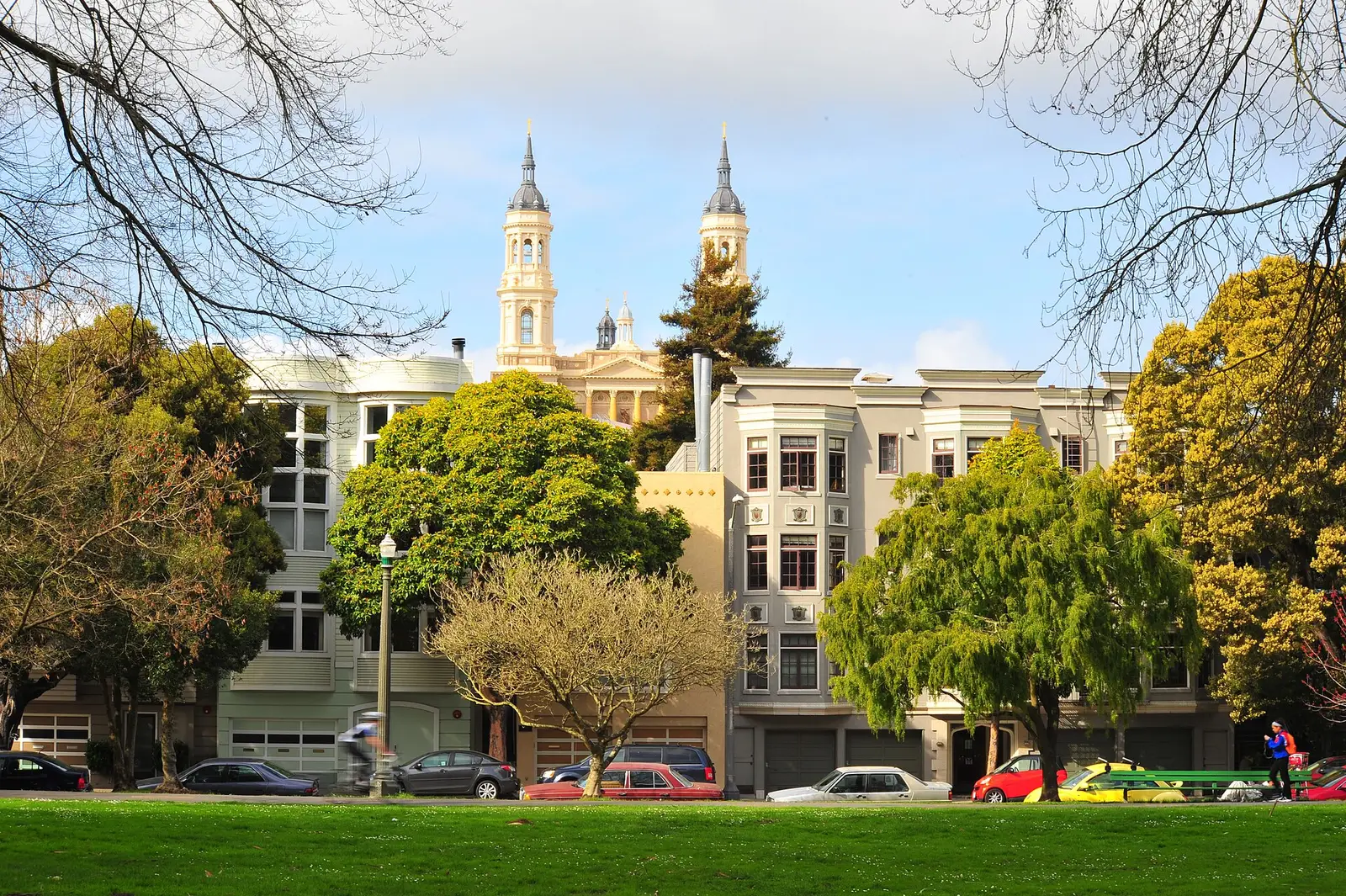
NoPa's thirty-odd blocks between Divisadero, Masonic, Turk and Fell are mostly flats and condominiums in Victorian and Edwardian buildings that came through 1906 intact, with only a small number of single-family houses. The work follows: wood sash windows and old doors, lath-and-plaster walls, and repairs that respect shared stairs, walls and ceilings in divided buildings.
Houses along Fell Street, across the Panhandle. Photo: Chris Hunkeler from Carlsbad, California, USA, CC BY-SA 2.0, via Wikimedia Commons.
ZIP codes
94117, 94115
When the homes were built
1885-1925
Main streets
Divisadero Street, Masonic Avenue, Fell Street, Hayes Street
Landmarks
The Panhandle, William McKinley monument, Divisadero Street corridor
Flats built here between the 1880s and 1920s still carry many original wood double-hung windows and paneled doors, including the doors that separate one unit's entry from the shared stair. Sash cords snap, sashes stick or rattle, and doors sag or stop latching after a century of use. Replacing cords and stops, freeing painted sashes, and rehanging doors on new hinges and strikes bring them back into use without replacing the originals. More about door and window repair
Quieting windows on Fell and Masonic
Fell Street along the Panhandle is a wide, busy one-way street beside a park that survived a freeway plan voted down in 1959 and 1966, and Masonic Avenue is a busy route too. Flats facing those streets hear it through old window frames. New weatherstripping, fresh glazing putty, caulk around the trim and interior window stops sealed tight cut both the noise and drafts noticeably. Acoustic replacement windows are a job for a window installer. More about weatherstripping, caulking and sealing
Plaster walls in divided buildings
Condo conversions and remodels have added drywall to many of NoPa's flats, right alongside century-old plaster. Cracks run along those joints, around doorways and across ceilings, and old plaster crumbles where fixtures were moved. Repairs mean securing loose plaster to the lath first, then blending plaster and drywall so the seam disappears. Work on a ceiling shared with the unit above should wait until any leak there is resolved. More about drywall and plaster repair
Getting furniture up to the upper flat
An upper flat in a NoPa Victorian is often reached by a long run of stairs from the street door, sometimes with a narrow turn at the top. Sofas, bed frames and wardrobes that arrive in boxes are easier to build in the room than to carry up assembled. Tall pieces should also be anchored into the studs behind the plaster, which matters in any building in an earthquake-prone city. More about furniture assembly
Fixtures on century-old ceilings
Parlor and dining room ceilings in 1900s flats often still use their original center fixture location. A new fixture, or a fan on a fan-rated box, can usually go in that same spot, taking care not to crack any decorative plaster around it. If there is no box, the wiring is old and brittle, or a new location is wanted, the job goes to a licensed electrician.
How the houses here are built
Two- and three-unit flats, condominiums carved from them, and small apartment buildings, with relatively few single houses. Assessor records put the largest share around 1900-1909, then the 1910s and 1920s, plus a scattering of 1980s and 2000s infill.
Wood-frame Victorian and Edwardian buildings, clad in wood, with double-hung sashes and plaster on lath inside. Most have been divided into separate units, so floors, stairs and many walls are shared.
Midway between the fog-heavy west side and the city's sunnier eastern neighborhoods, NoPa gets enough summer damp to swell old wood sashes, and the Panhandle's eucalyptus and pines shed onto the Fell Street blocks.
Good to know before a job in NoPa
Mostly flats, few houses
County assessor records list more than a thousand condominium parcels and hundreds of flats and duplexes in NoPa, but only about 150 single-family houses. That means most repairs happen in buildings with shared stairs, shared walls and a unit above or below. Front steps, the street door, exterior siding and windows facing the street are usually common areas, so check with co-owners or the association before booking work on them.
The Panhandle edge and street parking
The Panhandle, three-quarters of a mile long and one block wide, forms NoPa's southern edge along Fell Street, with the McKinley monument at its eastern end near Baker Street. The North of Panhandle Neighborhood Association, founded in 1991, pushed for residential permit parking here, so check posted signs before a work vehicle stays for hours. Divisadero's shops fill the eastern edge, and the side streets such as Lyon and Central are usually easier for unloading.
How a request works
Describe the job
A sentence and a photo or two is enough. It takes about a minute.
A local handyman gets in touch
By call or text, to ask what the photos don't show and give you a price.
You decide
Agree a time and price with the handyman directly, or don't. Requesting costs nothing.
Questions from NoPa homeowners
Our flat faces Fell Street and the Panhandle. Can the traffic noise be reduced?
Partly. Sealing old window frames, replacing glazing putty and weatherstripping, and tightening the interior stops cuts noise and drafts through century-old sashes. Heavy curtains help too. Fell is a busy one-way arterial, though, so real soundproofing means acoustic windows installed by a window company.
The pocket doors in our Victorian flat won't slide. Are they fixable?
Usually. Most stuck pocket doors have come off their overhead track, have a broken roller, or are dragging on a warped floor threshold. Reaching the hardware sometimes means removing a piece of trim or a small section of plaster at the head of the opening, which is patched and touched up afterward so it doesn't show.
We own a TIC unit in a NoPa Victorian. Who handles the front steps and street door?
In most tenancy-in-common and condo buildings those are shared, so the owners decide together and split the cost. Repairs inside your own unit are yours to arrange. Your TIC agreement or condo documents set the exact line between the two, so check them before booking any work outside your door.
Where should a work vehicle park in NoPa?
Check posted signs first, since residential permit parking time limits apply on many blocks here. Side streets like Lyon, Central and Broderick are usually easier than Divisadero or Fell. Mention a garage or driveway in the request if the building has one.
Checked against these public sources in September 2026. Rules change: confirm anything permit-related with the City of San Francisco before work starts.