Diamond Heights repairs for 1960s Eichlers and condos
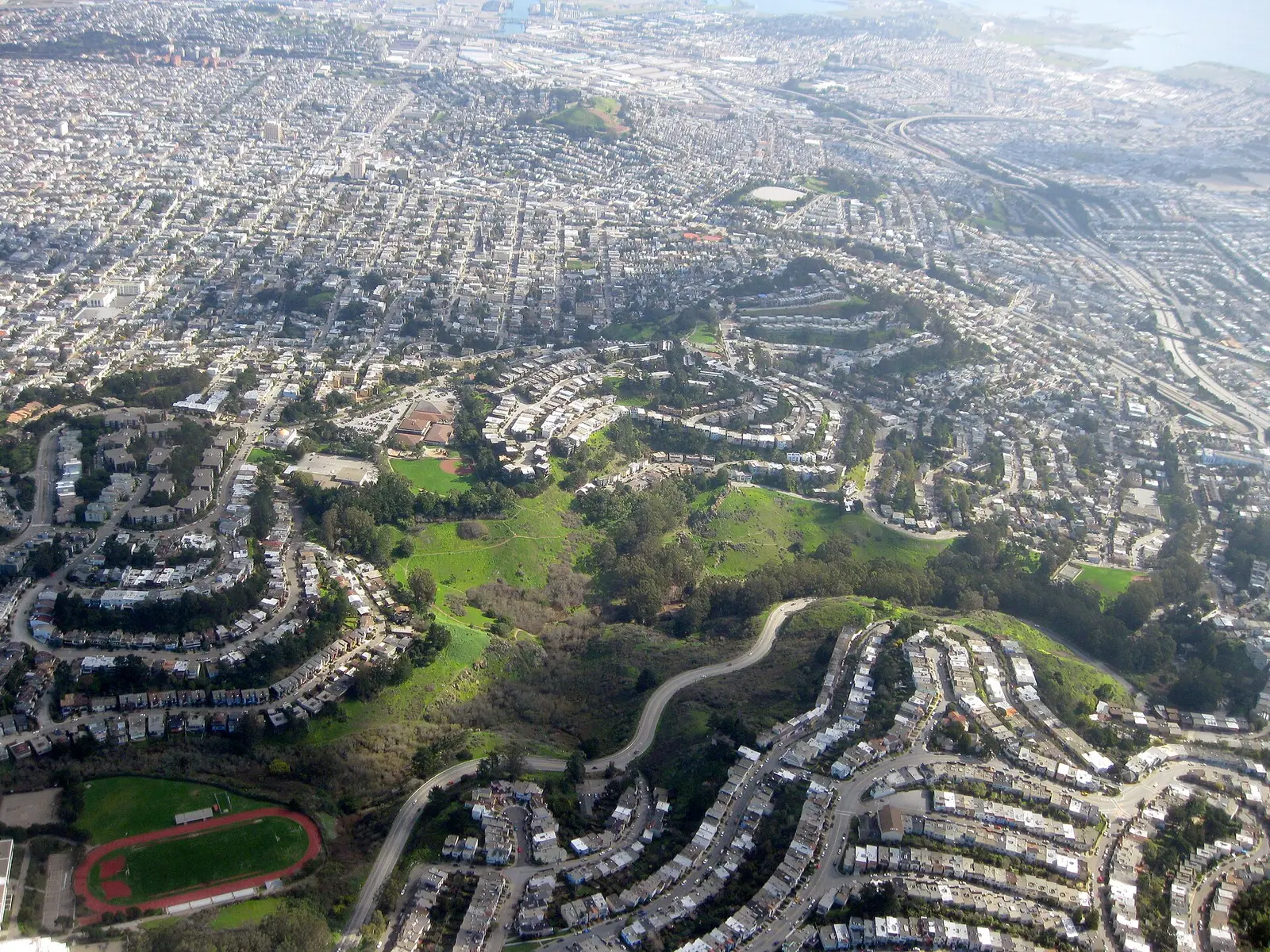
Nearly everything in Diamond Heights was built from 1962 to the late 1970s under one redevelopment plan: about 100 attached Eichler houses and hundreds of condos, townhouses and co-ops on Red Rock and Gold Mine hills. The work fits that era: sliding and shoji-style doors, mounting beside glass walls, and condo repairs within HOA rules.
Diamond Heights Boulevard, Red Rock Way, Gold Mine Drive, Duncan Street
Landmarks
Glen Canyon Park, Diamond Heights Shopping Center, St. Nicholas Orthodox Church
What homes in Diamond Heights need most
Mounting where the walls are glass
Diamond Heights Eichlers, built from 1962 to 1964 on Amethyst Way, Amber Drive and Cameo Way, have floor-to-ceiling glass and tongue-and-groove ceilings, so the few solid walls are in demand. Mounting a TV means finding the framing in those walls, planning cable runs that don't cut into finished wood, and never drilling into the floor, which carries radiant heating pipes. In the condos, check whether a wall is shared with a neighbor before mounting. More about tv mounting
Sliding glass doors and closet tracks
Houses and condos from the 1960s and 1970s here rely on sliding glass doors and sliding closet doors, including the shoji-style closet doors of the Eichlers. Rollers wear flat, tracks bend and fill with grit, and latches stop catching, so doors grind or jump the track. Replacing rollers and guides, cleaning and straightening tracks and fitting new latches usually brings them back without replacing the door. More about door and window repair
Floors over radiant heating
Eichler houses here were built with hydronic radiant heat, copper pipes set in the floor, which rules out nailing or screwing through it. Replacing damaged flooring over those floors, repairing floating floors and fixing lifted tiles all have to be done without penetrating the floor where the pipes run. A leak in the heating pipes themselves, or a floor that stays warm in one spot, is a job for a radiant heating specialist. More about flooring repair
Assembly in hillside condos and townhouses
Hundreds of Diamond Heights homes are condominiums and townhouses built into steep lots along Red Rock Way, Ora Way and Duncan Street, many of them on several levels with stairs inside the unit. Building furniture on the level where it will live saves carrying finished pieces up and down those inside stairs. Condo associations commonly set rules on moving hours and on where boxes and packaging can go, so check before a big delivery day. More about furniture assembly
Replacing 1960s and 1970s fixtures
Many homes still have 1960s or 1970s light fixtures, and in the Eichlers some hang from tongue-and-groove wood ceilings. Swapping a fixture onto an existing box is straightforward, but those ceiling boards are the finished surface, so the new canopy has to cover the old fixture's footprint and any marks around it. Adding a fixture where no box exists, especially in a wood ceiling, is work for a licensed electrician.
How the houses here are built
Condominium and townhouse complexes, many under homeowners associations, plus roughly 100 Eichler single-family houses built as attached row houses in split-level, two- and three-story plans. Assessor records put nearly every parcel in the 1960s and 1970s; the one older survivor is an 1895 house on Gold Mine Drive.
Modern wood-frame buildings stepped into steep hillsides. The Eichlers have floor-to-ceiling glass, tongue-and-groove ceilings and in-floor radiant heating, so there are few solid walls and floors must never be nailed or drilled.
Local historians describe Diamond Heights as having one of San Francisco's best climates, with little fog, which makes sun through the Eichlers' glass walls a bigger factor for shades and seals than damp.
Good to know before a job in Diamond Heights
HOAs and co-ops set the rules
Diamond Heights was planned from the start around group housing: Diamond Heights Village, finished in 1972, the Glenridge cooperative of 1969, and complexes by Fisher-Friedman Associates and Beverly Willis. Most homes are part of a condominium association or co-op, which typically controls exterior surfaces, windows, doors facing common areas and work hours. Check your association's rules before booking work that changes anything visible from outside your unit, and note any building access instructions in the request.
Three hills and a canyon
The neighborhood covers Red Rock Hill, Gold Mine Hill and Fairmount Hill, which rise between about 540 and 690 feet, with Glen Canyon Park below to the southwest. Streets were laid to follow the slopes, so many buildings step down the hill with parking at one level and the front door at another. Gem-named streets like Topaz, Turquoise and Amethyst help locate a building, but include the complex name and unit number too.
How a request works
Describe the job
A sentence and a photo or two is enough. It takes about a minute.
A local handyman gets in touch
By call or text, to ask what the photos don't show and give you a price.
You decide
Agree a time and price with the handyman directly, or don't. Requesting costs nothing.
Questions from Diamond Heights homeowners
We have a Diamond Heights Eichler. Can shelves be put on the wall next to the glass?
Yes, on the solid wall sections, fastened into framing. Stay away from the floor, which carries radiant heating pipes, and keep heavy loads off the exposed wood ceiling. Photos of the wall and the nearby glass help plan where the framing is.
Our Eichler row house shares walls with the neighbors. Does that matter for repairs?
It does. Diamond Heights Eichlers are unusual in being attached row houses rather than detached homes. Drilling into a shared wall carries noise next door, and fasteners must stay within your side of the wall. Mounting heavy items on interior partition walls is simpler, and a quick heads-up to the neighbor helps.
Our condo sliding door is almost impossible to open. Does it need replacing?
Usually not. Most stuck sliders from the 1960s and 1970s have worn rollers and dirty or bent tracks. New rollers, a cleaned and straightened track and an adjusted latch often make them glide again. Check whether your HOA treats the door as common area before any work.
Is the radiant heat in our Eichler floor a problem when replacing carpet or flooring?
It limits the method, not the choice. Nothing can be nailed or screwed into the heated floor, so floating floors or flooring rated for radiant heat are the usual options. Tack strips for carpet need care for the same reason. Get a heating specialist to check the system before covering it if it hasn't run in years.
Checked against these public sources in September 2026. Rules change: confirm anything permit-related with the City of San Francisco before work starts.