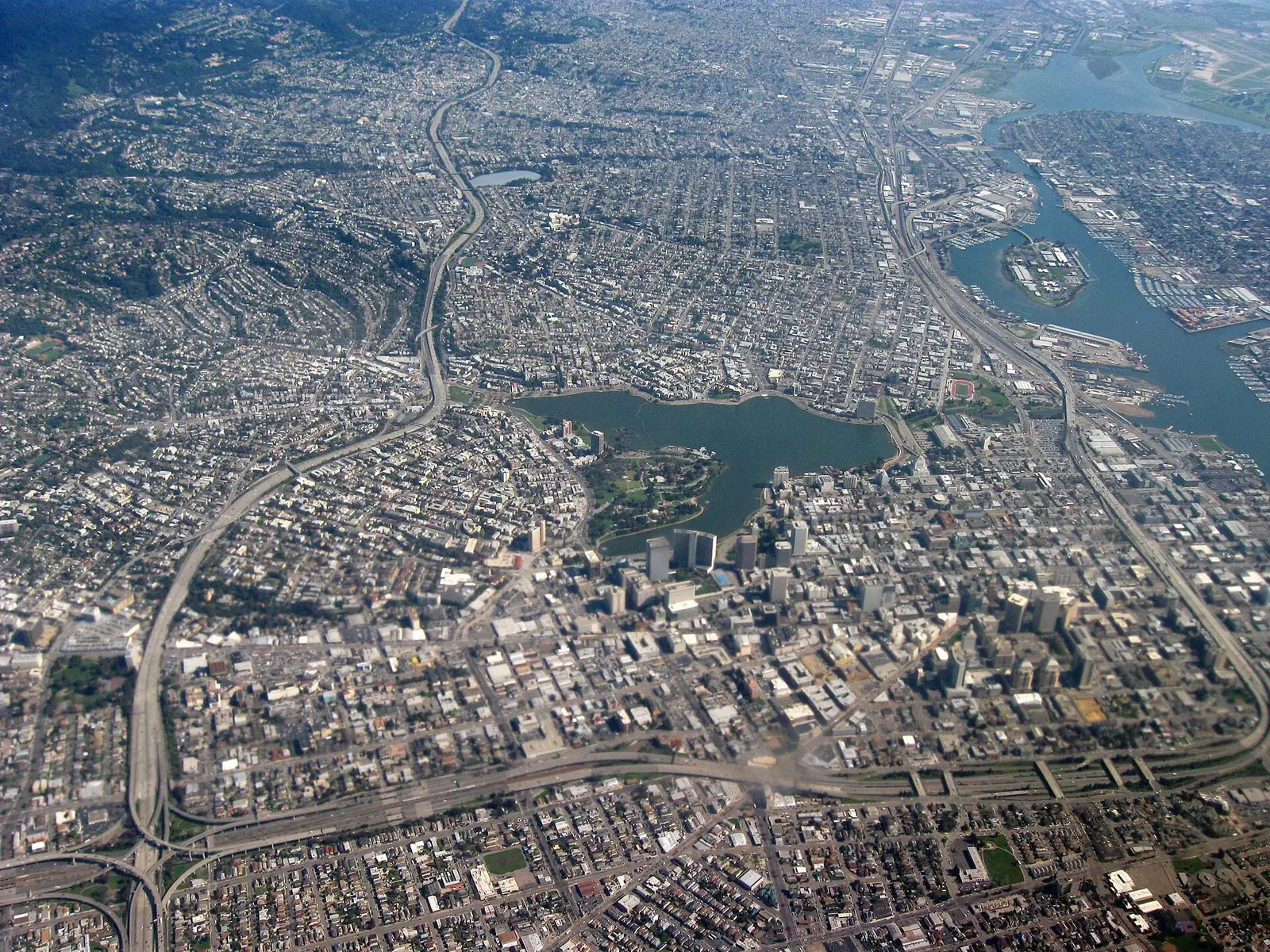
A white wooden picket fence with an open gate in front of a white weatherboard house
A white wooden picket fence with an open gate in front of a white weatherboard house. Photo: Jorge Royan, CC BY-SA 3.0, via Wikimedia Commons.

Fences and gates Oakland

Fences and gates in Oakland: 42 inches out front, eight feet behind

Oakland splits fence work by where the fence stands. In a required front yard or the street side of a corner lot, the Planning Code stops a fence at 42 inches; interior side and rear setbacks allow eight feet. Anything over 3.5 feet out front needs zoning approval, has to read as at least 60 percent open, and sits back 18 inches from the sidewalk. Wood and metal over seven feet adds a building permit.

  • Free to request, no obligation to hire
  • Up to five local pros who take this work can reply
  • Rules on this page checked against 13 public sources, October 2026
Front and street-side yards
42 inches, or 6 feet on small project design review
Interior side and rear
8 feet, Planning Code 17.108.140.B.1
Building permit from
Over 7 feet for wood and metal fences and gates
Creekside lots
Fence within 20 feet of the bank: Category 4 permit

The work

What a fence call in Oakland usually turns out to be

  • The fence across the front lawn

    This is the Oakland job with the most paperwork and the least lumber. Past 3.5 feet in a front yard, a fence needs zoning approval, has to average at least 60 percent transparency, and must sit back at least 18 inches from the sidewalk; six feet is the ceiling out front, and only on small project design review. Put back what was already there and the city's Design Review Exemption list covers it: a like-for-like replacement of an existing residential front-yard fence, filed through the Online Permit Center with the DRX checklist, a photo of the yard, a site plan drawn to verified property lines and elevations to scale.

  • Going to eight feet along a side or rear line

    The number that surprises owners is the one for the back and side lines. Section 17.108.140 allows eight feet in any minimum yard or court other than the front, the street side of a corner lot, or a rear yard within ten feet of a street that abuts the lot, where the figure drops to six. The building department sets a separate line: wood and metal fences and gates over seven feet need a building permit, and other materials can need one lower down. So the last foot of an eight-foot board fence is the one that turns a weekend repair into a permitted project.

  • A gate across a hill driveway

    Many hill lots reach the street through one narrow driveway, and the gate at its head answers to more than one office. The city's fence page allows a residential gate up to ten feet tall and no more than ten feet wide, and the Planning Code permits one entry gateway, trellis or other entry structure in the required front setback of each lot so long as neither its height nor its width passes ten feet. A powered operator adds an electrical permit. The Fire Department's yearly standards ask for ten feet of horizontal and 13.5 feet of vertical clearance along driveways and fire trails, so the posts and the swing want to stay clear of that line.

  • A back fence that ends at a creek bank

    Oakland counts 15 main creeks and more than 30 tributaries, and back lines in Dimond Canyon and Shepherd Canyon end at one. A lot that a creek crosses or touches is creekside property, and work within 20 feet of the top of bank falls into the Creek Protection Ordinance's top category. For a repair that matters in one way: the old line is not automatically the new line. Grading a bank, laying rip rap on it and clearing riparian plants all sit on the city's list of work that generally does not meet the ordinance, so posts sometimes go back a few feet uphill of where they rotted.

Free, no obligation. Next, add your details in the request form.

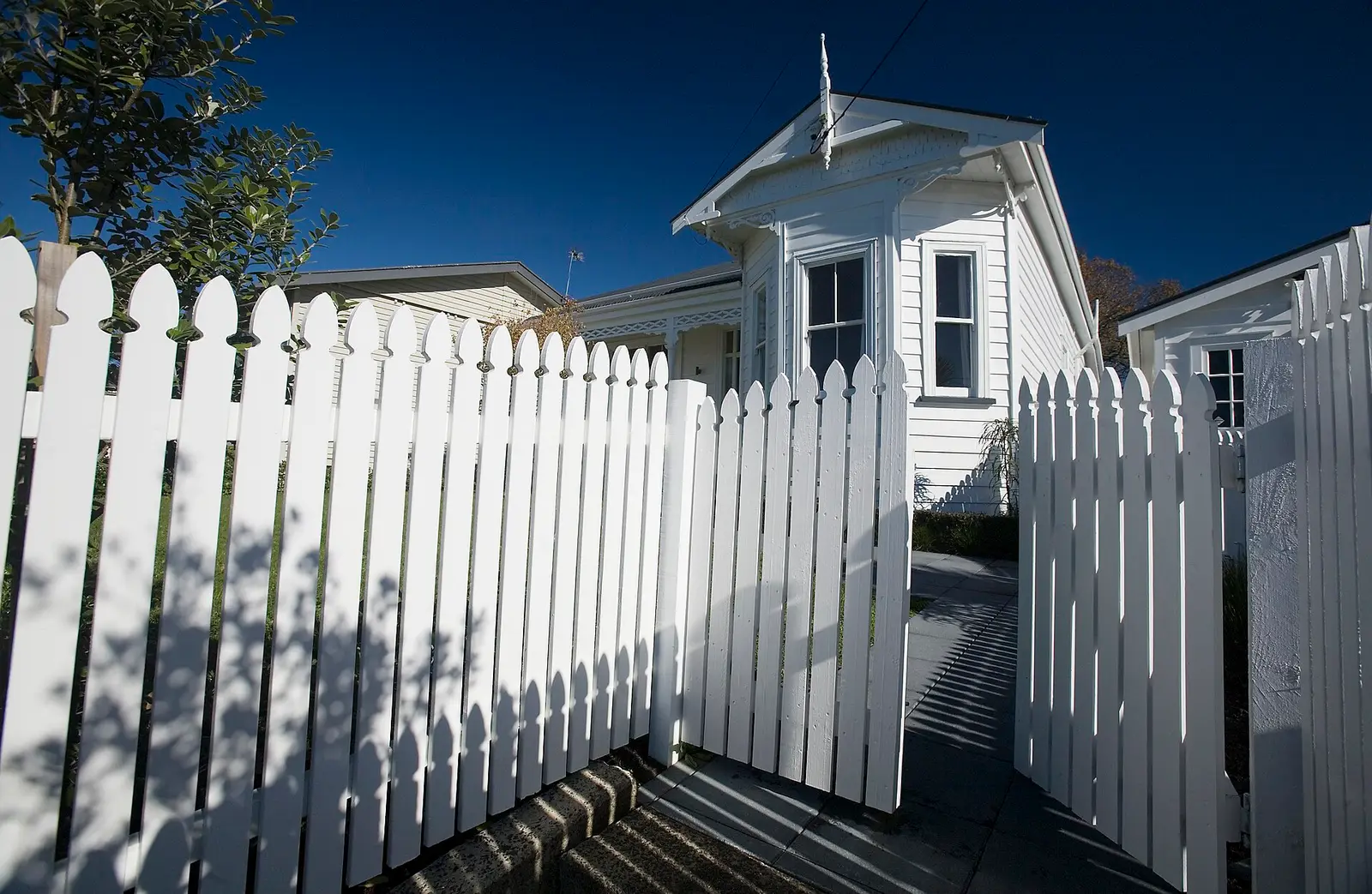
Downtown Oakland and Lake Merritt from the air
Downtown Oakland and Lake Merritt from the air. Photo: Dcoetzee, Public domain, via Wikimedia Commons.

The houses here

A grid of front yards below, hillside lots above

Two patterns run through the city. On the flatland grid, houses sit behind shallow front yards that face the sidewalk, so the fence an owner most wants to replace is the one Oakland's Planning Code watches hardest, and the job becomes a design question as much as a carpentry one. Above the flats, four RH Hillside Residential zones cover what the code calls hillside lots, and a fence there usually stands on or beside a retaining wall. Section 17.108.150 holds a retaining wall to six feet, orders at least four feet between the exposed faces of stacked walls, and asks for a decorative surface on any wall that is not screened from the street or the neighbors. Walls flanking a driveway 19 feet or less in width may pass six feet where the street-to-setback gradient reaches 20 percent, a figure that is ordinary uphill and unknown on the grid.

Free request

Describe the fence and gate job once. Local pros who take work in Oakland reply by call or text.

  • No fee to request, and no obligation to hire
  • You agree scope and price with the pro you choose
  • Photos help them quote without a first visit

Get quotes for fence and gate work in Oakland

Two short steps. A local pro who takes this work calls or texts you back.

To send a request, call or text (415) 449-8213.

Free to request, and you agree the scope and price with the person you hire before work starts. In California, a job over $1,000 in labor and materials, or one that needs a building permit, must be done by a contractor licensed by the CSLB in the right class. Ask for the license number and check it at cslb.ca.gov.

Permits and local rules

The Oakland desks a fence job crosses

  • Zoning approval and how open a front fence has to be

    Oakland's Planning & Building Department puts the residential rules on one page. A fence over 3.5 feet in a front yard needs zoning approval; it must be at least 60 percent transparent and set back at least 18 inches from the sidewalk; six feet is the maximum out front; gates may rise to ten feet and run no wider than ten; and nothing may be built in the public right-of-way. The application wants a site plan showing the fence against verified property lines and the other structures on the lot. Permits go to the owner, or to a contractor whose license class suits the work and whose city business tax account is current.

    Source: City of Oakland Planning & Building (oaklandca.gov)

  • Planning Code 17.108.140, by yard and by material

    The code sets fence height by location. Forty-two inches in a minimum front yard or the minimum side yard on the street side of a corner lot, with six feet allowed in the stretch of that street side yard within the greater of 35 feet from the rear lot line and the depth to the rearmost enclosed part of the house, or on small project design review. Six feet in a minimum rear yard within ten feet of an abutting street line. Eight feet in any other minimum yard or court. One entry gateway or trellis per lot in the required front setback, to ten feet. Barbed, razor and electrified wire are out of residential fences, with an exception the Director of City Planning may grant around a building site.

    Oakland Planning Code, Municode Library (opens in a new tab)
  • Vision Obscurement at Intersections

    Oakland does not use a fixed corner triangle. Chapter 10.60 of the Traffic Code bars any fence, hedge, shrub, tree, wall, retaining wall, earthen bank or other screening above three feet over street-pavement grade along the property line, for a distance equal to the sum of the building setbacks on the two intersecting streets, existing or legal, whichever is less, and within the area that distance subtends. The length therefore changes with the setbacks on each block. Trees trimmed clear of foliage to eight feet are excepted, as is a permanent building. The Traffic Engineer notices the owner, who then has 20 days to clear it; an appeal goes within ten days to a board of the Traffic Engineer, the Director of City Planning and the Superintendent of Parks.

    Oakland Traffic Code, Municode Library (opens in a new tab)
  • Creek Protection Permits, by distance to the bank

    Zoning staff in Planning & Building issue these, with Public Works' Watershed Division as liaison. Category 4 covers exterior work from the creek centerline to within 20 feet of the top of bank, and the city's list of that work names fences alongside earthwork, landscape walls, patios, decks, drainage and trenching. Category 3 covers exterior work between that 20-foot setback and 100 feet from the centerline, and any earthwork over three cubic yards beyond the 20 feet. A reviewed creek protection plan comes before the permit for Categories 3 and 4, and a hydrology report for Category 4 and some Category 3. A Creek Determination form settles whether an address counts as creekside at all.

    Source: City of Oakland, Creeks and Stormwater (oaklandca.gov)

State license for this work: C-13 Fencing, C-29 Masonry. Look up a contractor's license on the CSLB website (cslb.ca.gov).

Timing

Before the hill inspectors come round

The Vegetation Management Unit inspects around 26,000 parcels in the Wildland-Urban Interface Fire Area each year, and the 2026 season opens in June and runs until every parcel has been seen. Oakland's compliance standards tell owners not to store combustible or flammable material anywhere on the property, even outside the 30-foot and 100-foot defensible space zones, and to keep firewood at least 20 feet from structures. A stack of torn-out boards and old posts beside the driveway is exactly that, so a hill fence job wants the haul-away booked with the work rather than after it. A parcel found non-compliant gets 45 days to put things right.

Part by part

Three Oakland settings that change a fence job

  • Montclair and the hill districts

    Above the flats the lots are steep and a fence usually shares a line with a retaining wall, so Section 17.108.150's six-foot cap, its four-foot gap between the faces of stacked walls and its decorative-finish rule come into play before any boards are ordered. These are also the streets the Fire Department inspects every year; the city's interactive map says whether an address sits inside the Wildland-Urban Interface Fire Area.

  • Dimond Canyon and Shepherd Canyon

    Sausal Creek runs through Dimond Park and the canyon above it, and Shepherd Creek, one of its tributaries, runs through Shepherd Canyon Park. Lots backing onto either are creekside property, so the fence question starts with a Creek Determination and a permit category rather than with post spacing. Earthwork over three cubic yards pulls in a review even well back from the bank.

  • The flatland grid, West Oakland to Fruitvale

    On the grid almost every block has corner lots, and the corner rule is not a set triangle: the low-fence distance equals the sum of the building setbacks on the two streets, so it is read off the block rather than out of a table. Front yards here are shallow and face the sidewalk, which is why so many fence jobs in the flats are design questions first.

Before you hire

Settle these before an Oakland fence comes down

  • Ask whether a front-yard fence goes in as a design review exemption or needs small project design review, and who files it.
  • On a street-facing fence, ask how the design reaches 60 percent transparency and where the 18-inch setback from the sidewalk is drawn.
  • If a creek crosses or touches the lot, ask whether a Creek Determination has been filed before anyone digs a post hole.
  • For anything over seven feet, ask who writes the recycling plan Oakland wants in place before a building permit is issued.
  • Ask for the C-13 Fencing license number behind the quote and look it up at cslb.ca.gov.

Free, no obligation. Next, add your details in the request form.

Questions

Oakland fence questions, yard by yard

How tall can the fence across the front of our Oakland house be?

Forty-two inches by right inside the minimum front yard, and up to six feet if the city grants small project design review. Above 3.5 feet the fence also needs zoning approval, has to be at least 60 percent transparent and must sit back at least 18 inches from the sidewalk. The limits attach to the required yards, so where the line falls matters as much as how tall it is; zoning staff can confirm how your front setback is measured.

We are putting the same front fence back. Is there a faster route?

Yes. A like-for-like replacement of an existing residential fence, gate or freestanding wall in a front yard is on Oakland's Design Review Exemption list. It is filed through the Online Permit Center with the DRX checklist, a photo of the yard, a site plan drawn to verified property lines and footprints, and elevations to scale. Review is shorter than design review, and the city notes that exemptions are final and cannot be appealed. A building permit may still follow.

Can a back fence in Oakland be eight feet?

Under zoning, yes in the right yard: Section 17.108.140 allows eight feet in any minimum yard or court other than the front, the street side of a corner lot, or a rear yard within ten feet of a street that abuts the lot. The building department is the other half of the answer, because wood and metal fences and gates over seven feet need a building permit, and some other materials need one at a lower height.

Our house is on a corner. How far back does the low fence have to run?

Oakland reads it off the street setbacks rather than a fixed triangle. Traffic Code Chapter 10.60 keeps anything over three feet above street-pavement grade off the property line for a distance equal to the sum of the building setbacks on the two intersecting streets, existing or legal, whichever is less, and within the area that subtends. If the Traffic Engineer sends a notice, there are 20 days to clear it and ten days to appeal to the Vision Obscurement Appeals Board.

A creek runs along the back of our lot. Does that change a fence repair?

It changes the paperwork. The lot is creekside property, and a fence from the creek centerline to within 20 feet of the top of bank is Category 4 work, which needs a reviewed creek protection plan and a hydrology report before the permit is issued. Between that setback and 100 feet from the centerline it is Category 3, as is any earthwork over three cubic yards further out. Start with the city's Creek Determination form.

Can the old boards sit in the side yard until we haul them off?

Not in the hills. For parcels in the Wildland-Urban Interface Fire Area, Oakland's vegetation compliance standards say not to store combustible or flammable materials anywhere on the property, even outside the 30-foot and 100-foot defensible space zones, and firewood belongs at least 20 feet from structures. Inspections of about 26,000 parcels start each June, and a non-compliant parcel has 45 days to correct. Book the haul-away as part of the job.

Where these facts come from

Checked against these public sources in October 2026. Rules and programs change: confirm permit requirements with the city before work starts, and a contractor's license on the CSLB website.

Fence and gate work in Oakland? Tell us what you see.

One request reaches local handymen and contractors who take this work. The Handyman SF connects you with them; it does not do the work.

HandymanNow for handymen Work in Oakland? Get job leads by text. Pick your trades and areas, take only the jobs you want. No subscription. Start getting leads HandymanNow for homeowners Get the HandymanNow app. Send a request with photos, message your handyman and follow them on the way. Download the app

HandymanNow app

Fix it faster. Find work faster.

Homeowners send a job with photos and follow their handyman on the map. Handymen get local jobs by text and take only the ones they want.

Call WhatsApp (opens WhatsApp) Free quote