Roofing Berkeley

Which Berkeley roofs answer to the city's new wildfire rules

On a Berkeley re-roof, the first question is whether the house sits in one of the city's wildland-urban interface areas. Under Berkeley's own wildfire code, Chapter 19.49, adopted in December 2025, roofs in the High and Very High fire hazard zones, which include the Panoramic and Grizzly Peak mitigation areas, must be Class A assemblies, and wood shakes and shingles are banned whatever their rating. The rest of the city is its Flatlands Area.

Wildfire code
BMC Chapter 19.49, adopted December 2025
Where it applies
High and Very High zones, Panoramic and Grizzly Peak areas
Wood shakes
Banned in those areas, whatever the assembly rating
Major fires in the hills
1905, 1923, 1970, 1980 and 1991

Get quotes for roofing work in Berkeley

Two short steps. A local pro who takes this work calls or texts you back.

To send a request, call or text (415) 449-8213.

Free to request, and you agree the scope and price with the person you hire before work starts. In California, a job over $1,000 in labor and materials, or one that needs a building permit, must be done by a contractor licensed by the CSLB in the right class. Ask for the license number and check it at cslb.ca.gov.
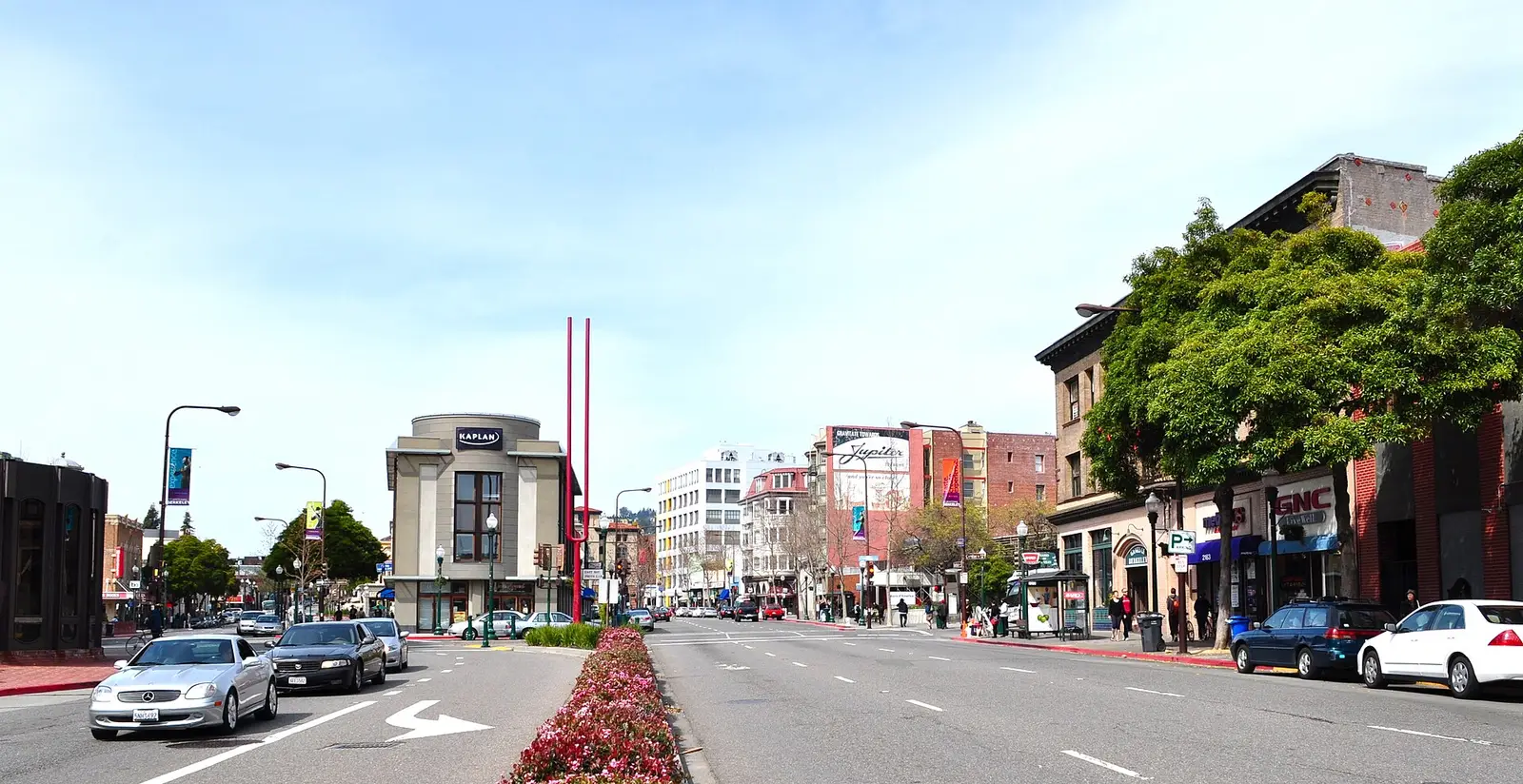
A downtown Berkeley street
A downtown Berkeley street. Photo: Sharon Hahn Darlin, CC BY 2.0, via Wikimedia Commons.
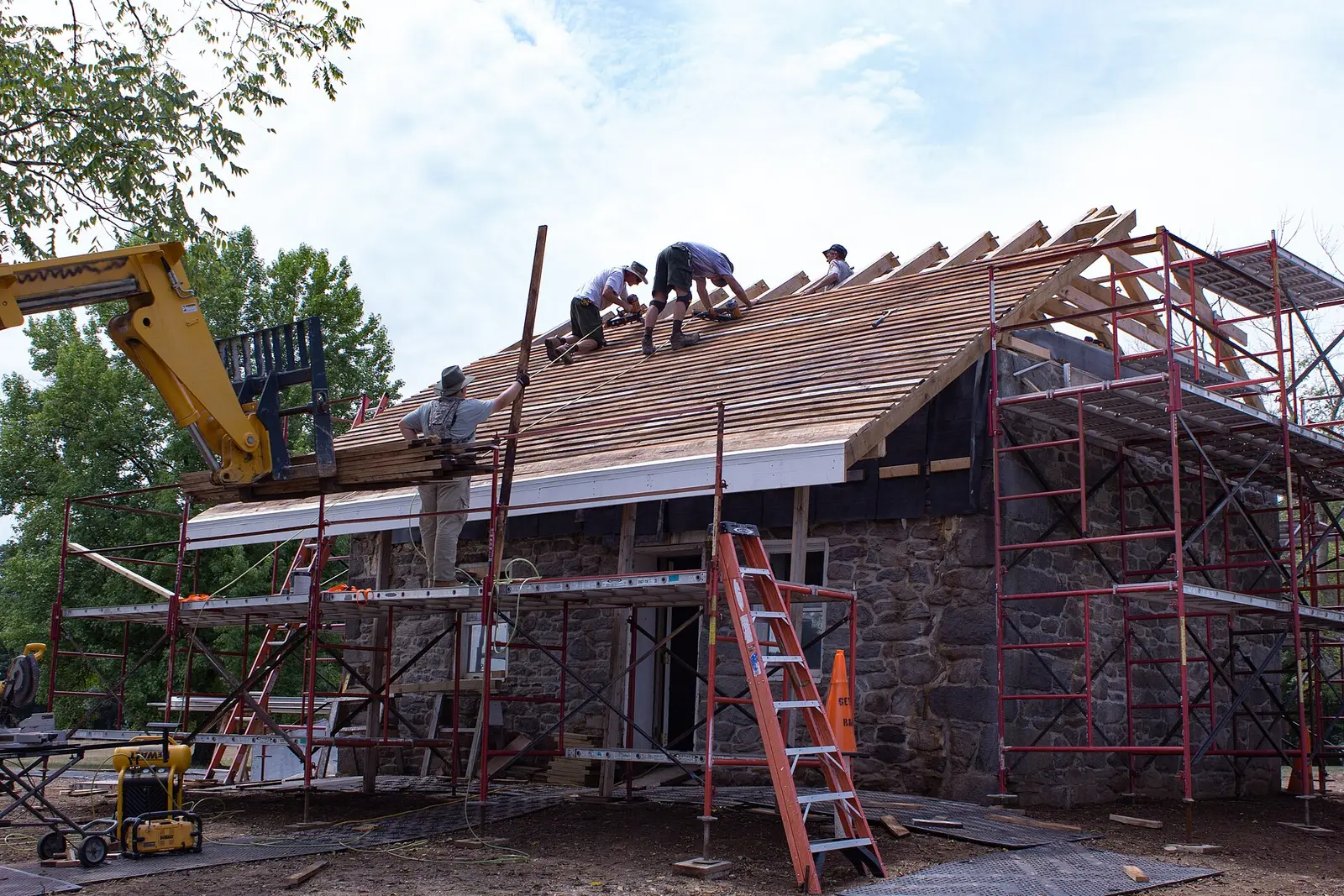
Roofers installing cedar shingles near the ridge while a telehandler lifts bundles onto the roof
Roofers installing cedar shingles near the ridge while a telehandler lifts bundles onto the roof. Photo: NPS photo, Public domain, via Wikimedia Commons.

The houses here

Shingled blocks by campus, tile and narrow hill streets

Berkeley's own code findings name the roofs that worry the fire department: the blocks north and south of the university, where apartments, rooming houses and fraternity and sorority houses, many of them wood-frame and up to five stories, still carry wood shingle roofs and siding. Up the hill, the city's 2025 fire map report notes how few houses have been brought up to wildfire construction standards, and many sit on narrow, winding streets that the city says hamper fire engines and that leave little room for a roofing truck and a debris bin. Tile is common across the city too, and the new code treats it with care: clay or concrete tile and slate count as Class A without testing only over a noncombustible deck.

The work

Four kinds of Berkeley re-roof

  1. Tearing off a wood shake roof in the hills

    In the interface areas, a roof replaced entirely, or by half or more within twelve months, must meet the standard for new construction. Replace more than half of the roof area within any five-year period and the whole covering has to be redone. Any roofing applied during a repair must also be Class A, under the same section that bans shakes, so ask the building department how a small shake repair will be treated before material is ordered.

  2. Clay tile over a wood deck

    Berkeley's wildfire code accepts clay or concrete tile, metal and slate as Class A without testing when they sit on a noncombustible deck, and slate also over a specified felt underlayment on a wood deck. Tile laid over wood sheathing, as on an ordinary wood-framed roof, needs a listed Class A assembly instead. Ask which listing the bid relies on and what goes between the tile and the deck.

  3. Ember details that ride along with the roof

    Bird stops between the roof covering and the sheathing, fire-resistant vents, gutter covers and enclosed eaves are all on the city's list of home hardening work that can earn a transfer tax rebate in the High and Very High zones. They are easiest to add while the old roof is off, and the permit scope should name them so the stamped plans show they qualify.

  4. Clearing branches before and after the crew

    In the locally designated Very High zone, owners must keep branches at least ten feet from any chimney or stovepipe outlet and six feet above the roof, and keep the roof and gutters free of leaves and needles. A re-roof is the natural moment to have trees cut back and gutters fitted with covers, since the crew has ladders up and the debris bin is already there.

Permits and local rules

Rules a Berkeley roof bid should name

  1. Berkeley Wildland-Urban Interface Code, BMC Chapter 19.49

    The City Council adopted it in December 2025, alongside the state's new stand-alone wildland-urban interface code, which took effect on January 1, 2026. It designates the High and Very High fire hazard zones and the Panoramic and Grizzly Peak mitigation areas as interface areas. New roofs and re-roofs there must carry a Class A rating under ASTM E108 or UL 790, and wooden shakes and shingles are prohibited regardless of the assembly rating.

    City of Berkeley City Council (opens in a new tab)
  2. Fire hazard severity zone map, Ordinance 7,958-N.S.

    In 2025 Berkeley adopted CAL FIRE's new map for the local responsibility area, the first update since 2007, and added its own zones. Very High now takes in Panoramic Hill and its surroundings; High reaches west to a line along The Arlington, Sutter, Spruce, Gayley, Piedmont, Warring, Belrose and Claremont. Homes on either side of those boundary streets are inside, and sellers in both zones must make a natural hazard disclosure.

    City of Berkeley, Ordinance 7,958-N.S. (opens in a new tab)
  3. Home hardening transfer tax rebate

    Buyers and sellers of homes in the High or Very High zones can get part of the city's transfer tax back for wildfire hardening, but the house must have a Class A roof, and a wood shake roof must be replaced with one before any other measure counts. The roof installation itself qualifies. Eligible costs start January 1, 2025, work must fall within five years before a sale or one year after, and a defensible space inspection is required that year.

    City of Berkeley Fire Department (opens in a new tab)

State license for this work: C-39 Roofing, B General Building. Look up a contractor's license on the CSLB website (opens in a new tab).

Part by part

How the fire lines fall across Berkeley

  • Panoramic Hill

    The whole Panoramic Mitigation Area, bounded by Centennial Drive, Stadium Rim Way, Canyon Road, Bancroft Way, Piedmont Avenue and Dwight Way, is rated Very High. The code adds a fire warning system with an audible exterior alarm for buildings altered or repaired there, so ask whether a re-roof permit will bring that in too.

  • Grizzly Peak

    Everything east of Grizzly Peak Boulevard to the city limit, plus homes fronting either side of the boulevard, is the Grizzly Peak Mitigation Area, designated Very High by ordinance. Keeping the roof and gutters clear of leaves and needles is a standing duty here under the code, not only a job for the next re-roof.

  • Claremont

    The High zone line runs along Claremont Boulevard from Garber Street to Claremont Avenue, then down Claremont Avenue to the Oakland border. Houses east of it, and those fronting either side of it, re-roof under the Class A and no-shake rules; a block west, the rules do not reach.

  • Southside and Northside by campus

    Blocks west of the Gayley Road and Piedmont Avenue line, apart from buildings fronting those streets, sit in the Flatlands Area, outside the wildfire code's roofing rules. Yet the city's code findings rate the fire potential of these dense apartment and fraternity blocks moderately high because of wood shingle roofs and siding, which is worth weighing when choosing what goes on next.

Before you hire

What to settle before a Berkeley roofer starts

  • Has the roofer checked the address on Berkeley's GIS map for the High or Very High zone, or a mitigation area?
  • Which Class A listing does the bid rely on, and does it assume a noncombustible deck or a tested assembly?
  • If you may claim the rebate, will the permit scope say "home hardening work for transfer tax reduction"?
  • Re-roofing is not on Berkeley's list of work exempt from a building permit; who pulls it, and under whose license?
  • Look up the C-39 Roofing license at cslb.ca.gov and confirm the name and number match the contract.

Questions

Berkeley roof questions, hills to flats

Can I patch my wood shake roof in the Berkeley hills with new shakes?

Inside the High or Very High zones, very likely not. Berkeley's wildfire code requires roofing applied during a repair to meet the same Class A section that prohibits wood shakes and shingles regardless of rating. Ask the Permit Service Center how your repair will be read, and expect a roofer to propose a Class A replacement rather than matching shakes.

How do I find out whether my Berkeley house is in the High fire hazard zone?

The city publishes the zones on its GIS map. As a rough guide, the High zone lies east of a line along The Arlington, Fountain Walk, Sutter, Eunice, Spruce, Hearst, Gayley, Piedmont, Warring, Derby, Belrose, Claremont Boulevard and Claremont Avenue, and homes fronting either side of those streets are included.

Does a new Class A roof count toward Berkeley's home hardening rebate?

Yes. A Class A roof is a condition of the rebate and its installation cost qualifies, and an existing wood shake roof must be replaced before any other hardening counts. The house must be in the High or Very High zone, the costs must date from January 1, 2025 or later, and a defensible space inspection has to be passed in the year you apply.

Is a clay tile roof automatically Class A in Berkeley's fire zones?

Only over a noncombustible deck. Berkeley's wildfire code treats clay or concrete tile, metal and slate on a noncombustible deck as Class A without testing. Over ordinary wood sheathing the tile has to be part of a listed Class A assembly, so ask for that listing in the bid.

Do I have to tell a buyer my Berkeley house is in a fire hazard zone?

Yes. Berkeley's 2025 map ordinance notes that sellers in the High and Very High zones must make a natural hazard real estate disclosure at the time of sale under the state Civil Code. A recent Class A roof and other hardening are worth documenting for that conversation.

Roofing work in Berkeley? Tell us what you see.

One request reaches local handymen and contractors who take this work. The Handyman SF connects you with them; it does not do the work.

HandymanNow for handymen Work in Berkeley? Get job leads by text. Pick your trades and areas, take only the jobs you want. No subscription. Start getting leads HandymanNow for homeowners Get the HandymanNow app. Send a request with photos, message your handyman and follow them on the way. Download the app

HandymanNow app

Fix it faster. Find work faster.

Homeowners send a job with photos and follow their handyman on the map. Handymen get local jobs by text and take only the ones they want.

Call Get a quote