Roofing San Jose

Re-roofing San Jose houses, from 2:12 Eichler roofs to Mission tile

Two numbers shape a San Jose re-roof before anyone picks a shingle. The city allows at most two composition roof layers and wants an engineering check once all the coverings weigh more than seven pounds per square foot. And every San Jose ZIP code is in Energy Code Climate Zone 4, where replacing more than half a roof brings cool-roof rules and, on a low-slope roof, added insulation.

Energy Code zone
Climate Zone 4, in every San Jose ZIP code
Layer limit
Two composition roof covers at most
Weight check
Engineering when all coverings exceed 7 lb per sq ft
Eichler tracts
Morepark, Fairglen, Fairglen Additions, Hudson, Fairhaven

Get quotes for roofing work in San Jose

Two short steps. A local pro who takes this work calls or texts you back.

To send a request, call or text (415) 449-8213.

Free to request, and you agree the scope and price with the person you hire before work starts. In California, a job over $1,000 in labor and materials, or one that needs a building permit, must be done by a contractor licensed by the CSLB in the right class. Ask for the license number and check it at cslb.ca.gov.
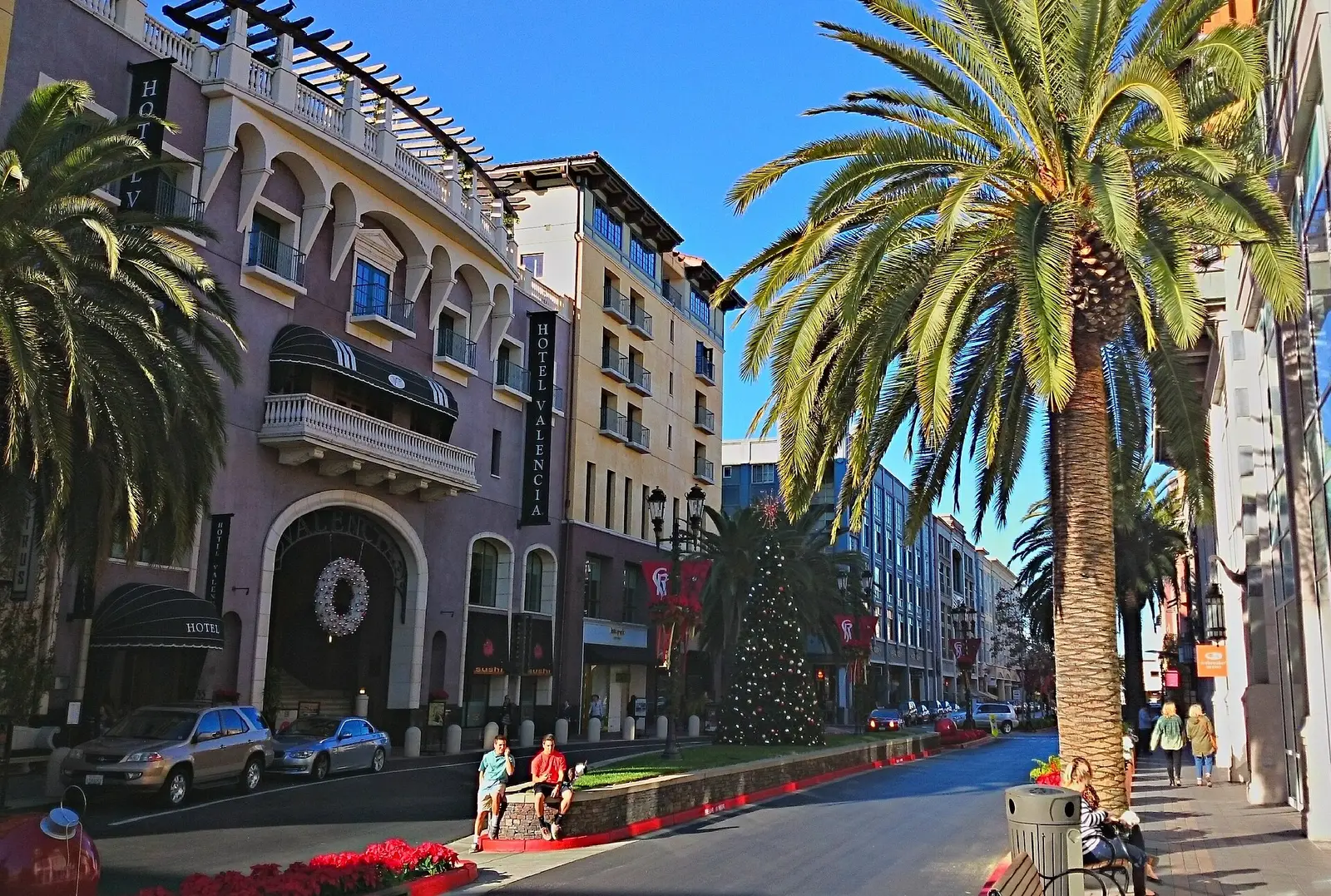
Hotel Valencia at Santana Row in San Jose
Hotel Valencia at Santana Row in San Jose. Photo: Payton Chung, CC BY 2.0, via Wikimedia Commons.
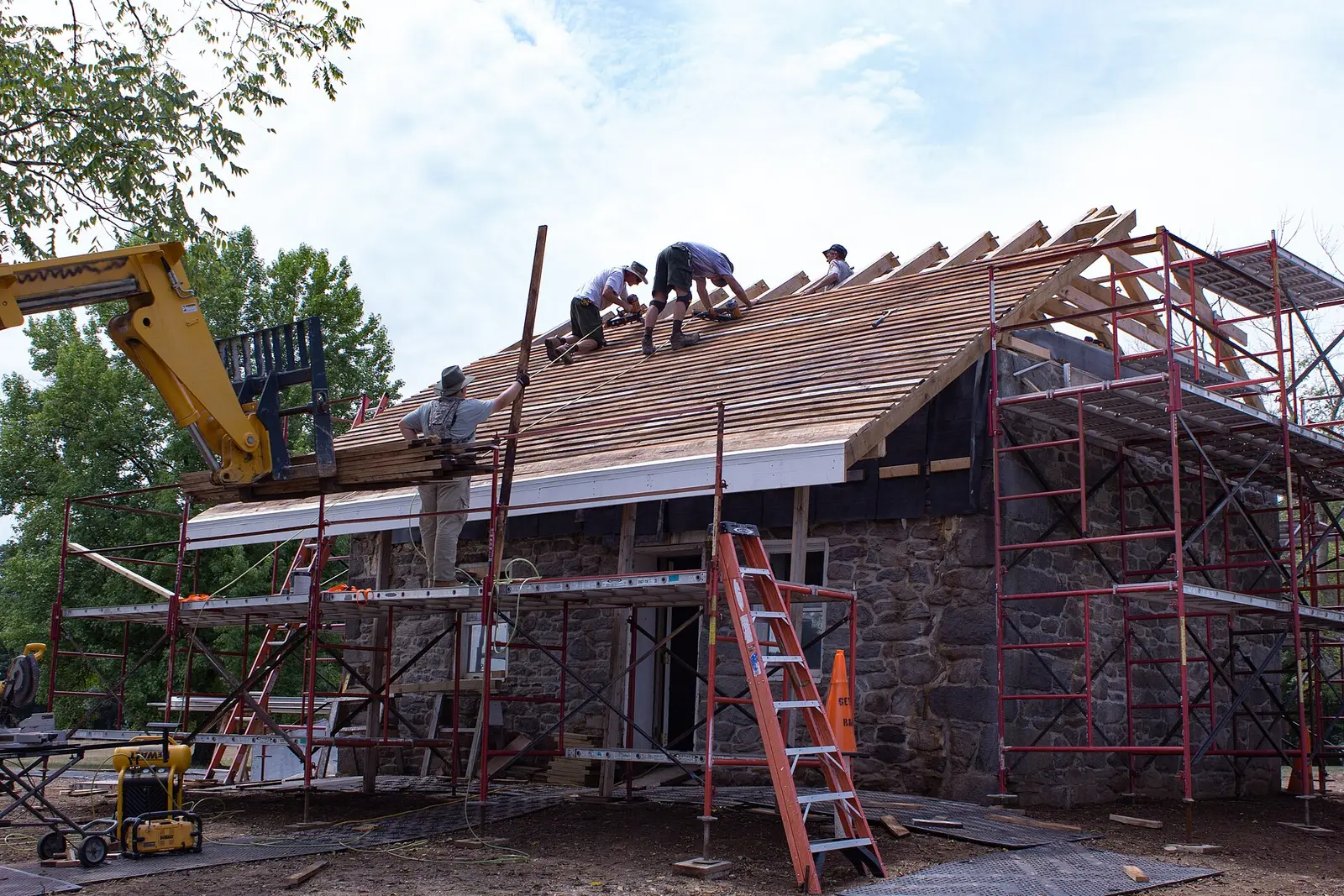
Roofers installing cedar shingles near the ridge while a telehandler lifts bundles onto the roof
Roofers installing cedar shingles near the ridge while a telehandler lifts bundles onto the roof. Photo: NPS photo, Public domain, via Wikimedia Commons.

The houses here

Flat Eichler roofs, red tile and the tracts in between

San Jose's roofs follow its building eras. Eichler Homes built seven tracts here between 1952 and 1963, forming five neighborhoods, and the city's Eichler design standards describe their roofs as shallow, often 2:12, covered with tar and gravel or rolled roofing. Near downtown, Naglee Park and Hanchett and Hester Park mix bungalows with Spanish and Mission Revival houses, and the city's preservation guide lists a red tile roof as a Mission Revival feature and Spanish tile or a flat roof behind a parapet for Spanish Eclectic. Between those two worlds lie the post-war tracts of the annexation years, which make up much of the rest of the city.

The work

Roof jobs that come up on San Jose houses

  1. Re-covering a low-slope Eichler roof

    The Energy Code treats any roof flatter than 2:12 as low-sloped. In Climate Zone 4, replacing more than half of one calls for a membrane with an aged solar reflectance of at least 0.63 and thermal emittance of 0.75, or an SRI of 75, plus insulation to R-14 continuous unless the roof already has R-10. Thicker insulation lowers the reflectance needed. On an Eichler, where the deck is the ceiling, that insulation goes on top, so ask how it changes the roof edge.

  2. Tile-to-tile on Spanish and Mission houses

    San Jose's reroof worksheet, Form 330, asks for rafter span tables or engineering whenever the finished roof weighs more than seven pounds per square foot, but a replacement with no increase in weight, such as tile roof to tile roof, is exempt. The city's inspection guide expects lightweight tile on a reroof unless the structure is shown to carry a heavier system. Concrete tile needs a slope of at least 4:12, and the reroof page notes that most tile roofs require every tile to be nailed.

  3. Overlay or tear-off on a tract-house roof

    San Jose allows two composition roof covers at most, so a house that already has an overlay gets a full tear-off. Shingles need a slope of at least 2:12 and solid sheathing underneath, and the nails have to reach three-quarters of an inch into or through it. When more than half the roof is replaced, Climate Zone 4's steep-slope cool-roof rule applies unless an exception fits, such as R-38 ceiling insulation or no ducts in the attic.

  4. Skylights, flues and panels on the way off

    A roof in San Jose rarely comes off clean. A skylight installation needs its own building permit and inspection, and a gas appliance flue that is cut or altered in any way needs a separate mechanical permit, with a one-inch clearance to combustibles around a double-wall Type B vent. If solar panels are coming off and going back on, the city's inspection guide asks for evidence of a valid photovoltaic permit. Settle in the contract who arranges each one.

Permits and local rules

How San Jose sorts a reroof permit

  1. Online permit, or a counter visit

    A reroof starts in SJPermits' Application Wizard, which either issues the permit online or flags the job for Planning or Building review. Building review comes from certain materials and weight. A qualifying single-family job can then be issued over the counter, but not if the lot is in a Planned Development zoning district, flood zone A, AE, AH or AO, a geohazard or landslide zone, or a Wildland Urban Interface area, or has an open code case. Those go to Standard Plan Review.

    City of San José, Reroof Projects (opens in a new tab)
  2. Cool roofs and insulation in Climate Zone 4

    San Jose has enforced the 2025 Energy Code since January 1, 2026. When more than half of an existing roof's surface is replaced, including laying a new layer over the old one, the new roofing in Climate Zone 4 must meet minimum aged solar reflectance and thermal emittance: 0.20 and 0.75 on a steep roof, 0.63 and 0.75 on a low-sloped one. Low-sloped roofs also take insulation to the levels in Table 150.2-F, with exceptions for roofs already insulated.

    California Energy Commission, 2025 Energy Code (opens in a new tab)
  3. Class A in the wildland-urban interface

    The San José Fire Department's WUI policy says that when more than half of a roof's area is replaced within a year, the entire covering must meet the Class A requirements of CBC 705A and CRC R337.5.2. The plans have to describe the whole assembly: covering, underlayment, decking, valley flashing and gutter protection. The city's inspection guide adds a 26-gauge galvanized valley over a cap sheet 36 inches wide. Check your address with the Fire Department's fire hazard severity zone finder.

    San José Fire Department, WUI policy (opens in a new tab)
  4. Eichler design standards for the Fairglen Additions

    The city's Eichler Neighborhood Objective Design Standards currently apply only within the Fairglen Additions historic district. They allow built-up, membrane, rolled and foam roofing on flat and low-pitched roofs, and composite shingles only where the pitch is steeper than 2:12. Clay tile, concrete tile, slate, standing-seam metal and wood or metal shingles are prohibited on every roof form, and raising a roof above its original height is prohibited too.

    City of San José, Eichler Neighborhood Design Standards (opens in a new tab)

State license for this work: C-39 Roofing, B General Building. Look up a contractor's license on the CSLB website (opens in a new tab).

Part by part

Neighborhoods where a San Jose roof follows extra rules

  • Fairglen Additions, Willow Glen

    A National Register historic district built from 1959 to 1961, and the one Eichler tract where the city's design standards apply today. A replacement roof there stays low and visually flat, and the list of banned materials rules out tile and standing-seam metal.

  • Morepark, Fairglen, Hudson and Fairhaven

    San Jose's other Eichler neighborhoods share the same shallow roofs and exposed decks, but the design standards do not cover them for now. The city says they could apply in future to other Eichler tracts designated as historic districts, so check a house's status before choosing a material.

  • Naglee Park and Hanchett and Hester Park

    Both are city conservation areas with Spanish and Mission Revival houses among the bungalows. If the house is also on the Historical Resources Inventory, Planning has to clear the reroof first, and the city's preservation guide asks for new roofing that matches the color, material and pattern of the old as closely as possible.

  • East Foothills and Almaden Valley

    The Fire Department names these two communities as especially vulnerable to wildfire. A house in the Wildland Urban Interface area there needs a Class A roof assembly on a large reroof and cannot use the over-the-counter permit service, so the job goes through Standard Plan Review.

Before you hire

What to ask a San Jose roofer before signing

  • Is the house in the Fairglen Additions, a Wildland Urban Interface area or on the Historical Resources Inventory, and how does that change the permit?
  • How many layers are on the roof now, and does the bid assume an overlay San Jose will still allow?
  • For tile, will the new roof weigh more than the old one, and who provides the rafter span tables or engineering?
  • On a low-slope roof, which Climate Zone 4 reflectance and insulation path does the bid use?
  • Look up the C-39 Roofing license at cslb.ca.gov and confirm who applies for the permit on SJPermits.org.

Questions

Roof questions from San Jose homeowners

Does every roof in San Jose have to be Class A?

No. San Jose's reroof page lists Class C as the minimum California law requires, new roof or reroof, and wood shakes and shingles must be a fire-resistant type. Class A comes in for houses in the Fire Department's Wildland Urban Interface area, once more than half the roof is replaced within a year. The Fire Department's online fire hazard severity zone finder shows which zone an address is in.

Can I put a tile roof on my Eichler in San Jose?

Not in the Fairglen Additions historic district, where the city's Eichler design standards prohibit clay and concrete tile on every roof form. Elsewhere, the slope usually decides it: the city's reroof page requires at least 4:12 for concrete tile, and the same standards describe Eichler roofs as often 2:12. Tile would also add weight a low-slope Eichler roof was not built to carry.

Our house already has two layers of shingles. Can a roofer add a third?

No. San Jose's reroof requirements allow a maximum of two composition roof covers, so a roof that already has an overlay has to be stripped to the sheathing before new shingles go on. A tear-off is also the moment to replace damaged sheathing, since the city requires solid sheathing under every roof covering except wood shingle and shake.

Will my San Jose re-roof need cool-roof shingles?

If more than half the roof is being replaced, usually yes, because San Jose is in Climate Zone 4. Steep-slope roofing there needs an aged solar reflectance of at least 0.20 and thermal emittance of 0.75, or an SRI of 16. The Energy Code exempts a house with at least R-38 ceiling insulation, or one with no ducts in the attic, so ask the roofer which path applies.

What happens if the inspector finds something small on our reroof?

San Jose's reroof page says that if only minor corrections are needed and the inspector decides the contractor or owner can certify them, the inspector may issue a Self-Verification Form instead of a return visit. Keep the permit card on site, have the manufacturer's instructions available and make sure there is a ladder for the inspector to reach the roof.

Roofing work in San Jose? Tell us what you see.

One request reaches local handymen and contractors who take this work. The Handyman SF connects you with them; it does not do the work.

HandymanNow for handymen Work in San Jose? Get job leads by text. Pick your trades and areas, take only the jobs you want. No subscription. Start getting leads HandymanNow for homeowners Get the HandymanNow app. Send a request with photos, message your handyman and follow them on the way. Download the app

HandymanNow app

Fix it faster. Find work faster.

Homeowners send a job with photos and follow their handyman on the map. Handymen get local jobs by text and take only the ones they want.

Call Get a quote