Plumbing San Jose

San Jose plumbing, shaped by three water suppliers and hard well water

Plumbing work in San Jose starts with a question most cities never ask: who supplies the water? Three retailers serve the city, and the wells behind some of them deliver water hard enough to scale water heaters and fixtures. The city's permit pages add their own rules, including one that makes any permitted plumbing alteration in a house built before 1994 replace every noncompliant fixture with a water-conserving model.

Water retailers
San Jose Water, Muni Water, Great Oaks Water
Sewer lateral
The owner's; the city clears past a property line cleanout
Built before 1994
Permitted work triggers water-conserving fixture upgrades
Pressure limits
15 to 80 psi at the fixture; a regulator above 80

Get quotes for plumbing work in San Jose

Two short steps. A local pro who takes this work calls or texts you back.

To send a request, call or text (415) 449-8213.

Free to request, and you agree the scope and price with the person you hire before work starts. In California, a job over $1,000 in labor and materials, or one that needs a building permit, must be done by a contractor licensed by the CSLB in the right class. Ask for the license number and check it at cslb.ca.gov.
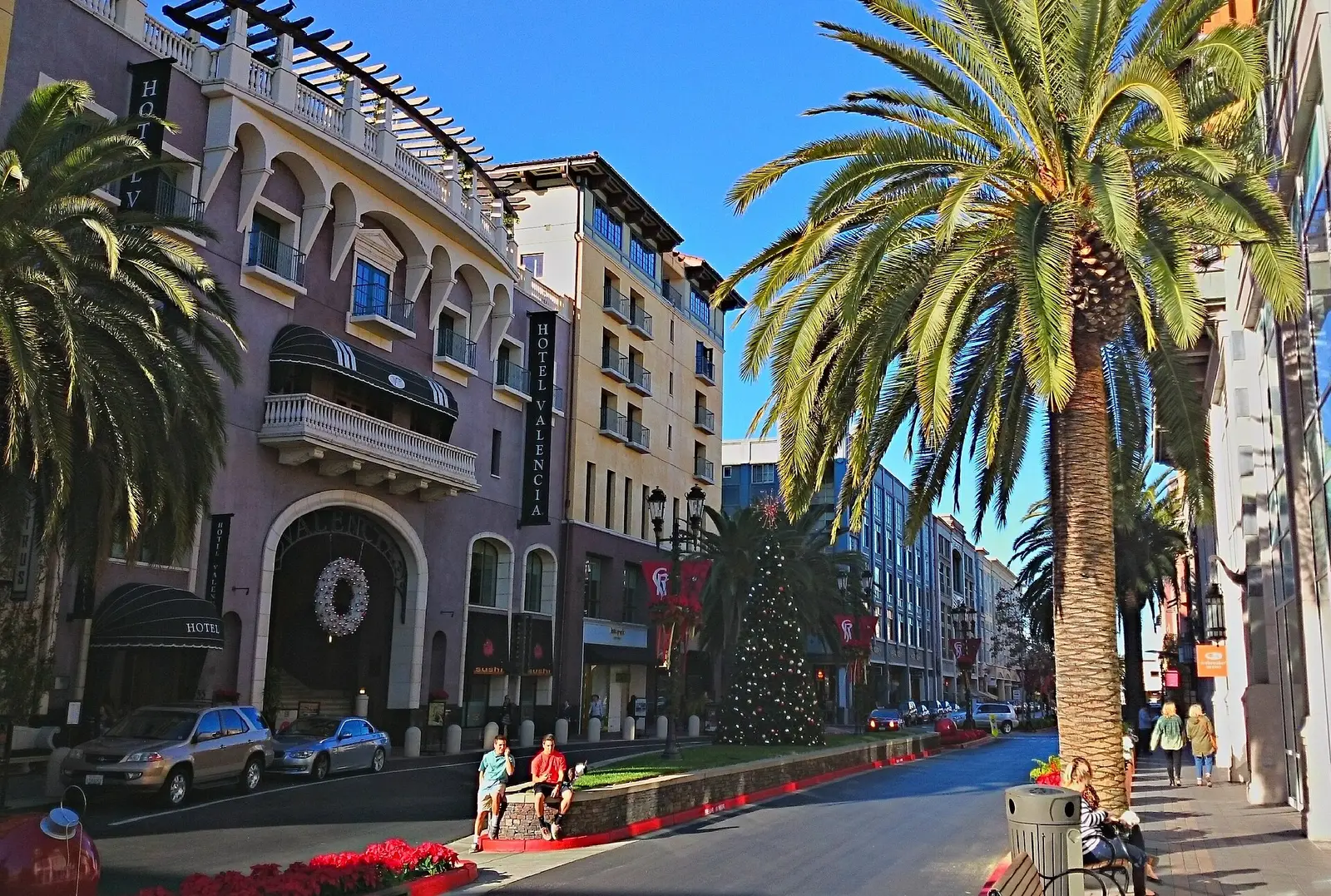
Hotel Valencia at Santana Row in San Jose
Hotel Valencia at Santana Row in San Jose. Photo: Payton Chung, CC BY 2.0, via Wikimedia Commons.
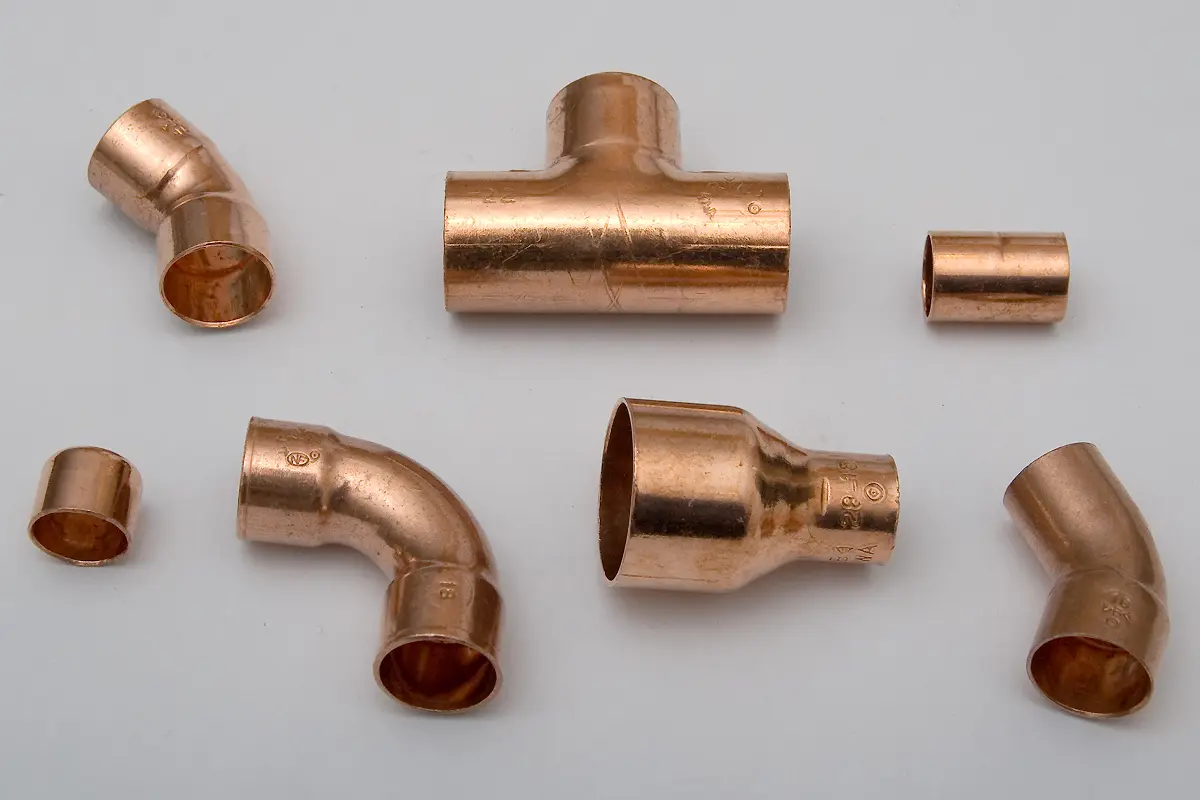
Copper pipe fittings: elbows, a tee, reducers and couplings
Copper pipe fittings: elbows, a tee, reducers and couplings. Photo: Torsten Bätge, CC BY-SA 3.0, via Wikimedia Commons.

The houses here

Slab floors, septic past and hard water in the pipes

A lot of San Jose's houses went up in the tract era of the 1950s and 1960s, and the Eichler tracts among them sit on concrete slabs rather than over a crawlspace. The National Register listing for the Fairglen Additions in Willow Glen describes slab-on-grade foundations with radiant heating, which leaves no crawlspace to carry new pipe and changes how a repipe is routed. Where a lot still has, or once had, a septic tank or cesspool, the city requires a property line cleanout when it is removed and the house is tied into the sewer. Where the water comes from wells, scale builds inside water heaters and fixture valves.

The work

What San Jose plumbers get called out to replace

  1. A water heater swap under the city's checklist

    Replacing a water heater in San Jose takes a plumbing permit, available online for a single-family house. The city's handout is specific: the relief valve drain runs to the outside, pointing down between six inches and two feet above the ground, never into the underfloor area or the sewer, and a tank of up to 52 gallons gets two straps, one in its upper third and one in its lower third. A heat pump model needs an electrical permit too, and a room of at least 700 cubic feet or a door with a louvered panel.

  2. Tankless heaters and the gas meter

    San Jose's water heater page passes on a PG&E rule: a tankless heater on the same wall as the gas meter has to sit at least 36 inches from it horizontally. The vent must end at least four feet from a property line, which on a narrow side yard can decide where the unit goes. The city also warns that a dedicated gas line from the meter is typical and that a larger meter may be required, so ask early who is arranging that with PG&E.

  3. Repiping and the line out to the meter

    A repipe needs a plumbing permit, and a building permit as well if the new runs cut through shear walls, firewalls or other structural members. San Jose treats the exterior line from the house to the water meter as a separate water service project, and any plastic service pipe has to carry a 14-gauge tracer wire along its full length so it can be located later. San Jose Water says it owns the system up to about the property line, and the owner owns the pipe from there to the house.

  4. Sewer laterals and property line cleanouts

    In San Jose the lateral between the city main and the house belongs to the owner, and so do the installation and upkeep of a property line cleanout. Having one matters: the city clears stoppages between that cleanout and the city sewer at no cost, under its Department of Transportation's terms. It must sit on the lot within five feet of the property line, in an approved concrete box, and the city requires one whenever the building sewer is repaired or replaced at the property line.

Permits and local rules

Permit rules a San Jose plumbing bid should account for

  1. The pre-1994 fixture upgrade

    San Jose requires a plumbing permit to add or replace plumbing systems or fixtures, or to change how the pipes are configured. On a property built before January 1, 1994, any permitted alteration or improvement triggers a mandatory upgrade of every noncompliant fixture in the building to a water-conserving model, not only the ones being worked on. The same page sets fixture pressure between 15 and 80 psi and requires a backflow device on hose bibbs and irrigation systems.

    City of San José, Plumbing Projects (opens in a new tab)
  2. When a backwater valve is required

    Most San José buildings do not need a backwater valve, the city says, but one is required where the floor of the lowest plumbing fixture sits less than one foot above the next upstream manhole cover of the sewer. Below that line, a blockage in the main can push sewage out of the house's own drains first. Installing the valve takes a plumbing permit and an inspection, so a contractor should check the manhole elevation before quoting a basement or low-lot bathroom.

    City of San José, Backwater Valves (opens in a new tab)
  3. Air District Rule 9-6 and gas tank heaters

    Under the Bay Area Air District's Rule 9-6 as adopted, natural gas tank water heaters of 75,000 BTU per hour or less that are manufactured after January 1, 2027 must emit zero nitrogen oxides. The rule applies only when an existing heater burns out. Amendments the Air District Board is scheduled to consider on November 4, 2026 would add some exemptions and extend that compliance date, so ask where the rule stands before choosing a replacement.

    Bay Area Air District, Building Appliances (opens in a new tab)

State license for this work: C-36 Plumbing, C-42 Sanitation System. Look up a contractor's license on the CSLB website (opens in a new tab).

Part by part

Which water reaches your taps, district by district

  • North San José and Alviso

    The city's own Muni Water buys a blend of Hetch Hetchy and other treated water from the San Francisco Public Utilities Commission for these areas. Its 2025 report puts that supply at an average of 60 ppm hardness, far softer than the well water elsewhere, though groundwater in the same service area averaged 337 ppm in the same report.

  • Evergreen

    Muni Water delivers treated surface water from Valley Water here, averaging 101 ppm hardness in its 2025 report. Groundwater measured in Evergreen's distribution system averaged 407 ppm, the hardest figure in that report, so it matters which source reaches a given house.

  • Edenvale and Coyote Valley

    Muni Water says deep wells supply all of the water for its Edenvale and Coyote Valley service areas, with hardness averaging 331 and 252 ppm in its report. Great Oaks Water also serves parts of both, so check the city's Utility Services Lookup before assuming which utility you call about a meter.

  • Almaden Valley, Blossom Valley and Santa Teresa

    Great Oaks Water has served this part of the city since the early 1960s and pumps all of its water from 22 wells. Its 2025 report lists hardness averaging 241 ppm, hard enough that scale in water heaters and fixture valves is worth asking a plumber about.

Before you hire

Before a San Jose plumber starts

  • Ask whether your supplier is San Jose Water, Muni Water or Great Oaks, and how its hardness changes their water heater advice.
  • On a house built before 1994, ask which fixtures the permit will make you upgrade, and whether those are in the price.
  • For sewer work, ask whether a property line cleanout is included and where on the lot it will go.
  • For a tankless heater, ask where it will sit relative to the gas meter and who handles a meter upgrade with PG&E.
  • Look up the C-36 Plumbing license at cslb.ca.gov and confirm the online permit is pulled under that license.

Questions

What San Jose homeowners ask a plumber

Sewage backed up in my San Jose house. Who do I call first, the city or a plumber?

Call the city first: its backwater valve page lists a number for reporting a sanitary sewer backup into a home or the street at any hour. Department of Transportation staff check the city main. If the blockage turns out to be in your own lateral, calling a plumber to clear it is your responsibility, though the city clears stoppages between a property line cleanout and the main.

Is San Jose's sewer lateral grant still available?

No. The city posted on July 1, 2024 that funding for the Sewer Lateral Grant Program is no longer available and that the program is not currently active. A lateral repair or a new property line cleanout is paid for by the owner, and the work needs a plumbing permit, which the city says can be obtained online.

Does San Jose Water have lead service lines?

San Jose Water says it has no lead service lines, but in 2019 it identified a small number of lead goosenecks, short connectors at the meter or house, at some properties whose service lines went in before 1946. You can check your line's classification at sjwater.com/LCRR. Muni Water reports no lead or galvanized lines requiring replacement, customer-owned ones included.

Do I need a water softener in San Jose?

It depends on which water you get. San Jose Water's 2025 report shows groundwater averaging 288 ppm against 99 ppm for its Valley Water supply, and Muni Water's Evergreen wells run harder still. Muni Water's report notes that reducing hardness means less soap, longer water heater life and less incrustation of pipes. Have a plumber read your supplier's report before recommending equipment.

Can I send my washing machine's graywater to the garden in San Jose without a plumbing permit?

For a simple single-washer system, yes, according to the city's plumbing page, as long as nothing in the plumbing or electrical system is modified. You still have to submit a plot plan to the city for approval before installing it, and the washer needs a listed three-way diverter valve. Any change to the plumbing system itself needs a plumbing permit.

Plumbing work in San Jose? Tell us what you see.

One request reaches local handymen and contractors who take this work. The Handyman SF connects you with them; it does not do the work.

HandymanNow for handymen Work in San Jose? Get job leads by text. Pick your trades and areas, take only the jobs you want. No subscription. Start getting leads HandymanNow for homeowners Get the HandymanNow app. Send a request with photos, message your handyman and follow them on the way. Download the app

HandymanNow app

Fix it faster. Find work faster.

Homeowners send a job with photos and follow their handyman on the map. Handymen get local jobs by text and take only the ones they want.

Call Get a quote