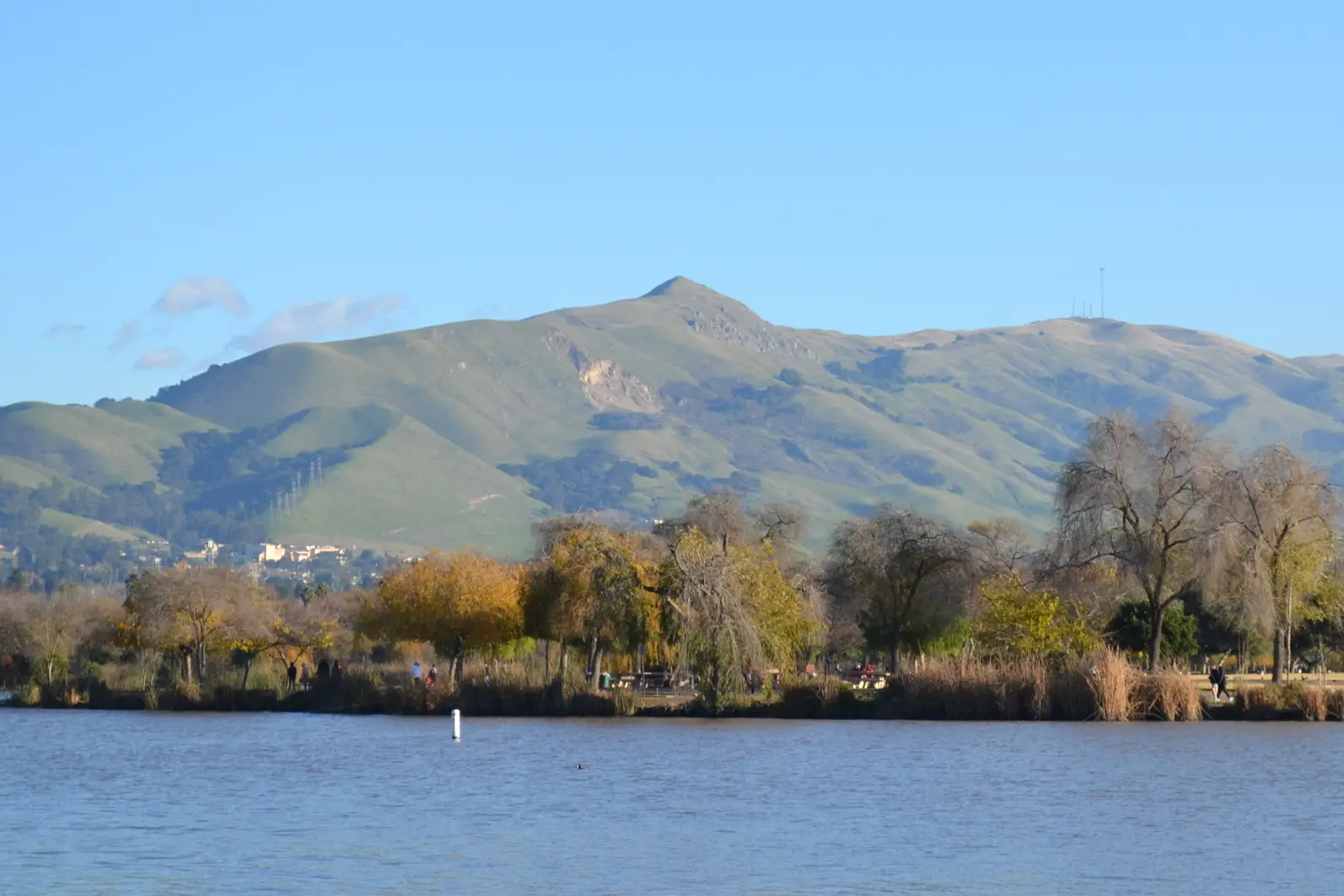
Copper pipe fittings: elbows, a tee, reducers and couplings
Copper pipe fittings: elbows, a tee, reducers and couplings. Photo: Torsten Bätge, CC BY-SA 3.0, via Wikimedia Commons.

Plumbing Fremont

Fremont pipes, from Niles Cone hard water to the lateral under the street

Two agencies shape most plumbing jobs in Fremont. Alameda County Water District blends local Niles Cone groundwater with imported supplies, so hardness changes across town, and it owns the pipe only up to and including the meter. Union Sanitary District owns the sewer mains, while the owner answers for the whole lateral, the part under the sidewalk and street included, and needs a USD permit before repairing any of it.

Water supplier
Alameda County Water District (ACWD)
Sewer agency
Union Sanitary District (USD), Ordinance No. 34 on laterals
Hardest band on ACWD map
160-230 mg/L (9-13 grains per gallon), on the Union City side
City vs. USD sewer permits
City: within 2 feet of the building; USD: everything beyond

The work

The pipe jobs Fremont houses keep producing

  • Replacing the galvanized line from the meter

    ACWD maintains the main in the street, the service line to the meter, the meter box and lid, and the meter. From the meter connection into the house, the pipe is the owner's. ACWD lists the signs of a failing galvanized line: pressure that keeps dropping, a strip of grass that stays greener than the rest along the line's path, and water stains. Its smart meters also show continuous use, interval after interval, in the My Smart Water Connect portal, which is often the first clue. Replacing the line is a trench from the meter box to the house shutoff.

  • Water heaters on the hard-water side of town

    Calcium carbonate is what leaves the white crust on Fremont kettles and faucets, and ACWD advises flushing a water heater at least once a year, twice if possible, to keep mineral deposits from building up. Where a house sits on the district's hardness map changes how fast that happens. Fremont's express Residential Plumbing permit covers replacing a tank, tankless or heat pump water heater in the same location, and it issues automatically through Citizen Access. Moving the heater elsewhere takes a regular permit.

  • A lateral repair that needs two agencies

    The city's plumbing permit reaches only the sewer line and cleanout within two feet of the building's footprint. Past that line, the lateral belongs to Union Sanitary District's permit desk, and USD issues its repair permit to whoever is contracted to do the underground work once a city building permit is shown. If the trench crosses the property line into the sidewalk or street, Fremont's encroachment permit is a third piece of paper. USD then wants a call before sewer construction starts so it can schedule its inspection.

  • Pipe bursting instead of an open trench

    USD accepts pipe bursting, pulling new pipe through the old one, as a way to replace a lateral, with two conditions. A video of the existing lateral has to satisfy the permit counter staff, which in practice means no sags in the stretch to be burst, and the property owner signs a Pipebursting Owner Approval Form. USD names HDPE for pipe bursting, and PVC SDR 26, Schedule 40 or ABS for conventional replacement.

  • Finding a lateral nobody marked

    A Fremont lateral usually announces itself with a cleanout just outside the house or behind the sidewalk, its lid marked S or SEWER, or with an S stamped in the curb. USD warns that the curb mark is not always accurate, and some older homes have no cleanout at all. The district can sometimes give an approximate location. Reconnecting to an old capped lateral is allowed only after USD reviews a video of it and the pipe is brought up to current district standards.

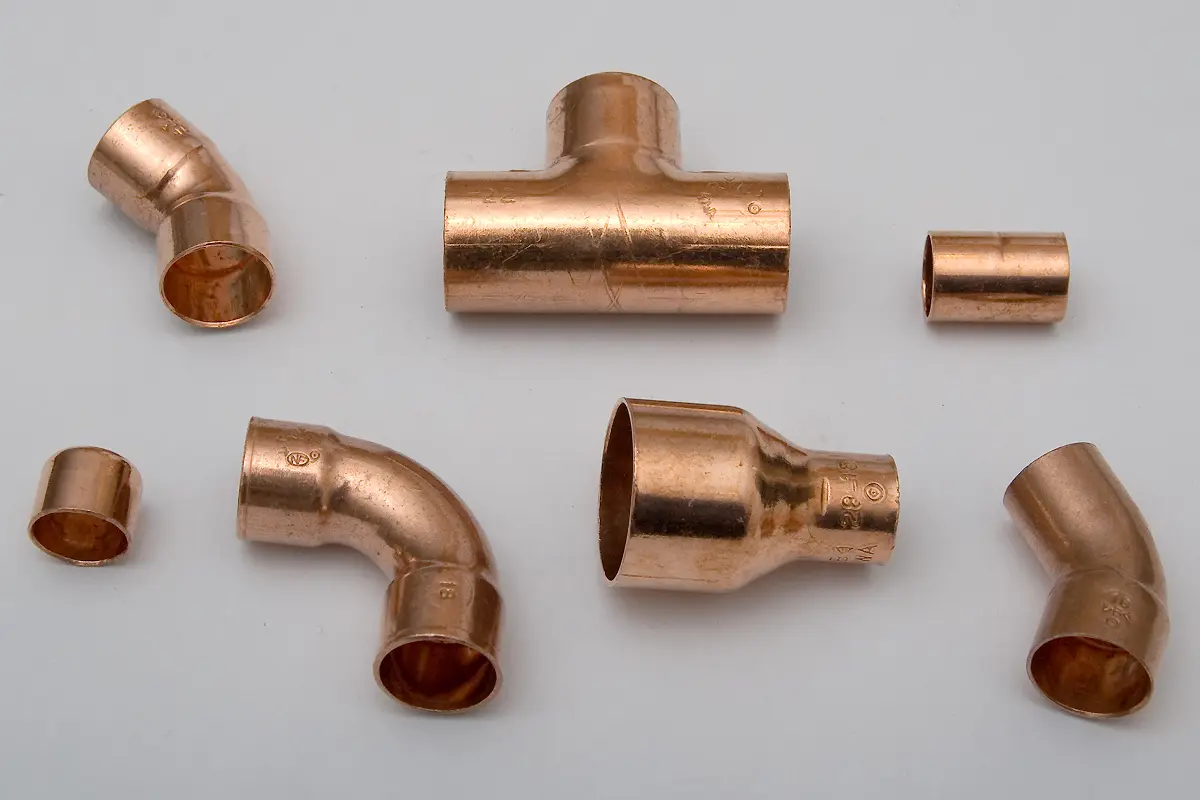
Mission Peak above Lake Elizabeth in Fremont
Mission Peak above Lake Elizabeth in Fremont. Photo: Oleg Alexandrov, CC BY-SA 3.0, via Wikimedia Commons.

The houses here

Tract houses from the 1950s to the 1980s, and what is buried in front of them

Fremont's Housing Element counts most of the city's homes as built between 1960 and 1990, and roughly 23,800 units already past 60 years old. The city's own history of its postwar subdivisions describes thousands of Ranch houses going up in the quarter century after the war, from Glenmoor Gardens to Mission Ranch. ACWD's rule of thumb for those houses is direct: a home built before 1960 is likely to have a galvanized steel service line, and galvanized pipe tends to lose strength and start leaking after 40 to 50 years underground. When the city's Code Enforcement Division reviewed substandard-housing complaints from 2014 to 2021, mold was the most common problem, followed by plumbing and roof leaks.

Free request

Describe the plumbing job once. Local pros who take work in Fremont reply by call or text.

  • No fee to request, and no obligation to hire
  • You agree scope and price with the pro you choose
  • Photos help them quote without a first visit

Get quotes for plumbing work in Fremont

Two short steps. A local pro who takes this work calls or texts you back.

To send a request, call or text (415) 449-8213.

Free to request, and you agree the scope and price with the person you hire before work starts. In California, a job over $1,000 in labor and materials, or one that needs a building permit, must be done by a contractor licensed by the CSLB in the right class. Ask for the license number and check it at cslb.ca.gov.

Permits and local rules

Ordinances and permits behind a Fremont plumbing job

  • USD Ordinance No. 34 and the repair permit

    Union Sanitary District maintains the public sewer mains in Fremont, Newark and Union City. Under its Ordinance No. 34, each owner maintains and repairs the sewer lateral from the house up to the point where it joins the public main, including the section beneath the sidewalk and street. A USD repair permit is required before any lateral work begins, even when the repair is entirely on private property, and USD's own crew inspects the public main free when a backup's source is unclear.

    Union Sanitary District (opens in a new tab)
  • Fremont's express Residential Plumbing permit

    Through Citizen Access, the city's online permitting portal, Fremont issues an express Residential Plumbing permit automatically for repairing, altering or replacing an existing water heater, gas line, or water and waste line in the same location. It does not cover relocating a sewer line or adding lines for more demand. The city's no-permit handout is narrow: stopping a leak or clearing a stoppage is exempt, but once a defective concealed pipe has to be replaced with new material, it counts as new work and needs a permit and inspection.

    City of Fremont Planning, Building & Permit Services (opens in a new tab)
  • Where ACWD's pipe ends and yours begins

    ACWD is responsible for the water main in the street, the service line to the meter, the meter box and lid, and the meter itself. The homeowner is responsible for everything from the meter connection onward: the service line to the house and all household plumbing. ACWD reviewed its records in preparing its service line inventory and found it never used lead connectors or leaded pipelines for water services, and it publishes an interactive map showing the material on record for each address.

    Alameda County Water District (opens in a new tab)
  • ACWD's cross connection control program

    ACWD's Cross Connection Control Program identifies businesses and residential areas likely to contain cross connections, and one of its specialists surveys the property on site. Where needed, the owner is asked to install a backflow prevention device at the meter, and state law then requires the device to be tested at least once a year. ACWD publishes an approved testers list of local plumbing contractors registered to test devices for its customers, along with standard installation drawings.

    Alameda County Water District (opens in a new tab)

State license for this work: C-36 Plumbing, C-42 Sanitation System. Look up a contractor's license on the CSLB website (opens in a new tab).

Part by part

Where Fremont's tap water changes character

  • Quarry Lakes and the Alameda Creek side

    ACWD recharges the Niles Cone groundwater basin by diverting Alameda Creek water, behind two inflatable rubber dams, into the Quarry Lakes. Its Tri-City hardness map puts this north end of Fremont, toward Union City, in its hardest band, 160 to 230 mg/L. Scale builds fastest here in water heaters, tankless units and faucet aerators.

  • Irvington, Mission San Jose and Warm Springs

    The same map shows the south and east of the city in a softer band, 74 to 130 mg/L, or 4 to 8 grains per gallon. The map itself says location decides hardness, so a plumber sizing a softener or a tankless heater should go by the district's map for the street, not a citywide figure.

  • Hill streets east of Mission Boulevard

    USD does not require a sewer backflow prevention device in every home, but it says that in hilly areas installing one may be prudent, to keep a sanitary sewer overflow in the main from backing into the house. The district does not supply the devices, so the plumber sources and installs one under the repair permit.

Before you hire

What to settle with a Fremont plumber first

  • Ask whether the quote includes the USD repair permit and, if the trench reaches the sidewalk or street, Fremont's encroachment permit.
  • For pipe bursting, ask to see the lateral video USD will review for sags before it accepts the method.
  • Look your address up on ACWD's service line map, then ask the plumber to confirm the pipe material at the meter box.
  • Check the C-36 Plumbing license at cslb.ca.gov, and ask whether they hold the liability coverage USD requires before issuing a sewer permit.
  • Ask whether your street's band on ACWD's hardness map changes the water heater or tankless unit they recommend.

Questions

Fremont owners ask about water, sewers and permits

Who pays to fix the sewer pipe under the street in front of my Fremont house?

The owner. Union Sanitary District's Ordinance No. 34 makes the property owner responsible for the lateral all the way to its connection with the public main, under the sidewalk and street included. USD maintains the main itself. If you cannot tell where a backup is, USD will inspect the main free; if the main is clear, the problem is almost certainly in your lateral.

Why does our water spot the dishes more than at my sister's house in Warm Springs?

Because ACWD's water is not the same hardness everywhere. Its Tri-City map shows the north end of Fremont, toward Union City, at 160 to 230 mg/L, while the south and east of the city fall in a 74 to 130 mg/L band. The spots are calcium carbonate, which ACWD notes is the same mineral sold as a calcium supplement.

Where is the main water shutoff on a Fremont house?

ACWD says it is usually the house valve just ahead of the water spigot in the front yard, though older homes may have it elsewhere. The handle is typically red, grey or green and shaped like a wagon wheel, and it closes clockwise. ACWD suggests testing it now and then; if it will not turn or spins freely, a plumber should repair or replace it.

Are there lead service lines in ACWD's system?

ACWD says no. After reviewing installation records, standard specifications, repair records and field investigations, it found that it did not use lead connectors or leaded pipelines for water services. Its October 2024 inventory added the customer-owned side of each line, and an interactive map on its site shows the material recorded for your address.

Can I replace my water heater in Fremont without a permit?

No. Fremont's no-permit list for plumbing covers only stopping leaks and clearing stoppages without replacing pipe or fixtures. A same-location water heater replacement, whether tank, tankless or heat pump, falls under the express Residential Plumbing permit, which Citizen Access issues automatically once the application is submitted and paid.

Plumbing work in Fremont? Tell us what you see.

One request reaches local handymen and contractors who take this work. The Handyman SF connects you with them; it does not do the work.

HandymanNow for handymen Work in Fremont? Get job leads by text. Pick your trades and areas, take only the jobs you want. No subscription. Start getting leads HandymanNow for homeowners Get the HandymanNow app. Send a request with photos, message your handyman and follow them on the way. Download the app

HandymanNow app

Fix it faster. Find work faster.

Homeowners send a job with photos and follow their handyman on the map. Handymen get local jobs by text and take only the ones they want.

Call Get a quote