Roofing Fremont

Fremont roofs: the 100-square-foot line, the halfway inspection, Class A

Fremont draws its roofing line at 100 square feet: a residential project that removes and replaces more than that takes an Express Reroof permit, issued automatically through Citizen Access. The inspection is the unusual part. The city wants to see the roof in progress, with no more than half of it covered, so it can check underlayment, valley flashing, deck repairs and a Class A fire classification before the rest goes on.

Express Reroof permit
Over 100 sq ft of roofing removed and replaced; issued online
Inspection No. 122
In progress, with no more than 50% of the roof covered
Energy Code zone
Climate Zone 3 in 94536, 94538, 94539 and 94555
Local fire zone
Very High zone under Ordinance 10-2025, approved July 15, 2025
  • Free to request, no obligation to hire
  • Up to five local pros who take this work can reply
  • Rules on this page checked against 15 public sources, October 2026
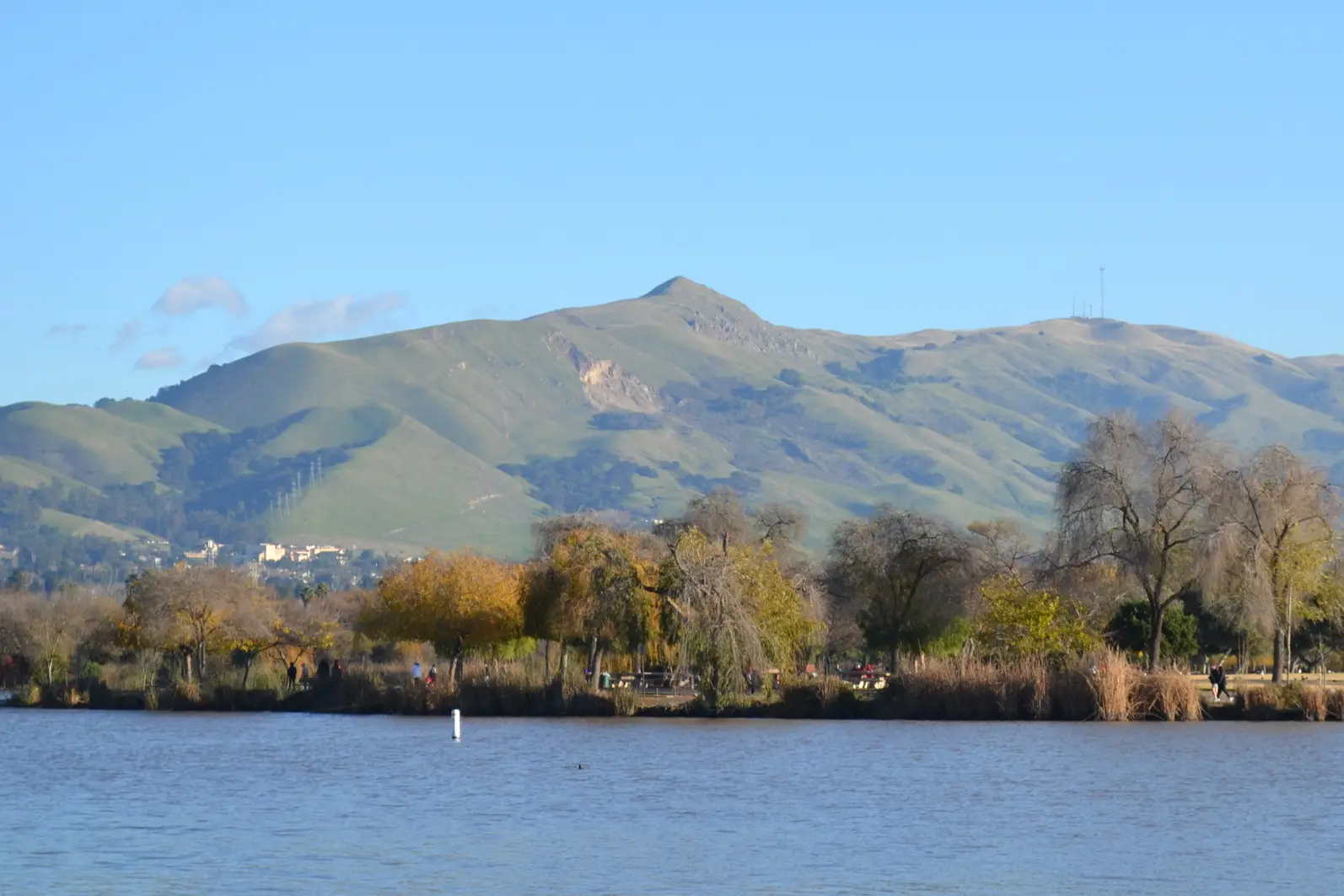
Mission Peak above Lake Elizabeth in Fremont
Mission Peak above Lake Elizabeth in Fremont. Photo: Oleg Alexandrov, CC BY-SA 3.0, via Wikimedia Commons.

Permits and local rules

City and state papers a Fremont roof is checked against

  1. The Express Reroof record in Citizen Access

    Express permits are applied for online and issued automatically, with no plan review, and are limited to work of narrow scope. Reroof is one of them, covering more than 100 square feet of roofing removed and replaced on a house or a commercial building. The removal and replacement of photovoltaic systems is allowed under it only for single-family homes; every other project with panels needs a regular building permit. New rooftop solar can instead go through Fremont's Instant Solar Permit, which uses SolarAPP+.

    Source: City of Fremont Planning & Building Permits (fremont.gov)

  2. Inspection 122, then the final

    The handout on residential reroof inspections, updated March 6, 2025, makes the in-progress inspection mandatory on existing houses and sets its limit: no more than 50 percent of the roof completed or covered. Past that, the applicant may have to remove new material so the inspector can see what is under it. A contractor or representative must be present for every inspection, and a ladder set up and secured to OSHA standards or the visit is cancelled. The final, No. 199, also verifies the smoke and carbon monoxide alarms.

    Source: City of Fremont Building and Safety Division (fremont.gov)

  3. Fremont's own Very High fire zone

    The Fire Prevention Bureau says the city keeps its own Very High Fire Hazard Severity Zone designations, alongside the state's Moderate, High and Very High classifications. They cover the hill areas east of Mission Boulevard and east of I-680, plus Ardenwood Historic Farm and Coyote Hills Regional Park. The map sets the zone under City Ordinance 10-2025, approved by the City Council on July 15, 2025. Defensible space requirements apply to owners inside it, and Municipal Code Chapter 15.66 is the city's Wildland-Urban Interface Code.

    Source: Fremont Fire Department, Fire Prevention Bureau (fremont.gov)

  4. What Climate Zone 3 leaves out

    Section 150.2 of the 2025 Energy Code reaches a re-roof once more than half the roof is replaced, an overlay included. Its steep-slope reflectance rule names Climate Zones 4 and 8 through 15, its low-slope reflectance rule names Zones 4 and 6 through 15, and its table of added roof insulation marks Zone 3 as not required. Every Fremont ZIP code is in Zone 3, and the city's inspection list checks cool roofing only "if applicable".

    Source: California Energy Commission, 2025 Energy Code (energy.ca.gov)

State license for this work: C-39 Roofing, B General Building. Look up a contractor's license on the CSLB website (cslb.ca.gov).

Free, no obligation. Next, add your details in the request form.

The work

Five roof calls Fremont's rules have something to say about

  1. A patch, or a permit

    The permit-types page defines the Express Reroof record by size: residential or commercial work that removes and replaces more than 100 square feet of roofing material. Re-roofing an accessory structure of 120 square feet or less needs no building permit at all. A leak around a vent or a few blown-off shingles usually stays well under the line, but a repair that keeps growing once the old roofing is lifted can cross it, so agree up front who files if it does.

  2. Overlay on a roof that already has one layer

    Fremont allows two layers of roofing and no more, so a house that was overlaid once has to be stripped next time. An overlay still gets the in-progress inspection, because the inspector has to confirm the new product is compatible with what it is laid over. The city's handout warns that materials found incompatible may have to come off, which is worth knowing before a bid built on an overlay is signed.

  3. Dry rot under the old shingles

    Among the items the in-progress inspector verifies are that all dry rot has been removed and replaced with new rafters or deck, that the roof deck is structurally sound, and that the deck material and fasteners are right. Ask the roofer how replacing rotten boards is written into the contract and how it is counted.

  4. Solar panels that have to come off

    When an existing roof-mounted system is in the way, the job needs an electrical final. If the roofing contractor removes and reinstalls the panels, the work can sit on the Express Reroof record, which allows it only on single-family homes. If another contractor handles the panels, that firm applies for an Express Residential Electrical record that quotes the reroof record's ID. Changing the system or adding a new one takes a Renewable Energy record with plan review before any work starts.

  5. Valleys on a fire-rated roof

    The inspection handout spells out what the city expects in a valley: flashing of at least 26 gauge, laid on a non-perforated, mineral-surfaced cap sheet of 72 pounds or more that meets ASTM D3909, runs the full length of the valley and is no narrower than 36 inches. The handout cites CRC R337.5.3 for it, or allows the valley to be lined to the manufacturer's specification. Ask which of the two the bid follows.

Free request

Describe the roofing job once. Local pros who take work in Fremont reply by call or text.

  • No fee to request, and no obligation to hire
  • You agree scope and price with the pro you choose
  • Photos help them quote without a first visit

Get quotes for roofing work in Fremont

Two short steps. A local pro who takes this work calls or texts you back.

To send a request, call or text (415) 449-8213.

Free to request, and you agree the scope and price with the person you hire before work starts. In California, a job over $1,000 in labor and materials, or one that needs a building permit, must be done by a contractor licensed by the CSLB in the right class. Ask for the license number and check it at cslb.ca.gov.

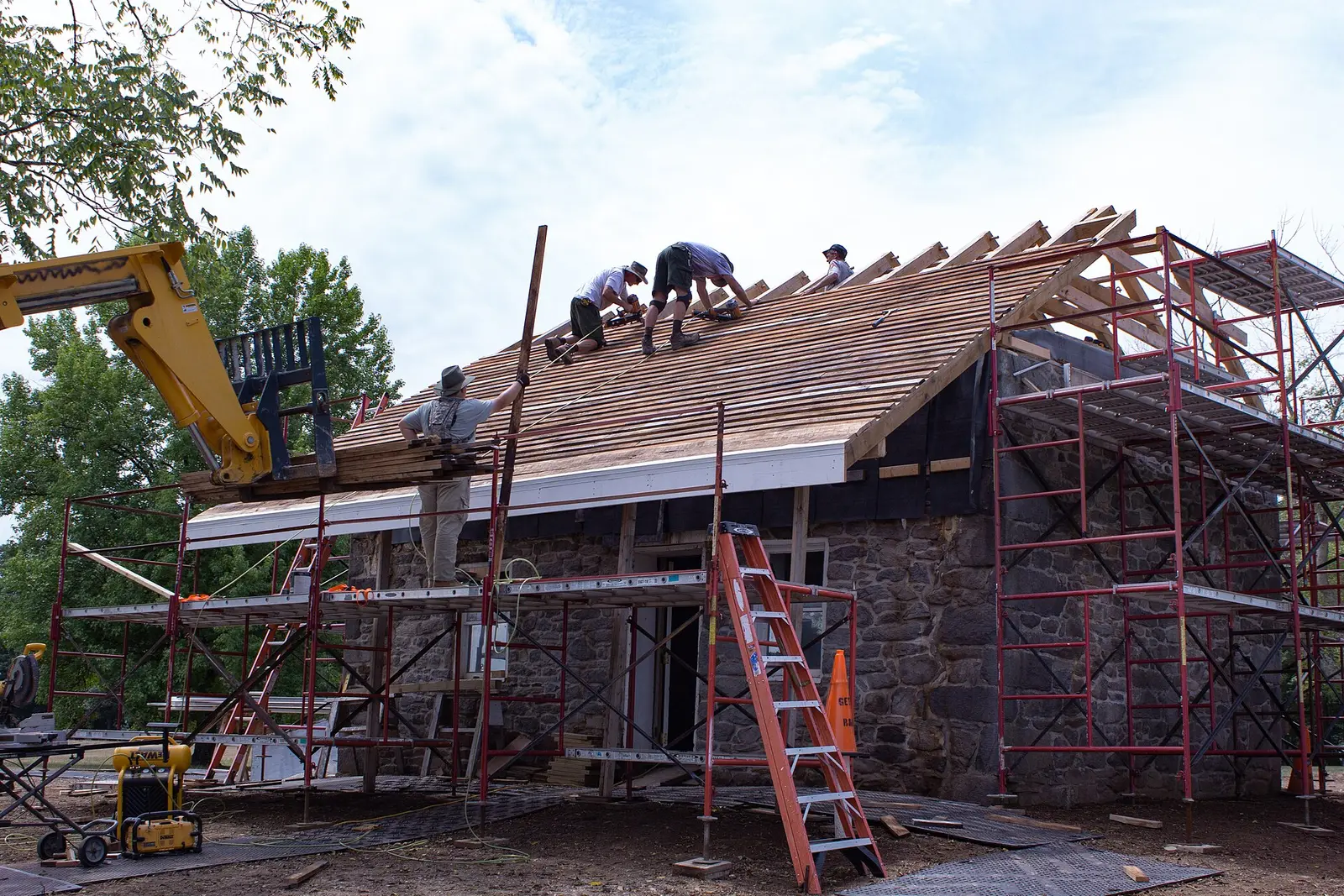
Roofers installing cedar shingles near the ridge while a telehandler lifts bundles onto the roof
Roofers installing cedar shingles near the ridge while a telehandler lifts bundles onto the roof. Photo: NPS photo, Public domain, via Wikimedia Commons.

The houses here

Low-pitched ranch roofs over a housing stock mostly built 1960-1999

Fremont's Housing Element counts 32,139 homes built from 1960 to 1979 and another 30,330 from 1980 to 1999, together 79 percent of the city's housing. Before that came the 1950s ranch tracts. The city's historic context study of Glenmoor Gardens and Mission Ranch lists what a standard Ranch House carried on top: shake roofs, low pitches, wide eaves and the occasional rooftop dovecote, and Glenmoor Homes' own 1954 office building was given a shake roof to match. The same study describes the houses as low to the ground and horizontal, with larger ones rambling into wings, and calls the attached garage a hallmark of the style, so a ranch roof covers a lot of ground and a lot of eave. Niles and Mission San Jose keep older houses that predate the 1956 city.

Part by part

Parts of Fremont where a roof comes with extra questions

  • Glenmoor Gardens

    The Glenmoor Gardens Homeowners Association was incorporated in March 1953, when the tract had no more than 75 houses, and the city's 2009 historic context names design review, under its bylaws and the covenants attached to every deed, as one of its two main jobs. Take a change of roofing color or material to the association before the city permit is pulled.

  • Hills east of Mission Boulevard and I-680

    The Fire Prevention Bureau places these hillsides inside the city's locally designated Very High fire zone. A replacement roof there is bid around a Class A assembly and the ember details that go with it, and the house also answers to the city's defensible space rules. Look the address up on the city's zone map before comparing bids.

  • Niles and Mission San Jose

    Both were towns before 1956 and hold many of the city's oldest houses. Fremont's permit-types page says a property 50 years or older must go through a Historic Evaluation Request before permits for exterior modifications are issued, so ask Planning whether a new roofing material on an older house here counts as one.

Questions

Fremont roof questions, from a patch to a tear-off

How big can a Fremont roof patch get before it needs a permit?

The city defines its Express Reroof permit as residential work that removes and replaces more than 100 square feet of roofing material, and says a re-roof on an accessory structure of 120 square feet or less needs no building permit. Fremont's list of work you can do without a permit does not mention roofing, so for a repair close to the line, ask Plans and Permits staff by email before work starts.

Why does the inspector have to see my roof half finished?

Because most of what the inspector checks ends up buried. At inspection 122 Fremont verifies underlayment and fasteners, valley flashing, sealed utility penetrations, the deck material, rot repairs, a sound deck and a Class A fire classification. If more than 50 percent of the roof is already covered, the city can require new material to be pulled back so those items can be seen.

Does my Fremont re-roof need cool-roof shingles?

Not under the state's re-roof rules. Every Fremont ZIP code is in Energy Code Climate Zone 3, and the reflectance requirements for replaced roofs name Zones 4 and 8 through 15 for steep roofs and Zones 4 and 6 through 15 for low-slope ones. The roof insulation table for low-slope replacements marks Zone 3 as not required either.

We live in a Fremont mobile home park. Does the city issue our reroof permit?

No. Fremont's Building and Safety FAQ says permits for repairs on mobile homes, a reroof included, are not issued by the city. They fall under the California Department of Housing and Community Development, so the permit comes from the state, not through Citizen Access.

Does a Fremont tear-off need a Green Halo recycling plan?

Not by itself. The city's construction and demolition page lists the projects with recycling requirements as new residential buildings, residential additions, larger commercial work and all demolition, and a house re-roof is not on that list. A re-roof that is part of an addition can fall under it, in which case the Waste Handling Plan goes in before the permit is issued.

Free, no obligation. Next, add your details in the request form.

Before you hire

Five things to settle with a Fremont roofer first

  • Will the work pass 100 square feet, and if so who files the Express Reroof record before the old roofing comes off?
  • When will you call for inspection 122, and how will you stop short of covering half the roof before the inspector arrives?
  • If solar panels have to come off, is your firm handling them on the reroof record, or will the solar contractor file an electrical record?
  • Is the address inside Fremont's Very High fire zone, and which Class A assembly and valley detail does the bid name?
  • Look up the C-39 Roofing license at cslb.ca.gov, and ask how replacing rotten deck boards is written into the contract.

Where these facts come from

Checked against these public sources in October 2026. Rules and programs change: confirm permit requirements with the city before work starts, and a contractor's license on the CSLB website.

  • fremont.gov: permit types (fremont.gov)
  • fremont.gov: permit forms handouts (fremont.gov)
  • fremont.gov: 638768733743570000 (fremont.gov)
  • fremont.gov: 637769005420130000 (fremont.gov)
  • fremont.gov: building safety faqs (fremont.gov)
  • fremont.gov: vegetation management (fremont.gov)
  • fremont.gov: 639140843924530000 (fremont.gov)
  • fremont.gov: wildfire (fremont.gov)
  • fremont.gov: construction demolition debris (fremont.gov)
  • fremont.gov: 638151808164530000 (fremont.gov)
  • fremont.gov: 638416080467670000 (fremont.gov)
  • fremont.gov: building code (fremont.gov)

Roofing work in Fremont? Tell us what you see.

One request reaches local handymen and contractors who take this work. The Handyman SF connects you with them; it does not do the work.

HandymanNow for handymen Work in Fremont? Get job leads by text. Pick your trades and areas, take only the jobs you want. No subscription. Start getting leads HandymanNow for homeowners Get the HandymanNow app. Send a request with photos, message your handyman and follow them on the way. Download the app

HandymanNow app

Fix it faster. Find work faster.

Homeowners send a job with photos and follow their handyman on the map. Handymen get local jobs by text and take only the ones they want.

Call WhatsApp (opens WhatsApp) Free quote