Electrical Palo Alto

Meters, service laterals and slab-buried Eichler wiring in Palo Alto

In Palo Alto the electric meter and the grid behind it belong to the city's own utility, not PG&E. City of Palo Alto Utilities writes service rules that can differ from PG&E's, and the Building Department will not issue a permit for a new, upgraded or relocated service until the utility's Electric Engineering Division approves it. Inside the city's Eichlers, the original wiring runs under the slab and through the roof.

Electric utility
City of Palo Alto Utilities (CPAU), owned by the city
Energy Code climate zone
Zone 4 in ZIP codes 94301, 94303, 94304 and 94306
Meter socket
Ring-type, centered 48 to 75 inches above grade
Undergrounding program
Run by CPAU since 1965; 8 districts proposed, no citywide plan

Get quotes for electrical work in Palo Alto

Two short steps. A local pro who takes this work calls or texts you back.

To send a request, call or text (415) 449-8213.

Free to request, and you agree the scope and price with the person you hire before work starts. In California, a job over $1,000 in labor and materials, or one that needs a building permit, must be done by a contractor licensed by the CSLB in the right class. Ask for the license number and check it at cslb.ca.gov.
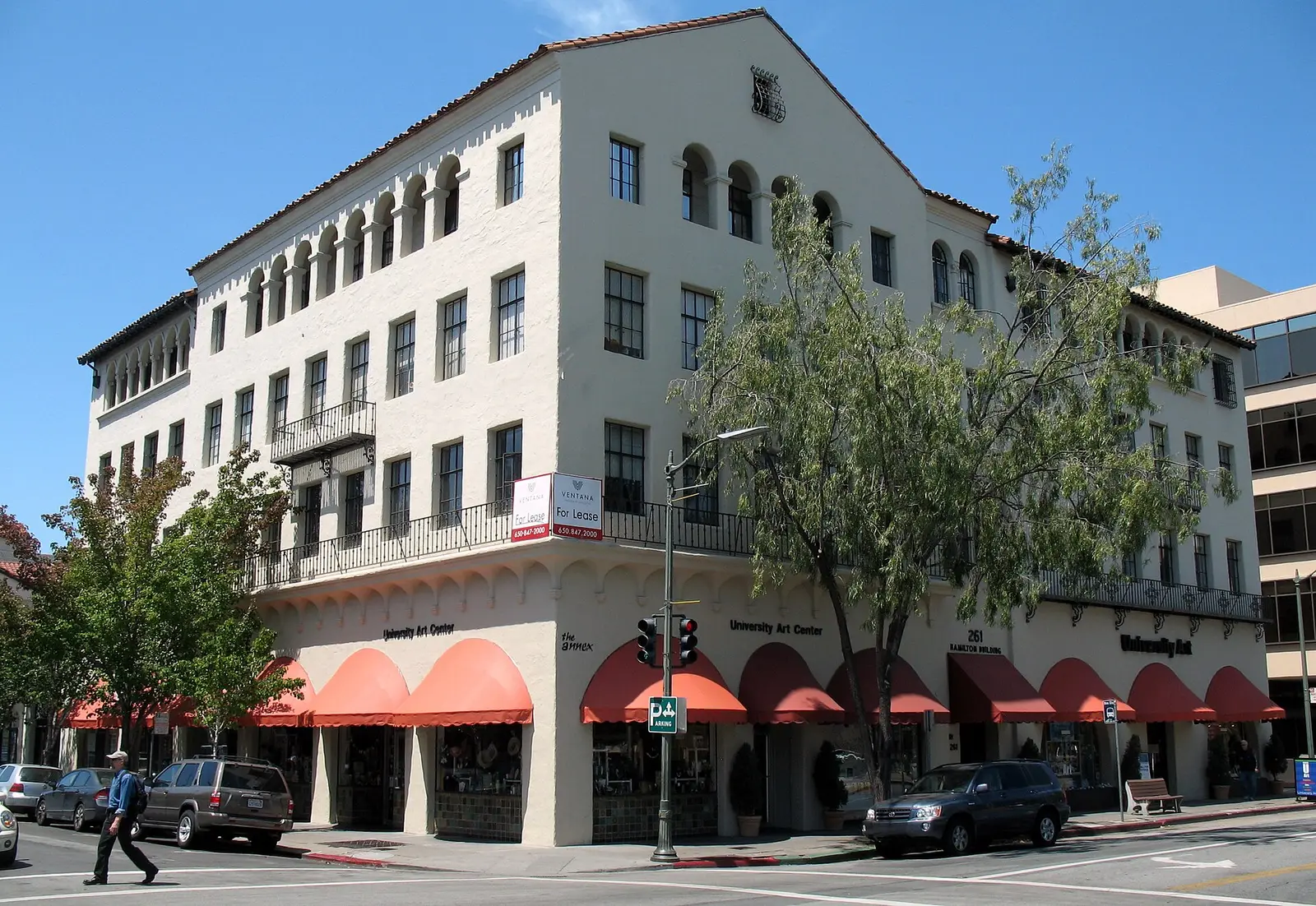
The Ramona Street Architectural District in downtown Palo Alto
The Ramona Street Architectural District in downtown Palo Alto. Photo: Sanfranman59, CC BY-SA 3.0, via Wikimedia Commons.
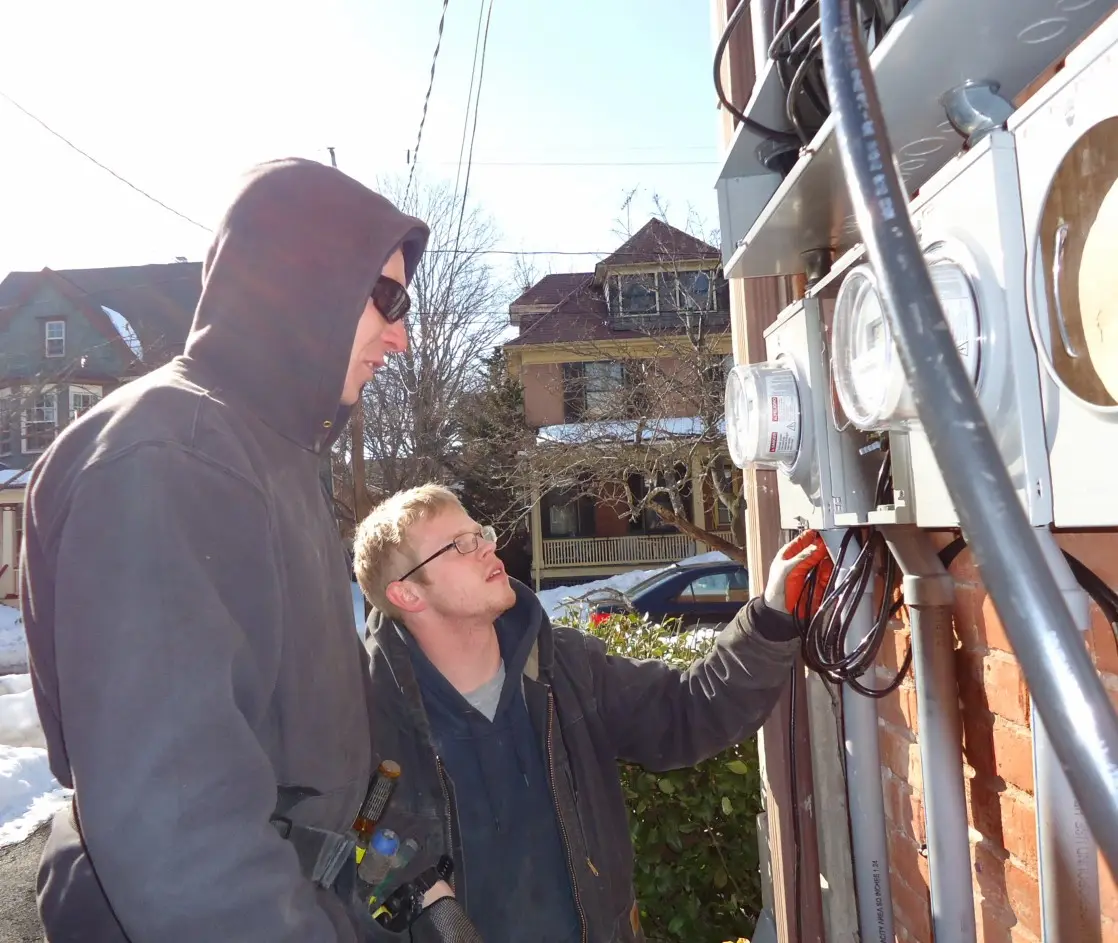
Electricians inspecting the electrical panels and meters on a multifamily house
Electricians inspecting the electrical panels and meters on a multifamily house. Photo: Tomwsulcer, CC0, via Wikimedia Commons.

The houses here

Houses with no attic to run a new circuit through

Palo Alto's Eichler design guidelines put some 2,700 of Joseph Eichler's houses inside the city and name two things they were built without: insulation and attic space. The missing attic is what an electrician meets first. The Eichler Network, a publication devoted to these houses, describes the original wiring as channeled under the slab, carried across the roof inside the roofing materials to the ceiling lights, and run behind the wall panels, all fed by panels of 50 to 100 amps. It also warns that new wire very rarely pulls through the old conduit under the slab, so on these houses the route for a new circuit has to be settled before the price is.

The work

Four reasons a Palo Alto panel gets opened up

  1. A bigger service, approved by the utility first

    Upgrading the service starts with a utility service application to CPAU, because the Building Department needs Electric Engineering's approval before it issues the electric permit. The city's checklist for services up to 225 amps also asks for a tree protection sheet when a trench passes near a protected tree. The meter has to stay outdoors with a level working space 30 inches wide and 36 inches deep in front of it, and never inside a carport, breezeway or porch that might be enclosed later.

  2. Heat pump appliances on the panel you already have

    CPAU's Electrify My Home program, the successor to its heat pump water heater program, now covers all major appliances, provided the project switches the water heater or the heating. Before anyone replaces the panel, the city points owners to phone consultations with QuitCarbon's electrification experts and to circuit sharing, where two appliances use one circuit because only one runs at a time. Its rebate rules also support panel upgrades and circuit splitter devices, but only for a new panel of 200 amps or less.

  3. A home EV charger and the transformer up the street

    A charger on a breaker of up to 60 amps, with a charger of up to 50 amps, fits the city's over-the-counter permit pilot. Anything rated above 50 amps also needs CPAU's EV charging equipment form with the permit. Where the extra load means the city's transformer has to be upgraded, CPAU's Utility Service Capacity Fee Rebate Program applies to the extra service fees that upgrade brings, so ask early whether the charger will trigger one.

  4. Rooftop solar and a battery under city rules

    Palo Alto issues rooftop solar permits instantly to licensed contractors through SolarAPP+, but not for homes on the city's historic registry, not for standalone batteries and not when the panel is being upgraded; CPAU's interconnection approval comes first in every case. CPAU reached its net metering cap on December 31, 2017, so systems connected since then are credited for exports under its E-EEC-1 rate. A battery permit closes with a fire inspection, and the unit may not sit in a bedroom or a closet.

Permits and local rules

What the city's utility and permit desk require

  1. CPAU's Electric Service Requirements

    CPAU publishes its own service manual and warns that standards set by other utilities may not be acceptable in its territory. The owner is responsible for the trenching, conduit and cable from the utility's designated service point to the meter or panel. Each parcel gets one service lateral, no longer than 100 feet unless Engineering approves, and inside an underground utility district only underground services are allowed. Services over 200 amps need a load calculation under Article 220 of the California Electrical Code.

    City of Palo Alto Utilities (opens in a new tab)
  2. Rule 20: overhead, underground and the wildfire areas

    Under CPAU's Rule 20, the standard service to a house in an overhead area stays overhead, except where CPAU finds an elevated threat of wildfire: there, every new, relocated or modified service goes underground. The customer furnishes, owns and maintains the service panel and meter socket, and CPAU takes over customer-installed underground conductors only if they meet its specifications. An accessory dwelling unit sold separately from the main house may need its own service line and utility easements.

    City of Palo Alto Utilities (opens in a new tab)
  3. Only the utility connects, and meters stay on the ground floor

    CPAU's Rule 18 allows only its own employees or agents to connect a customer's electric, gas or fiber service to the city's system or to disconnect it, so the electrician schedules the cutover with the utility rather than pulling the meter. Rule 15 adds that CPAU must approve where a meter goes and that meters may not be placed above the ground floor, which settles most plans to move one into a garage loft or onto an upper deck.

    City of Palo Alto Utilities (opens in a new tab)
  4. The over-the-counter pilot for residential electrical permits

    Development Services runs a pilot over-the-counter program for single residential mechanical, electrical and plumbing permits. Service replacements up to 225 amps, EV chargers up to a 60-amp breaker and 50-amp charger, and roof-mounted solar or battery systems up to 38.4 kW or 38.4 kWh qualify, while a project with several components does not. The applicant registers in Accela Citizen Access, sends a pre-application, and books a one-hour appointment with a project coordinator.

    City of Palo Alto Development Services (opens in a new tab)

State license for this work: C-10 Electrical. Look up a contractor's license on the CSLB website (opens in a new tab).

Part by part

Two corners of Palo Alto where the job runs differently

  • The Foothills

    CPAU's wildfire plan prioritizes vegetation management, maintenance and undergrounding of electric lines in the Foothills, and a utility may cut power to high-threat lines during fire weather. The city's EV and battery permit guidelines list an extra travel-time inspection for jobs west of Interstate 280, and Rule 20 sends a modified service underground wherever CPAU finds an elevated wildfire threat.

  • East Meadow Circles, Fairmeadow

    About 300 homes here are in a region of CPAU's Grid Modernization project, which replaces small transformers with larger ones and open-wire secondaries with aluminum aerial cable so that every end use can go electric. The work reaches into utility easements two to five feet behind the sidewalk and into some backyards, so check the schedule before trenching a new service.

Before you hire

Settle these with a Palo Alto electrician before work starts

  • Ask whether the bid includes CPAU's utility service application and who waits for Electric Engineering's approval before the permit is pulled.
  • On an Eichler, ask how a new circuit will reach the far rooms and the ceiling, since old under-slab conduit rarely takes new wire.
  • If a trench for the service runs near an oak or another protected tree, ask whether the tree protection sheet is in the permit set.
  • For a charger above 50 amps, ask who files CPAU's EV charging form and whether the transformer may need an upgrade.
  • Look up the C-10 Electrical license at cslb.ca.gov and confirm that every permit, SolarAPP+ included, is issued under it.

Questions

Questions Palo Alto owners put to their electrician

Does PG&E have any part in upgrading the service on a Palo Alto house?

Not at the house. CPAU owns the meters, approves the service before the Building Department issues the electric permit, and is the only party allowed to connect or disconnect the service. Its manual warns that PG&E's standards may not be accepted. PG&E's role is upstream: its transmission lines feed the city's switching station.

Why did the whole city lose power in 2010, and could it happen again?

Palo Alto is fed by three PG&E 115 kV lines that share one corridor. On February 17, 2010 a plane crash damaged all three and blacked out the entire city, hospitals included, for about ten hours. In a 2025 letter, CPAU backed a planned Ames to Palo Alto line as a second source. Until it is built, the single corridor remains the weak point.

Can we move the electric meter into our garage?

Not inside it. CPAU's manual requires the meter outdoors, accessible to the utility, and rules out locked rooms, cabinets, fenced enclosures, and carports, breezeways or porches that might be enclosed later. Rule 15 also bars meters above the ground floor. A new location has to be approved by CPAU, so it goes on the utility service application.

Will the city put the wires on our street underground?

Possibly, but slowly. CPAU has run an undergrounding program since 1965, it has slowed since 2010, and the city says it has no plans to underground everything. Eight districts are proposed. Each needs a council ordinance, and the city says every resident must agree. Owners pay to make their own parcel ready, and the city offers a loan repaid on the property tax bill.

Our Eichler still has its original panel. Is that common?

The Eichler Network reports that the original panels were sized at 50 to as much as 100 amps, with circuits running under the slab and through the roof. An electrician can tell you whether yours is original and whether it is one of the brands CPAU's panel page lists as a possible hazard, before you add a heat pump or a charger.

Electrical work in Palo Alto? Tell us what you see.

One request reaches local handymen and contractors who take this work. The Handyman SF connects you with them; it does not do the work.

HandymanNow for handymen Work in Palo Alto? Get job leads by text. Pick your trades and areas, take only the jobs you want. No subscription. Start getting leads HandymanNow for homeowners Get the HandymanNow app. Send a request with photos, message your handyman and follow them on the way. Download the app

HandymanNow app

Fix it faster. Find work faster.

Homeowners send a job with photos and follow their handyman on the map. Handymen get local jobs by text and take only the ones they want.

Call Get a quote