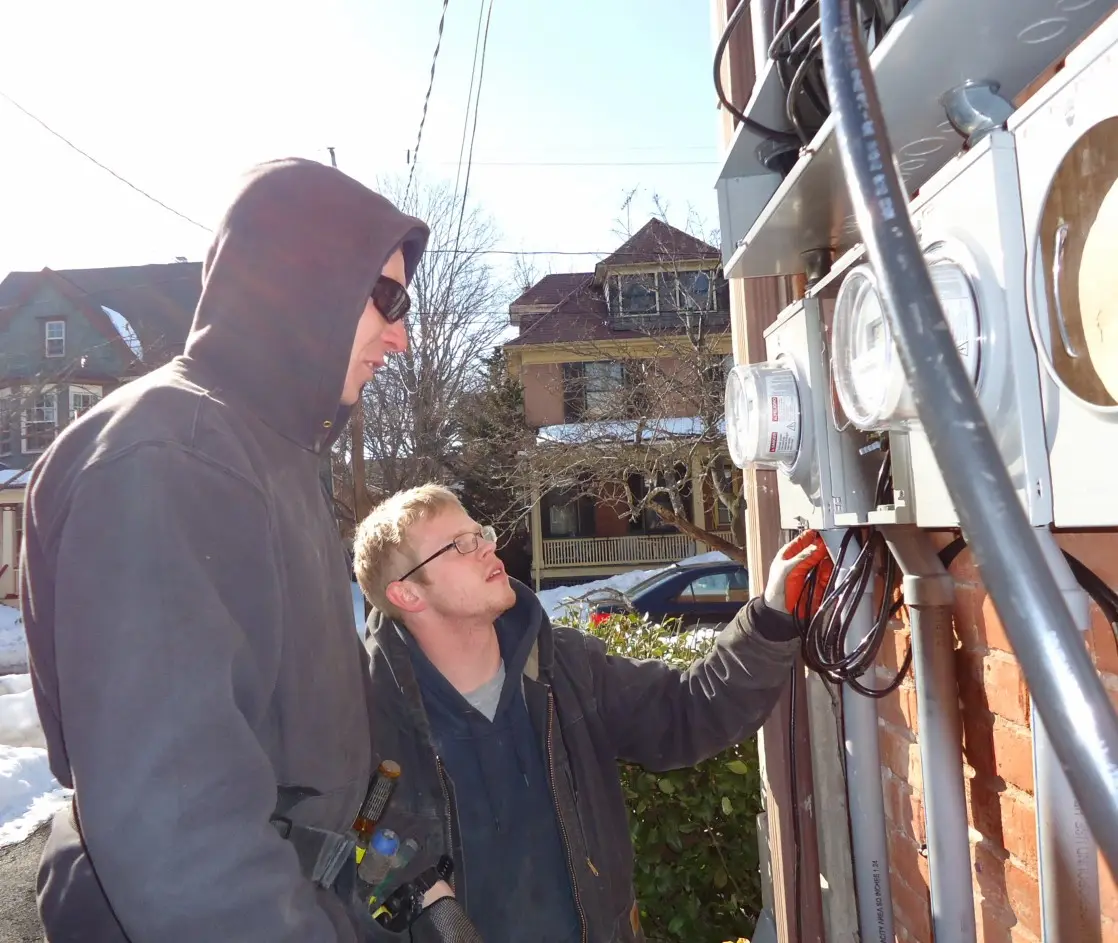
Electricians inspecting the electrical panels and meters on a multifamily house
Electricians inspecting the electrical panels and meters on a multifamily house. Photo: Tomwsulcer, CC0, via Wikimedia Commons.

Electrical San Francisco

San Francisco electrical work, from wired rental heat to PG&E service

Much of the electrical work in a San Francisco building answers to city rules on top of the state code. Heaters in rental units must be permanently attached and wired, a remodel that also replaces the heating and hot water may now have to be all-electric, and permitted work on a home closes with a smoke and carbon monoxide alarm affidavit. Even for CleanPowerSF customers, PG&E still owns the wires and handles any service change.

Wires and meters
PG&E, even when CleanPowerSF supplies the power
Rental heaters
Permanently attached and wired, per the Housing Code
Alarm affidavit
Returned to DBI within 10 days of finishing the work
New buildings
All-electric for permits filed on or after June 1, 2021

The work

Electrical jobs San Francisco buildings keep generating

  • Wiring permanent heat into rental units

    Ordinance 290-19 rewrote the Housing Code's heat section so that every individual heater in a dwelling unit or guest room is permanently attached and properly wired to the San Francisco Electrical Code. Plug-in space heaters do not satisfy a landlord's duty. Replacing a dead wall furnace with electric wall heaters or ductless heads therefore usually means new dedicated circuits run to each room, which in an occupied flat takes planning around tenants.

  • Sizing the panel for an electric remodel

    Since July 1, 2026, a project that is both a major renovation and a whole-building replacement of heating and hot water has to go all-electric, under Administrative Bulletin 112. Even the projects that qualify for an exemption must be ready to convert to all-electric in the future. On a gut remodel, that turns the panel size, spare breaker spaces and conduit to the kitchen and laundry into decisions to settle at design time.

  • Smoke and carbon monoxide alarms at sign-off

    When an addition or alteration to a house or apartment building is permitted, DBI expects the owner or an agent to certify that smoke and carbon monoxide alarms are installed and working throughout. On a house over a garage that means CO alarms on the garage-level floor and on the floors above and below any floor with a gas appliance. Hard-wired, interconnected alarms are often added to the electrician's scope at this point.

  • Service upgrades with PG&E on the other end

    CleanPowerSF enrolls San Francisco customers automatically as their electricity supplier, but its own FAQ says PG&E still delivers the energy, maintains the power lines, turns service on and off and sends the bill. So a bigger service, a new meter or a relocated service drop is coordinated with PG&E, whichever supplier the household chose. The SFPUC's Hetch Hetchy Power mainly serves development on City-owned property, not ordinary homes.

The Golden Gate Bridge and San Francisco, seen from the Marin Headlands
The Golden Gate Bridge and San Francisco, seen from the Marin Headlands. Photo: Paul.h, Public domain, via Wikimedia Commons.

The houses here

Divided Victorians and houses built over garages

Two building types shape most residential electrical calls here. The first is the pre-1915 Victorian or Edwardian, which in neighborhoods like Cow Hollow has often been divided into flats or condominiums, so walls, floors and sometimes circuits are shared and a panel change in one unit can involve the owners above and below. The second is the Sunset-style tract house of the 1920s to 1950s, built over a ground story that SF Planning describes as garage and basement space, often with the laundry beside the car. That garage matters to the alarm rules as much as to the wiring: San Francisco wants carbon monoxide alarms on every floor of a home with an attached garage.

Free request

Describe the electrical job once. Local pros who take work in San Francisco reply by call or text.

  • No fee to request, and no obligation to hire
  • You agree scope and price with the pro you choose
  • Photos help them quote without a first visit

Get quotes for electrical work in San Francisco

Two short steps. A local pro who takes this work calls or texts you back.

To send a request, call or text (415) 449-8213.

Free to request, and you agree the scope and price with the person you hire before work starts. In California, a job over $1,000 in labor and materials, or one that needs a building permit, must be done by a contractor licensed by the CSLB in the right class. Ask for the license number and check it at cslb.ca.gov.

Permits and local rules

City requirements behind the work

  • Heaters in rentals must be wired in

    Ordinance 290-19, effective in 2020, amended Housing Code Section 701 to require heat able to hold 70°F three feet above the floor in habitable rooms of rental units, and added that all individual heaters installed in dwelling units, guest rooms and guest room suites must be permanently attached and properly wired, with wiring that conforms to the San Francisco Electrical Code. Heating equipment and its maintenance must also comply with that code.

    San Francisco Board of Supervisors (opens in a new tab)
  • The smoke and CO alarm affidavit

    DBI's self-certification affidavit covers additions and alterations to one- and two-family dwellings, apartment buildings and hotels. Carbon monoxide alarms are required on all floors with fossil-fuel burning appliances or attached garages, and on all floors above and below floors with fossil-fuel appliances; combination smoke and CO alarms may be used where both are needed. The owner or authorized agent signs under penalty of perjury and returns it to Housing Inspection Services within 10 days of completing all work.

    San Francisco Department of Building Inspection (opens in a new tab)
  • All-electric buildings stay all-electric

    Permit applications for new buildings filed on or after June 1, 2021 must be for fully electric buildings, with no gas piping for space heating, water heating, cooking, lighting or clothes drying, and once construction is complete the building must remain all-electric. For existing buildings, the same DBI page explains when a major renovation must convert and which exemptions apply, among them appliances regulated by the US Department of Energy.

    San Francisco Department of Building Inspection (opens in a new tab)

State license for this work: C-10 Electrical. Look up a contractor's license on the CSLB website (opens in a new tab).

Timing

Booking the inspection

DBI now issues most permits through PermitSF, where application numbers start with letters such as ELEC or BLDG, and inspections for those are requested online from the PermitSF dashboard once the permit is issued. Older permits whose numbers start with digits are still scheduled through the department's phone system. Ask the contractor which kind your permit is, and build the inspection wait into the schedule before walls and ceilings are closed.

Before you hire

Questions for a San Francisco electrician

  • Ask whether your remodel counts as a major renovation under Bulletin 112, and how the panel plan leaves room for converting the rest later.
  • Ask who completes DBI's smoke and carbon monoxide alarm affidavit and returns it within 10 days of finishing.
  • For a service upgrade, ask who arranges the PG&E disconnect and reconnect, whichever supplier appears on your bill.
  • In a rental, ask for heaters that are permanently attached on their own circuits, never plug-in units.
  • In a building split into condos, ask whether any shared wiring or the main service needs the association's approval first.

Questions

What San Francisco owners ask an electrician

We're CleanPowerSF customers. Who handles a bigger electrical service?

PG&E. CleanPowerSF buys and supplies the electricity, and customers are enrolled automatically with the option to opt out, but PG&E continues to deliver it, maintain the lines, turn power on and off and respond to outages. A service upgrade is therefore coordinated with PG&E by your electrician, as it would be without CleanPowerSF.

Our house was built all-electric in 2023. Can we add a gas line for a range later?

No. San Francisco requires buildings whose permit applications were filed on or after June 1, 2021 to be fully electric, and DBI states that once construction is complete an all-electric building must remain all-electric. An induction range on a properly sized circuit is the route instead.

Where do carbon monoxide alarms go in a house built over a garage?

DBI's affidavit requires them on every floor with a fuel-burning appliance or an attached garage, and on every floor above and below a floor with a fuel-burning appliance. In a Sunset house where the furnace or water heater sits on the garage level, that means the garage floor and the living floor above it, plus any floor below.

Can a landlord hand out plug-in heaters instead of fixing the wall heater?

No. The Rent Board's summary of the Housing Code says portable space heaters do not meet the heating requirement, and the Housing Code requires heaters in rental units to be permanently attached and properly wired. A tenant can ask DBI to inspect, and a Notice of Violation orders the landlord to provide approved heat.

How is an electrical inspection booked in San Francisco now?

For a permit issued in PermitSF, with a number starting in letters such as ELEC, the permit holder requests inspections online from the PermitSF dashboard. Permits from before PermitSF, with numbers that start with digits, are scheduled through DBI's phone system. Wiring has to be inspected before it is covered, so book it before the drywall crew is due.

Electrical work in San Francisco? Tell us what you see.

One request reaches local handymen and contractors who take this work. The Handyman SF connects you with them; it does not do the work.

HandymanNow for handymen Work in San Francisco? Get job leads by text. Pick your trades and areas, take only the jobs you want. No subscription. Start getting leads HandymanNow for homeowners Get the HandymanNow app. Send a request with photos, message your handyman and follow them on the way. Download the app

HandymanNow app

Fix it faster. Find work faster.

Homeowners send a job with photos and follow their handyman on the map. Handymen get local jobs by text and take only the ones they want.

Call Get a quote