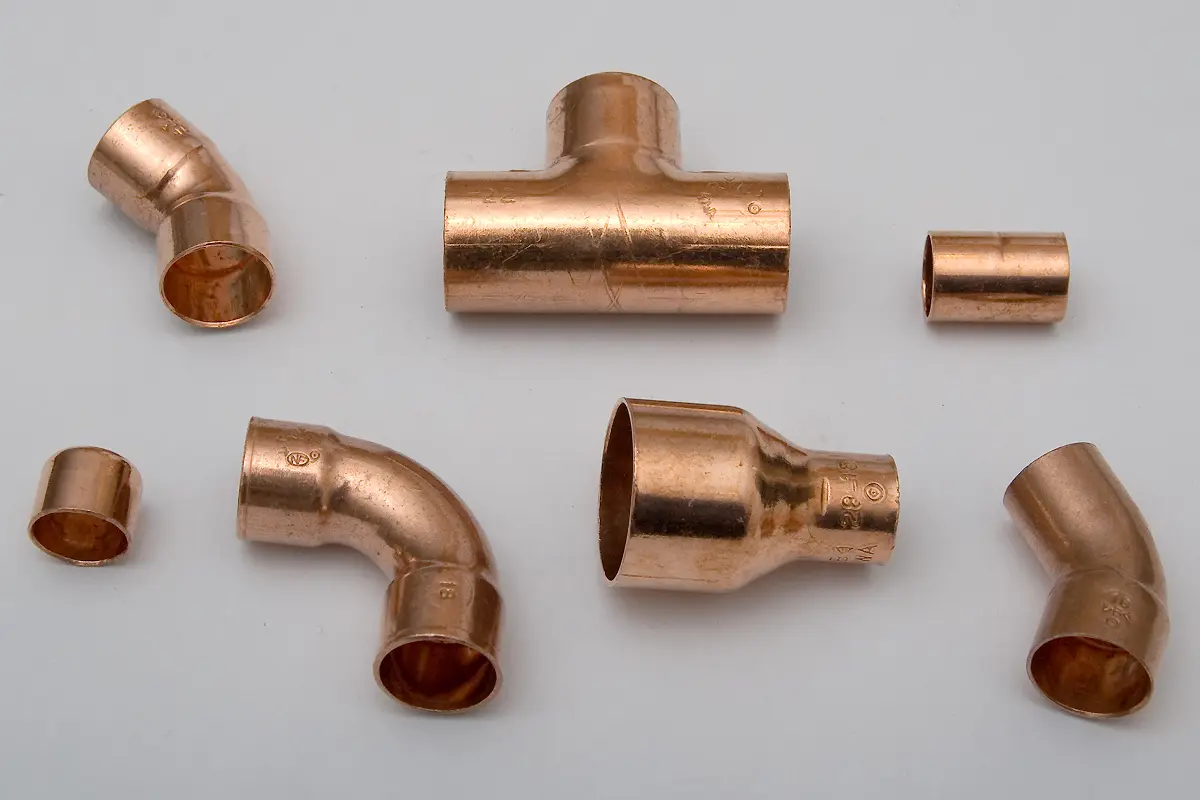
Copper pipe fittings: elbows, a tee, reducers and couplings
Copper pipe fittings: elbows, a tee, reducers and couplings. Photo: Torsten Bätge, CC BY-SA 3.0, via Wikimedia Commons.

Plumbing Palo Alto

Gas, water and sewer from one city utility: plumbing in Palo Alto

In Palo Alto the gas, the water and the sewer all come from one city-owned utility, so most plumbing jobs start by finding where CPAU's pipe ends. The city owns the gas line up to the meter, the water line up to and including the meter, and the lower sewer lateral up to the first city cleanout. Past those points the pipe belongs to the owner, and so do its leaks, roots and repairs.

Gas, water and sewer
All run by City of Palo Alto Utilities (CPAU)
City gas system
Operated since 1917; 211 miles of gas mains
Water source
SFPUC Hetch Hetchy, almost entirely Sierra Nevada snowmelt
Sewer lateral split
City: main to first city cleanout. Owner: cleanout to house

The work

Pipe work that Palo Alto's single utility shapes

  • Gas piping on the owner's side of the meter

    CPAU's gas safety brochure draws the line at the meter: the city owns the line from its main to the meter, and the owner answers for every gas line beyond it, to the house, the yard, a pool or hot tub, a second unit and each appliance. It advises owners to have a plumber or heating contractor locate and inspect buried gas piping for corrosion and leaks. Adding a tankless heater or another appliance changes the load, and CPAU sizes the meter to the demand stated on the utility application.

  • Clearing a sewer stoppage without hitting a gas line

    When a sewer backs up, Rule 23 asks the customer to notify CPAU, which works out whether the stoppage is in the city's part of the lateral or the owner's. The brochure adds a warning specific to this utility: gas pipelines have occasionally been found running inside sewer laterals, and a cutter clearing the blockage can puncture one. CPAU asks to be called before a lateral is cleared or rooted, and its Crossbore Phase IV-A project is inspecting 951 laterals for exactly this.

  • Laterals that meet a sewer main in the backyard

    Where the city's sewer main runs through a public utility easement on private property, Rule 23 makes CPAU responsible only for the main. The owner owns the entire lateral from the connection at the main to the house. Sheds, trees, bushes and other large plants are not allowed in the easement, since city crews must reach the manholes there, so a lateral repair may also mean clearing a corner of the yard.

  • Water heaters behind a backflow assembly

    Palo Alto requires a permit to replace a water heater, and water heater swaps are among the jobs in the city's over-the-counter residential permit pilot. On a property where CPAU requires a backflow prevention assembly, Rule 21 makes the owner install a pressure relief valve and an expansion tank between that assembly and any gas, electric or solar water heater. CPAU's Electrify My Home program will also take on the permit and installation of a heat pump water heater.

  • Sumps and lightwells on the bay side

    A Public Works guide for residential construction says perforated drains around basement walls or under the slab are not allowed on the bay side of Foothill Expressway. Exterior basement-level spaces such as lightwells instead need a sump, a sump pump, a backflow preventer and a closed pipe to a dissipation device on the lot at least 10 feet from the property line. Rule 23 separately bars groundwater, stormwater and roof drainage from the sewer.

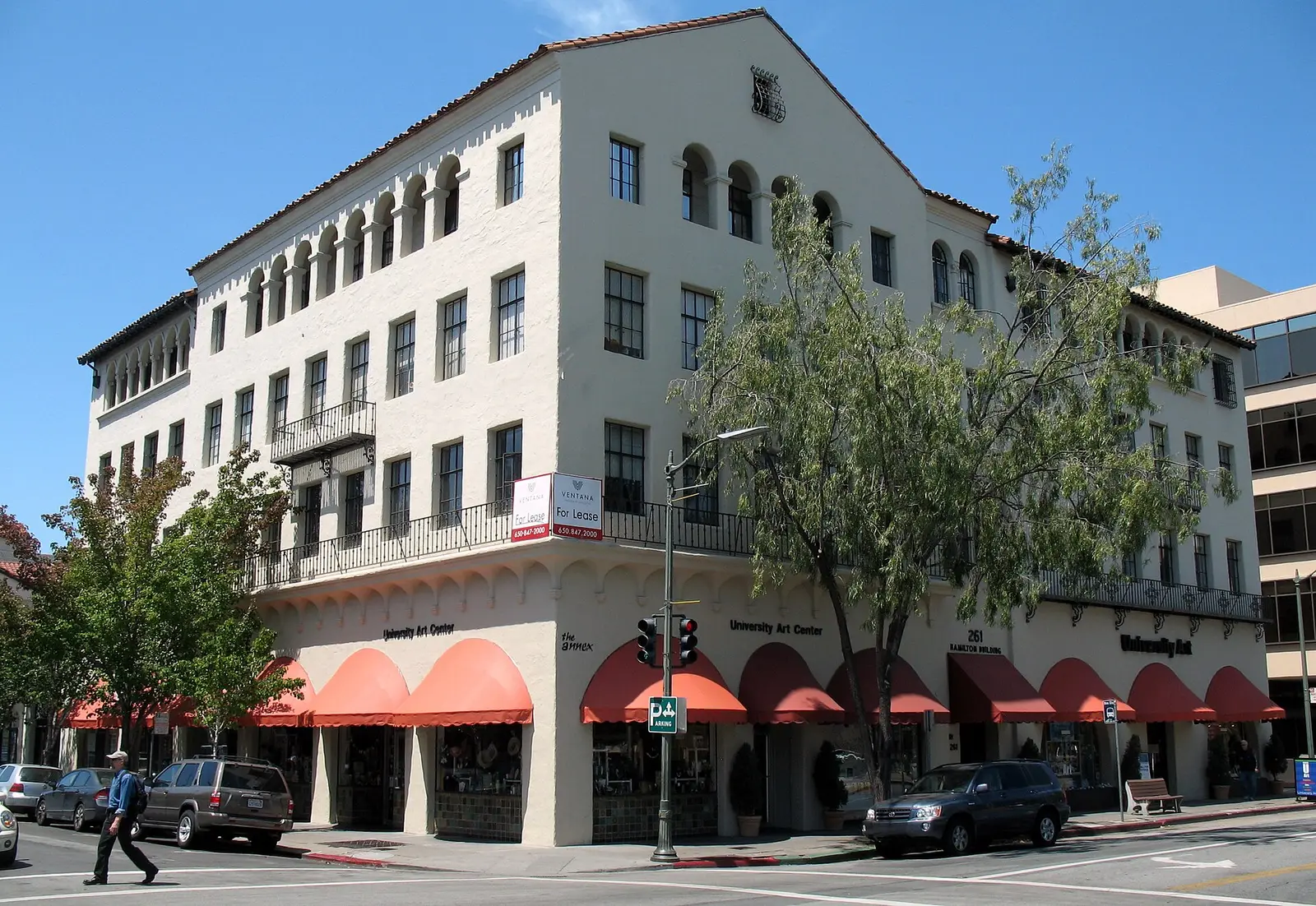
The Ramona Street Architectural District in downtown Palo Alto
The Ramona Street Architectural District in downtown Palo Alto. Photo: Sanfranman59, CC BY-SA 3.0, via Wikimedia Commons.

The houses here

Copper, then steel, then copper again under Eichler floors

Eichler's builders started out with copper radiant heating tubing in the slab, switched to steel by late 1951 and went back to copper in the late 1950s, according to the Eichler Network, a publication devoted to these houses. That history decides what a leak means in a Palo Alto Eichler. The same source says most copper leaks can be repaired, typically through a hole about a foot square broken into the slab and a brazed patch, while a first leak in steel tubing can forecast the end of the system. Copper fails too, through electrolysis where it touches the wire mesh or rebar. When the slab loops are retired, the options it lists include mini-splits, low-profile ducting, wall radiators, or new PEX set into grooves cut in the slab.

Free request

Describe the plumbing job once. Local pros who take work in Palo Alto reply by call or text.

  • No fee to request, and no obligation to hire
  • You agree scope and price with the pro you choose
  • Photos help them quote without a first visit

Get quotes for plumbing work in Palo Alto

Two short steps. A local pro who takes this work calls or texts you back.

To send a request, call or text (415) 449-8213.

Free to request, and you agree the scope and price with the person you hire before work starts. In California, a job over $1,000 in labor and materials, or one that needs a building permit, must be done by a contractor licensed by the CSLB in the right class. Ask for the license number and check it at cslb.ca.gov.

Permits and local rules

CPAU rules that decide whose pipe it is

  • Rule 23: special wastewater regulations

    With an accessible city cleanout, CPAU owns the lower lateral from the main up to and including that cleanout, and the owner owns the rest. With no city cleanout, an inaccessible one, or an owner's cleanout more than five feet behind the property line, the owner owns the whole lateral. Owners must keep cleanout boxes visible, keep the system watertight, and install a backwater valve for fixtures at ground level or below; a remodel that relocates the connection to the main makes the owner pay for the new lower lateral.

    City of Palo Alto Utilities (opens in a new tab)
  • Rule 22: special gas regulations

    A new building, remodel or addition must give CPAU the total connected gas load so the utility can judge the impact on its system. When a meter moves, the owner is responsible for permits, rerouting, pressure testing and inspection of the houseline to the new location. A new gas service installed by directional boring needs a sewer cleanout at the front of the building so CPAU can inspect the lateral, and digging within 10 feet of service lines or meters needs CPAU's permission first.

    City of Palo Alto Utilities (opens in a new tab)
  • Backflow testing by registered testers

    Required backflow assemblies belong to the owner and must be inspected at least once a year by a tester certified by the AWWA's California-Nevada Section and registered with CPAU, which accepts reports from registered testers only. A failed assembly has to be repaired or replaced within 30 calendar days. The city requires backflow protection on every water service to a property with a well, and on graywater systems other than laundry-to-landscape.

    City of Palo Alto Utilities (opens in a new tab)
  • Who owns the water service line

    CPAU operates and maintains the water service from the main up to and including the meter; everything downstream toward the house is the customer's. The utility states that no lead is present in its own portion but that it has little information on customer-owned lines, so it is investigating every service 3 inches or smaller installed before January 1, 1987. Crews may dig around the meter box to see what the customer's pipe is made of.

    City of Palo Alto Utilities (opens in a new tab)

State license for this work: C-36 Plumbing, C-42 Sanitation System. Look up a contractor's license on the CSLB website (opens in a new tab).

Before you hire

Put these to a plumber working on CPAU lines

  • Before rooting the sewer, will the plumber call CPAU so a possible gas cross bore in the lateral can be checked?
  • Where is the city cleanout, usually in the planting strip, and is it accessible? Without one, the whole lateral may be yours.
  • If the sewer main crosses your backyard in an easement, how will the repair reach it, and what has to be cleared?
  • For a tankless heater or another gas appliance, who sends the connected load to CPAU and handles any meter change?
  • Check the C-36 Plumbing license at cslb.ca.gov, and confirm any backflow tester is on CPAU's registered list.

Questions

Gas, sewer and water questions from Palo Alto owners

Our street is in CPAU's gas main replacement project. Does that replace our house pipes too?

No. Gas Main Replacement Project 25, in Duveneck/St. Francis, Leland Manor and Midtown/Palo Verde, and Project 26, in Fairmeadow, South of Midtown, Midtown, Evergreen Park and Greenmeadow, replace aging PVC and black-wrapped steel mains and services with polyethylene. Services run to the meter and belong to the city. The piping beyond the meter stays the owner's, so its condition is still a question for your plumber.

After our gas was shut off at the meter, can we turn it back on ourselves?

No. CPAU's gas safety brochure says it is never safe to turn the valves back on yourself once a meter has been shut off, because safety and pressure checks are required before service is restored. All meters and valves are city property. A plumber can repair your houseline, but the restart is the utility's.

Does Palo Alto make us replace a failed gas water heater with a heat pump?

Not under city rules today. In February 2024 the council suspended the heat pump water heater requirement for residential addition and alteration projects, and the city lists one at gas water heater replacement only as a proposal for its 2026-2028 code update. The rule to watch is regional: the Air District's zero-NOx standard applies to new water heaters at replacement, and draft amendments would move its start from January 2027 to January 2028.

Who pays when roots block the sewer under our parkway strip?

It depends on the cleanout. If there is an accessible city cleanout, the lateral from it to the main is CPAU's to repair, and the part from the cleanout to the house is yours. With no city cleanout, an inaccessible one, or your cleanout more than five feet behind the property line, the whole lateral is yours. Report the stoppage to CPAU first.

Do we need a backflow device for a laundry-to-landscape graywater system?

No. CPAU requires backflow prevention on water services to properties with graywater systems, but makes an exception for laundry-to-landscape. Valley Water's graywater rebate places City of Palo Alto Utilities customers in its higher rebate tier, and other graywater systems need a backflow assembly tested every year by a registered tester.

Plumbing work in Palo Alto? Tell us what you see.

One request reaches local handymen and contractors who take this work. The Handyman SF connects you with them; it does not do the work.

HandymanNow for handymen Work in Palo Alto? Get job leads by text. Pick your trades and areas, take only the jobs you want. No subscription. Start getting leads HandymanNow for homeowners Get the HandymanNow app. Send a request with photos, message your handyman and follow them on the way. Download the app

HandymanNow app

Fix it faster. Find work faster.

Homeowners send a job with photos and follow their handyman on the map. Handymen get local jobs by text and take only the ones they want.

Call Get a quote