Painting Santa Rosa

Santa Rosa repaints where the color is free and the brick stays bare

Repainting a Santa Rosa house needs no building permit, and in the city's eight preservation districts even a change of color is exempt from Landmark Alteration review. What does shape the job is the house's age and address: lead rules on anything built before 1978, the districts' stand against painting brick or stone that was never painted, Oakmont's Architectural Committee, and a city rule that nothing but rainwater may reach a storm drain.

  • Free to request, no obligation to hire
  • Up to five local pros who take this work can reply
  • Rules on this page checked against 14 public sources, November 2026

Get quotes for painting work in Santa Rosa

Two short steps. A local pro who takes this work calls or texts you back.

To send a request, call or text (415) 449-8213.

Free to request, and you agree the scope and price with the person you hire before work starts. In California, a job over $1,000 in labor and materials, or one that needs a building permit, must be done by a contractor licensed by the CSLB in the right class. Ask for the license number and check it at cslb.ca.gov.

The work

Where a Santa Rosa repaint takes more than a color card

  1. Body and trim on a house in a preservation district

    The city's guidelines leave color to the owner, calling it a matter of taste that is easily changed, but they ask for contrast: trim and foundations should read as distinct from the body of the house. Only materials that were traditionally painted, such as wood, should get paint at all. Repainting with a new color is on the list of work that needs no Landmark Alteration Permit, unless the paint is there to make a sign.

  2. Brick and stone that were never painted

    Painting unpainted brick or masonry is, in the guidelines' words, a fundamental change in a building's character rather than a change of color. They say it should not be permitted except to repaint masonry already painted before the district was designated, or to unify a brick building with poorly matched additions or repairs. Brick, painted or not, should never be sandblasted, which the guidelines say makes it disintegrate, and heavy cleaning is a question for an architectural historian.

  3. Scraping and washing a house from before 1978

    Since April 22, 2010, firms paid to disturb paint in homes built before 1978 have needed EPA or state certification. Santa Rosa's stormwater sheet for painters adds the local layer: paint applied before 1972 is treated as hazardous material needing special permitted procedures, chips containing lead are dry-swept and handled as hazardous waste, and water from power-washing paint is collected in a tank and filtered before it goes to the sanitary sewer. The city lists power-washing of lead-based paint among the spills to report by calling 911.

  4. A repaint in Oakmont

    The Oakmont Village Association's painting policy, approved by its board on February 20, 2024, requires an Architectural Committee application for every exterior painting job, and for stains on wood or concrete, with an actual chip sample rather than a photocopy. Colors are chosen from a palette kept at the committee office, and not every color is approved in every neighborhood. All units of a duplex, triplex or fourplex are painted together in matching colors, and finishes stay flat or low sheen except entry doors, which may be semi-gloss.

Free, no obligation. Next, add your details in the request form.

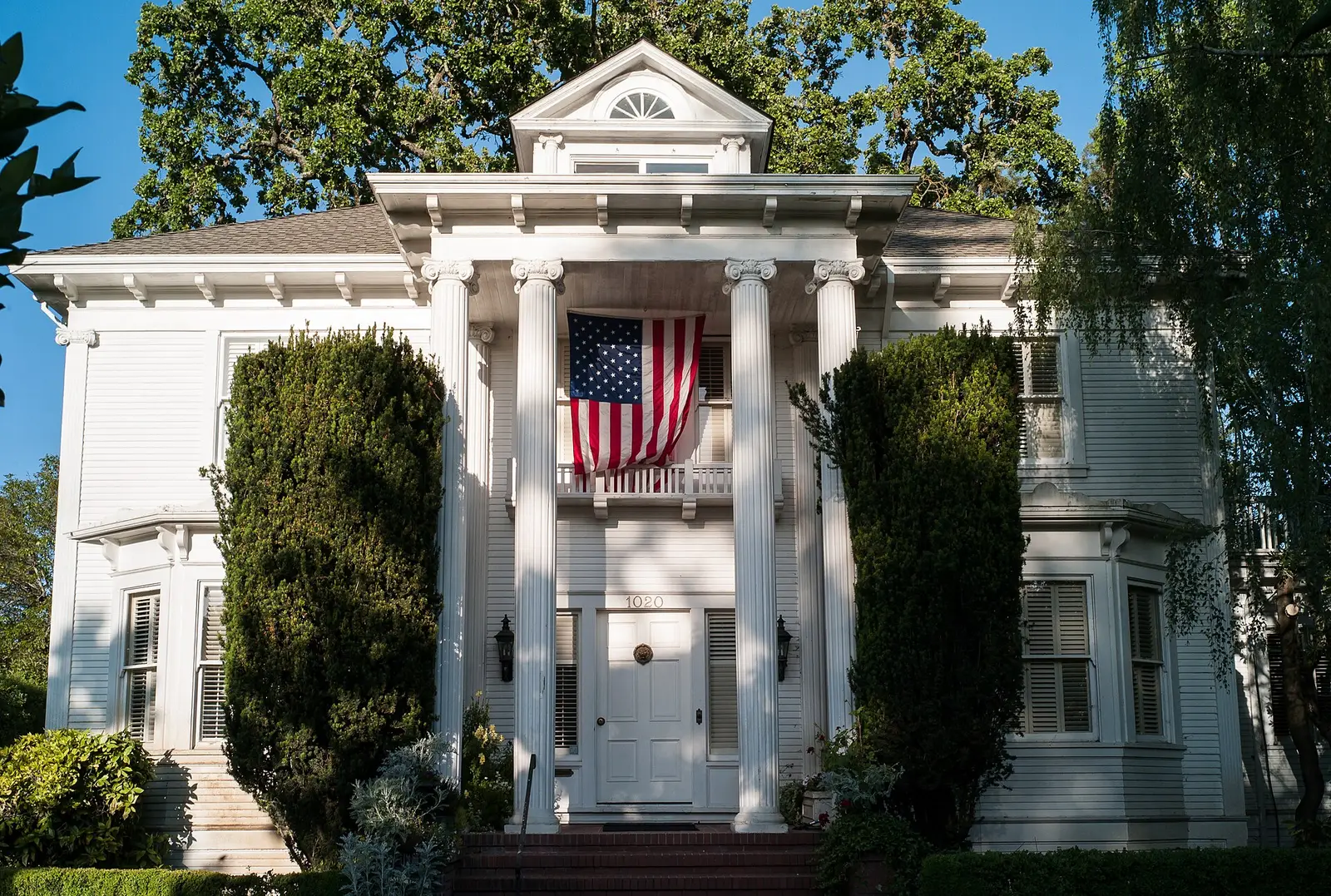
White two-story house with tall columns, a front balcony and shutters on McDonald Avenue in Santa Rosa, framed by oaks and clipped shrubs
White two-story house with tall columns, a front balcony and shutters on McDonald Avenue in Santa Rosa, framed by oaks and clipped shrubs. Photo: Frank Schulenburg, CC BY-SA 3.0, via Wikimedia Commons.

The houses here

Wood and stucco downtown, a 1970s building boom around it

Santa Rosa's guide for owners of historic properties describes most homes in the preservation districts as wood or stucco, with wood the material builders favored in the older parts of town, and it warns that new siding is no cure for a wall that will not hold paint. Beyond downtown, Table 3-11 of the Housing Element makes the 1970s the city's largest building decade, 14,319 homes or 20.6 percent of the stock, with 7,848 more from the 1960s. That decade straddles the EPA's 1978 lead line, so the year a house was finished decides how its prep is done. Fountaingrove sits at the far end of the range, since many of its houses went up after the 2017 Tubbs Fire.

Neighbourhood by neighbourhood

Santa Rosa addresses that change what a painter does

  1. The preservation districts around downtown

    Burbank Gardens, Cherry Street, McDonald, St. Rose, the West End and the others leave color to the owner, but not materials: paint belongs on traditionally painted surfaces such as wood, trim and foundations should stand apart from the body, and never-painted brick or stone is left alone. A bid that proposes covering failing paint with new siding offers what the guidelines call no substitute for maintenance.

  2. Railroad Square

    Signs giving a building's name and year are common on Railroad Square's commercial blocks, and the city counts a painted wall graphic in keeping with the district's historic period as appropriate signage. That is the one kind of repaint the exemption does not cover, because paint applied to create signage goes through review. The early twentieth-century stone buildings here fall under the rule against painting unpainted masonry.

  3. Oakmont

    The Village Association asks for a full specifications chart with each application, covering walls, trim, entry doors, garage door, brick, stucco and stone, with every line filled in. Its policy also leaves the quality of the paint and its application entirely to the homeowner, so the painter's product list is part of what the owner signs off on.

  4. Fountaingrove

    The city's 2026 fire map review counts large numbers of homes here rebuilt since the 2017 Tubbs Fire, and a house built in those years sits outside the EPA's pre-1978 rule. A neighbor that survived the fire is a different job, so its construction date gets checked before anyone starts scraping.

  5. Bennett Valley

    The valley at the southeast end of the city sees roughly 35 to 40 inches of rain a year, mostly from November to April, with oak woodland on its upper slopes. Exterior work there has a shorter dry window, so scraping, priming and topcoats are best planned for the warm, dry months that separate the winters.

Permits and local rules

Three documents that govern a Santa Rosa repaint

  1. Repainting is not a landmark alteration

    Santa Rosa's Processing Review Procedures for Owners of Historic Properties, dated April 2025, list repainting, even when it includes a color change, among projects exempt from Landmark Alteration review, unless the repainting creates signage for the building. Repairs to existing siding or trim with no change of material are exempt too. Owners in a preservation district are still asked to contact the Planning and Economic Development Department before exterior changes, and work that alters a building's exterior appearance needs approval before it starts.

    City of Santa Rosa Planning & Economic Development (opens in a new tab)
  2. Only rainwater in the storm drain

    The city's best-practice sheet for painters states that discharging anything but rainwater to a storm drain is illegal, and that people and businesses who dispose of paint waste that way face civil and criminal prosecution. Water-based paint, brushes, rollers and spray gear may be cleaned in a bucket or sink that drains to the sanitary sewer, while oil-based paint and solvent cleaners are hazardous waste. Santa Rosa Water treats paint reaching a creek or storm drain as an emergency spill to report by calling 911.

    City of Santa Rosa (opens in a new tab)
  3. EPA's Renovation, Repair and Painting rule

    Under the rule, firms doing renovation, repair or painting that disturbs lead-based paint in homes, child care facilities and kindergartens built before 1978 must hold EPA or state certification, assign renovators trained in its lead-safe work practices, and follow those practices on the job. It reaches in-house maintenance staff as well as outside contractors. With the 1960s and 1970s together accounting for nearly a third of Santa Rosa's housing in the Housing Element's count, the rule comes up on a large share of repaints here.

    Source: U.S. Environmental Protection Agency (epa.gov)

State license for this work: C-33 Painting and Decorating. Look up a contractor's license on the CSLB website (cslb.ca.gov).

Before you hire

Ask these before a Santa Rosa painter opens a can

  • For a job of 1,000 dollars or more in labor and materials, check the C-33 Painting and Decorating license at cslb.ca.gov.
  • On a house finished before 1978, ask for the firm's EPA certification and how chips and wash water will be caught.
  • Ask where brushes and rollers will be rinsed; the answer should be a bucket or sink that drains to the sanitary sewer.
  • In a preservation district, ask before any brick, stone or other masonry that was never painted gets primer.
  • In Oakmont, ask to see the Architectural Committee's written approval of the colors before the crew starts.

Free, no obligation. Next, add your details in the request form.

Questions

Before the first coat: Santa Rosa paint questions

We live in the St. Rose district. Do we need city approval to change our house colors?

No. Santa Rosa's review procedures list repainting, including a change of color, among exempt work, so no Landmark Alteration Permit is needed unless the paint is meant to form a sign. The city does encourage proper contrast, with trim and foundations set apart from the body of the house, and it asks that paint stay on traditionally painted materials such as wood.

Can we paint the brick on our house in a Santa Rosa preservation district?

Generally not. The city treats painting unpainted brick or masonry as a fundamental change to the building, acceptable only where it was already painted before the district was designated or where paint would unify badly matched additions or repairs. Brick that is already painted can be repainted, but it should never be sandblasted, which the guidelines say causes the material to fail.

Is a 1975 house in Santa Rosa covered by the lead paint rules?

Yes. The EPA's rule covers homes built before 1978, so a firm paid to disturb paint there needs EPA or state certification and has to follow lead-safe work practices. Santa Rosa's own stormwater sheet is stricter about what washes off a job: it treats paint applied before 1972 as hazardous material and has chips containing lead dry-swept and disposed of as hazardous waste.

Where can leftover paint go in Santa Rosa?

Residents can drop it off free at Zero Waste Sonoma's Household Hazardous Waste Facility at the Central Disposal Site, 500 Mecham Road, open Thursday through Saturday, or at PaintCare stores in town, in labeled original cans of 5 gallons or less. A latex can with under an inch of fully hardened paint can go in the garbage with the lid off; oil-based paint in any amount goes to the facility. Its reuse locker gives away remixed latex in four standard colors.

Can an Oakmont duplex be repainted one unit at a time?

No. Oakmont's painting policy requires every unit of a duplex, triplex or fourplex to be painted in the same colors and at the same time, although a different entry door color can be submitted for approval at any point. The job still needs Architectural Committee approval with a chip sample, and finishes must be flat or low sheen apart from the entry doors.

Does a repaint need a building permit in Santa Rosa?

Not usually. The Building Division points owners to the exemption list in Section 105 of the California Building Code, which includes painting, papering and similar finish work. A permit enters the picture when the job grows into replacing siding or other building work, and in a preservation district a change of exterior material goes to Planning before anything else.

Where these facts come from

Checked against these public sources in November 2026. Rules and programs change: confirm permit requirements with the city before work starts, and a contractor's license on the CSLB website.

Painting work in Santa Rosa? Tell us what you see.

One request reaches local handymen and contractors who take this work. The Handyman SF connects you with them; it does not do the work.

HandymanNow for handymen Work in Santa Rosa? Get job leads by text. Pick your trades and areas, take only the jobs you want. No subscription. Start getting leads HandymanNow for homeowners Get the HandymanNow app. Send a request with photos, message your handyman and follow them on the way. Download the app

HandymanNow app

Fix it faster. Find work faster.

Homeowners send a job with photos and follow their handyman on the map. Handymen get local jobs by text and take only the ones they want.

Call WhatsApp (opens WhatsApp) Free quote