Painting Palo Alto

Repainting Palo Alto, from redwood Eichler boards to shingled Professorville

Palo Alto's typical house dates from 1955, and nearly three quarters of its homes were built before 1980, so most repaints here start on coats laid down before the EPA's 1978 lead line. The city lists painting among work that needs no building permit. Color is where Palo Alto has views: its Eichler guidelines prefer muted walls with one accent, and the Professorville guidelines ask for schemes that do not clash with the houses next door.

  • Free to request, no obligation to hire
  • Up to five local pros who take this work can reply
  • Rules on this page checked against 11 public sources, October 2026

Get quotes for painting work in Palo Alto

Two short steps. A local pro who takes this work calls or texts you back.

To send a request, call or text (415) 449-8213.

Free to request, and you agree the scope and price with the person you hire before work starts. In California, a job over $1,000 in labor and materials, or one that needs a building permit, must be done by a contractor licensed by the CSLB in the right class. Ask for the license number and check it at cslb.ca.gov.

Before you hire

Settle these before a Palo Alto painter starts scraping

  1. On a house built before 1978, ask who on the crew is the renovator certified by EPA and whether the lead-safe records come with the final invoice.
  2. For stained redwood Eichler siding, ask whether they plan to restain or paint over it, and get the body and accent colors in writing.
  3. In Professorville, ask how loose paint will come off; the district guidelines rule out sandblasting and other abrasive stripping.
  4. Ask where the wash water and brush rinse will go: a sink or a sewer cleanout, never the gutter.
  5. Ask for the C-33 Painting and Decorating license number and look it up at cslb.ca.gov before a deposit changes hands.
Permit to repaint
None; painting is item 7 on the Building Division's exempt list
Homes built before 1980
About 73 percent; median year built 1955
City paint drop-off
Saturdays 9 to 11 a.m. and first Fridays 3 to 5 p.m., residents
Eichler color advice
Muted walls, one trim or accent color, bright tones on doors
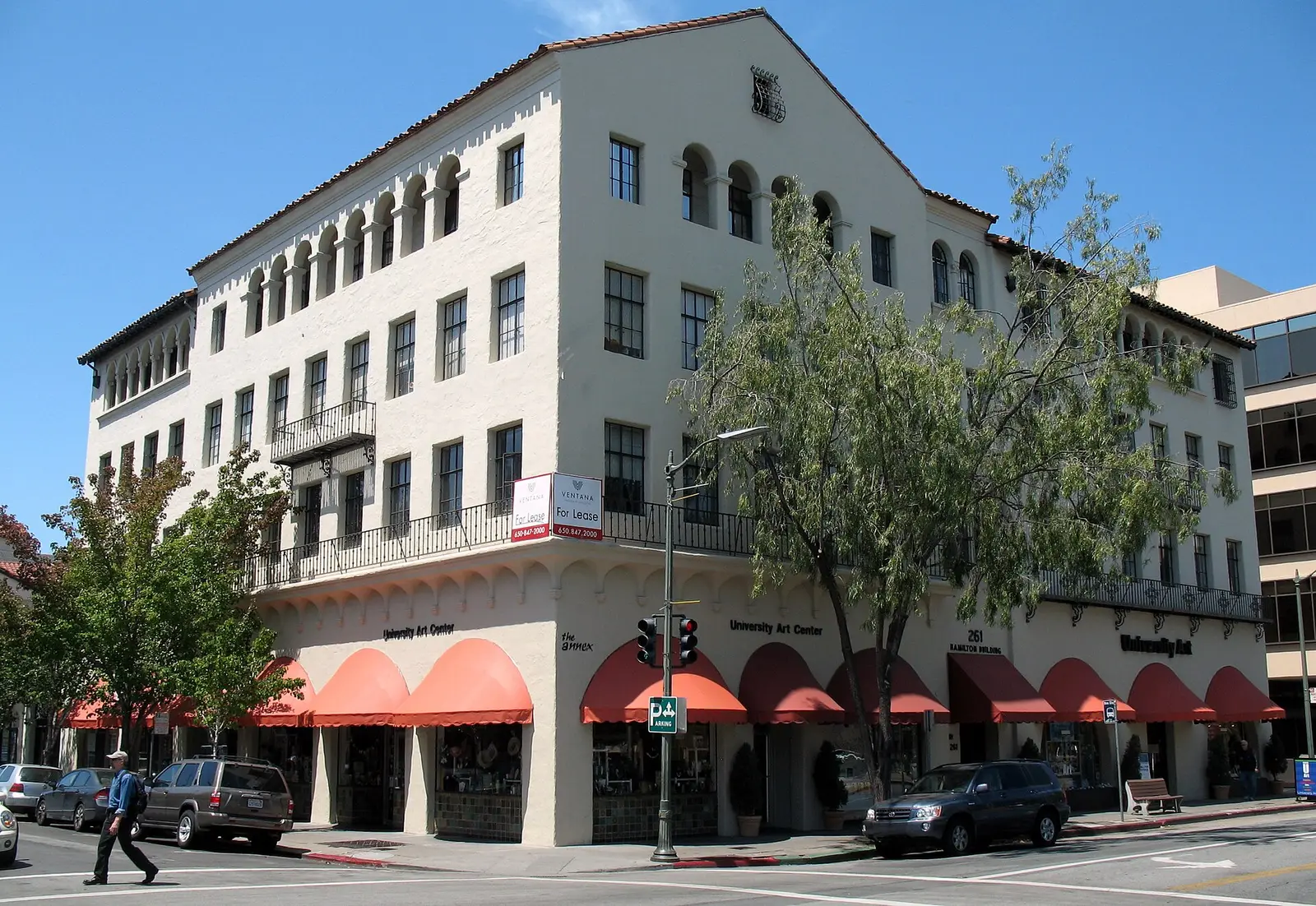
The Ramona Street Architectural District in downtown Palo Alto
The Ramona Street Architectural District in downtown Palo Alto. Photo: Sanfranman59, CC BY-SA 3.0, via Wikimedia Commons.

The houses here

A post-war city with brown shingles at its old core

Table 2-38 of Palo Alto's Housing Element counts 26.4 percent of the city's homes from the 1950s alone, another 13.7 percent from the 1960s and 12.3 percent from the 1970s, with 13.1 percent built in 1939 or earlier. Two finishes dominate the older stock. On the Eichlers the cladding is vertical redwood board or scored plywood, and the city's Eichler guidelines note that it was originally stained in a muted earth tone, with brighter paint saved for lintels, exposed carport beams and entry doors. In Professorville the walls are wood shingle, clapboard or stucco, and the district guidelines ask that whatever treatment a wall historically carried, paint or stain, keep being applied.

Free, no obligation. Next, add your details in the request form.

The work

Four repaints Palo Alto houses keep asking for

  1. Restaining or painting Eichler board siding

    The Eichler guidelines record that Joseph Eichler used Cabot's Ranch House Hues stains, even appearing in the company's advertisements in the 1950s, and that his accent colors reportedly came from Dunn-Edwards, all since discontinued. The city prints a partial list of matches, translated into colors sold today, but says plainly that none are required. What it does recommend is restraint: muted body colors, darker earth tones if wanted, and bright colors kept for accent features such as lintels and doors.

  2. Shingles and clapboard in Professorville

    Section 3.1.1 of the Professorville guidelines asks owners to keep wood shingle, clapboard and stucco where the style called for them, and to keep painting what was painted and staining what was stained. Preparing a historic wall for new paint must not damage the material underneath: the guidelines call sandblasting and other abrasive methods inappropriate, and point owners to the National Park Service's brief on exterior paint problems on historic woodwork.

  3. Brick that should stay unpainted

    Early tracts such as University Gardens included Eichler models with a brick chimney on the street facade, and the city's guidelines treat those chimneys as anchors of the composition. Their advice for chimney upkeep includes repointing with mortar that matches the old in strength and color, cleaning with low-pressure water and detergent, and avoiding paint on any unpainted masonry or brick. A painter quoting the whole house should leave that brick out of the scope.

  4. Washing walls and cleaning tools

    Palo Alto's stormwater program reminds residents that storm drains carry water to creeks and the Bay with no treatment, and its advice for home improvement work is specific. Dirty water from a power washer belongs in a sink, a sanitary sewer cleanout or a planted area where it cannot reach the drains. Latex brushes get rinsed in a sink, not outdoors, and a drop cloth goes under the work to catch drips.

Permits and local rules

The city papers behind a Palo Alto paint job

  • Item 7 on the list of work exempt from permit

    The Building Division's handout, drawn from Section 105.2 of the building code, names painting, papering, tiling, carpeting and similar finish work as item 7 of the jobs that need no permit. The same handout warns that an exemption authorizes nothing done in violation of the code or other city laws, and that work needing a permit, begun without one, draws a penalty fee equal to the permit fee. That matters when a repaint grows into new siding or windows.

    City of Palo Alto Building Division (opens in a new tab)
  • Group A historic resources

    The Planning Department's bulletin puts three kinds of property in Group A: Category 1 and 2 buildings on the Historic Inventory, Category 3 and 4 buildings in the Downtown Area, and every property in the Professorville or Ramona Street districts. Permit applications for exterior changes on these go to the Historic Preservation Planner, who checks them against the Secretary of the Interior's Standards. The city's project review page adds that normal maintenance typically needs no historic review when the exterior appearance does not change, so a new color scheme is the case to raise first.

    Source: City of Palo Alto Planning Department (paloalto.gov)

  • Section 5.1.2 of the Eichler guidelines

    The 2018 Eichler Neighborhood Design Guidelines ask owners to choose exterior paint colors that support the mid-century character of the tracts. Using the original colors is not required. Muted colors are preferred on the main walls, a single primary color with one trim or accent color is preferred to a busier scheme, and in a neighborhood with an Architectural Control Committee the owner is told to check whether paint color is something that committee reviews.

    Source: City of Palo Alto, Eichler Design Guidelines (paloalto.gov)

  • Section 3.3.4 of the Professorville guidelines

    Adopted after hearings in 2016, the guidelines apply to all of the nearly 200 homes in the expanded local district. For exterior color they suggest schemes compatible with the house's period, informed by research on period palettes or by investigative testing that can reveal the original colors. Body walls should be muted, with contrasting accents on trim and decorative elements, and owners are asked to avoid colors or reflective sheens that contrast sharply with nearby buildings.

    Source: City of Palo Alto, Professorville Design Guidelines (paloalto.gov)

State license for this work: C-33 Painting and Decorating. Look up a contractor's license on the CSLB website (cslb.ca.gov).

Part by part

Where a color choice may meet a review in Palo Alto

  • Professorville

    The city added the district to its Historic Inventory in 1979 and in 1993 pushed its boundary east to Embarcadero Road. Every house inside it is Group A, so any exterior change that needs a permit reaches the preservation planner, and the district guidelines are the yardstick the Historic Resources Board uses when a project comes before it.

  • Greenmeadow, Edgewood and Charleston Meadows

    The Eichler guidelines name these tracts as having Architectural Control Committees, groups of neighbors who use the tract's CC&Rs to review projects. Joseph Eichler set up the first one for Charleston Meadows in 1950, and owners there revived it in 2000. Where the CC&Rs are binding, the committee approves or rejects plans in writing within 30 days of receiving them.

  • The Downtown Area

    Downtown, a house listed in Category 3 or 4 of the Historic Inventory counts as Group A and falls under the Historic Preservation Ordinance. The same listing outside downtown and the historic districts is only Group B, reviewed under state environmental law when a discretionary application is filed. A Parcel Report from Development Services shows which group a house is in.

Free, no obligation. Next, add your details in the request form.

Questions

Palo Alto paint questions, from color to cleanup

Do I need a city permit to repaint my house in Palo Alto?

No. Painting is item 7 on the Building Division's list of work exempt from permit. Two other checks can still apply. On a Group A historic property, a new color scheme changes the exterior appearance, which is when the city suggests talking to the preservation planner. And in tracts such as Greenmeadow with an active Architectural Control Committee, the CC&Rs may give the committee a say over color.

Can we paint over the stained siding on our Greenmeadow Eichler?

The city's Eichler guidelines are voluntary and do not forbid it, but they record that Eichler siding was originally stained in muted earth tones, and they prefer muted body colors with brighter accents only on features such as doors and lintels. Greenmeadow is one of the tracts the guidelines list with an Architectural Control Committee, so read the CC&Rs and ask the committee before choosing paint.

Our Professorville house has stained brown shingles. Should we paint them?

The district guidelines lean against it. They ask that cladding which was stained historically keep being stained, and painted cladding keep being painted, because the treatment protects the wood and is part of each style's character. When shingles are prepared for new finish, the guidelines rule out sandblasting and other abrasive cleaning, and they favor replacing only the shingles that are actually deteriorated.

Where do leftover cans go after a paint job in Palo Alto?

The city's Household Hazardous Waste Station at 2501 Embarcadero Way takes latex and oil paint, thinners and solvents from residents with proof of residency, up to 15 gallons or 125 pounds a visit in containers of 5 gallons or less, and you stay in the car while staff unload the trunk. Labeled cans of paint can also go to the PaintCare site at the Sherwin-Williams store on Page Mill Road, which takes 5 gallons per visit.

Can I get free paint for touch-ups at the Palo Alto station?

Sometimes. The station runs an HHW Reuse Zone stocked with usable products, paint among them, that residents brought in for disposal and staff screened. It opens only during station hours, visitors may take up to five products per visit, and Palo Alto residency is not required to use it. Stock depends on what people dropped off, so a matching color is luck rather than a plan.

Where these facts come from

Checked against these public sources in October 2026. Rules and programs change: confirm permit requirements with the city before work starts, and a contractor's license on the CSLB website.

  • cityofpaloalto.org: work exempt from permit
  • paloalto.gov: historic resources review info bulletin sep. 2024 (paloalto.gov)
  • paloalto.gov: Project Review (paloalto.gov)
  • paloalto.gov: 2018 04 02 palo alto eichler design guidelines adopted design guidelin (paloalto.gov)
  • paloalto.gov: final professorville design guidelines 11 3 2016 (paloalto.gov)
  • paloalto.gov: palo alto housing element (paloalto.gov)
  • paloalto.gov: Household Hazardous Waste (paloalto.gov)
  • paloalto.gov: Stormwater Pollution Prevention for Residents (paloalto.gov)
  • paintcare.org: drop off locations
  • cslb.ca.gov: Licensing Classifications Detail (cslb.ca.gov)
  • ecfr.gov: section 745 (ecfr.gov)

Painting work in Palo Alto? Tell us what you see.

One request reaches local handymen and contractors who take this work. The Handyman SF connects you with them; it does not do the work.

HandymanNow for handymen Work in Palo Alto? Get job leads by text. Pick your trades and areas, take only the jobs you want. No subscription. Start getting leads HandymanNow for homeowners Get the HandymanNow app. Send a request with photos, message your handyman and follow them on the way. Download the app

HandymanNow app

Fix it faster. Find work faster.

Homeowners send a job with photos and follow their handyman on the map. Handymen get local jobs by text and take only the ones they want.

Call WhatsApp (opens WhatsApp) Free quote