Flooring Palo Alto

Palo Alto floors, from 1949 Eichler slabs to Professorville interiors

Palo Alto's Eichler tracts, mapped by the city from University Gardens in 1949 to a Los Arboles addition in 1974, put some 2,700 houses on concrete slabs with radiant heating pipes inside, so a new floor there floats or is glued rather than fastened down. Every original resilient floor in them predates Cal/OSHA's 1980 line. Floor coverings need no permit here, but the city's exempt list leaves out kitchen cabinets and countertops.

Eichler houses in the city
Some 2,700, on slabs with radiant heating pipes
Eichler tract years
1949, University Gardens, to 1974, Los Arboles Addition No. 2
Floor coverings
Exempt from permit; kitchen cabinets and counters are not
Asbestos at the HHW Station
Residents only: wetted, double-bagged, two bags at most
  • Free to request, no obligation to hire
  • Up to five local pros who take this work can reply
  • Rules on this page checked against 15 public sources, October 2026
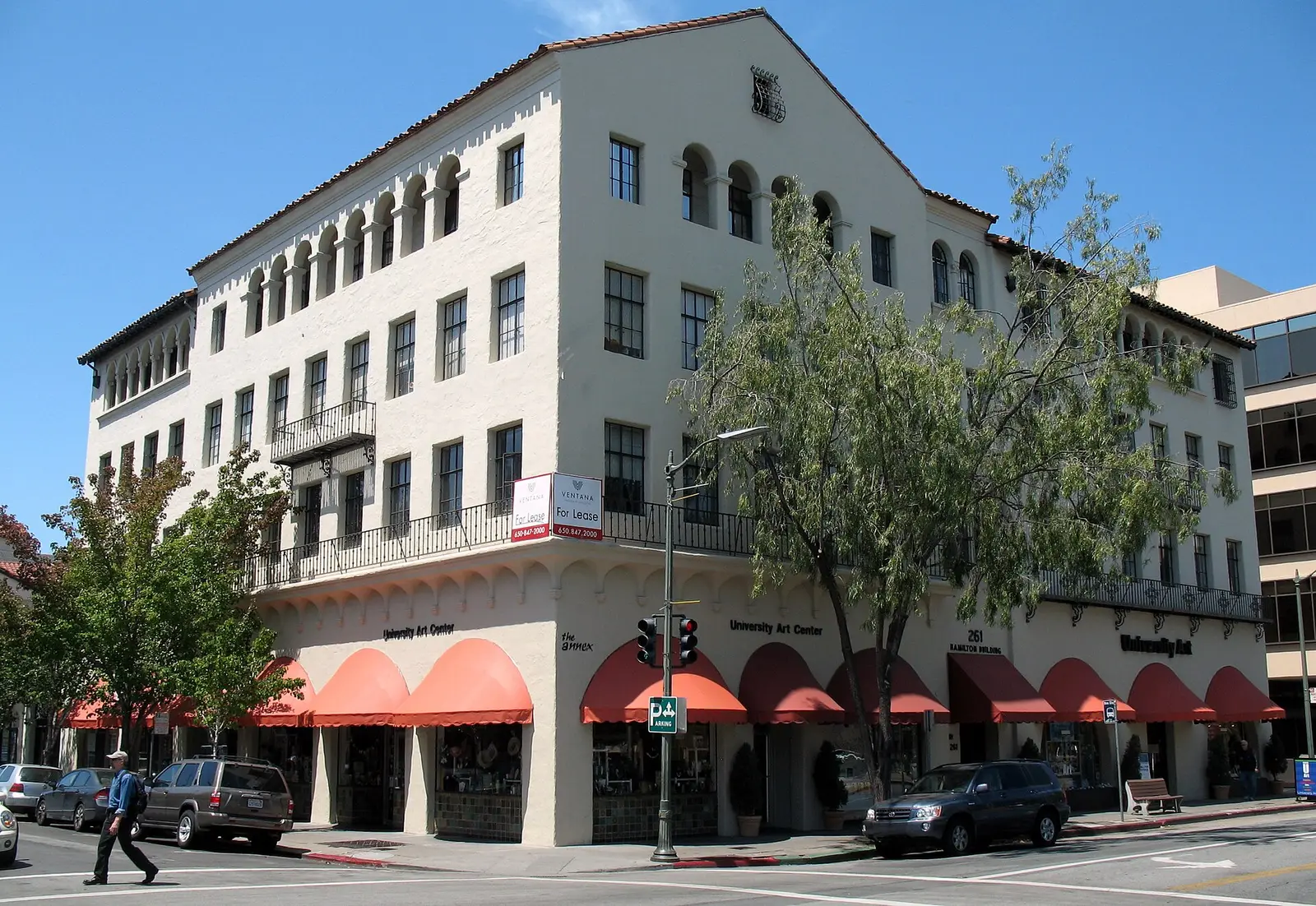
The Ramona Street Architectural District in downtown Palo Alto
The Ramona Street Architectural District in downtown Palo Alto. Photo: Sanfranman59, CC BY-SA 3.0, via Wikimedia Commons.

Permits and local rules

Palo Alto papers that touch a floor job

  1. Work exempt from permit, with a kitchen carve-out

    The Building Division's handout exempts painting, papering, tiling and carpeting, but not kitchen cabinets or kitchen countertops. Quoting the code's section on repairs, it says ordinary repairs need no application or notice, yet may not include removing or cutting a structural beam or load-bearing support, or altering water, drain, gas or wiring. A sagging floor that needs a joist replaced is therefore permit work. The handout's revision date is May 2015, so confirm a borderline job with the Building Division.

    City of Palo Alto Building Division (opens in a new tab)
  2. Interior work and historic review

    Group A historic resources, which include every property in the Professorville and Ramona Street districts, go through review under the city's Historic Preservation Ordinance, with exterior permit applications routed to the Historic Preservation Planner. The city's procedures, revised in 2024, say normal maintenance or repair, interior work and landscaping for historic resources typically do not require historic review, so refinishing or replacing a floor inside such a house is not the kind of change the planner reviews.

    Source: City of Palo Alto Planning and Development Services (paloalto.gov)

  3. Radiant heat in the Eichler guidelines

    Guideline 5.5.1 asks owners to repair the radiant floor heating and plumbing embedded in an Eichler's foundation where feasible, and to investigate whether failing heating can be repaired in place. It explains why the pipe matters: copper heating pipes in some Eichlers may be fixable without invasive removal of concrete, while the steel pipes in others are much harder to repair once corroded. The guidelines say nothing about flooring methods, but they show why a pierced pipe is a serious repair in a house of this kind.

    Source: City of Palo Alto Planning and Development Services (paloalto.gov)

  4. The approved-hauler rule for every construction project

    Palo Alto's Deconstruction and Construction Materials Management Ordinance, Municipal Code Section 5.24, reserves deconstruction and salvage surveys for projects that remove a whole structure, but its hauling rule reaches every construction project. Bins and debris boxes must come from GreenWaste of Palo Alto. Contractors may still haul in their own trucks, as long as the materials are source-separated and delivered to one of the processing facilities the city lists in Green Halo.

    Source: City of Palo Alto Public Works, Zero Waste (paloalto.gov)

State license for this work: C-15 Flooring and Floor Covering, C-54 Ceramic and Mosaic Tile. Look up a contractor's license on the CSLB website (cslb.ca.gov).

Free, no obligation. Next, add your details in the request form.

The work

What a new floor asks of a Palo Alto house

  1. Engineered wood floated over the radiant slab

    With heating pipes in the concrete, the floor either floats on an underlayment or is glued, and no fastener goes into the slab. The flooring maker's radiant terms then decide the rest. Kentwood's guide, for one, wants the system running for two weeks before installation and switched off for 24 hours beforehand, then brought back up 5 degrees Fahrenheit a day once the adhesive has cured, with the floor's surface never above 80 degrees. It recommends a dedicated quick-recovery thermostat to hold those limits.

  2. Moisture testing on a radiant slab

    Glue-down flooring on concrete usually needs a moisture test first. ASTM F1869 measures vapor rising from the surface of the slab, while F2170 reads relative humidity with probes placed in the concrete, which on an Eichler means choosing those spots with the heating pipes in mind. F2170 itself warns that a result describes the slab only at the time and in the places tested.

  3. Original vinyl in an Eichler kitchen or bath

    The last tract on the city's map was finished in 1974, so any original vinyl or asphalt tile in these houses falls under Cal/OSHA's rule for flooring installed no later than 1980, mastic and backing included. The Air District requires a sample and lab test before resilient flooring in a house of four or fewer units is removed or disturbed. A new floor laid over intact old tile leaves it undisturbed; if the tile tests positive and has to come up, 100 square feet or more is work for a contractor registered with Cal/OSHA.

  4. A kitchen floor that goes in with new cabinets

    Palo Alto's handout of work exempt from permit names tiling, carpeting and similar finish work, but carves out the kitchen: only cabinets other than kitchen cabinets, and countertops other than kitchen countertops, are exempt. A new floor laid on its own needs no permit. A kitchen floor that goes in with new kitchen cabinets or counters is part of a project that does, and so is moving a sink, a gas line or a circuit, since the handout requires a permit to alter any plumbing, gas or electrical system.

  5. Getting the old floor out of the house

    Any container on a Palo Alto construction site has to come from GreenWaste of Palo Alto; a contractor may instead self-haul by truck, sorting materials and delivering them to a facility the city has approved in Green Halo. For a small tear-out, a single-family home's Clean Up Day, held twice a year on set dates, takes up to six boxes or bundles of construction material labeled 'construction', each under 60 pounds and bundles no larger than 2 by 3 feet. Treated wood is refused.

Free request

Describe the flooring job once. Local pros who take work in Palo Alto reply by call or text.

  • No fee to request, and no obligation to hire
  • You agree scope and price with the pro you choose
  • Photos help them quote without a first visit

Get quotes for flooring work in Palo Alto

Two short steps. A local pro who takes this work calls or texts you back.

To send a request, call or text (415) 449-8213.

Free to request, and you agree the scope and price with the person you hire before work starts. In California, a job over $1,000 in labor and materials, or one that needs a building permit, must be done by a contractor licensed by the CSLB in the right class. Ask for the license number and check it at cslb.ca.gov.

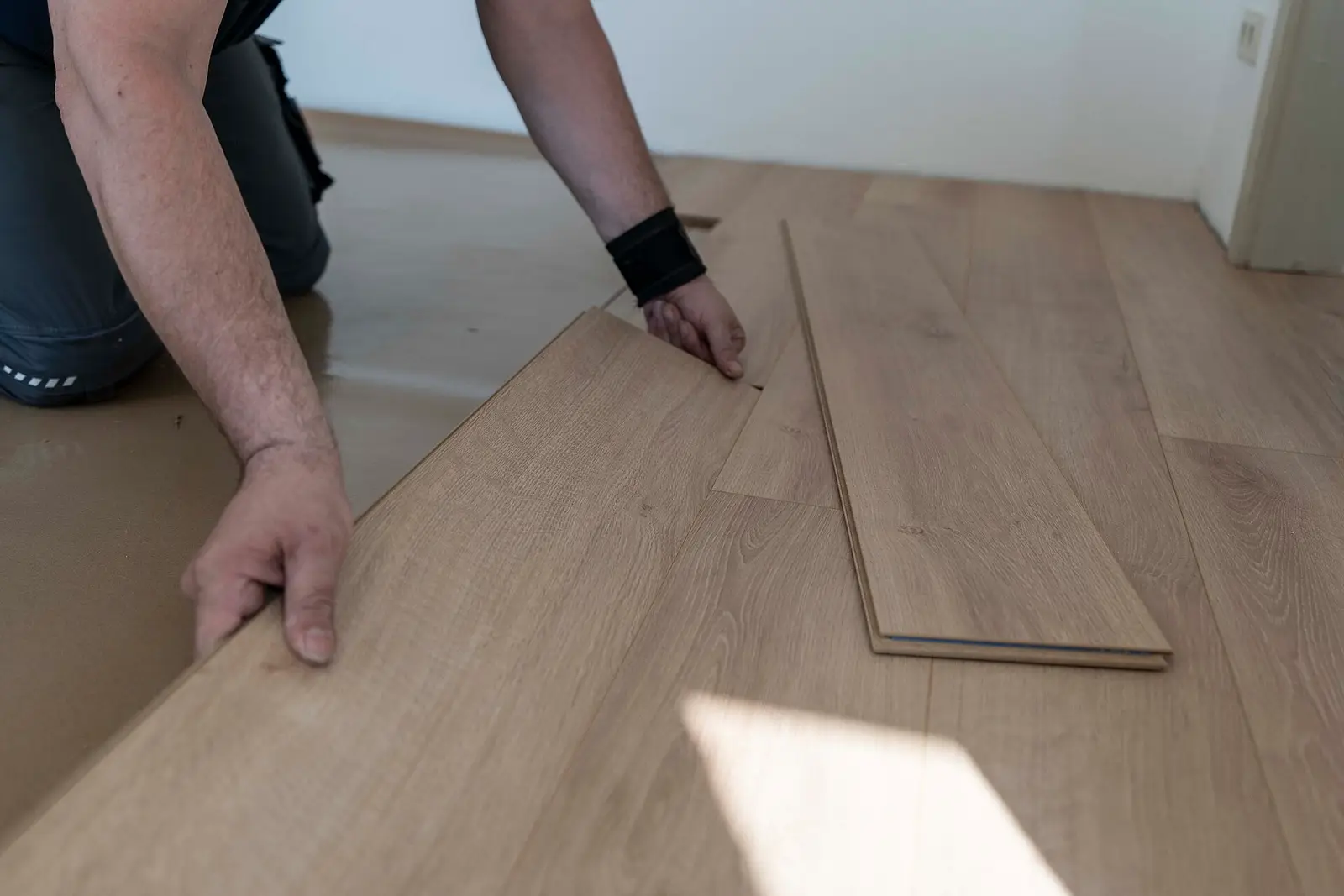
Hands fitting a wood-look laminate plank into the row beside it over a foam underlay
Hands fitting a wood-look laminate plank into the row beside it over a foam underlay. Photo: Raphael Mecke, CC BY 4.0, via Wikimedia Commons.

The houses here

Slab-on-grade Eichlers and a historic downtown

Floor work in Palo Alto splits along two kinds of house. The city's Eichler guidelines count some 2,700 of Joseph Eichler's houses here, mostly in the central and southern parts of the city, and describe radiant heating embedded in the concrete slab flooring, with plumbing laid in the slab as well. The city's tract map runs from University Gardens and El Centro Gardens around 1950, through Fairmeadow, Walnut Grove and Greenmeadow in the 1950s, to Midcourt in 1972 and the second Los Arboles addition in 1974. Near downtown, Professorville and Ramona Street are the city's two locally designated historic districts, where the floor question is not a slab but whether the work counts as interior.

Part by part

Where in Palo Alto the floor question changes

  • University Gardens and Green Gables

    The first tracts on the city's Eichler map, built from 1949 to 1951; Green Gables is one of the two Eichler neighborhoods on the National Register. Their slabs are the oldest Eichler floors in the city, so the type of pipe inside, copper or steel, is worth knowing before anything new is laid over one.

  • Midcourt and Los Arboles

    The newest tracts on the map: Los Arboles from 1959 to 1961, Midcourt in 1972 and the second Los Arboles addition in 1974. They are a generation younger than University Gardens, yet any original resilient floor in them still predates Cal/OSHA's 1980 line, so it is sampled before it is disturbed.

  • Professorville

    One of the city's two locally designated historic districts, near downtown, where any exterior permit goes to the Historic Preservation Planner. A floor sanded, patched or replaced inside a Professorville house is interior work, which the city's procedures say typically needs no historic review.

Questions

Palo Alto flooring questions, answered from city and state rules

Does a new floor in my Palo Alto kitchen need a permit?

Not by itself. Palo Alto's handout of work exempt from permit includes tiling, carpeting and similar finish work. The same list excludes kitchen cabinets and kitchen countertops, so a floor that goes in as part of replacing them belongs to a permitted project, as does anything that moves a sink, a gas line or a circuit. Replacing a joist is never an ordinary repair.

Can the HHW Station on Embarcadero Way take old floor tile from our Eichler?

Only a little, and only from Palo Alto residents. The station's list accepts asbestos wetted and double-bagged, in bags no larger than 3 feet on a side, two bags at most, and it is open Saturday mornings and the first Friday afternoon of each month. Taking tile up is not a homeowner project: Cal/OSHA's rules forbid sanding it, ripping up sheet flooring or sweeping it dry, and a sample comes first.

Do Professorville's historic rules cover refinishing the wood floors inside?

Generally not. Professorville properties are Group A historic resources, so exterior permit applications are routed to the Historic Preservation Planner. The city's review procedures say normal maintenance or repair, interior work and landscaping for historic resources typically do not require historic review. Sanding, patching or replacing a floor indoors falls under interior work.

Our Eichler's radiant heat stopped working years ago. Should that be settled before a new floor goes in?

It is worth settling first. The city's Eichler guidelines encourage owners to investigate whether failing radiant heat can be repaired in place, noting that copper heating pipes may be fixable without breaking out concrete while corroded steel pipes are much harder. A repair can mean opening the slab, so deciding before the new floor is laid spares it, and a working system brings the flooring maker's radiant-heat limits into play.

Where can old carpet from a Palo Alto house be recycled?

RE:Source, the disposal guide StopWaste runs for Alameda and Contra Costa counties and for Palo Alto, points to CARE's map of carpet drop-off sites. CARE's October 2026 booklet lists the SMaRT Station on Carl Road in Sunnyvale among its Santa Clara County sites. Carpet has to be dry, free of tack strips and nails, cut into sections and rolled apart from the pad; call ahead about hours and rates.

Free, no obligation. Next, add your details in the request form.

Before you hire

Before a Palo Alto floor job is booked

  • On an Eichler, ask for the flooring maker's radiant-heat instructions and how the floor will be held down without anything driven into the slab.
  • If the slab needs a moisture test, ask which method, and where any probe holes will go relative to the heating pipes.
  • Ask whether any original vinyl, asphalt tile or adhesive will be disturbed, and who will sample it first.
  • Ask whether debris leaves in a GreenWaste of Palo Alto container or in the contractor's truck to a city-approved facility.
  • Past $1,000 in labor and materials, look up the C-15 license number at cslb.ca.gov, or the C-54 number for tile.

Where these facts come from

Checked against these public sources in October 2026. Rules and programs change: confirm permit requirements with the city before work starts, and a contractor's license on the CSLB website.

Flooring work in Palo Alto? Tell us what you see.

One request reaches local handymen and contractors who take this work. The Handyman SF connects you with them; it does not do the work.

HandymanNow for handymen Work in Palo Alto? Get job leads by text. Pick your trades and areas, take only the jobs you want. No subscription. Start getting leads HandymanNow for homeowners Get the HandymanNow app. Send a request with photos, message your handyman and follow them on the way. Download the app

HandymanNow app

Fix it faster. Find work faster.

Homeowners send a job with photos and follow their handyman on the map. Handymen get local jobs by text and take only the ones they want.

Call WhatsApp (opens WhatsApp) Free quote