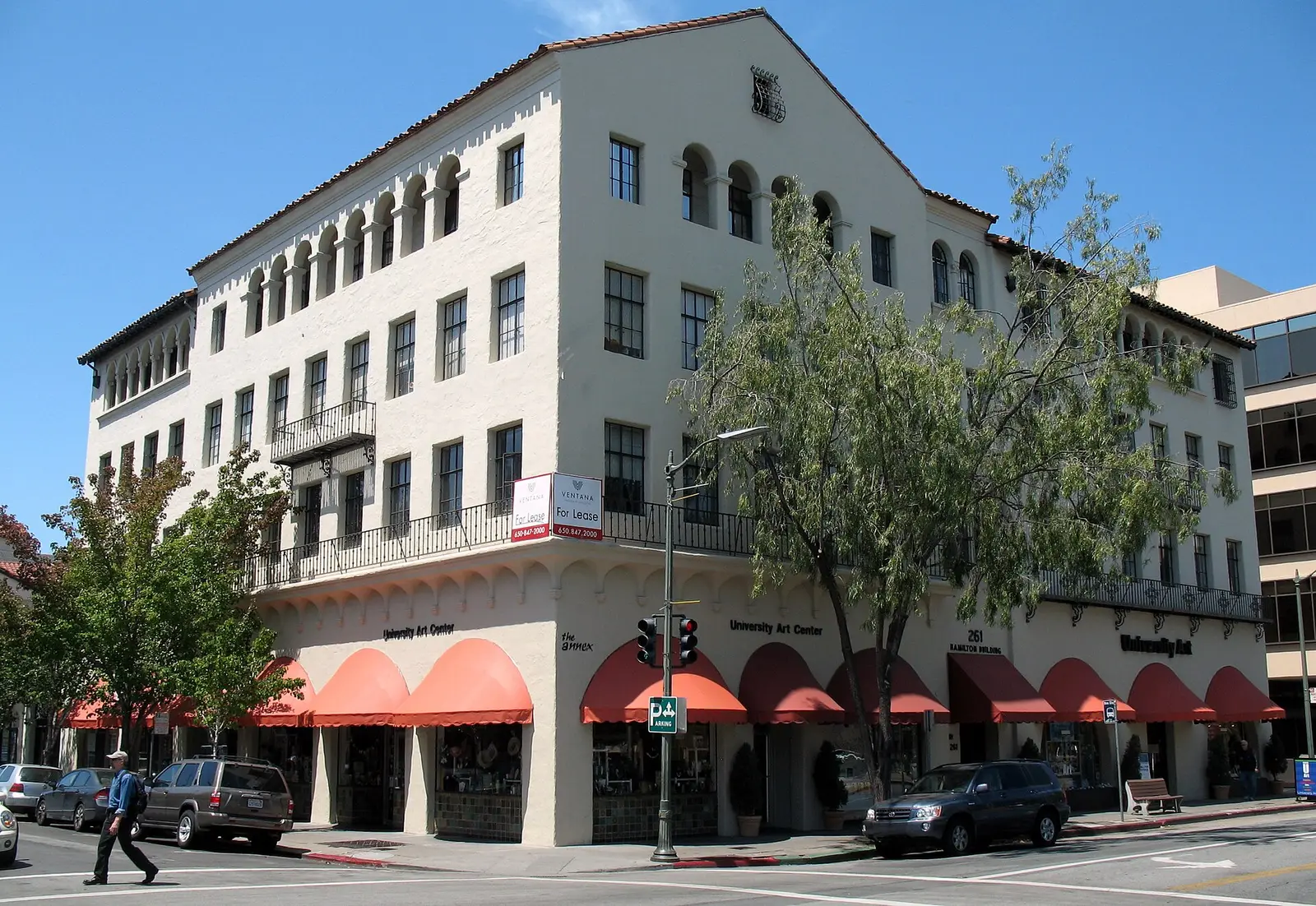
A hand plane, a saw, a hammer, a steel square and a tape measure lying on rough timber planks
A hand plane, a saw, a hammer, a steel square and a tape measure lying on rough timber planks. Photo: A S M Jobaer, CC BY-SA 4.0, via Wikimedia Commons.

Carpentry Palo Alto

Wood repairs in Palo Alto, from Professorville porches to Eichler beam ends

Carpentry in Palo Alto follows two sets of city guidelines. In Professorville, guidelines adopted in 2016 cover nearly 200 properties and ask for repair first, then in-kind replacement of shingle and clapboard. In the Eichler tracts, the 2018 guidelines ask owners to keep exposed beam ends, soffits and wide fascia boards rather than box them in. The building rules add a local twist: repairing a deck needs a permit once it is attached, raised more than 30 inches or has steps.

  • Free to request, no obligation to hire
  • Up to five local pros who take this work can reply
  • Rules on this page checked against 10 public sources, October 2026
Deck repair permit
Needed if attached, over 30 in., with steps, or on the exit path
Professorville guidelines
Adopted 2016; cover nearly 200 properties in the local district
Eichler beam ends
Keep exposed and treat with preservative; do not box them in
Treated lumber
Refused at the city's HHW Station on Embarcadero Way

The work

Palo Alto wood repairs and what the city's guides ask of them

  • Split shingles and clapboard in Professorville

    The Professorville guidelines ask for only the deteriorated shingles or boards to be replaced, removing no more than the repair needs. The new wood should match the old in size, shape, surface profile and pattern, and where the originals were cut from a distinctive species such as redwood, the same species should be used. Cladding that was historically painted or stained keeps that finish, and the guidelines call sandblasting or other abrasive ways of removing old paint inappropriate.

  • Rafter tails, brackets and porch railings

    On Professorville houses the details carry the style: cornices, dentils, porch columns, wood railings and balusters. The guidelines put repair first and, when a piece has failed, ask for a replacement matching its dimensions and appearance, with priority on features visible from the street. Rotted rafter tails are replaced with members that keep the historic profile rather than hidden behind boxed-in eaves, and new brackets are not added on conjecture.

  • Siding, beam ends and fascia on an Eichler

    Chapter 5 of the Eichler guidelines treats the beam ends, exposed soffits and fascia as visual hallmarks to maintain or replace in kind. Beam ends exposed to weather should get wood preservative, and the guidelines advise against boxing them in or wrapping the original fascia in aluminum or vinyl. When siding is beyond saving, new vertical wood board is encouraged, from a local fabricator if needed; sawtooth clapboard, shingles, stone and brick do not suit an Eichler.

  • Rebuilding an attached deck or back steps

    Palo Alto's deck inspection guideline asks for hot-dipped galvanized post brackets with pressure-treated wood, and wants every cut end of treated lumber brushed or soaked with copper naphthenate holding at least 2 percent copper. A deck fastened to the house must be positively anchored for vertical and lateral loads, never by toenails. An exterior stairway needs a light at its top landing. Each of those is checked at inspection, because the city requires a permit for this repair.

  • Bolting the mudsill on a raised foundation

    On an older house that sits on a raised foundation, Palo Alto's 2015 handout of work exempt from permit says a minor voluntary seismic upgrade, such as bolting the mudsill to the foundation and sheathing cripple walls, needs no permit, while more complex projects requiring engineering do. Eichlers, built on slabs, have no cripple walls to brace. Because the handout predates the current code, confirm the exemption with the Building Division before the work begins.

Free, no obligation. Next, add your details in the request form.

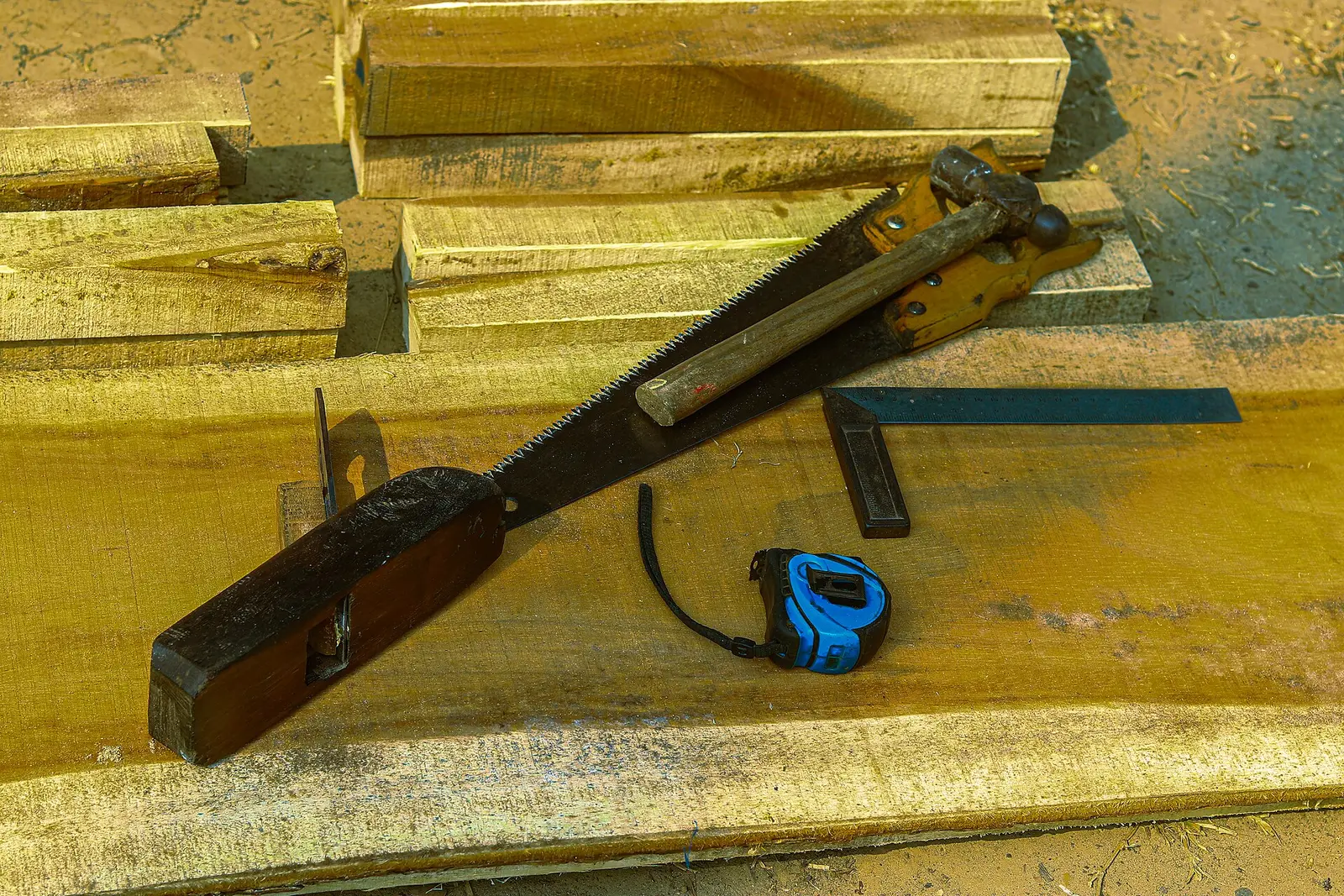
The Ramona Street Architectural District in downtown Palo Alto
The Ramona Street Architectural District in downtown Palo Alto. Photo: Sanfranman59, CC BY-SA 3.0, via Wikimedia Commons.

The houses here

Wood shingles near downtown, redwood boards in the Eichler tracts

Palo Alto's two best-known kinds of house both lean on wood, put together very differently. Professorville, about 65 acres southeast of downtown, filled in between about 1893 and the 1930s, and its guidelines single out the pervasive wood shingle siding, with First Bay Tradition houses adding decorative brackets, exposed rafter tails and front porches. The Eichlers came after the war: post-and-beam frames on concrete slabs, clad in vertical tongue-and-groove redwood boards or scored redwood plywood, with exposed rafters under extended eaves and wide fascia boards. The Eichler guidelines note there is no typical board width, because the Eichler catalogue offered many. A rotted piece on either kind of house has to be matched, not just replaced.

Free request

Describe the carpentry job once. Local pros who take work in Palo Alto reply by call or text.

  • No fee to request, and no obligation to hire
  • You agree scope and price with the pro you choose
  • Photos help them quote without a first visit

Get quotes for carpentry work in Palo Alto

Two short steps. A local pro who takes this work calls or texts you back.

To send a request, call or text (415) 449-8213.

Free to request, and you agree the scope and price with the person you hire before work starts. In California, a job over $1,000 in labor and materials, or one that needs a building permit, must be done by a contractor licensed by the CSLB in the right class. Ask for the license number and check it at cslb.ca.gov.

Permits and local rules

Palo Alto rules behind exterior wood repairs

  • Work exempt from permit, and the city's own policies

    The Building Division's handout lists finish work that needs no permit, but with a local twist: cabinets and countertops are exempt except in the kitchen. It also sets city policies on carpentry. A deck needs a permit for construction, repair, replacement or alteration whenever it is more than 30 inches above grade, attached to the house, has steps or forms part of the exit path. An arbor needs one when attached to the house or freestanding over 120 square feet.

    City of Palo Alto Building Division (opens in a new tab)
  • Group A historic resources

    Properties in the locally designated Professorville and Ramona Street districts are Group A resources, along with houses listed as Category 1 or 2 in the city's inventory. Any permit application for exterior changes on them, even a ministerial one, goes to the Historic Preservation Planner, who checks it against the Secretary of the Interior's Standards. The city's bulletin notes that normal maintenance or repair typically needs no historic review, and counts repair or in-kind replacement of features among minor improvements.

    Source: City of Palo Alto Planning and Development Services (paloalto.gov)

  • Professorville Historic District Design Guidelines

    The City Council adopted these guidelines by Resolution 9637 in October 2016, after the Historic Resources Board reviewed the draft that July. They apply to every property in the expanded local district, which the city added to its Historic Inventory in 1979 and stretched east to Embarcadero Road in 1993. Their chapter on historic materials starts from one principle: keep and repair existing materials wherever possible, and replace them in kind only when they are too far gone.

    Source: City of Palo Alto Planning and Development Services (paloalto.gov)

  • Eichler Neighborhood Design Guidelines

    Adopted in April 2018, these guidelines say their maintenance chapter is not meant to require work to strict preservation standards, only to help owners repair without eroding the neighborhood's character. Chapter 7 goes further for Green Gables and Greenmeadow, the two Eichler tracts on the National Register: replacement boards should match the originals in profile, dimensions and thickness, down to groove width and depth and surface texture, and only as much cladding as necessary should come off.

    Source: City of Palo Alto Planning and Development Services (paloalto.gov)

State license for this work: C-6 Cabinet, Millwork and Finish Carpentry, C-5 Framing and Rough Carpentry, B General Building. Look up a contractor's license on the CSLB website (cslb.ca.gov).

Part by part

Where in Palo Alto the same repair is held to different rules

  • Professorville

    Ten grid streets, among them Emerson, Bryant, Waverley, Kingsley and Embarcadero Road, with the oldest homes on tightly spaced lots in the western half. The National Register counted 105 contributing houses built between the 1890s and 1929. Every exterior permit here passes the Historic Preservation Planner.

  • Greenmeadow and Green Gables

    The two Eichler neighborhoods listed on the National Register, where the city's guidelines take a preservation-minded line on siding: match the original boards closely, and if a house was already re-clad in stucco, consider returning it to vertical boards.

  • West of Interstate 280

    The city's 2018 deck inspection guideline requires ignition-resistant materials for decks on buildings west of 280, such as fire-retardant-treated wood, and the same for walking surfaces of decks, porches, balconies and stairs within 10 feet of the house.

Before you hire

Questions for a Palo Alto carpenter before the first cut

  • In Professorville, how many shingles or boards do you plan to remove, and will the replacements be redwood like the originals?
  • On an Eichler, can the rotted beam end be repaired and treated with preservative before anyone suggests boxing it in?
  • For an attached deck or one with steps, who applies for the Palo Alto permit the city requires even for repairs?
  • Where will the old pressure-treated lumber go, given that the city's HHW Station on Embarcadero Way refuses it?
  • Once the job passes $1,000, which CSLB license covers it, C-6, C-5 or B, and what is the number?

Free, no obligation. Next, add your details in the request form.

Questions

Palo Alto carpentry questions, answered from city guidelines

Do I need a permit to replace a few boards on my Palo Alto deck?

It depends on the deck. Palo Alto requires a permit for the construction, repair, replacement or alteration of any deck more than 30 inches above finished grade, attached to the house, with steps, or forming part of the required exit path. A low freestanding deck of 200 square feet or less, with no steps and not serving the exit door, falls under the exemption.

Can old pressure-treated deck boards go to Palo Alto's HHW Station?

No. The Household Hazardous Waste Station at 2501 Embarcadero Way lists pressure-treated wood among the items it does not accept. The re:Source guide, which covers Palo Alto, says treated wood never goes in a curbside cart, while painted, stained, engineered and composite wood belongs in the garbage. Settle with the carpenter where the treated boards will be hauled before demolition starts.

Our Professorville house has split redwood shingles. Do the new ones have to be redwood?

The guidelines ask for it where the originals were cut from a distinctive species such as redwood, and for new shingles matching the old in size, profile and pattern. They also ask that only the deteriorated shingles come off. Under the city's bulletin, an in-kind repair like this is normal maintenance that typically needs no historic review.

Can I box in the weathered beam ends on our Palo Alto Eichler?

The Eichler guidelines advise against it. They count exposed beam ends, soffits and fascia among an Eichler's visual hallmarks, recommend wood preservative on beam ends to stop deterioration, and suggest in-kind replacement where needed. The guidelines are advisory, but covering the beams with aluminum or vinyl changes how the house reads from the street.

Do I need a permit to bolt my Palo Alto house to its foundation?

Possibly not. The city's 2015 handout of work exempt from permit says a minor voluntary residential seismic upgrade, such as bolting the mudsill to the foundation or sheathing cripple walls, needs no permit, while projects requiring engineering do. The handout was written to an earlier code, so confirm with the Building Division first.

Where these facts come from

Checked against these public sources in October 2026. Rules and programs change: confirm permit requirements with the city before work starts, and a contractor's license on the CSLB website.

  • cityofpaloalto.org: work exempt from permit
  • paloalto.gov: decks (paloalto.gov)
  • paloalto.gov: historic resources review info bulletin sep. 2024 (paloalto.gov)
  • paloalto.gov: final professorville design guidelines 11 3 2016 (paloalto.gov)
  • paloalto.gov: reso 9637 professorville design guidelines (paloalto.gov)
  • paloalto.gov: 2018 04 02 palo alto eichler design guidelines adopted design guidelin (paloalto.gov)
  • paloalto.gov: Hazardous Waste (paloalto.gov)
  • resource.stopwaste.org: wood treated
  • epa.gov: renovation repair and painting program (epa.gov)
  • cslb.ca.gov: Licensing Classifications Detail (cslb.ca.gov)

Carpentry work in Palo Alto? Tell us what you see.

One request reaches local handymen and contractors who take this work. The Handyman SF connects you with them; it does not do the work.

HandymanNow for handymen Work in Palo Alto? Get job leads by text. Pick your trades and areas, take only the jobs you want. No subscription. Start getting leads HandymanNow for homeowners Get the HandymanNow app. Send a request with photos, message your handyman and follow them on the way. Download the app

HandymanNow app

Fix it faster. Find work faster.

Homeowners send a job with photos and follow their handyman on the map. Handymen get local jobs by text and take only the ones they want.

Call WhatsApp (opens WhatsApp) Free quote