TV mounting San Jose

Hanging a TV on San Jose walls, from Hanchett Park plaster to Eichler glass

Mounting a TV in San Jose is a question of the wall first and the paperwork second. Pre-war plaster near downtown runs thicker than mount manuals expect, and Fairglen's Eichlers have more glass than solid wall. San José's permit page for wall-mounted equipment draws its first line at 50 pounds, a new outlet behind the screen takes an electrical permit, and HDMI or network cable inside the wall needs none.

  • Free to request, no obligation to hire
  • Up to five local pros who take this work can reply
  • Rules on this page checked against 14 public sources, October 2026
Wall-mounted equipment
No permit under 50 lb; permit from 51 lb; plans past 100 lb
Outlet behind the screen
Electrical permit, issued online for houses and duplexes
HDMI and network cable
Exempt from electrical permits as communications wiring
Fairglen Eichler interiors
Post-and-beam, high share of glass, mahogany veneer paneling

The work

What decides where the bracket goes in a San Jose room

  • Lagging through old plaster near downtown

    In Naglee Park and Hanchett and Hester Park the bracket goes through plaster before it reaches a stud. The Park Service's Preservation Brief 21 sets plaster over wood lath at a minimum of about 3/4 to 7/8 inch, and the lath adds to that, while a typical mount manual, SANUS's VLT5 among them, allows no more than 5/8 inch of drywall over the studs for its supplied lag screws. Longer hardware is the usual answer, and it is the mount maker's call, not the installer's guess.

  • Finding solid wall in a Fairglen Eichler

    Fairglen Additions went up in three units from 1959 to 1961. Its National Register nomination credits the post-and-beam frame with open plans and a much higher proportion of glass to solid wall, and records original interior walls of Philippine mahogany veneer paneling under a ceiling that is the underside of the roof decking. There is no attic overhead to drop a cable through, and each hole lands in wood veneer, so the screen's position is worth settling before the first one is drilled.

  • Weighing a big screen and a full-motion arm

    San José's chart for wall-mounted equipment counts the whole load on the wall. A large TV on an articulating arm can pass the first line together, which is why the weights on both spec sheets should be added up before the job is booked rather than after. The same arm that adds weight also levers on its fasteners each time the screen swings out, so the arm's rating for the wall type matters as much as the total.

  • Moving the power outlet up behind the screen

    A receptacle put back where one already was is exempt in San José; a new outlet for the TV's power is electrical work that needs a permit. For a single-family house or duplex the city issues that permit online through SJPermits.org. It recommends that a licensed contractor be the applicant, since whoever signs the application is responsible, and potentially liable, for all the work under it, and it warns that insurers may deny claims tied to unpermitted work.

  • Strapping a set that stays on its stand

    The San José Fire Department calls the city especially prone to earthquakes because of its closeness to the San Andreas and Hayward faults, and its preparedness list includes securing heavy items such as bookcases and televisions. For a TV left on furniture, the Earthquake Country Alliance shows flexible nylon straps screwed into the set's mount holes and fixed to the stand, with the stand itself secured to wall studs if it is tall.

Free, no obligation. Next, add your details in the request form.

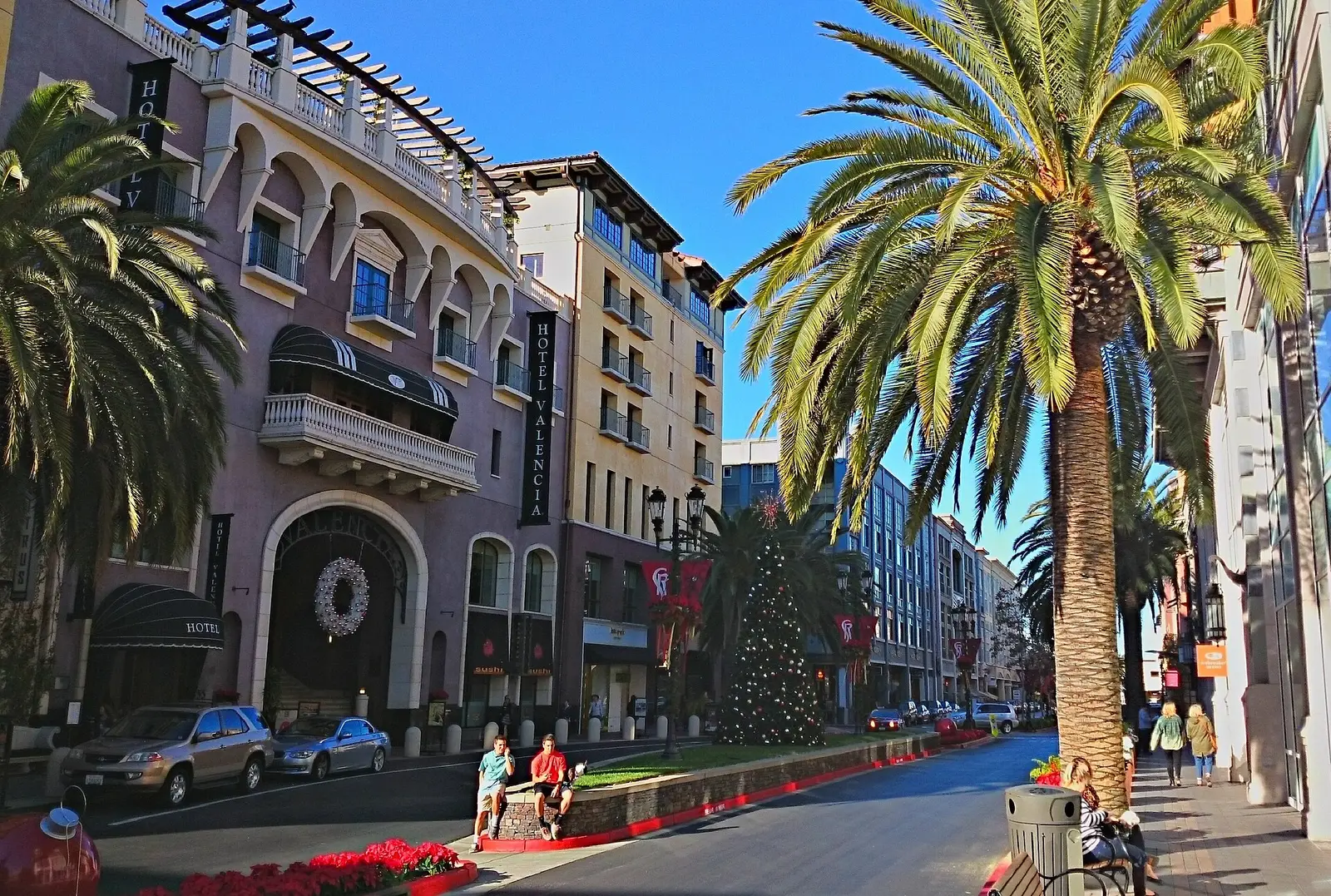
Hotel Valencia at Santana Row in San Jose
Hotel Valencia at Santana Row in San Jose. Photo: Payton Chung, CC BY 2.0, via Wikimedia Commons.

The houses here

Plaster near downtown, studs in the tracts, glass in Fairglen

Where a screen can go in a San Jose house depends on when the house went up. The conservation areas around downtown were built while plaster was still the ordinary wall: Naglee Park had 1,503 houses within three years of its 1902 subdivision, and Hanchett and Hester Park's homes date from about 1906 to 1935. Most of the city came later. The preservation guide Your Old House records the population climbing from 95,000 to over 500,000 between 1950 and 1975 as subdivisions replaced orchards, after the plaster era the Park Service describes. Eichler Homes built seven tracts here, forming five neighborhoods from Morepark to Fairhaven, and in Fairglen Additions the post-and-beam frame traded much of the solid wall for glass.

Free request

Describe the TV mounting job once. Local pros who take work in San Jose reply by call or text.

  • No fee to request, and no obligation to hire
  • You agree scope and price with the pro you choose
  • Photos help them quote without a first visit

Get quotes for TV mounting work in San Jose

Two short steps. A local pro who takes this work calls or texts you back.

To send a request, call or text (415) 449-8213.

Free to request, and you agree the scope and price with the person you hire before work starts. In California, a job over $1,000 in labor and materials, or one that needs a building permit, must be done by a contractor licensed by the CSLB in the right class. Ask for the license number and check it at cslb.ca.gov.

Permits and local rules

Three San José rules a wall-mounted TV can run into

  • Equipment on walls, sorted by weight

    San José's page on equipment suspended or mounted on roofs, floors or walls sets building-permit tiers by weight, and the figures for walls are half those for roofs and floors. On a wall, under 50 pounds needs no permit or plans; 51 to 100 pounds needs a permit without plans; 101 to 200 pounds needs plans, though not a professional's; heavier loads need plans and calculations from a licensed engineer or architect. Equipment must be positively attached in every case. The page does not name televisions, so ask the Building Division before a heavy screen goes up.

    Source: City of San José Building Division (sanjoseca.gov)

  • What the Municipal Code exempts from an electrical permit

    Section 24.02.150 lists the electrical work that needs no permit, and three entries bear on a TV wall: reinstalling attachment plug receptacles, but not the outlets; installing or maintaining communications wiring, devices and equipment; and wiring operating at less than 25 volts that cannot supply more than 50 watts. Read together, an HDMI or network run inside the wall is exempt and a new power outlet is not. Section 24.02.120 adds that work exempt from a building permit still needs its separate electrical permit unless the title exempts it too.

    San José Municipal Code, Chapter 24.02 (opens in a new tab)
  • What a new receptacle must meet

    The city's electrical projects page lists the inspector's points for receptacles. Each must be listed and marked with its maker, voltage and amperage; tamper-resistant where the code calls for it; connected to the equipment grounding conductor where the box has one; and, when it replaces a receptacle at a location that needs arc-fault protection, provided with that protection. The inspector asks to see the manufacturer's listing and installation instructions, so keep the packaging until the final.

    Source: City of San José Building Division (sanjoseca.gov)

State license for this work: C-10 Electrical, C-7 Low Voltage Systems. Look up a contractor's license on the CSLB website (cslb.ca.gov).

Before you hire

Settle these before a San Jose installer drills

  • Add the TV's and the mount's weights from their spec sheets; past 50 pounds on a wall, ask San José's Building Division whether its equipment permit applies.
  • In Naglee Park, Hanchett Park or another pre-war district, ask what lag length will cross the plaster and lath, and whether the mount maker allows it.
  • In a Fairglen Additions Eichler, ask where the solid framing sits behind the paneling and how cables will reach the screen with no attic overhead.
  • For a new outlet, ask who files the online electrical permit at SJPermits.org, and check the C-10 license at cslb.ca.gov.
  • For a patio screen, ask about the Planning clearance San José requires for exterior wall equipment, and whether the mount is rated outdoors.

Free, no obligation. Next, add your details in the request form.

Questions

Questions San Jose owners ask before a TV goes on the wall

Does putting a TV on the wall need a building permit in San Jose?

It can, depending on weight. San José's page for equipment mounted on walls requires no permit under 50 pounds, a building permit without plans from 51 to 100 pounds, plans from 101 to 200, and an engineer's or architect's calculations above that. The page does not mention televisions by name, so for a heavy screen on a full-motion arm, ask the Building Division before installing.

Do I need an electrical permit to run HDMI cable inside a San Jose wall?

No. Municipal Code Section 24.02.150 exempts the installation of communications wiring, devices and equipment, and wiring that runs at under 25 volts and cannot supply more than 50 watts. The city's permit page also exempts low-energy Class II and Class III circuits. The exemption covers the signal cable only; adding an outlet for the TV's power cord is electrical work that needs a permit.

Can we mount a TV on the back patio wall of our San Jose house?

Check two things first. San José requires a Planning clearance, regardless of weight, for equipment installed on an exterior wall unless it sits lower than an existing parapet or roof screen, and the weight tiers still apply. The mount matters too: UL 2442, the safety standard for TV wall mounts, covers indoor use only, so look for a mount its maker rates for outdoor installation.

Will the screws that came with our mount hold in a Hanchett Park plaster wall?

Possibly not as supplied. Mount kits are usually written for drywall: SANUS's VLT5 manual allows no more than 5/8 inch of covering over wood studs. Plaster over wood lath in houses of Hanchett Park's age was meant to be at least 3/4 to 7/8 inch thick, according to the Park Service, before the lath is counted. Ask the mount maker which longer fasteners it accepts, and keep the lag screws in the studs.

How should a TV be secured against earthquakes in San Jose?

Anchor it. The San José Fire Department lists televisions among the heavy items to secure, citing the city's closeness to the San Andreas and Hayward faults. The Earthquake Country Alliance favors a wall mounting kit installed to the manufacturer's instructions, and for a set left on furniture, nylon straps from the TV's mount holes to the stand, with tall furniture fastened to wall studs.

Where these facts come from

Checked against these public sources in October 2026. Rules and programs change: confirm permit requirements with the city before work starts, and a contractor's license on the CSLB website.

  • sanjoseca.gov: equipment suspended or mounted on roofs floors or walls (sanjoseca.gov)
  • sanjoseca.gov: when is a building permit required (sanjoseca.gov)
  • sanjoseca.gov: electrical projects (sanjoseca.gov)
  • library.municode.com: code of ordinances
  • sanjoseca.gov: historic areas districts (sanjoseca.gov)
  • sanjoseca.gov: 636689792740100000 (sanjoseca.gov)
  • sanjoseca.gov: 638913000651930000 (sanjoseca.gov)
  • npgallery.nps.gov: d06ce6c1 514d 4ec8 9284 95bfcaeaa6be (npgallery.nps.gov)
  • nps.gov: preservation brief 21 flat plaster (nps.gov)
  • sanjoseca.gov: 4699 (sanjoseca.gov)
  • earthquakecountry.org: televisions
  • sanus.com: VLT5 IM FR 240716

TV mounting work in San Jose? Tell us what you see.

One request reaches local handymen and contractors who take this work. The Handyman SF connects you with them; it does not do the work.

HandymanNow for handymen Work in San Jose? Get job leads by text. Pick your trades and areas, take only the jobs you want. No subscription. Start getting leads HandymanNow for homeowners Get the HandymanNow app. Send a request with photos, message your handyman and follow them on the way. Download the app

HandymanNow app

Fix it faster. Find work faster.

Homeowners send a job with photos and follow their handyman on the map. Handymen get local jobs by text and take only the ones they want.

Call WhatsApp (opens WhatsApp) Free quote