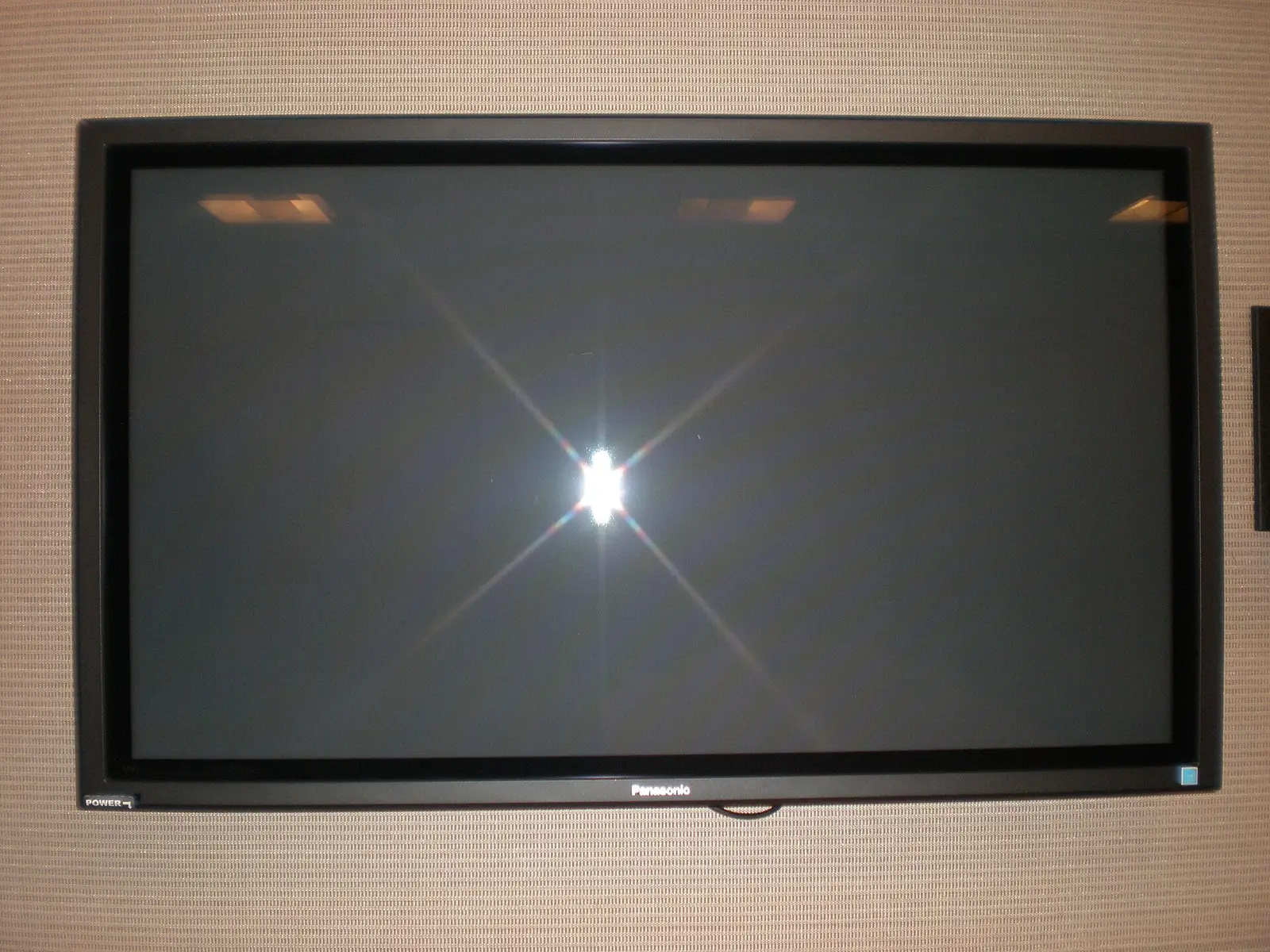
Mounting TVs on Bay Area walls, from lath plaster to Eichler paneling
Putting a TV on a Bay Area wall starts with what the wall is made of. Mount makers write their hardware for wood studs under thin drywall, solid concrete or concrete block, while pre-war houses here carry thick plaster on lath and Eichlers have more glass than solid wall. The bracket itself is handyman work; a new outlet behind the screen is electrical work that most cities here want permitted.
Most mounts are written around this wall. The installation manual for SANUS's VLT5 tilting mount, a typical example, asks for wood studs no smaller than a nominal 2x4, lag holes drilled into the stud centers, and no more than 5/8 inch of drywall over the framing. It warns that studs are not always on the usual 16- or 24-inch centers, so each one has to be found rather than counted, and it says the wall must hold five times the combined weight of TV and mount.
Plaster and lath in pre-war houses
The National Park Service's Preservation Brief 21 dates plaster as the near-universal interior finish into the 1930s and 40s, and puts its minimum over wood lath at roughly three-quarters to seven-eighths of an inch, before the lath itself is counted. That is past the 5/8-inch covering many mount manuals allow over the studs. The bracket can still go on studs, but the lag length becomes a question for the mount maker, and a manual written for drywall should not be read as covering a plaster wall.
Steel-stud walls
A light-gauge steel stud gives a lag screw nothing to bite. SANUS's manuals say their mounts ship with hardware for wood studs, solid concrete and concrete block only, and that a steel-stud wall needs a separate steel stud kit that is not in the box. The rated load can drop as well: the BXL1 full-motion mount is rated for 180 pounds on wood studs or concrete but 130 pounds on steel studs. Knowing the stud material before the mount is bought saves a second trip.
Brick, block and concrete walls
Masonry takes anchors, not lag screws, and the manual sets the minimums. SANUS's VLT5 instructions call for solid concrete at least 8 inches thick or concrete block at least 8 by 8 by 16 inches, fasteners spaced at least 24 inches apart, pilot holes drilled 3 inches deep, and never a hole in the mortar between blocks. The concrete anchors in that kit are marked for concrete only, not drywall or wood. Brick is not on the list of walls that manual covers, so an old brick chimney breast needs the mount maker's word first.
A screen above the fireplace
Samsung's U.S. support guidance says outright that it does not recommend mounting a TV over a fireplace. Its reasons are heat, since its TVs should never exceed 104 degrees Fahrenheit, ash settling on the set and its vents from a wood-burning fire, and a screen sitting well above eye level for anyone on the sofa. Its advice, for anyone set on the spot, is to light a fire and measure the temperature there before mounting anything, and to choose a mount that can angle the screen down.
Getting power and cables behind the screen
The wires behind a wall-mounted TV fall under two different rules. HDMI, network and speaker cable are communications or low-voltage wiring, which several Bay Area cities leave out of the electrical permit, and which the C-7 class covers for a contractor. Moving the power outlet up to the bracket is new electrical work: a box, a receptacle and cable run inside the wall from an existing circuit. That half needs a C-10 contractor on any job past the handyman line, and an electrical permit in the cities listed below.
The license this work needs
C-10 Electrical
C-7 Low Voltage Systems
Hanging the bracket and the screen stays handyman work while labor and materials together come to less than $1,000 and no building permit is involved. The wiring splits by voltage. CSLB's C-10 class covers placing or connecting any wires, fixtures or apparatus that use electrical energy, which takes in a new outlet behind the TV. The C-7 Low Voltage Systems class covers energy-limited systems up to 91 volts and names sound systems and cable television among them. Check either number at cslb.ca.gov.
Ready.gov names televisions, with bookcases, refrigerators and water heaters, among the heavy items to secure before an earthquake. The Earthquake Country Alliance gives two ways to do it. A set on furniture can be tied down with flexible nylon straps screwed into the TV's mount holes, with tall furniture itself secured to wall studs. Where one can be used, the Alliance prefers a wall mounting kit, installed exactly as the manufacturer's instructions say.
Tip-overs on ordinary days
A 2024 report from the Consumer Product Safety Commission counted 217 tip-over deaths from 2013 through July 2023, and 47 percent involved a television; 55 percent were children aged 1 to 3. The agency's advice is to anchor TVs to the wall, and where that cannot be done, to set the screen on a low, sturdy base, push it as far back as it goes and keep its cords out of children's reach. Anchoring is the agency's first answer; the low base is the fallback.
Eichler walls with little solid wall
The National Register nomination for Fairglen Additions, an Eichler tract in San Jose, explains why these houses are awkward for a TV. Post-and-beam framing with longer spans allowed open plans and a much higher proportion of glass to solid wall. Original interior walls were Philippine mahogany veneer paneling, and the ceiling is the stained underside of 2-by-8 tongue-and-groove roof decking, so there is no attic above it to route a cable down from. The few solid walls are worth choosing carefully.
San Francisco requires an electrical permit before new wiring goes in or an existing installation is altered, extended or added to, which takes in an outlet moved up behind a screen. The PermitSF application asks how many devices or outlets the job involves, and the wiring has to be inspected before it is covered. The city accepts electrical permit applications from C-10 contractors, and from C-7 contractors for low-voltage work only.
East Palo Alto's list of work exempt from permits separates the two halves of a TV install. Connecting approved portable equipment to a permanently installed receptacle counts as minor repair work, and putting an existing receptacle back is exempt, but the wording stops short of the outlets themselves. Residential wiring and devices running at less than 25 volts and unable to supply more than 50 watts are also on the exempt list.
Milpitas reads the outlet question strictly. Its building safety FAQ names the installation, replacement or relocation of outlets among the work that needs an electrical permit, while reinstalling attachment plug receptacles and installing or maintaining communications wiring need none. On that wording, HDMI and network cable can go into a Milpitas wall without an electrical permit, but the power outlet cannot move up behind the screen without one.
Oakland keeps mechanical, electrical and plumbing permits separate from the building permit, and its homeowner page names wiring, lights, outlets and circuits as the reasons for an electrical one. A recessed power box cut in behind a wall-mounted screen is an outlet on that list. The city also publishes its own administrative amendments to the California Electrical Code, which is where any local exemption would be set out.
Permits and rules to know
Who may take the job: Business and Professions Code 7048
California's contractor law exempts a job only when the aggregate contract price for labor, materials and all other items is less than $1,000 and the work needs no building permit. The exemption is lost if the work is part of a larger operation, if a job is split into smaller contracts to stay under the line, or if the person advertises as a contractor or employs someone to help. The section was last amended by AB 1170, effective January 1, 2026.
Condominium walls: Civil Code 4185 and 4760
Where a condominium's walls are designated as unit boundaries, Civil Code 4185 makes the interior surfaces of the perimeter walls, along with the outlets inside the unit, part of the owner's separate interest, and the rest of the wall common area, unless the declaration or condominium plan says otherwise. Section 4760 lets an owner alter the separate interest only within the governing documents and without impairing structural integrity or mechanical systems. Read the CC&Rs before lag bolts go into a party wall.
Before you hire
Ask what the wall is, wood studs, steel studs, plaster on lath or masonry, and which hardware the mount's manual specifies for it.
Weigh the TV and mount together and compare the total with the mount's rating for your type of wall, which can be lower than the headline figure.
Ask whether the mount is listed to UL 2442, and for a patio screen, whether it is rated for outdoor use at all.
If the outlet moves behind the screen, ask who pulls the electrical permit, then check the C-10 number at cslb.ca.gov.
Over a fireplace, ask the installer to measure the wall's temperature during a fire before anything is drilled.
In a condo, ask to see the association's approval or the CC&R clause before a party wall is drilled.
If more than one person will do the work, ask for proof of workers' compensation coverage.
How a request works
Describe the job
A few sentences and a photo of the problem or the space. It takes about a minute.
Local pros get in touch
Up to five handymen or contractors who take this kind of work may call or text to ask questions and quote.
Check, compare, decide
Look up the license, compare what you hear, and agree the scope and price with the one you pick. Requesting costs nothing.
Questions about TV mounting work in the Bay Area
Can a handyman mount the TV and also move the outlet up behind it?
The two halves fall under different rules. Hanging the bracket and screen is handyman work on a job under $1,000 that needs no permit. A new outlet is electrical work, the territory of CSLB's C-10 class, and cities such as San Francisco, Oakland and Milpitas require an electrical permit for it. HDMI and network cable are low-voltage work that several cities leave out of the permit.
Is it safe to mount a TV above a fireplace?
Samsung does not recommend it. Its U.S. support page says its TVs should never exceed 104 degrees Fahrenheit, tells owners to light a fire and check the temperature at the spot before mounting, and warns that a wood fire can coat the set and its vents with ash. A screen over a mantel also sits well above eye level, so Samsung suggests a mount that tilts the screen down. Check your own TV maker's limit too.
Can a TV mount go into drywall without hitting studs?
Not with most mount makers' hardware. SANUS's manuals say in capital letters not to install into drywall alone, and they require the wall to carry five times the weight of the TV and mount. Samsung's own guidance mentions toggle bolts where studs cannot be reached, but only if the wall can hold the weight. The mount's manual is the rule that counts, and it usually sends the lag screws into wood studs.
Our condo's living room wall is shared with the neighbors. Can we mount a TV on it?
Often, but check the documents first. Under Civil Code 4185, unless the declaration or condominium plan says otherwise, only the interior surface of a boundary wall belongs to your unit; the studs and the rest of the wall are common area. Section 4760 allows changes to your unit only as the governing documents permit and without harming structural integrity. Many associations set rules for drilling into common walls, so ask before the lag bolts go in.
What does UL 2442 on a TV mount's box mean?
It is the safety standard for wall- and ceiling-mounts that hold audio and video equipment to the building as the primary support, with the equipment off the floor. Its scope covers indoor use only, so a listing says nothing about a mount on an open patio. Carts, stands and entertainment centers fall under a different standard, UL 1678. A listing tests the mount, not the wall it is fastened to.
Does a TV that sits on a stand need to be strapped down?
The safety agencies say yes. The Consumer Product Safety Commission found that 47 percent of 217 tip-over deaths from 2013 through July 2023 involved a television, and it advises anchoring TVs to the wall. For earthquakes, the Earthquake Country Alliance shows nylon straps screwed into the TV's mount holes and fastened to the furniture, with tall furniture secured to wall studs.
Checked against these public sources in October 2026. Codes and programs change: confirm permit rules with your city's building department and a license on the CSLB website before work starts.