Waterproofing and drainage Sunnyvale

Water under Sunnyvale houses, from Eichler slabs to new basements

Most water trouble under a Sunnyvale house is not in a basement. The city's Eichler guidelines describe slab-on-grade houses, and its first two Eichler tracts, from 1948 and 1949, were built on raised foundations over crawlspaces. When a new house adds a basement, Sunnyvale leaves one rising no more than 2 feet above grade out of its floor area. Wherever water collects, the rule that shapes the fix is where it may go: groundwater is barred from the sanitary sewer.

  • Free to request, no obligation to hire
  • Up to five local pros who take this work can reply
  • Rules on this page checked against 23 public sources, October 2026

Get quotes for waterproofing and drainage work in Sunnyvale

Two short steps. A local pro who takes this work calls or texts you back.

To send a request, call or text (415) 449-8213.

Free to request, and you agree the scope and price with the person you hire before work starts. In California, a job over $1,000 in labor and materials, or one that needs a building permit, must be done by a contractor licensed by the CSLB in the right class. Ask for the license number and check it at cslb.ca.gov.

Before you hire

What to ask a Sunnyvale drainage or waterproofing contractor

  1. Where is the water coming from: rain, grading, a radiant-heat leak or groundwater, and how will you confirm it before recommending a fix?
  2. Where will pumped water discharge, given that Sunnyvale's sanitary sewer is closed to groundwater without the city's written approval?
  3. If the drain line crosses the sidewalk or curb, who files the Public Works encroachment permit, and does your license class cover that work?
  4. Is the house in a Special Flood Hazard Area, and could this project count as a Substantial Improvement under Municipal Code 16.62.300?
  5. Waterproofing has no license class of its own, so which CSLB class covers this job: C-12, C-42, C-8 or B? Check it at cslb.ca.gov.
Groundwater in the sewer
Barred by SMC 12.12.050 without written city approval
Flood hazard zones
A, AE and AO, mainly in the northeast part of the city
FEMA flood maps
Current flood insurance rate maps dated May 18, 2009
Basement floor area
Not counted when no more than 2 feet above grade
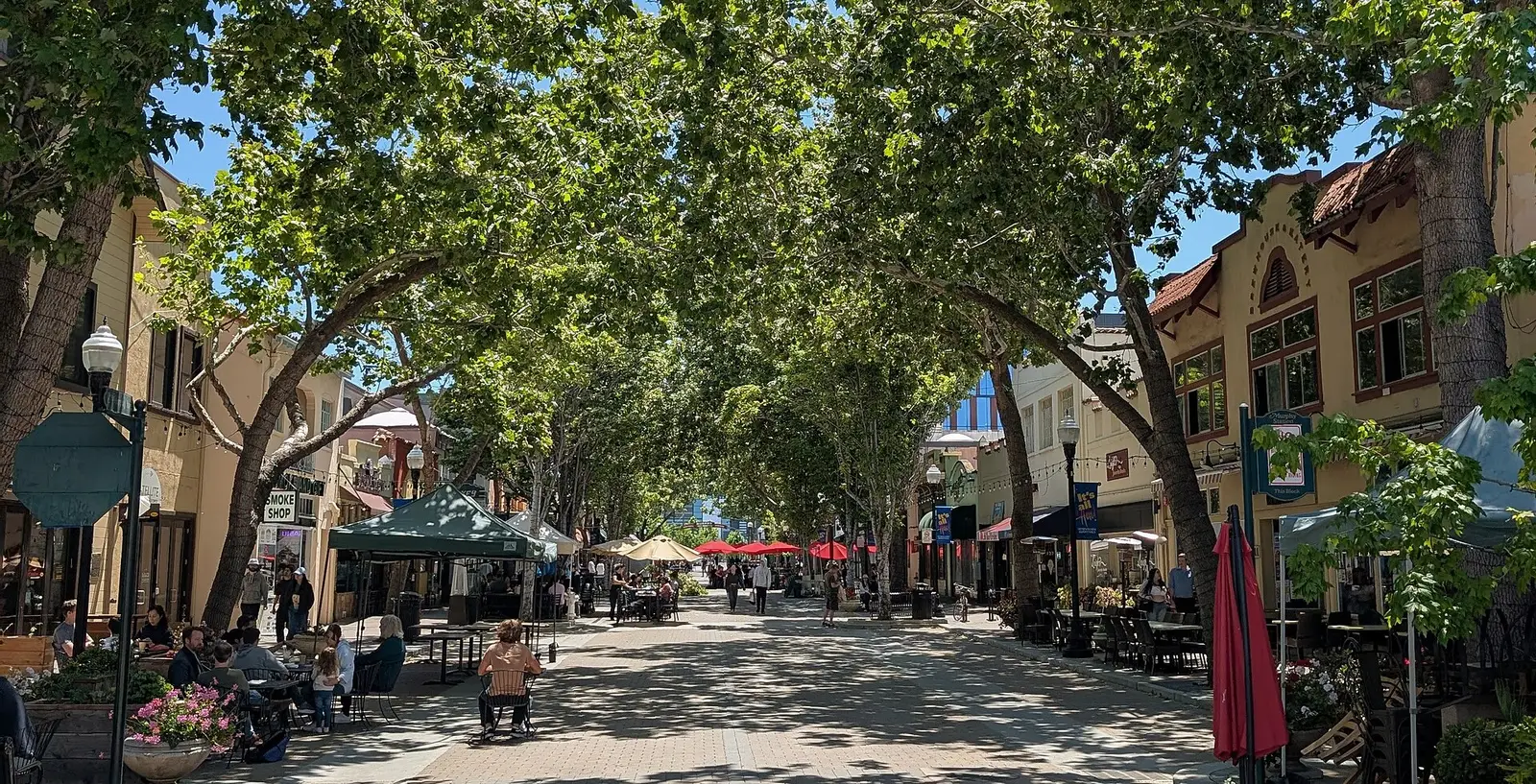
Historic Murphy Avenue in downtown Sunnyvale
Historic Murphy Avenue in downtown Sunnyvale. Photo: The Sands of Time 0, CC BY-SA 4.0, via Wikimedia Commons.

The houses here

Slab floors, raised floors, and what a basement adds

Sunnyvale's Eichler Design Guidelines list slab-on-grade construction and radiant floor heating among the features its Eichler tracts share, so most of those houses have no space below the floor at all. The city's historical context statement records an exception at the very start: Sunnyvale Manor, on the north side of Maude Avenue west of Morse Avenue, and Sunnymount Gardens, north of Remington Drive, were built in 1948 and 1949 on raised foundations, ranch-style and modern houses alike. Later Eichler prototypes made the concrete slab with radiant heat a signature. A raised floor means a crawlspace, which the California Residential Code treats as a moisture problem of its own. A basement is a room that holds back soil, and the code asks more of its walls.

Free, no obligation. Next, add your details in the request form.

The work

Where the water shows up, and what each case calls for

  1. Wet carpet on an Eichler slab

    Before blaming groundwater, rule out the house's own heating. Eichler radiant floors run hot water through pipe cast in the slab, and the Eichler Network lists puddles and mildew under carpets, and a white powdery efflorescence along the base of the foundation outside, among the signs of a leak in that pipe. A radiant loop can be isolated and pressure-tested without cutting concrete. If the slab stays dry between storms and the water comes only with rain, the next suspects are grading, downspouts and an atrium drain that has stopped draining.

  2. Standing water in a crawlspace

    Under a raised floor, the 2025 California Residential Code offers two routes. A vented crawlspace needs openings of at least 1 square foot per 150 square feet of under-floor area, or 1 per 1,500 where the soil is covered with a Class I vapor retarder. An unvented one needs that retarder continuous, lapped 6 inches, sealed, and carried 6 inches up the stem wall, plus exhaust, conditioned air or dehumidification. And where groundwater can rise to within 6 inches of the finished floor at the perimeter, the soil inside must be as high as the grade outside unless an approved drainage system is provided.

  3. A sump or footing drain that needs an outlet

    Pumping the water out is half the job; the other half is where it goes. Sunnyvale's sanitary sewer is closed to groundwater under Municipal Code 12.12.050, and an exception needs the Compliance Inspection Program's written approval in advance. The storm drain is treated differently: the regional stormwater permit exempts a single-family home's pumped groundwater, foundation drains and crawlspace pump water, as long as they carry no pollutants. Ask the contractor to mark the outlet on a sketch, along with the route the pipe takes to reach it.

  4. Keeping a new basement dry

    The residential code treats a basement as what it is, a room that retains earth. Section R405.1 calls for drains around concrete or masonry foundations that retain earth and enclose habitable or usable space below grade, laid at or below the top of the footing and discharging by gravity or by pump into an approved drainage system. Section R406 requires those walls to be dampproofed, or fully waterproofed where a high water table is known. If the excavation has to be dewatered into the sewer, Sunnyvale wants the request at least 10 working days ahead.

  5. Taking a yard drain out to the street

    A drain line run under the sidewalk and out through the curb leaves the owner's lot. Sunnyvale's list of work exempt from building permits notes that repairing or replacing public sidewalks or driveway curb cuts needs Public Works review, and its encroachment permit applies to all work in the public right-of-way, with curb, sidewalk and storm work among the categories on the form. The application goes through E-Onestop with a site plan and the contractor's state license and city business license numbers, and the city asks for at least 10 working days to issue it.

Permits and local rules

City and regional rules on where Sunnyvale's water may go

  • Groundwater stays out of the sanitary sewer

    Sunnyvale Municipal Code Section 12.12.050 prohibits discharging storm drainage and groundwater into the sewer. The Water Pollution Control Plant's request form explains the exception: for groundwater clean-up, construction dewatering and stormwater collection areas, the Compliance Inspection Program may approve a discharge when no reasonable alternative exists. The request goes in at least 10 working days ahead, nothing may flow before written approval, the discharge point must be a cleanout or other building sewer connection on the property, and Section 12.12.100 bars putting anything directly into a city manhole.

    Source: City of Sunnyvale Water Pollution Control Plant (sunnyvale.ca.gov)

  • What the regional stormwater permit exempts

    Sunnyvale is one of the Santa Clara Valley cities under the San Francisco Bay Regional Water Board's Municipal Regional Stormwater Permit, Order R2-2022-0018. Its Provision C.15.a exempts certain unpolluted flows from the ban on non-stormwater discharges, naming single-family homes' pumped groundwater, foundation drains, and water from crawl space pumps and footing drains, along with rising ground waters. If a category is identified as a source of pollutants, it is handled instead as a conditionally exempted discharge, with controls. The city's storm drain page puts the everyday rule plainly: only rainwater belongs there.

    Source: San Francisco Bay Regional Water Quality Control Board (waterboards.ca.gov)

  • Building in a Special Flood Hazard Area

    Sunnyvale's Special Flood Hazard Areas lie mainly in the northeast part of the city, in Zones A, AE and AO, on FEMA flood insurance rate maps last updated May 18, 2009. The city says these areas carry special requirements for new construction and remodeling, and a project the Building Division deems a Substantial Improvement must bring the entire structure up to current FEMA standards and Municipal Code 16.62.300. In a flood hazard area, the residential code also wants flood openings in the walls around a crawlspace. Elevation certificates can be viewed at the permit center in City Hall.

    Source: City of Sunnyvale, Flood-safe Building (sunnyvale.ca.gov)

State license for this work: C-42 Sanitation System, C-12 Earthwork and Paving, C-8 Concrete. Look up a contractor's license on the CSLB website (cslb.ca.gov).

Part by part

Parts of Sunnyvale where the water question changes

  • Northeast Sunnyvale

    The city's flood insurance guide for real estate professionals places most of Sunnyvale's Special Flood Hazard Areas here. All buildings in one with a federally backed mortgage must carry flood insurance, and the lender decides whether any part of the building sits inside the zone. An owner who can show that the structure or its foundation is above the flood height can apply to FEMA for a Letter of Map Amendment.

  • Along the Sunnyvale East and West Channels

    Both channels were built in the 1960s to serve as storm drains, and they flooded in 1963, 1968, 1983, 1986 and 1998. Its project to bring about 6.4 miles of the East Channel and 3 miles of the West Channel to 1% protection, part of the Safe, Clean Water and Natural Flood Protection Program, is in design. Its fact sheet says it will not protect some Bay-side properties in northern Sunnyvale from tidal flooding.

  • Sunnyvale Manor and Sunnymount Gardens

    These two tracts from 1948 and 1949 sit on raised foundations, unlike the slab-on-grade Eichler tracts that followed, so their below-floor water problems are crawlspace problems: vents, a vapor retarder on the soil, under-floor grade and drainage. The lots are modest, typically 52 by 100 feet in Sunnyvale Manor and 75 by 117 in Sunnymount Gardens, which leaves limited room to let collected water out away from the house.

Timing

Getting ready for the 2026-27 El Niño winter

On September 21 the Governor proclaimed a state of emergency for the developing 2026-27 El Niño, and Sunnyvale warns it may bring prolonged rain, flooded streets, backed-up storm drains and rising water in local creeks and channels. During the rainy season the city gives out free self-serve sandbags at the Corporation Yard, 221 Commercial Street, on weekdays through April 1, ten per address with ID showing a Sunnyvale address. Valley Water has its own sandbag sites. Flood insurance bought now has a 30-day waiting period before it takes effect.

Free, no obligation. Next, add your details in the request form.

Questions

Water and below-grade questions from Sunnyvale owners

Can my sump pump empty into the sewer cleanout in my Sunnyvale yard?

Not without the city's permission. Sunnyvale Municipal Code 12.12.050 prohibits groundwater discharges to the sanitary sewer. The Compliance Inspection Program can approve one when no reasonable alternative exists, but the request has to go in at least 10 working days ahead and nothing may flow before written approval. Clean water from a single-family home's sump is exempt from the regional ban on non-stormwater discharges, which leaves the yard or the storm drain as the routes to plan for.

How do I find out whether my Sunnyvale house is in a flood zone?

Look the address up in the Sunnyvale Flood Zone Viewer, or ask Public Works staff at the permit center in City Hall. The current FEMA rate maps date from May 18, 2009. If the house is in a Special Flood Hazard Area and has a federally backed mortgage, flood insurance is required. Anyone can buy it, renters included, but a new policy normally takes 30 days to take effect.

Our Eichler has wet carpet but it hasn't rained. Is it groundwater?

Check the radiant heating first. The pipe that heats an Eichler runs through the slab, and the Eichler Network lists puddles and mildew under carpets, cracks in flooring, a warm spot on the floor and white powder along the base of the foundation among the signs of a leak. A radiant-heat specialist can isolate and pressure-test the loop. Water that appears only after storms points instead to grading, downspouts or drains.

Will rising groundwater from the Bay reach our Sunnyvale crawlspace?

Valley Water's 2025 study says groundwater emergence is not currently a widespread concern in Santa Clara County: it is temporary and localized in undeveloped lands, wildlife preserves and parks near the Bay, and the wet 2023 winter showed its projection map tends to overestimate it. The district keeps monitoring near the Bay. Overpumping caused permanent land subsidence in the north county from the early 1900s until the 1970s, when it was stopped.

Our neighbor's new patio sends rainwater into our Sunnyvale yard. What does California law say?

California follows the civil law rule for surface water: the upper owner may let water leave the land as it naturally flows, but is liable for damage from discharging it in an unnatural manner. In Keys v. Romley (1966) the state Supreme Court added that every person must take reasonable care in using property to avoid injuring adjacent property through the flow of surface waters. If talking with the neighbor does not settle it, that is a question for an attorney rather than a contractor.

Does a new basement count against our floor area in Sunnyvale?

Not if it rises no more than 2 feet above grade. Sunnyvale's handout on additions and new houses counts living area and garage area as floor area, and leaves out ground-floor porches at the front door and basements that low. Its major-remodel handout also excludes walls that form a basement, as the residential code defines one, when it measures how much exterior wall a project removes.

Where these facts come from

Checked against these public sources in October 2026. Rules and programs change: confirm permit requirements with the city before work starts, and a contractor's license on the CSLB website.

  • sunnyvale.ca.gov: 638273442749170000 (sunnyvale.ca.gov)
  • sunnyvale.ca.gov: 638525723585370000 (sunnyvale.ca.gov)
  • sunnyvale.ca.gov: 639231613429000000 (sunnyvale.ca.gov)
  • sunnyvale.ca.gov: 639046845634230000 (sunnyvale.ca.gov)
  • sunnyvale.ca.gov: 638611410584730000 (sunnyvale.ca.gov)
  • sunnyvale.ca.gov: 639107281821070000 (sunnyvale.ca.gov)
  • sunnyvale.ca.gov: 638955958307770000 (sunnyvale.ca.gov)
  • sunnyvale.ca.gov: storm drains (sunnyvale.ca.gov)
  • sunnyvale.ca.gov: flood zones (sunnyvale.ca.gov)
  • sunnyvale.ca.gov: flood safe building (sunnyvale.ca.gov)
  • sunnyvale.ca.gov: 638518778772270000 (sunnyvale.ca.gov)
  • sunnyvale.ca.gov: sandbags (sunnyvale.ca.gov)

Waterproofing and drainage work in Sunnyvale? Tell us what you see.

One request reaches local handymen and contractors who take this work. The Handyman SF connects you with them; it does not do the work.

HandymanNow for handymen Work in Sunnyvale? Get job leads by text. Pick your trades and areas, take only the jobs you want. No subscription. Start getting leads HandymanNow for homeowners Get the HandymanNow app. Send a request with photos, message your handyman and follow them on the way. Download the app

HandymanNow app

Fix it faster. Find work faster.

Homeowners send a job with photos and follow their handyman on the map. Handymen get local jobs by text and take only the ones they want.

Call WhatsApp (opens WhatsApp) Free quote