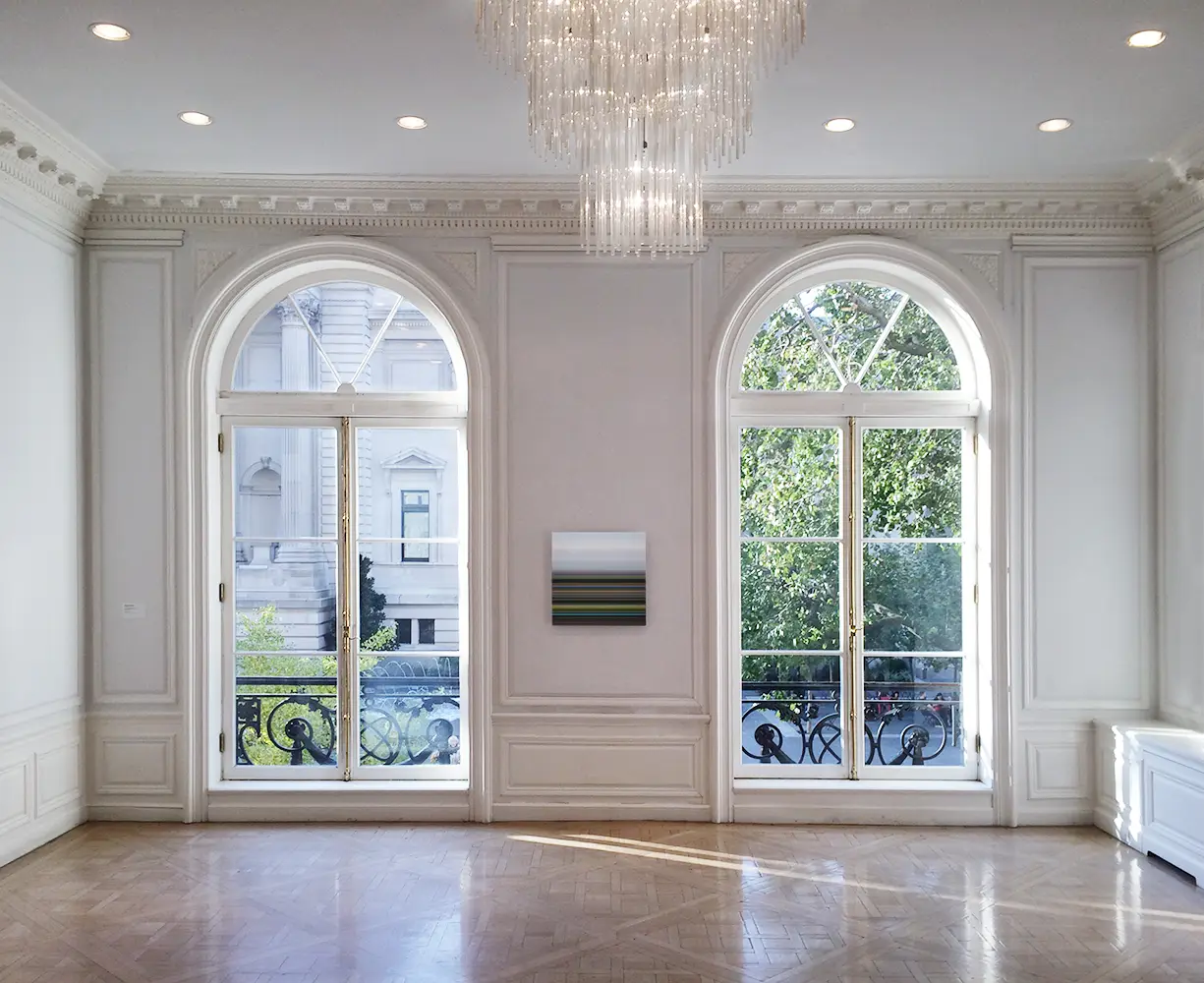
Tall arched double windows with divided panes in a white paneled room
Tall arched double windows with divided panes in a white paneled room. Photo: WesselArtPublic, CC BY-SA 4.0, via Wikimedia Commons.

Window replacement San Francisco

San Francisco windows: wood double-hungs, casements and thin aluminum

Since May 2025, Planning Code Section 136.2 has stopped SF Planning from restricting the material of a replacement window frame or sash, except on historic buildings rated Category A or A* and on new or enlarged openings. Since February 13, 2026, a same-size replacement can be applied for online through PermitSF, with no plans, if the new units meet the energy figures. On a Category A front with original wood windows, the replacements are still wood.

Energy Code zone
Climate zone 3 in every San Francisco ZIP code
Online permit threshold
U-factor 0.27 or lower for houses, duplexes and townhomes
Material rule
Planning Code 136.2 (2025): no material limits outside Category A/A*
Lot-line windows
Within 3 feet of a property line, may need a 1-hour rating

The work

Window work, sorted by how the city treats it

  • Original wood on a Category A front

    For street-visible windows on a Category A building, SF Planning's matrix pairs an original wood double-hung with a wood double- or single-hung, or aluminum-clad wood where the originals were already replaced. A* buildings, the landmarks and conservation district properties, get wood only, with no clad option. For houses built in or before 1955 whose original operation is unknown, double-hung, single-hung, casement or fixed units are allowed, ideally set about 2 inches back from the wall face.

  • Divided lites on Edwardian and 1920s patterns

    Replacing true divided lites with insulated glass means simulated divided lites, and Planning spells out how they should look. The applied muntin should match the old profile and depth as closely as possible, at least half an inch deep, against a common original width of about 7/8 inch including putty. A spacer bar inside the glass, preferably dark, should line up with the grilles, which should be part of the sash rather than snapped on or sealed between panes.

  • Lightwell and side-lot windows

    On a building close to its side lot lines, a window onto a lightwell or side passage can sit within a few feet of the property line, and the city treats those differently. Windows within 3 feet of a property line may need a 1-hour fire rating, and the online application asks whether any replacement unit falls in that band. Skylights have their own question: whether any sits within 5 feet of a property line, and if so whether a fire-rated parapet runs around the perimeter.

  • Glass near floors, doors and stairs

    San Francisco's window page lists where safety glazing belongs: a pane over 9 square feet whose bottom edge is under 18 inches from the floor, top over 3 feet, and within 3 feet of a walkway; glass within 2 feet of a closed door's edge; glass beside tubs and showers; and windows within 5 feet of stairs or landings. A sturdy railing in front can remove the need. Every sleeping room, attics and basements included, needs one window large enough for escape and rescue.

The Golden Gate Bridge and San Francisco, seen from the Marin Headlands
The Golden Gate Bridge and San Francisco, seen from the Marin Headlands. Photo: Paul.h, Public domain, via Wikimedia Commons.

The houses here

Old-growth sash, 1920s casements and thin aluminum

SF Planning groups the city's windows into three main types: all-wood double-hungs, all-wood casements, and thin-profiled aluminum. Its guide says wood was the original material on the majority of homes built before the Second World War, and that many late 19th- and early 20th-century sash still perform well because they were cut from heartwood, the dense core of old-growth trees, which resists rot and insects better than farmed lumber. Decay tends to begin on horizontal surfaces and at joints where water sits. Exposure matters as much as age: the guide notes that windows on east and north walls usually outlast those facing south or west.

Free request

Describe the window replacement job once. Local pros who take work in San Francisco reply by call or text.

  • No fee to request, and no obligation to hire
  • You agree scope and price with the pro you choose
  • Photos help them quote without a first visit

Get quotes for window replacement work in San Francisco

Two short steps. A local pro who takes this work calls or texts you back.

To send a request, call or text (415) 449-8213.

Free to request, and you agree the scope and price with the person you hire before work starts. In California, a job over $1,000 in labor and materials, or one that needs a building permit, must be done by a contractor licensed by the CSLB in the right class. Ask for the license number and check it at cslb.ca.gov.

Permits and local rules

Window rules San Francisco enforces in 2026

  • Planning Code Section 136.2

    In May 2025 the Board of Supervisors adopted Section 136.2, which says the Planning Department shall impose no restrictions on the material of a window frame or sash that replaces an existing one. It does not apply to Category A and A* historic buildings, or to enlarging windows and adding new openings. On Category B and C properties Planning may not control frame or sash material, though it asks owners to consult on the operation and design of distinctive windows.

    San Francisco Planning (opens in a new tab)
  • Same-size replacements go online

    Starting February 13, 2026, door, window and siding replacements can be applied for in PermitSF with no printed plans, no trip to the Permit Center and no paper job card. A window qualifies when the existing wall openings stay the same. The form asks for the building's construction type and occupancy, the number of windows, any change in how they open, whether one is an escape opening, and whether any sits within 3 feet of a property line.

    San Francisco Permit Center (opens in a new tab)
  • Energy figures that decide where you apply

    DBI's step-by-step page says windows in R-3 buildings, meaning single-family homes, townhomes and duplexes, should have a U-factor of 0.27 or lower, and windows in residences with more than two units 0.28 or lower, to apply online. Units that miss those figures go to an in-person application to discuss other ways of meeting energy rules. The ratings come from the NFRC or ENERGY STAR sticker in the corner of the glass, and the inspector checks them.

    San Francisco Department of Building Inspection (opens in a new tab)
  • Landmarks and conservation districts first

    A Category A* property, meaning a City Landmark or a building in a landmark or conservation district under Article 10 or 11 of the Planning Code, is not eligible for over-the-counter approval. It needs an Administrative Certificate of Appropriateness or a Minor Permit to Alter before the building permit, though most are handled by staff without a hearing. The category shows on the Property Information Map under Historic Preservation.

    San Francisco Planning (opens in a new tab)

State license for this work: C-17 Glazing, B General Building. Look up a contractor's license on the CSLB website (opens in a new tab).

Timing

How long a window permit takes, and lasts

For a same-size replacement filed online, the city's stated goal is to approve most permits within two business days, with the fee sent after review. Enlarging, shrinking or moving an opening still runs through the Over-the-Counter process with plans and elevations. Planning's guide says most window replacement permits stay valid for one year, and a DBI inspector's final visit completes the permit. An interior storm window, by contrast, needs no building permit at all.

Before you hire

Settle these before any windows are ordered

  • Look up the building's category on the Property Information Map before choosing a frame material.
  • Ask for each unit's NFRC U-factor and whether it is 0.27 or lower, so the permit can be filed online.
  • Check the C-17 Glazing or B General Building license at cslb.ca.gov before signing.
  • Ask which windows sit within 3 feet of a property line and whether those units need a fire rating.
  • For divided-lite patterns, ask for the muntin depth and whether the grilles are built into the sash.

Questions

What San Francisco owners ask about new windows

Can SF Planning still require wood windows on my house?

Only in some cases. Since Planning Code Section 136.2 took effect in 2025, Planning may not restrict the frame or sash material of a window that replaces an existing one, but the section does not cover Category A or A* historic buildings or new and enlarged openings. On a Category A front with original wood windows, expect wood, or aluminum-clad wood where the originals were already gone.

Do interior storm windows need a San Francisco permit?

No. SF Planning's window guide says an interior storm window, added for energy efficiency or noise, does not require a building permit. Changing the type of glass in an existing sash does need one. The same guide points out that well-weatherstripped single-glazed sash can greatly reduce noise and air leaks, so repair is worth pricing before replacement.

Can I replace just my own unit's windows in a condo building?

You can apply, but Planning discourages mixing. Its guide says it does not generally recommend partial window replacement in a building unless the new windows restore the historic configuration, because mixed types and materials make facades look inconsistent. On a Category A multi-unit building where owners replace windows one unit at a time, all the new windows must be the same.

How do I find out whether my building is Category A, B or C?

Search the address on the city's Property Information Map and open Historic Preservation. Category A covers buildings listed in or found eligible for the California or National Register, or identified in an adopted survey. Category B means more than 45 years old and not yet evaluated, and Category C means under 45 years old or found not historic.

Should old wood windows be repaired instead of replaced?

Often they should at least be assessed first. SF Planning suggests surveying every window, since some may need only repair, and notes that sound windows from the rear or sides can be moved to the street front to replace failed ones. Old-growth sash from the late 1800s and early 1900s can outlast new wood, and double-paned replacements cannot be repaired once their seals fail.

Where these facts come from

Checked against these public sources in October 2026. Rules and programs change: confirm permit requirements with the city before work starts, and a contractor's license on the CSLB website.

Window replacement work in San Francisco? Tell us what you see.

One request reaches local handymen and contractors who take this work. The Handyman SF connects you with them; it does not do the work.

HandymanNow for handymen Work in San Francisco? Get job leads by text. Pick your trades and areas, take only the jobs you want. No subscription. Start getting leads HandymanNow for homeowners Get the HandymanNow app. Send a request with photos, message your handyman and follow them on the way. Download the app

HandymanNow app

Fix it faster. Find work faster.

Homeowners send a job with photos and follow their handyman on the map. Handymen get local jobs by text and take only the ones they want.

Call Get a quote