Second stories, basements and new layouts in Bay Area houses
A whole-house remodel in the Bay Area is shaped as much by review as by construction. In San Francisco, adding a floor or raising a roof more than 30 inches can trigger neighborhood notice under Planning Code Section 311. In Palo Alto, a second story of 150 square feet or more must meet objective design standards unless the owner chooses Individual Review. Older houses add lead paint, asbestos and energy code work on top.
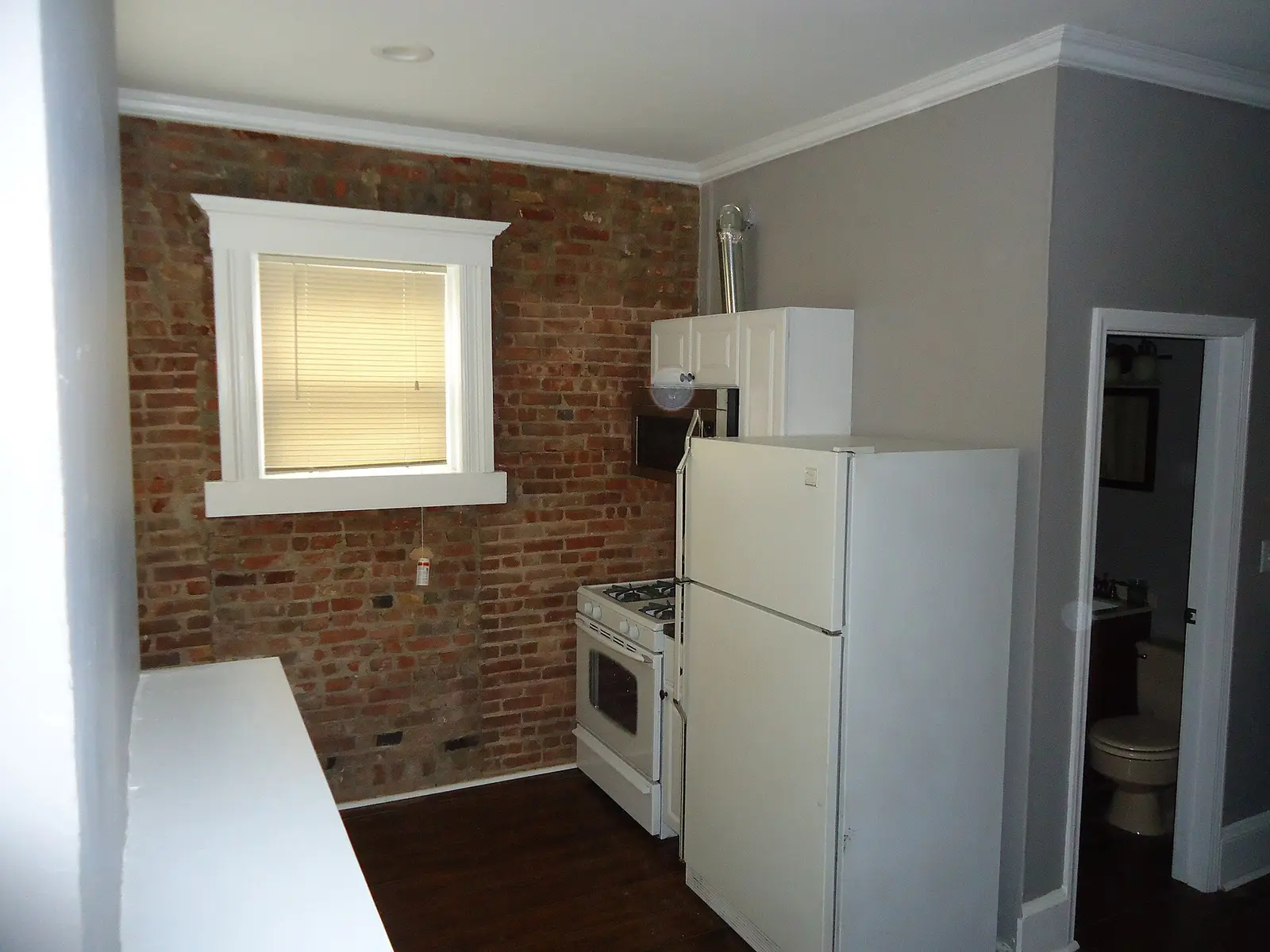
A kitchen partway through a renovation, with new floors, painted walls and a built-in microwave. Photo: Tomwsulcer, CC0, via Wikimedia Commons.
CSLB license class
B General Building, B-2 Residential Remodeling
Where it applies
San Francisco, Peninsula, East Bay
Request
Free, up to three local pros reply
Remodeling jobs on Bay Area homes
Adding a floor or raising the roof
San Francisco Planning treats several things as a vertical alteration: a fully new floor above the top floor, a new floor where the roof holds only a stair penthouse or mechanical equipment, raising a building's measured height or its highest roof by more than 30 inches, a new stair or elevator penthouse, and dormers beyond the exempt limits. Outside the Priority Equity Geographies district, a vertical alteration requires neighborhood notice unless the permit also adds a dwelling unit. Extending an existing partial upper floor sideways is not a vertical alteration.
Second stories next to one-story neighbors
Palo Alto's Two-Story Objective Design Standards limit a second floor to 35 percent of the lot's allowable gross floor area or 400 square feet, whichever is larger, and keep it out of the standard side and rear setbacks. When the house next door is single-story, the side daylight plane is measured from 8 feet above average grade instead of 10, and the street front needs either a one-story form at least 6 feet in front of the upper wall or a porch or roof overhang at least 6 feet deep.
Digging out a basement
Adding floor area below grade does not change how a San Francisco house looks from the street, and Planning's notice rules follow that logic. A purely subterranean addition is not an alteration for Section 311 notice, however large. If the project also adds above-grade area, the basement counts: notice is required when the combined work increases gross floor area by more than 25 percent and leaves the building over 3,000 square feet.
Removing walls to open the floor plan
Taking out a wall between the kitchen, dining room and living room is a typical layout change, and the first question is whether it carries load. Contra Costa County's permit checklist asks for a floor plan showing existing and proposed walls and whether any load-bearing wall is being removed, and warns that more plans may be required when one is removed or relocated. A B-2 license does not cover that structural change, so the contractor needs a B classification.
Dormers and attic rooms
A dormer can turn a San Francisco attic into a usable room without counting as an alteration for neighborhood notice, if it stays inside Planning's limits. Each dormer may be up to 8 by 8 feet in plan, at least 3 feet from the side property line and 10 feet back from the front building wall, at least 3 feet from other dormers, and no higher than the roof peak. All such exempt features together may cover no more than 20 percent of the roof.
The license this work needs
B General Building
B-2 Residential Remodeling
CSLB's B-2 Residential Remodeling class covers projects on an existing wood-frame house that use at least three unrelated trades, but a B-2 contractor may not take structural changes to load-bearing parts, or install, replace or extend electrical, plumbing or mechanical systems without holding those licenses or subcontracting to someone who does. Removing a bearing wall or adding a story calls for a licensed contractor (B General Building). Confirm the classification at cslb.ca.gov before signing.
San Francisco's Building and Health Codes presume that any building built before 1979 has lead-based paint, and federal EPA rules cover renovation in homes built before 1978. On an older Bay Area house, opening walls or stripping trim means lead-safe work practices. Where its lead rules apply, San Francisco bans open-flame burning, heat guns running above 1,100 degrees Fahrenheit, and scraping, sanding or grinding without containment or a HEPA vacuum attachment, and requires residential occupants to be told at least three days before work starts.
Asbestos in older materials
The Bay Area Air Quality Management District's Regulation 11, Rule 2 requires notice at least 10 business days before a renovation that removes 100 square feet, 100 linear feet or 35 cubic feet or more of asbestos, and before every demolition regardless of asbestos content. Houses and small buildings of four or fewer units have a 72-hour notice option. The start and end dates on the District's job number are treated as confirmed dates, not an estimate, so the schedule has to be real.
The 2025 Energy Code on additions
California's 2025 Energy Code took effect on January 1, 2026 and applies to permit applications filed from that date, including additions and major alterations to existing homes. It encourages heat pumps for space heating, cooling and water heating, and raises the efficiency required of exterior walls and windows. For a remodel that opens most of the walls, expect the energy compliance work to shape insulation and window choices.
Where a San Francisco house sits decides how much notice a remodel draws. Inside the Priority Equity Geographies Special Use District, new construction, demolition and building expansions generally require neighborhood notice. Outside it, only vertical alterations, single-family additions of a certain scale, demolitions and new construction may. A lightwell infill against a blank neighboring wall that no one can see from off the site can be approved over the counter with no Section 311 notice.
In Palo Alto's mapped Eichler tracts, a second-story addition or new two-story house built to the objective standards also meets Eichler-specific ones: roofs no higher than 22 feet, pitches of 3:12 or less in gable, shed, butterfly or flat forms, two-foot overhangs on at least half of the roof edges, and no projecting entry porch. Stucco, concrete block and board-form concrete together may cover no more than 30 percent of the solid wall area, with vertical board siding, fiber cement or metal panels as the main cladding.
Contra Costa County's building division reminds applicants that a permit for any addition, alteration or improvement brings the whole house's plumbing fixtures up to CALGreen water-efficiency limits, unless the house was built after January 1, 1994. Toilets using more than 1.6 gallons per flush, and showerheads or faucets above the listed flow rates, have to be replaced. Permits in unincorporated areas go through the county's ePermits Center, where contractors link their CSLB license before they can apply.
Permits and rules to know
Section 311 neighborhood notice in San Francisco
Planning Code Section 311 requires notice to neighbors and property owners for certain scopes of work in Residential, NC, NCT, RTO, Chinatown Mixed Use and Eastern Neighborhoods Mixed Use districts. The Zoning Administrator's Bulletin No. 4, revised in March 2026, collects the interpretations of what counts. If a permit needs fresh Planning review more than three years after its notice was completed, notice must be done again; renewing an expired permit on a job already framed in does not need new notice.
Palo Alto Individual Review or objective standards
Since February 14, 2025, Palo Alto's Two-Story Development Objective Design Standards apply to every new two-story house and every second-story addition of 150 square feet or more, unless the homeowner elects Individual Review under PAMC 18.12.110 and 18.77.075. Existing parts of the house that do not meet the standards may stay. Roof decks are not permitted, and on substandard lots PAMC 18.12.040(c) prohibits second floors except as part of an SB 9 project.
Before you hire
Ask whether the design counts as a vertical alteration in San Francisco, and whether the parcel is inside the Priority Equity Geographies district.
Ask who will determine which walls are load-bearing, and whether an engineer's drawings are part of the scope.
Check at cslb.ca.gov whether the license is B or B-2, since a B-2 cannot take structural work on bearing walls.
For a house built before 1979, ask how the crew will contain paint dust and which methods they will not use.
Ask whether an asbestos survey is planned and who files the Air District notification with confirmed start and end dates.
In Palo Alto, ask whether the design meets the objective standards or will go through Individual Review, and how that changes the schedule.
Ask for proof of workers' compensation coverage and their liability insurance certificate.
How a request works
Describe the job
A few sentences and a photo of the problem or the space. It takes about a minute.
Local pros get in touch
Up to three handymen or contractors who take this kind of work may call or text to ask questions and quote.
Check, compare, decide
Look up the license, compare what you hear, and agree the scope and price with the one you pick. Requesting costs nothing.
Questions about remodeling work in the Bay Area
We want to add a bedroom level on top of our one-story San Francisco house. Will neighbors get notice?
Usually. A fully new floor above the top floor is a vertical alteration, which requires Section 311 notice outside the Priority Equity Geographies district unless the permit also adds a dwelling unit. Inside that district, building expansions generally require notice anyway. Ask the designer early which side of that district line the parcel is on.
Does digging out our San Francisco basement mean notifying the neighbors?
Not if the work is entirely below grade, because Section 311 only applies to increases in a building's exterior dimensions. Combine the basement with an above-grade addition and the basement area counts: notice is required when the total increase in gross floor area is more than 25 percent and the building ends up larger than 3,000 square feet.
Can we add dormers to our attic in San Francisco without neighborhood notice?
Yes, within limits. Each dormer can be up to 8 by 8 feet in plan, set at least 3 feet from the side property line and 10 feet from the front wall, spaced 3 feet from other dormers, and no taller than the roof peak, with all exempt roof features covering no more than 20 percent of the roof. Bigger dormers count as a vertical alteration.
How large can a second-story addition be in Palo Alto?
Under the objective standards, the second floor may not exceed 35 percent of the lot's allowable gross floor area or 400 square feet, whichever is larger, and cannot sit within the standard side or rear setbacks. An owner who wants something the standards do not allow can apply for Individual Review instead.
Our San Francisco remodel permit expired partway through. Do the neighbors get notified again?
Not if the job was substantially completed under the permit, which Planning defines as the final envelope already being framed in. Separately, if a permit needs updated Planning review more than three years after its Section 311 notice was completed, and notice is still required, it has to be done again.
Will a permit for our addition make us replace the old toilets?
In Contra Costa County's unincorporated areas, the building division applies the CALGreen rule that non-compliant plumbing fixtures throughout the house be upgraded whenever a permit is issued for an addition, alteration or improvement. Houses built after January 1, 1994 are exempt. Toilets using more than 1.6 gallons per flush are on the replacement list.
Checked against these public sources in September 2026. Codes and programs change: confirm permit rules with your city's building department and a license on the CSLB website before work starts.