We're selling our Berkeley house. Will a new electrical panel satisfy BESO by itself?
It can. A service panel upgrade is worth six credits, the full requirement, if it raises capacity with a new panel sized for electric-ready loads, is permitted with an approved final, and comes with PG&E's service upgrade approval. A smart panel with real-time monitoring is also worth six. Work finished in the five years before the sale counts, and the certificate lasts five years.
Can I insulate a Berkeley attic that still has knob-and-tube wiring?
Only after a licensed C-10 electrical contractor surveys it and signs Form 146 stating it is in good condition, with proper overcurrent protection and no improper connections or splices. If it fails, it must be repaired or rewired before it is covered. Copies of the form go up in the attic for the inspection, and the original is handed to the inspector at final.
Do we have to hardwire smoke alarms when we rewire our Berkeley house?
It depends on how much comes open. Berkeley's guideline lets existing houses keep battery-only alarms when electrical work removes no wall or ceiling finishes, and lets houses that still have knob-and-tube keep them too. Where alterations under a permit open up walls or ceilings, it expects alarms powered from the building wiring and interconnected.
If our Berkeley block forms its own undergrounding district, who connects each house?
Each owner does, through a licensed electrician. In a neighborhood-funded assessment district, once the underground system is built, the city tells owners it is time for private conversions: the contractor connects the existing overhead service to the new infrastructure, usually at a box near the property line, and removes the above-ground lines. The conversion is not part of the assessment, and one late owner can delay the whole district.
Does BESO apply when we sell a Berkeley condo or an ADU?
No. The time-of-sale requirements do not apply to condominiums or accessory dwelling units. They cover single-family homes and duplexes now, and triplexes and fourplexes from January 2028. A home that uses no gas and has a capped gas service line is exempt, and a home whose every unit already has a heat pump water heater or heat pump HVAC can qualify for an exemption.
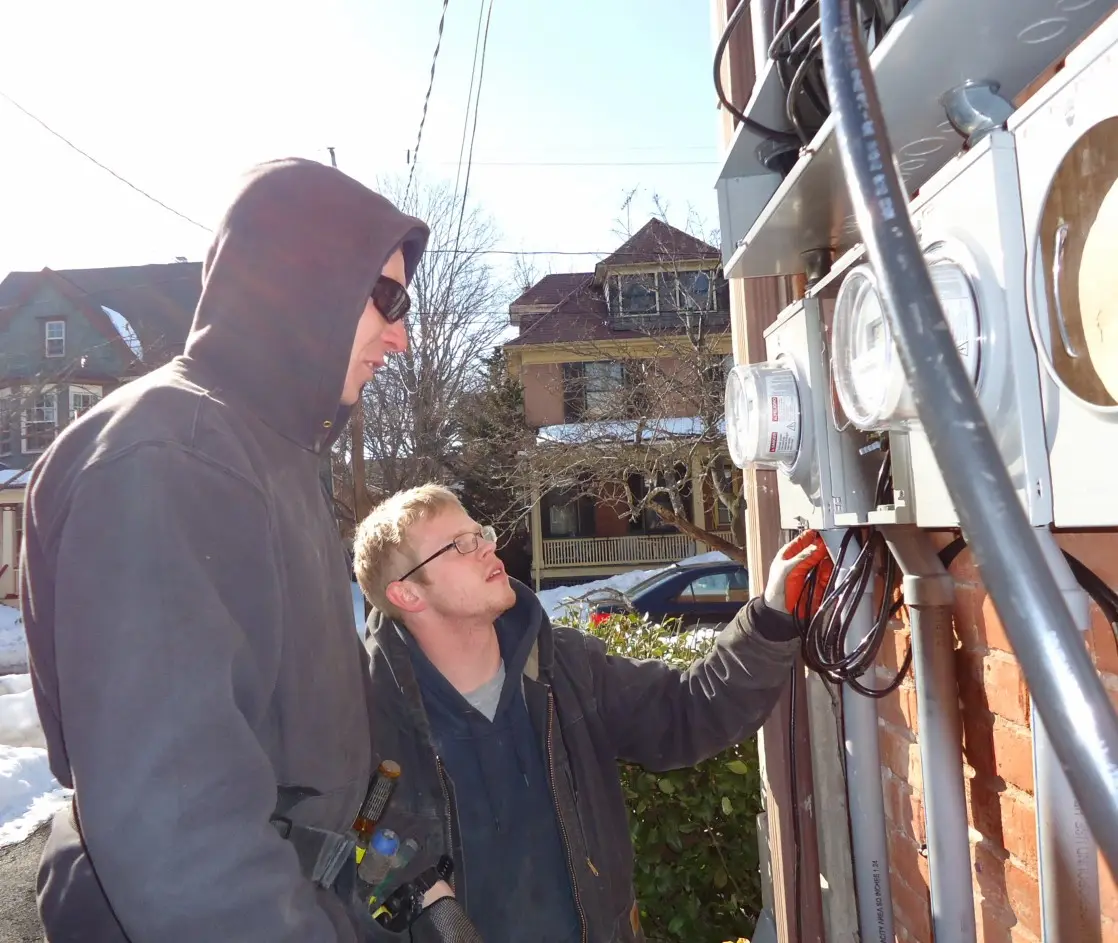
Why did the inspector object to two meters' wires sharing one conduit?
Because Berkeley's electrical code now forbids it. A local amendment adopted with the 2025 codes keeps conductors from separate services or separate utility meters out of any enclosure, cable or raceway carrying another service's or meter's conductors. The city's reason was the safety of occupants, service workers and first responders in older buildings whose systems lack modern safety features.