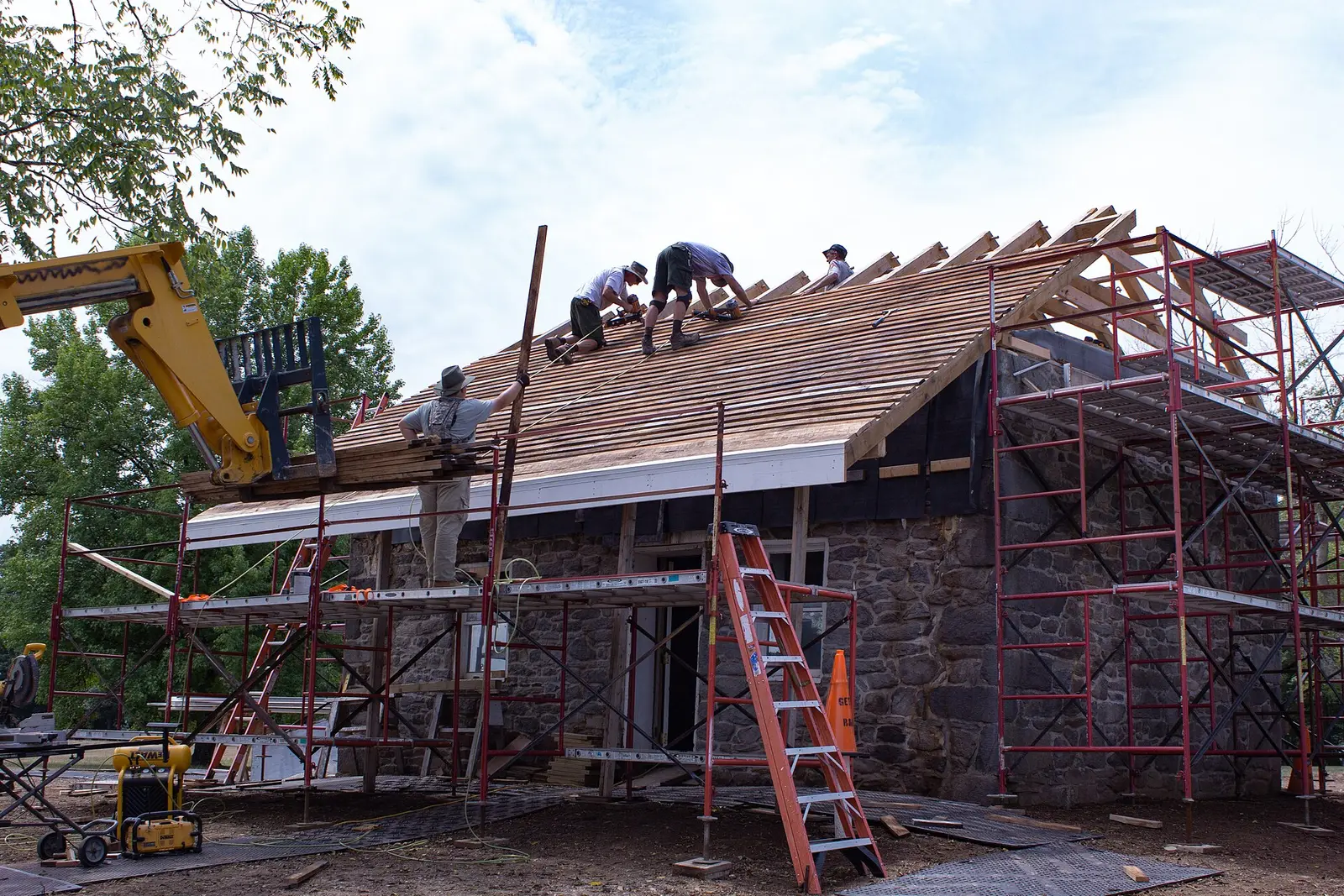
Roofing San Mateo
San Mateo re-roofs, from Baywood clay tile to the county-run Highlands
A San Mateo re-roof is normally an Express Building Permit, issued with no plan check and no drawings. The fire rules sit in two places. The city's 2025 amendment to the Building Code roof table lists Class B as the minimum for every construction type, and SMC Fire's 2025 maps rate parts of San Mateo Moderate, none High or Very High. Eichlers in the Highlands sit outside city limits, so the county issues those permits.
- Free to request, no obligation to hire
- Up to five local pros who take this work can reply
- Rules on this page checked against 22 public sources, November 2026
Asked most
San Mateo roof questions, from tile to the Highlands
Our Highlands house has a San Mateo address. Does the city issue the roof permit?
No. The Highlands is unincorporated county land just west of the city boundary, so the County of San Mateo's Planning and Building Department handles it. The county's re-roof waiver form lets the owner and contractor ask together to skip the tear-off inspection; the county then records that it never saw the old sheathing and framing, and that record is public. The waiver never excuses the nailing inspection when new sheathing goes on.
Is any of San Mateo in a High or Very High fire hazard zone?
Not on the 2025 maps. SMC Fire, which adopted the State Fire Marshal's recommendations without change, says San Mateo and Belmont are designated Moderate only and Foster City has no zone, so the defensible space inspection needed at sale in High and Very High zones does not apply. Its fire code still applies wildfire construction rules to buildings constructed in local Moderate zones, so look the address up before choosing materials.
Can we swap the clay tile on our 1920s Spanish Revival house for a different roof?
That depends on the house's status. On a Landmark, or a Contributor in the Downtown Historic District, any alteration needs a Certificate of Appropriateness, and the code lists re-roofing in a different material that replicates the original as a minor alteration. An individually eligible historic resource needs an approved planning application before a permit for exterior alteration. For other houses, the context statement's guidance treats the roofline form, more than the material, as what to keep.