Roofing Livermore

Livermore roofs under a citywide fire rating and zone 12 cool-roof rules

Livermore's Residential Code chapter sets a fire-rating floor for every house in the city: Class A or B roofing, tested and listed to UL 790 or ASTM E108. The state Energy Code adds a second test once more than half a roof is replaced, because Livermore lies in climate zone 12, where steep roofs need cool-rated products unless an exception fits. The same chapter also strikes the state's provisions on ordinary and emergency repairs.

  • Free to request, no obligation to hire
  • Up to five local pros who take this work can reply
  • Rules on this page checked against 19 public sources, November 2026

Start with your job

Which of these is closest to yours?
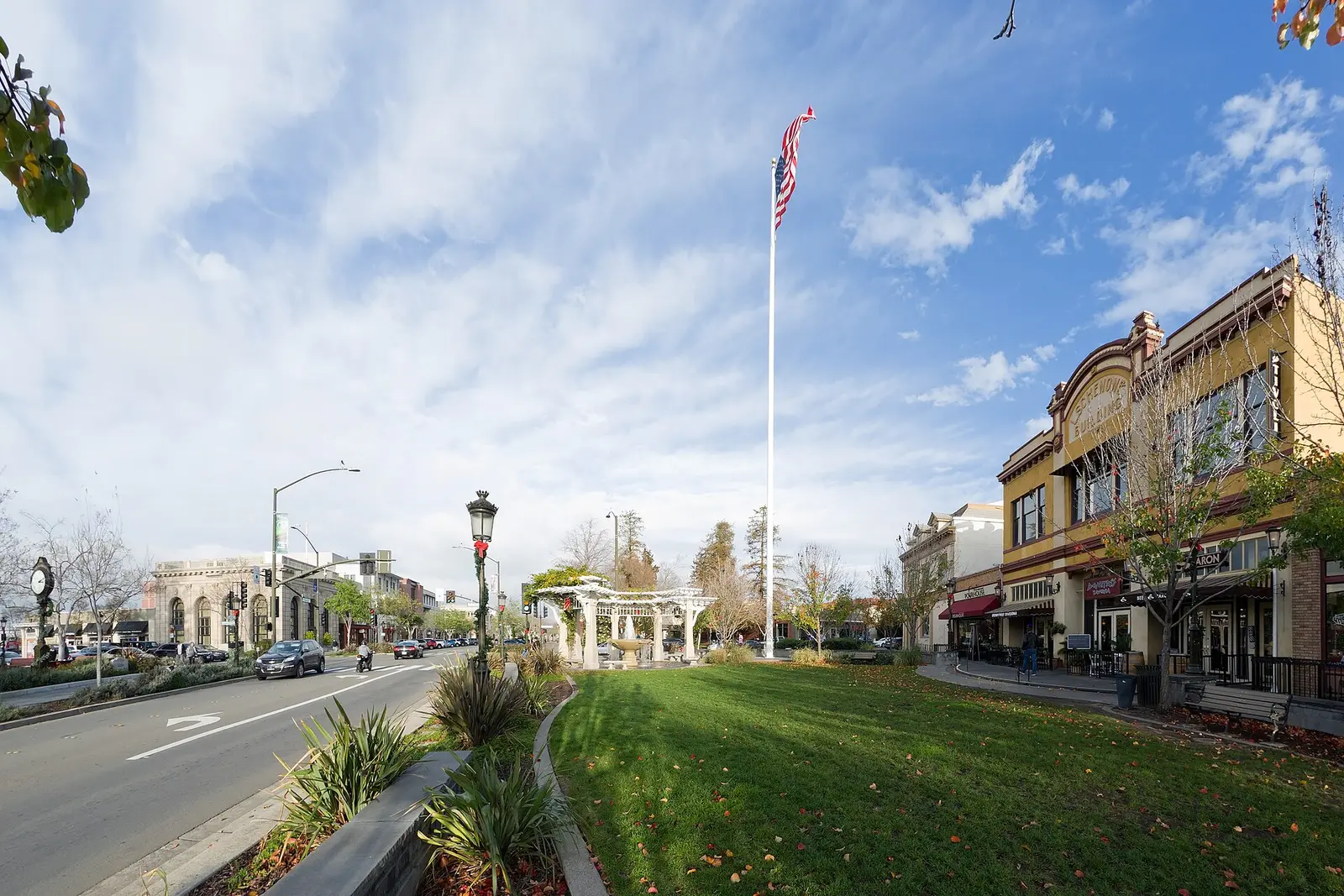
The flagpole in downtown Livermore, a landmark since 1905
The flagpole in downtown Livermore, a landmark since 1905. Photo: LPS.1, CC0, via Wikimedia Commons.
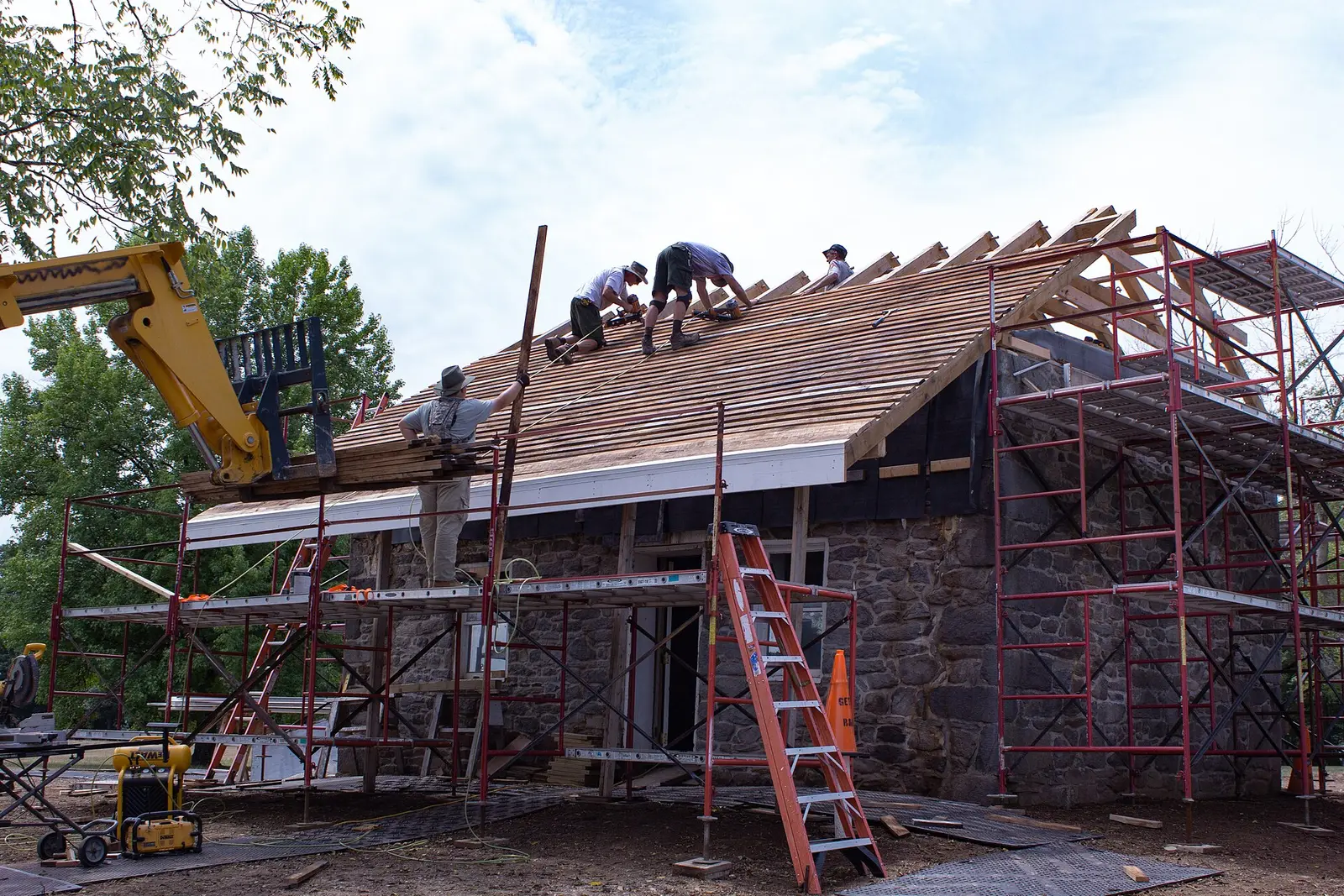
Roofers installing cedar shingles near the ridge while a telehandler lifts bundles onto the roof
Roofers installing cedar shingles near the ridge while a telehandler lifts bundles onto the roof. Photo: NPS photo, Public domain, via Wikimedia Commons.

The houses here

Bungalow gables on the old grid, ranch tracts and Spanish Revival tile

The General Plan's existing-conditions report reads Livermore's houses in rings. Around the commercial core, single-family blocks extend the downtown street grid on lots about 50 by 150 feet, with bungalow, ranch and Craftsman houses from the late nineteenth century to the mid twentieth. Past them, post-war tracts turn the grid toward the compass points and put a one- or two-car garage on the front. Across both, most houses are bungalows or ranches styled Craftsman or Mediterranean and Spanish Revival, and the report notes that the Mediterranean and Spanish Revival houses often have tiled roofs. A tile roof changes two answers on a Livermore re-roof: what it weighs, and whether the Energy Code's reflectance rule reaches it at all.

Free, no obligation. Next, add your details in the request form.

Neighbourhood by neighbourhood

Livermore districts where a roof job carries an extra layer of rules

  1. Trevarno Road Historic District

    The 2021 survey list gives the district and its 13 houses state status codes 3D, 3CD and 5D2, which make them historical resources under the Development Code. Its definition of character-defining features names roof form beside materials and massing, so a new roof shape or material there is an alteration, while ordinary maintenance is not. The 2003-2025 General Plan also commits the city to using the State Historical Building Code wherever possible.

  2. The bungalow blocks on the downtown grid

    Front porches and the gable roofs common to bungalows are the pattern on these 50-by-150-foot lots, which makes the exceptions stand out: the D.J. Murphy House at 291 McLeod Street, an Italianate cottage listed on the state and national registers, sits under a hip roof. A listed house is a historical resource, so a change to its roof form or covering starts with Planning rather than the Building Division.

  3. South Livermore Valley vineyards

    Vineyards occupy the southern part of the valley floor and define the city's urban edge there. On a developed parcel LPFD classes as agricultural, its 2026 standard asks owners to remove or trim branches that overhang a roof or come within 10 feet of a chimney, a line the department's standard for ordinary town lots leaves out.

Free request

Describe the roofing job once. Local pros who take work in Livermore reply by call or text.

  • No fee to request, and no obligation to hire
  • You agree scope and price with the pro you choose
  • Photos help them quote without a first visit

Get quotes for roofing work in Livermore

Two short steps. A local pro who takes this work calls or texts you back.

To send a request, call or text (415) 449-8213.

Free to request, and you agree the scope and price with the person you hire before work starts. In California, a job over $1,000 in labor and materials, or one that needs a building permit, must be done by a contractor licensed by the CSLB in the right class. Ask for the license number and check it at cslb.ca.gov.

The work

Livermore roof work, sorted by which rule it trips

  1. A leak patch, before anyone assumes no permit

    The state Residential Code normally excuses ordinary repairs from a permit application and lets emergency repairs start before the application is filed. Livermore's Residential Code chapter deletes both sections, R105.2.2 on repairs and R105.2.1 on emergency repairs. A small flashing or shingle fix may still need nothing from the city, but in Livermore that is a question to put to the Building Division before the work, not an assumption to make on the ladder.

  2. Over half a shingle roof, with ducts in the attic

    Replace more than 50 percent of a steep-sloped roof and Section 150.2(b)1I of the 2025 Energy Code asks zone 12 for new products with an aged solar reflectance of at least 0.20 and a thermal emittance of 0.75, or an SRI of 16. The code counts that as met where the ceiling carries R-38 insulation or a U-factor of 0.025, where a qualifying radiant barrier lines the attic, where R-2 continuous insulation sits at the deck, or, in zone 12, where no ducts run through the attic.

  3. A flat or low-slope section

    A roof pitched under 2:12 is low-sloped in the Energy Code. Replacing more than half of one in zone 12 calls for an aged reflectance of 0.63 and emittance of 0.75, or an SRI of 75, and continuous insulation of R-14 unless the roof already has R-10. Table 150.2-E lets thicker deck insulation stand in for part of the reflectance, and in limited cases the code accepts R-4 where added thickness would leave base flashing too short at rooftop equipment or a parapet wall.

  4. Tile on a Spanish Revival tract house

    Clay and concrete tile has to clear the same Class A or B floor as any other covering, and the city's amendment wants it tested and listed to UL 790 or ASTM E108. The Energy Code excuses roof constructions weighing at least 25 pounds per square foot from its reflectance rule, so on a zone 12 re-roof the weight printed on the tile's data sheet decides whether a cool-rated tile is needed.

Permits and local rules

The code sections and fire standards Livermore roofers work to

  1. Livermore's own roof fire-class amendments

    The adopted Housing Element lists fire classification of roof coverings among the city's local amendments to the state building codes. For the 2025 codes, in force since January 1, 2026, the Residential Code chapter rewrites Section R902.1 so that a minimum Class A or B roofing is installed in Livermore, tested and listed to UL 790 or ASTM E108, and the Building Code chapter adds to Section 1505.1 that roof coverings be Class B or higher for all buildings regardless of construction type.

    City of Livermore Housing Element (opens in a new tab)
  2. 2025 Energy Code, Section 150.2(b)1I

    The section reaches replacements of the exterior surface of existing roofs, a new layer laid over the old one included, wherever more than half the roof is replaced. Livermore lies in zone 12, one of the zones, 4 and 8 through 15, that the steep-slope rule names. Roof area under building-integrated photovoltaic or solar thermal panels is exempt from the reflectance and emittance minimums, and so are roof constructions of 25 pounds per square foot or more.

    Source: California Energy Commission, 2025 Energy Code (energy.ca.gov)

  3. The 2025 wildfire code, enforced by LPFD

    The Livermore-Pleasanton Fire Department says the 2025 California Wildland-Urban Interface Code was adopted by ordinance by both City Councils, and Livermore's chapter names the department as the agency that enforces it. Section 507.1 of that code sends a roof replaced outright, or with half or more replaced within 12 months, to the covering required for new construction, and holds any roofing applied during a repair to at least Class A.

    Livermore-Pleasanton Fire Department (opens in a new tab)
  4. Vegetation standards for wildland-urban interface parcels

    LPFD's 2026 standards for parcels in Moderate, High and Very High fire hazard zones apply year-round. Within 30 feet of a structure on a developed parcel, owners remove dead plants, leaves and pine needles, keep grass at 4 inches or less, take out tree branches that overhang the roof or come within 10 feet of a chimney outlet, and keep woodpiles out entirely. The standard for parcels outside those zones and off farmland carries no roof-branch line.

    Livermore-Pleasanton Fire Department (opens in a new tab)

State license for this work: C-39 Roofing, B General Building. Look up a contractor's license on the CSLB website (cslb.ca.gov).

Before you hire

Questions that pin down a Livermore roof quote

  • Check the C-39 Roofing license at cslb.ca.gov, and ask the contractor to confirm with the Building Division whether a small repair needs a permit.
  • Ask for the new covering's class under UL 790 or ASTM E108, since Livermore accepts nothing below Class B on a house.
  • On a re-roof of more than half the roof, ask which Energy Code path the bid takes: a cool-rated product, or an exception such as no attic ducts.
  • For tile, ask for the weight per square foot from the data sheet; at 25 pounds or more the reflectance rule falls away.
  • On a Trevarno Road house, ask who takes a change of roof form or material to Planning before anything is ordered.

Free, no obligation. Next, add your details in the request form.

Questions

Livermore homeowners ask about leaks, ratings and cool roofs

Does a small roof repair in Livermore need a permit?

Livermore does not answer that with the state's default. Its Residential Code chapter deletes R105.2.2, the section that normally spares ordinary repairs from a permit application, and R105.2.1, which lets emergency repairs begin before the application is filed. Ask the Building Division about the specific patch before the work starts rather than relying on the usual exemption.

Can a Livermore house get a Class C or unrated roof?

No. The city's amendment to Section R902.1 requires a minimum Class A or B roofing in Livermore, tested and listed to UL 790 or ASTM E108, and its Building Code chapter sets Class B or higher for all buildings. In a High or Very High fire hazard zone, the 2025 wildfire code asks more: Class A for roofing applied in a repair, and new-construction roofing once half the roof is replaced within 12 months.

Do I have to buy cool-roof shingles for a Livermore re-roof?

Only when more than half the roof is replaced, and then not always. Zone 12 steep roofs need an aged reflectance of 0.20 and emittance of 0.75, or an SRI of 16, unless the house qualifies another way: R-38 ceiling insulation, a qualifying attic radiant barrier, R-2 continuous insulation at the deck, or no ducts in the attic, an exception that lists zone 12 by name.

Will a flat section of my Livermore roof need new insulation when it is replaced?

If more than half of that low-sloped roof is replaced, usually yes. The 2025 Energy Code asks zone 12 for R-14 continuous insulation or a roof assembly U-factor of 0.039. A roof that already has R-10 continuous insulation is exempt, and in limited cases the requirement drops to R-4 where added thickness would leave the base flashing at rooftop equipment or a parapet wall shorter than the manufacturer allows.

Our house is on Trevarno Road. Can we change the roof?

Repairs that keep the roof as it is count as ordinary maintenance and need no certificate of appropriateness. A change to the roof's form or covering is different, because the district's houses are historical resources and the Development Code lists roof form among character-defining features. Talk to the Planning Division before choosing a new material, and ask whether the State Historical Building Code can help.

Does the fire department care about trees over my Livermore roof?

On some parcels, yes. LPFD's 2026 vegetation standards for wildland-urban interface parcels, and its standard for developed agricultural parcels, call for removing branches that overhang a roof or come within 10 feet of a chimney outlet. Its standard for other town lots does not include that line, so the parcel's classification decides whether the trimming is required.

Roofing work in Livermore? Tell us what you see.

One request reaches local handymen and contractors who take this work. The Handyman SF connects you with them; it does not do the work.

HandymanNow for handymen Work in Livermore? Get job leads by text. Pick your trades and areas, take only the jobs you want. No subscription. Start getting leads HandymanNow for homeowners Get the HandymanNow app. Send a request with photos, message your handyman and follow them on the way. Download the app

HandymanNow app

Fix it faster. Find work faster.

Homeowners send a job with photos and follow their handyman on the map. Handymen get local jobs by text and take only the ones they want.

Call WhatsApp (opens WhatsApp) Free quote